Medically reviewed for accuracy and updated with current clinical research. This guide reflects guidance from the U.S. Department of Health and Human Services, the National Institutes of Health, and peer reviewed obstetric studies, and is intended for general education rather than personal medical advice.
Growing a human is hard work. Between hormonal shifts, frequent bathroom trips, and a mind that will not stop racing, getting a good night of rest can feel like a distant memory. If you are tossing and turning while trying to find a comfortable and safe way to sleep, you are far from alone. Roughly three out of four pregnant women report poor sleep quality at some point in pregnancy, and nearly every woman experiences at least some nighttime waking by the third trimester.
Finding the right approach for how to sleep better during pregnancy starts with understanding what your body needs, then adjusting your position, your habits, and even your bedding to support that need.
How Much Sleep Do You Need During Pregnancy
When you are exhausted, it is completely natural to wonder how many hours a pregnant woman should sleep. The general recommendation for most adults is seven to nine hours a night, but pregnancy changes the math. Your body is working overtime to build a placenta and support new life, so you may need closer to eight to ten hours of sleep, especially during the first and third trimesters.
Listen to your body. If you feel wiped out by eight o'clock in the evening, give yourself permission to head to bed early, or fit in a short afternoon nap. If racing thoughts are keeping you from settling down, a guided approach such as relaxation therapy for sleep can help your body shift out of alert mode before you even change position.
The Best Sleeping Positions For Pregnancy
The Gold Standard: Sleeping On Your Side
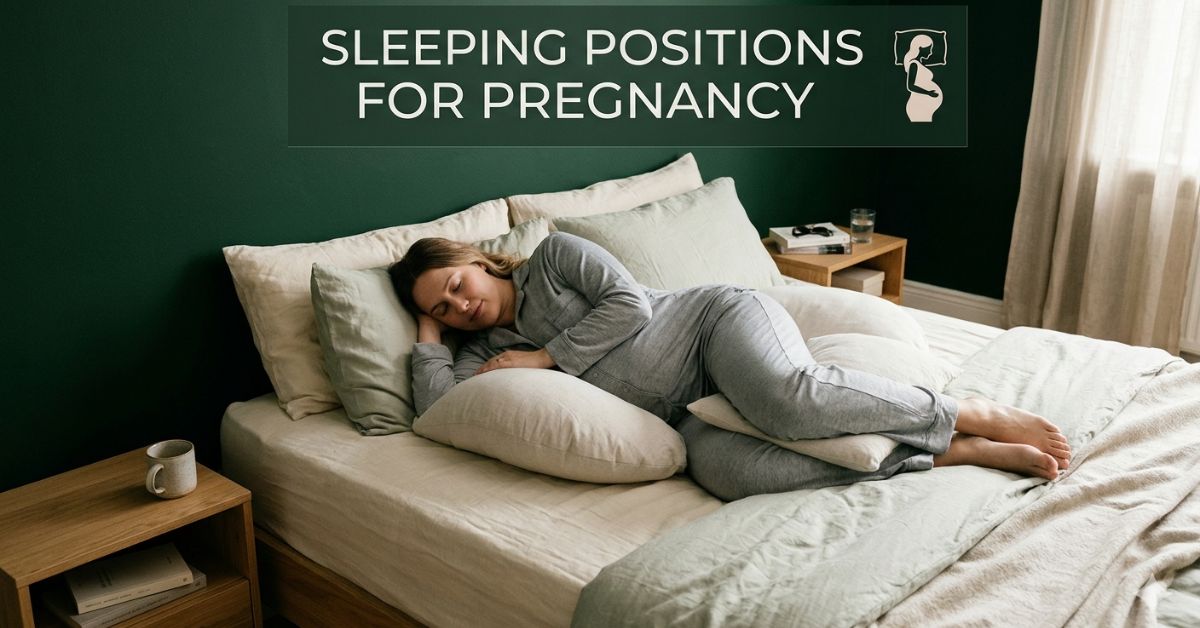
Sleeping on your left side is widely considered the safest and most comfortable position once your bump starts to grow. According to the Office on Women's Health, a division of the U.S. Department of Health and Human Services, lying on your left side with pillows tucked behind your back, between your knees, and under your belly can ease discomfort and support healthy circulation throughout the night.
Side sleeping keeps your growing uterus from pressing on your liver and on the inferior vena cava, the large vein that returns blood from your lower body to your heart. The National Library of Medicine's MedlinePlus explains that side sleeping, particularly on the left, improves blood flow among the heart, fetus, uterus, and kidneys, and takes pressure off the liver as well.
The comfort hack: bend your knees slightly and place a pillow between them. This takes pressure off your lower back and keeps your hips aligned through the night.
The Right Side: A Safe Alternative
If your left hip gets sore, switching to your right side is perfectly fine. Recent research described below found no meaningful difference in outcomes between the two sides, so alternating is a reasonable and comfortable strategy rather than something to worry about.
Positions To Approach With Caution As Your Bump Grows
Sleeping flat on your back: Once you reach the second trimester, most clinicians advise limiting time spent flat on your back. The Eunice Kennedy Shriver National Institute of Child Health and Human Development notes that the weight of the growing uterus can compress major blood vessels in this position, which is why many providers continue to recommend side sleeping in later pregnancy even as research evolves.
A large individual participant data meta analysis published through the National Institutes of Health's PubMed Central archive found that going to sleep on your back in the third trimester was linked with a higher rate of late stillbirth compared with side sleeping, while going to sleep on either the left or right side appeared equally safe. If you wake up on your back, simply roll to your side and settle back in. This is common, and your body is resilient.
Sleeping on your stomach: This is fine in the early weeks, but nature eventually makes the choice for you, since a growing bump makes stomach sleeping physically impractical and uncomfortable for most women well before the third trimester.
Pregnancy Sleep Positions At A Glance
The table below summarizes how each position compares, based on current clinical guidance and the research referenced throughout this guide.
| Position |
Best Trimester |
Key Benefit |
Consideration |
| Left side |
All trimesters, especially second and third |
Optimizes blood flow to the placenta and eases pressure on the liver |
Some women find a left hip gets sore over a long night |
| Right side |
All trimesters |
Comparable safety to the left side and a comfortable alternative |
Alternate sides through the night rather than forcing one position |
| Back |
Generally fine in the first trimester, limit later on |
Can feel restful briefly and is sometimes needed for medical exams |
Growing uterus can press on major blood vessels in later pregnancy |
| Stomach |
Early first trimester only |
No special benefit beyond personal habit |
Becomes physically impractical as the bump grows |
What The Research Actually Says About Sleep Position
It is worth knowing that the evidence here has evolved. An NICHD funded analysis of more than eight thousand seven hundred first time mothers found that sleeping on the back or side through thirty weeks of pregnancy did not appear to increase the risk of stillbirth, reduced birth size, or high blood pressure disorders of pregnancy. The researchers cautioned that their data only covered pregnancy up to thirty weeks, and many physicians continue to advise left side sleeping, particularly in the third trimester.
A separate, detailed evidence review available through the NIH National Center for Biotechnology Information Bookshelf summarizes several international studies on maternal sleep position and late pregnancy outcomes, and generally supports the practice of settling to sleep on your side, especially after twenty eight weeks.
The takeaway for a smoother night is simple: side sleeping is the safest habit to build, either side is acceptable, and an occasional shift onto your back while asleep is not something to panic about.
Practical Tips For Better Sleep During Pregnancy
Positioning is only half the battle. These evidence informed habits can meaningfully improve how well you sleep through the night.
Build A Comfortable Sleep Environment
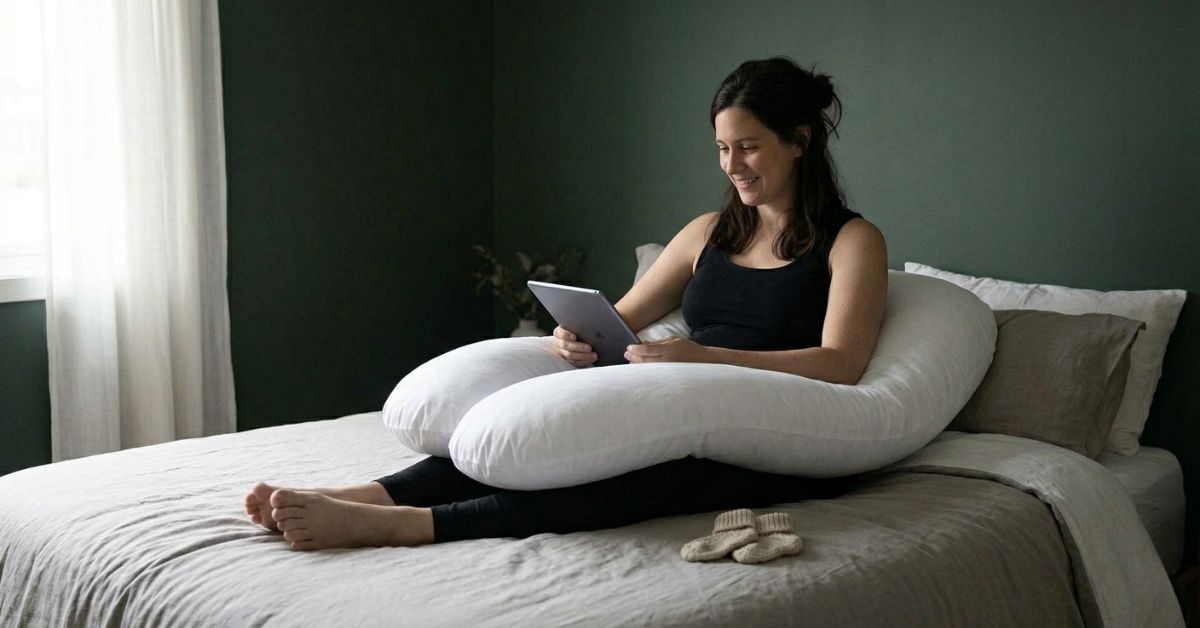
You do not necessarily need a specialized, massive C shaped or U shaped pregnancy pillow, though many women love them. A few regular, firm pillows tucked under your belly, behind your back, and between your knees can transform your comfort. What you sleep on matters just as much as what you sleep with. Breathable, temperature regulating bedding such as Oeko Tex certified bamboo sheets helps prevent overheating, which is common in pregnancy thanks to a higher resting metabolism and increased blood volume. For sensitive skin, an organic sheet set or an organic cotton bed sheet set avoids the synthetic finishes and pesticide residues found in some conventional bedding, which some pregnant women prefer to limit.
Manage Heartburn Before It Starts
Progesterone relaxes the valve between your stomach and esophagus, making heartburn extremely common in pregnancy. The National Institute of Diabetes and Digestive and Kidney Diseases recommends avoiding large or heavy meals close to bedtime and raising the head of the bed slightly if reflux disturbs your sleep. Try to finish eating at least three hours before lying down, and skip spicy, fried, or highly acidic foods in the evening.
Taper Fluids And Manage Nighttime Bathroom Trips
Hydration is essential, but try to drink the bulk of your water earlier in the day. Tapering fluid intake an hour or two before bed can help cut down on midnight bathroom trips without affecting your overall hydration.
Quiet A Racing Mind
Many pregnant women lie awake worrying about labor, parenthood, or simply cannot switch their thoughts off. If this sounds familiar, it may help to read about how to stop your mind racing at night, or explore techniques for how to turn your brain off to sleep. If the pattern feels persistent night after night, it is also worth reading about an overactive mind at night, since pregnancy anxiety at bedtime is common and manageable with the right approach.
Wind Down With Intention
Your mind needs a clear transition into sleep mode. Turn off screens about forty five minutes before bed, dim the lights, and try a warm, not hot, bath or some light reading. If you have ever wondered why you feel sleepy when reading, that same drowsy effect can be used deliberately as part of a bedtime routine. Gentle movement also helps: research on whether stretching before bed helps you sleep suggests that a few minutes of light stretching can ease the tension pregnancy places on your hips and lower back.
Handle Leg Cramps Safely
Leg cramps are a common nighttime disruptor in pregnancy. Gently stretching the calf or pressing your foot against the wall usually resolves a cramp within a minute. Because many medications are not appropriate during pregnancy, it is worth reading whether muscle relaxers help you sleep before considering any medication, and always check with your prenatal provider first.
If You Cannot Fall Asleep Quickly
On nights when your mind will not settle, a structured technique like how to fall asleep in ten seconds can offer a quick, drug free option to try before reaching for anything else.
Our Recommendation
For most pregnant women, the safest and most comfortable approach is to fall asleep on either side, with a pillow supporting the belly and another between the knees. Do not stress over which side, and do not panic if you wake up on your back, simply roll over and settle back in.
- Favor side sleeping from the second trimester onward, alternating left and right for comfort.
- Support your body with pillows behind the back, under the belly, and between the knees.
- Choose breathable, temperature regulating bedding to reduce nighttime overheating and discomfort.
- Build a consistent wind down routine and limit screens in the final hour before bed.
- Talk with your prenatal provider about any persistent sleep problems rather than treating them alone.
Related Reading
Explore more evidence based guidance on falling asleep and staying asleep:
Sources