There is a reason cashmere is universally tied to luxury. The moment you touch a genuinely fine cashmere sweater, it feels completely different from a standard wool knit. It is lighter, remarkably soft, and lacks the scratchy bite many people associate with wool. But what actually makes this fiber so special, why is it regulated by a federal consumer protection agency, and why does it carry such a premium price. This guide walks through the biology, the labeling rules, and practical buying advice so you can shop with confidence.
What Is Cashmere Made From
A common misconception is that cashmere comes from sheep. In reality, cashmere is made from the soft, insulating undercoat of specific goat breeds, primarily the Cashmere or Kashmiri goat, formally classified as Capra hircus laniger. This exact classification is the standard used by United States regulators, as confirmed in the official Wool Products Labeling Act rule text published by the Federal Trade Commission.
These goats live in regions with extreme temperature swings, such as the high altitude plains of Mongolia, China, and Tibet. To survive winters that can drop well below zero Fahrenheit, they grow a double fleece made of two distinct layers.
- Outer layer: coarse, thick guard hairs that shield the goat from wind and rain.
- Undercoat: a downy, ultra fine layer that traps warm air close to the skin.
When spring arrives and the goats naturally begin to shed, herders carefully harvest this downy undercoat, typically by hand combing rather than shearing, which keeps the delicate fibers intact. Because it takes the annual yield of roughly three to four goats to produce a single sweater, the raw material is naturally scarce and highly valued. The USDA Agricultural Marketing Service goat program and the USDA Economic Research Service cotton and wool data both track fiber producing goat populations and wool statistics as part of the national agricultural data system.
Cashmere Wool Fabric and How It Is Processed
Once the raw fiber is collected, it goes through careful sorting, washing, and dehairing to remove any stray, coarse guard hairs. The resulting pure down is then spun into yarn and knitted or woven into cashmere fabric. Because individual fibers are exceptionally fine, typically under 19 microns in diameter (for comparison, a human hair measures roughly 70 microns), the finished textile has a notably soft drape and smooth surface. This 19 micron ceiling is not simply a quality preference, it is a legal threshold. Under United States federal regulation, a textile cannot legally be labeled cashmere unless its average fiber diameter meets that limit, as detailed in the FTC guide Cachet of Cashmere: Complying with the Wool Products Labeling Act.
Is Cashmere Warmer Than Wool
If you are looking for winter warmth without bulk, the short answer is yes. Cashmere is significantly warmer than standard sheep wool. High quality cashmere can be up to three to eight times warmer than regular wool, depending on how it is knitted.
Why the difference? It comes down to air pockets. Because cashmere fibers are exceptionally fine and have a tight, natural crimp, they trap tiny pockets of warm air far more efficiently than thicker sheep wool fibers. This creates an effective thermal barrier while remaining remarkably lightweight.
Cashmere vs Wool at a Glance
The table below summarizes the practical differences a shopper should weigh before buying.
| Feature |
Cashmere Goat Down |
Standard Sheep Wool |
| Fiber diameter |
Ultra fine, under 19 microns |
Medium to coarse, often above 25 microns |
| Texture |
Silky, smooth, non irritating |
Can feel scratchy against bare skin |
| Warmth to weight |
High thermal insulation at a low weight |
A heavier garment is needed for equal warmth |
| Typical source animal |
Cashmere goat undercoat, Capra hircus laniger |
Sheep fleece |
| Federal labeling rule |
Governed by the Wool Products Labeling Act cashmere definition |
Governed by the Wool Products Labeling Act general wool definition |
How Cashmere Is Regulated and Labeled in the United States
Because cashmere commands such a premium price, mislabeling is a real risk for shoppers. The Wool Products Labeling Act of 1939 and its implementing rules at 16 CFR Part 300 in the electronic Code of Federal Regulations set the legal definition of cashmere that every seller in the United States must follow. Under this framework, a product can only be called cashmere if it consists of the fine, dehaired undercoat of a cashmere goat, the average fiber diameter does not exceed 19 microns, and no more than 3 percent of the fibers by weight exceed 30 microns in diameter.
The Federal Trade Commission also publishes consumer facing guidance titled Threading Your Way Through the Labeling Requirements Under the Textile and Wool Acts, which explains how percentages, blends, and country of origin must appear on a garment label. A broader overview for consumers and sellers alike is available on the FTC page Clothing and Textiles. These rules exist precisely because the word cashmere alone does not guarantee authenticity. A legally compliant label must state the true fiber content, for example 80 percent Wool, 20 percent Cashmere, rather than simply the word Cashmere.
Cashmere Grades Explained
Grade A cashmere is made from the finest, longest, and softest fibers and typically measures close to the 14 to 15.5 micron range. Grade B cashmere is mid range in fineness and softness. Grade C cashmere uses shorter, coarser fibers that are less soft and less durable. All three grades can still legally be labeled cashmere in the United States provided they meet the 19 micron federal ceiling described above, so the grade itself is a quality signal rather than a legal category.
How to Identify High Quality Cashmere
Check for softness, long fibers, a tight knit, and a label that accurately states 100 percent cashmere or the correct blend percentage. Low quality or counterfeit items often feel rough, pill quickly, or contain undisclosed blended fibers. Because federal labeling rules require accurate percentage disclosure, a garment that simply says Cashmere Blend without listing percentages is not compliant and is worth avoiding.
Caring for Cashmere
Cashmere requires more delicate care than traditional wool because its fine, soft fibers are more prone to stretching, pilling, and damage. Most garments should be hand washed in cool water or dry cleaned, laid flat to dry, and stored folded rather than hung to preserve their shape.
Recommendations: Pairing Natural Fiber Bedding With a Cashmere Aesthetic
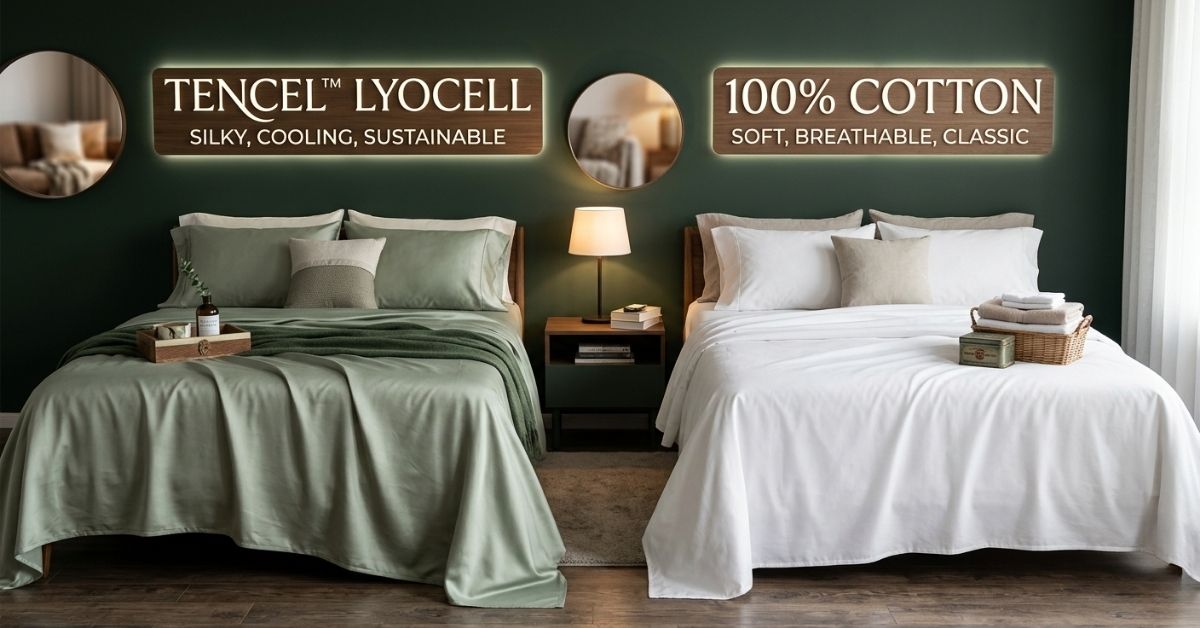
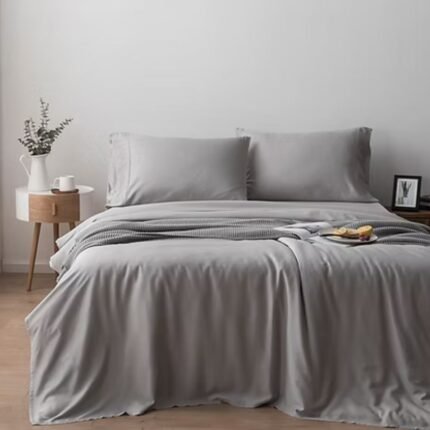
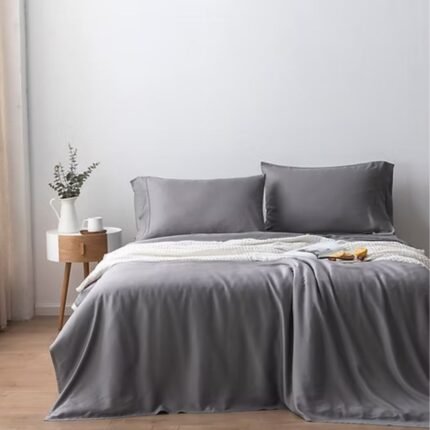
If cashmere has you thinking about upgrading the natural fiber comfort of your bedroom overall, these bedding options complement the same softness and breathability that make cashmere appealing.
| If you want |
Recommended choice |
Why it fits |
| Everyday bedding softness without the cashmere price tag |
Oeko Tex Certified Bamboo Sheets |
Bamboo lyocell offers a smooth, cool hand feel and independent safety certification, a comfortable everyday alternative to luxury animal fibers |
| Breathable natural fiber sheets that pair well with a cashmere throw |
Purely Organic Sheet Set |
Certified organic cotton is grown without synthetic pesticides, giving a natural fiber pairing for a cashmere accented bedroom |
| A crisp, durable base layer for a cold weather bedroom |
Organic Cotton Bed Sheet Set |
Long staple organic cotton is strong, breathable, and layers well under a cashmere blanket during winter months |
Related Reading
If you are comparing cashmere against other bedding and textile fibers, these guides go deeper on each comparison.
Sources
- Federal Trade Commission, Wool Products Labeling Act, official rule text
- Federal Trade Commission, Cachet of Cashmere: Complying with the Wool Products Labeling Act
- Federal Trade Commission, Threading Your Way Through the Labeling Requirements Under the Textile and Wool Acts
- Federal Trade Commission, Clothing and Textiles industry guidance
- Electronic Code of Federal Regulations, 16 CFR Part 300, Rules and Regulations Under the Wool Products Labeling Act of 1939
- United States Department of Agriculture, Agricultural Marketing Service, Goat grades and standards
- United States Department of Agriculture, Economic Research Service, Cotton and Wool data