Few decisions shape your nightly comfort as much as your bedding. If you have spent any time browsing for a new set, you have likely run into a debate between the classic crowd favorite and the modern option built for performance: Tencel versus cotton bed sheets.
Cotton has ruled the bedroom for centuries, and Tencel is quickly becoming a premium alternative for people who run warm at night or want a more sustainable choice. This guide breaks down how the two fabrics compare, what regulators and standards bodies actually say about labeling and safety, and which option is likely to suit your sleep style, backed by information from federal agencies including the Federal Trade Commission, the U.S. Department of Agriculture, the Consumer Product Safety Commission, and the Environmental Protection Agency.
What Exactly Is Tencel
Tencel is a brand name for a fabric known generically as lyocell, a type of regenerated cellulose fiber. It is made from harvested wood pulp, usually from sustainably sourced eucalyptus trees. The pulp is dissolved in a nontoxic solvent, spun into fibers, and woven into a remarkably soft fabric.
This process often raises the question: is Tencel synthetic? Not exactly. According to the FTC Textile Fiber Rule, which governs how fiber content must be labeled in the United States, a fiber can only be marketed as natural if it retains its basic chemical structure through processing. Because the wood cellulose used to make Tencel is chemically dissolved and re-formed into new fibers, lyocell is officially classified as a manufactured fiber rather than a natural one, even though its raw material starts out as plant matter. That places Tencel in a middle category that industry professionals often call semisynthetic, or more precisely, a regenerated cellulose fiber.
Tencel Lyocell Sheets vs Cotton
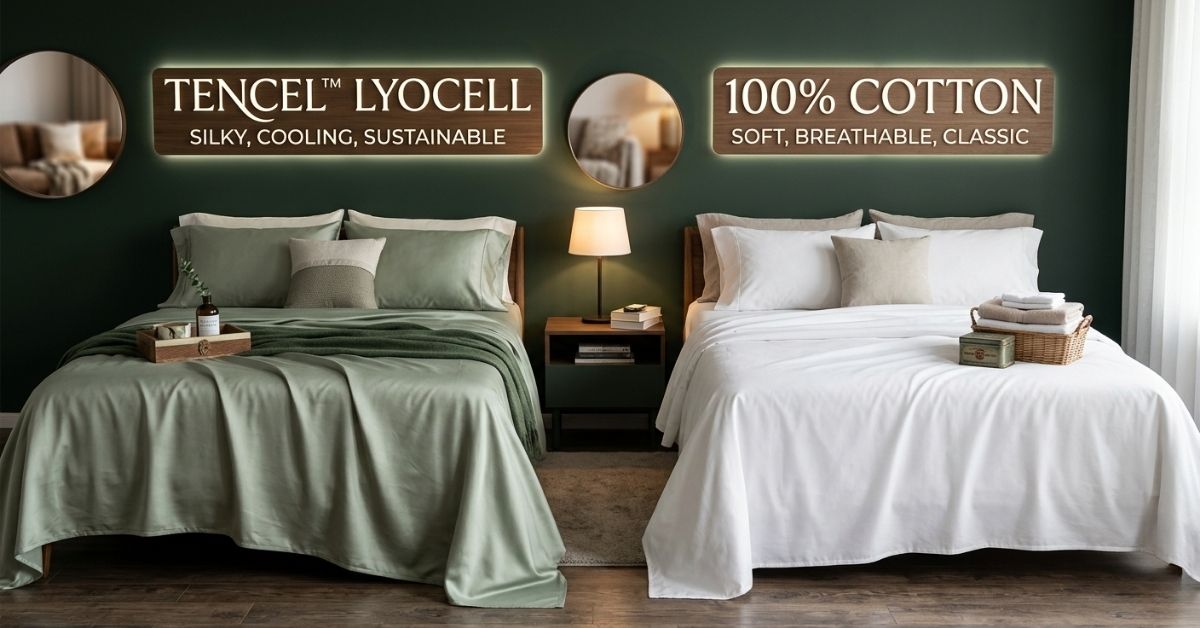
When comparing Tencel lyocell sheets to cotton, the right choice really depends on what you value most in fabric texture, feel, and care.
Feel and Texture
Tencel has a distinctively silky, fluid drape. It glides smoothly against the skin and feels almost weightless. If you have ever compared satin sheets to cotton sheets, Tencel sits somewhere in the middle. It offers the luxurious, buttery glide of satin without the slipperiness or heat trapping tendency of polyester satin.
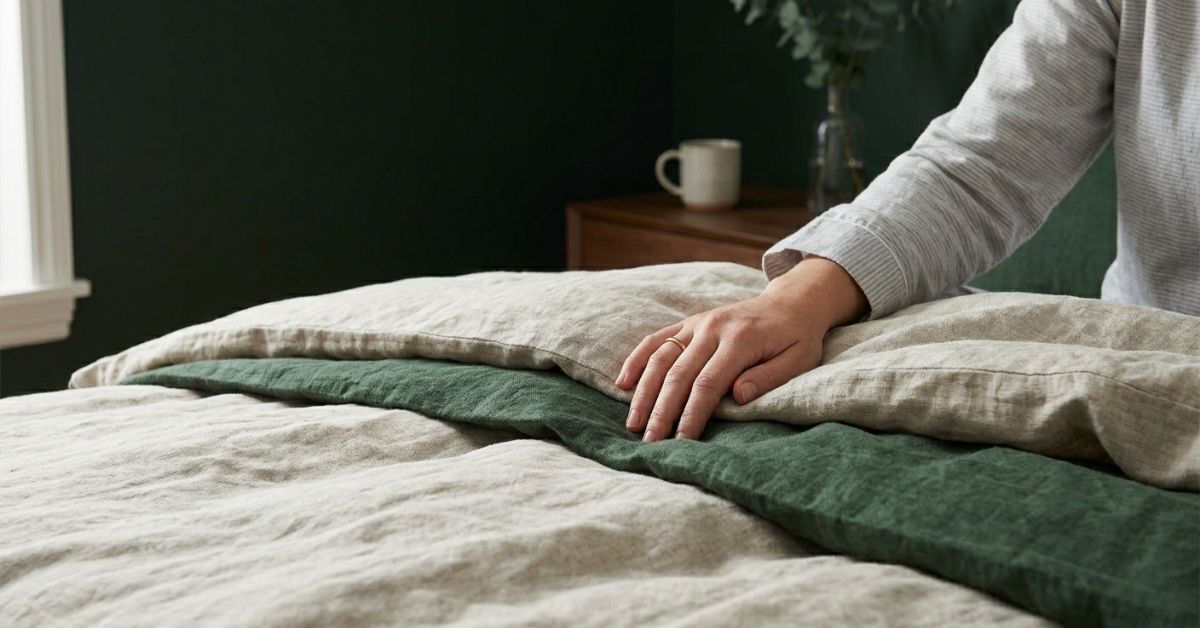
Cotton, on the other hand, is crisp, reliable, and holds its structure beautifully. It feels familiar and tends to soften with every wash.
Is Tencel Good for Hot Weather
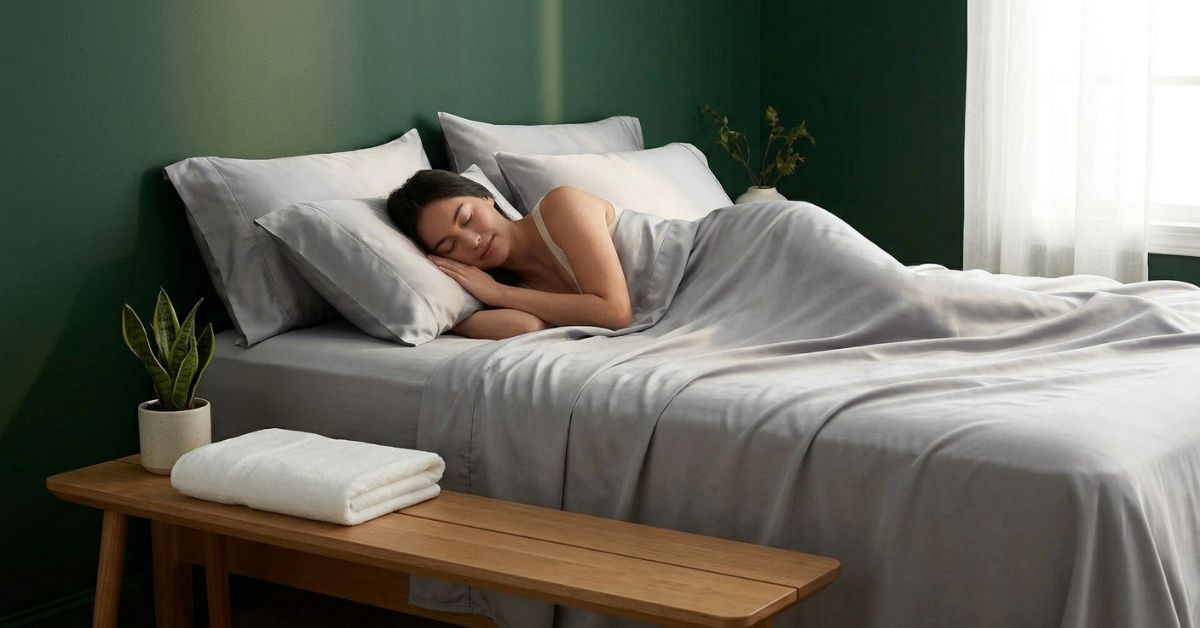
If you run warm at night, this is where Tencel truly shines. Tencel fibers are exceptionally efficient at absorbing moisture and releasing it back into the air, a property that has been studied in clinical settings. A trial registered with the U.S. National Institutes of Health clinical trials database compared Tencel and standard cotton therapeutic garments in children with moderate to severe eczema and found Tencel fabric was evaluated specifically for its moisture handling and comfort benefits for irritated, overheated skin. This natural breathability keeps sleepers cool and dry, making Tencel a strong option for summer months or for anyone who sleeps hot year round.
Cotton is also highly breathable, but it tends to hold onto moisture longer than Tencel does. If you sweat heavily, cotton sheets can start to feel damp, while Tencel generally stays dry to the touch.
The Nuances of Cotton: A Quick Side Note
If you lean toward cotton, keep in mind that not all cotton sheets feel the same. A common source of confusion is understanding the difference between cotton and percale sheets.
Put simply, cotton is the fiber, while percale is the weave style. A percale sheet is woven in a classic, one-over-one-under pattern that the USDA cotton grading program and industry classification standards recognize as a distinct construction from sateen weaves. Percale creates a matte finish that feels crisp, cool, and lightweight, resembling a high-end hotel bedsheet. Sateen weaves, by comparison, give cotton a heavier, smoother feel.
Bamboo vs Tencel Sheets
If you have ruled out cotton and want a modern, plant-based sheet, you will likely compare bamboo and Tencel sheets directly. Both are soft, highly breathable, and derived from wood pulp, bamboo stalks in one case and eucalyptus trees in the other.
| Feature | Tencel Sheets | Bamboo Sheets |
|---|
| Texture | Silky, buttery smooth, fluid drape | Soft, light, cashmere-like feel |
| Cooling | Excellent moisture wicking and cooling | Naturally breathable and temperature regulating |
| Eco footprint | Closed loop process recovers most solvents and water | Sustainable crop, but processing often uses harsher chemicals |
| Federal fiber classification | Lyocell, a manufactured cellulose fiber under FTC rules | Rayon or viscose, also a manufactured cellulose fiber under FTC rules |
The biggest distinction lies in how they are made. Tencel typically uses a closed loop manufacturing process in which most of the water and nontoxic solvents are recovered and reused repeatedly, which is one reason manufacturers seeking programs like the EPA Safer Choice label for their supply chains often favor lyocell over standard bamboo viscose processing.
What Government Standards Say About Cotton and Tencel
Because bedding claims are easy to exaggerate, it helps to know what federal agencies actually require. Here is a plain language summary of the rules that shape how Tencel and cotton products can be labeled and sold in the United States.
- Fiber labeling: Under the Textile Fiber Products Identification Act, enforced by the FTC, sheets must disclose the generic fiber name and country of processing. Trademarked names like Tencel must appear next to the generic term lyocell so shoppers know what they are actually buying.
- Regulatory text: The full labeling regulation is published in the Code of Federal Regulations, Title 16, Part 303, which spells out exactly how fiber percentages and generic names must appear on a label.
- Organic claims: The USDA Agricultural Marketing Service states that a sheet set can only use the USDA organic seal if the finished product is certified organic, not simply because the raw cotton was grown organically. This is worth checking before paying a premium for an organic label.
- Fire safety: All mattress pads, quilted covers, and related bedding sold in the United States fall under flammability testing rules maintained by the Consumer Product Safety Commission, which is a useful reference if you are also shopping for a new mattress pad alongside your sheets.
- Chemical safety: The EPA's Safer Choice program sets voluntary criteria for manufacturing processes that limit harmful air, land, and water releases, a standard some sustainable bedding brands reference when describing their production methods.
Are Tencel Sheets Good for Sensitive Skin and Eczema
Yes, Tencel sheets are generally considered a strong option for sensitive skin. Because the fabric is smooth, breathable, and slow to trap moisture, it tends to reduce the friction and dampness that commonly aggravate irritated skin. A study registered on the National Institutes of Health ClinicalTrials.gov database specifically evaluated Tencel garments against standard cotton as an added treatment for moderate to severe atopic dermatitis in children, reflecting real clinical interest in how this fiber performs against irritated skin.
Cotton remains a dependable, well-studied choice too. Because both fibers are breathable and free of the synthetic finishes found in many polyester blends, either one is a reasonable starting point if you are managing eczema, allergies, or general skin sensitivity. If you want to compare cotton against other natural options directly, see our guide to organic cotton versus conventional cotton.
The Verdict: Which One Should You Choose
| Choose | If this sounds like you |
|---|
| Tencel | You sleep hot, prefer a silky, drape-heavy feel, want resistance to wrinkling, and value a sustainable, closed loop manufacturing process. |
| Cotton | You prefer a traditional, crisp bed feel, enjoy bedding that softens over years of washing, and want a fabric that is easy to care for and widely available. |
| Organic cotton | You want the familiar feel of cotton with fewer chemical residues and a USDA-backed organic standard behind the claim. |
| Certified bamboo | You want a plant-based, cashmere-like feel and prefer a fabric that has been independently tested for harmful substances. |
Both materials can deliver an excellent night's sleep. It largely comes down to how you want your bed to feel when you climb in at the end of a long day.
Our Recommendation: If you sleep hot, deal with sensitive skin, or want the most sustainable closed-loop production, go with Tencel sheets. If you prefer a traditional, crisp feel that softens over time and want maximum availability and easy care, cotton (ideally certified organic cotton) is the smarter pick.
Recommended Sheet Sets to Try
If you are ready to shop, these three options cover the most common preferences discussed above, from certified bamboo cooling to fully organic cotton.
- OEKO-TEX Certified Bamboo Sheets — a good match if you want the cashmere-like drape of bamboo with independent testing confirming the fabric is free from harmful substance levels.
- Organic Sheet Set — best for shoppers who want a verified organic claim rather than a vague sustainability label.
- Organic Cotton Bed Sheet Set — a classic, breathable choice for anyone who wants the familiar crispness of cotton grown without synthetic pesticides.
Related Reading
Compare more fabric options across our other guides:
Sources
This guide references the following primary sources, including federal government agencies and a National Institutes of Health registered clinical study:
- Federal Trade Commission, Clothing and Textiles guidance
- Federal Trade Commission, Textile Fiber Rule
- Federal Trade Commission, Textile Fiber Products Identification Act
- Electronic Code of Federal Regulations, Title 16 Part 303, Textile Fiber Products Identification Act rules
- United States Department of Agriculture, Agricultural Marketing Service, Organic Textiles
- United States Department of Agriculture, Agricultural Marketing Service, Cotton Standards
- United States Consumer Product Safety Commission, Mattresses, Mattress Pads and Mattress Sets FAQ
- United States Environmental Protection Agency, Safer Choice Program
- United States Environmental Protection Agency, Safer Choice Standard and Criteria
- National Institutes of Health, ClinicalTrials.gov, Tencel vs Standard Cotton Therapeutic Garments as an Adjunct Treatment for Moderate to Severe Atopic Dermatitis in Children