Medically informed sleep positioning advice, reviewed against current guidance from U.S. federal health agencies including the National Institutes of Health, the National Heart, Lung, and Blood Institute, and the Centers for Disease Control and Prevention.
If your lower back hurts every time you lie down, you already know the cycle. Pain makes it hard to fall asleep, a poor position makes the pain worse overnight, and you wake up stiffer than when you went to bed. According to the National Institute of Arthritis and Musculoskeletal and Skin Diseases, back pain is one of the most common medical problems in the United States, ranging from a dull constant ache to sudden sharp pain that limits movement. The good news is that your sleep position is one of the few parts of this cycle you can control tonight, without medication or a new mattress.
This guide breaks down the research backed sleeping positions for lower back pain, how to set up pillow support for each one, a comparison table you can reference at a glance, a full recommendation section, and answers to the questions people ask most often. We also link out to government health resources throughout so you can read the primary guidance yourself.
Why Your Sleep Position Affects Lower Back Pain
Your spine has a natural S shaped curve, and that curve needs to be supported while you sleep, not flattened or twisted. When your hips, pelvis, and shoulders fall out of alignment overnight, the muscles and ligaments around your lumbar spine work overtime to compensate, which is why so many people wake up sore even though they never got out of bed. MedlinePlus, a service of the National Library of Medicine, notes that low back pain is the second most common reason Americans see a health care provider, right behind colds and the flu, and that positioning changes are one of the first steps clinicians recommend at home.
Sleep quality and pain also feed into each other. Poor sleep can lower your pain threshold, while unmanaged pain fragments your sleep, so fixing your position is not just about comfort. It supports the deeper, restorative sleep your body needs to recover. The CDC notes that consistently poor sleep quality is linked to a higher risk of several chronic health conditions, which is one more reason to take nighttime positioning seriously rather than just powering through the discomfort.
Best Sleeping Positions for Lower Back Pain Relief
1. On Your Back, With a Pillow Under Your Knees
Back sleeping is generally considered the most spine friendly position because your weight is distributed evenly and your spine can stay in a neutral, elongated line. To get the full benefit, place a small pillow or a rolled towel under your knees. This slight elevation preserves the natural curve of your lower back instead of letting your legs pull your pelvis flat. If you need more support, a thin rolled towel tucked under the small of your back adds extra contact so nothing is left unsupported.
2. On Your Side, In a Gentle Fetal Curl
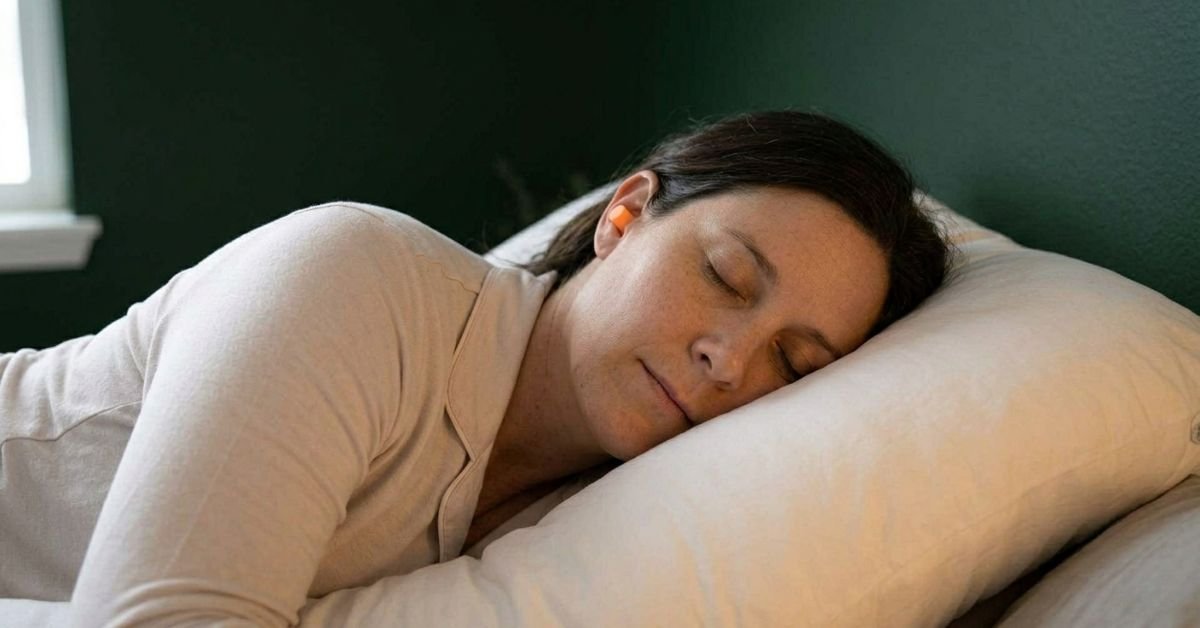
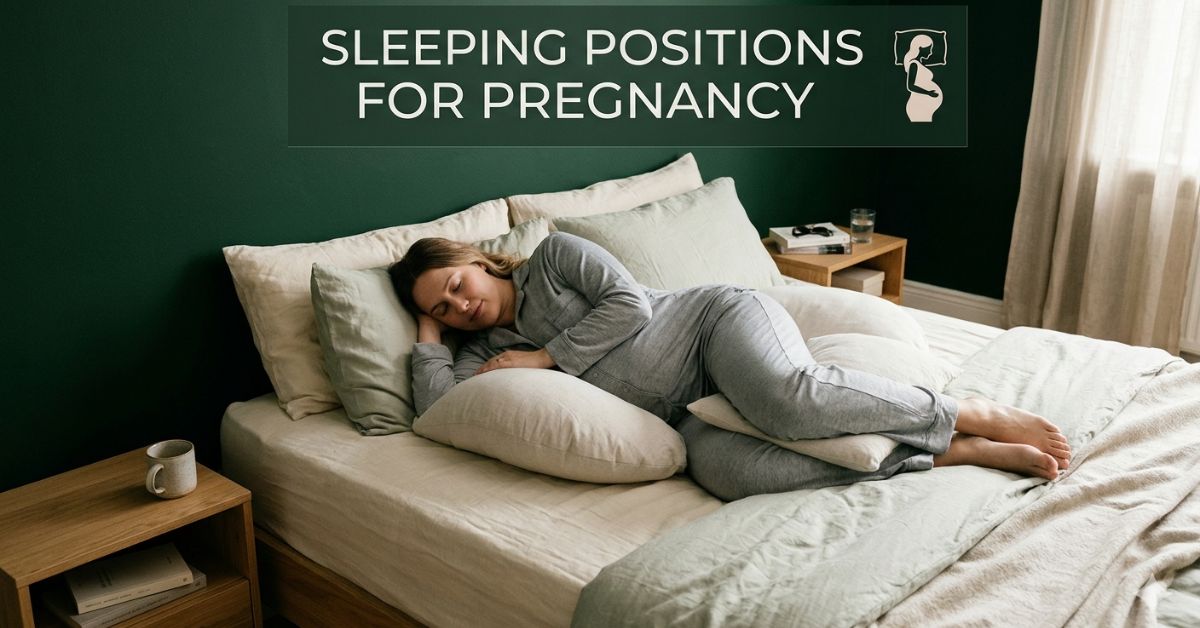
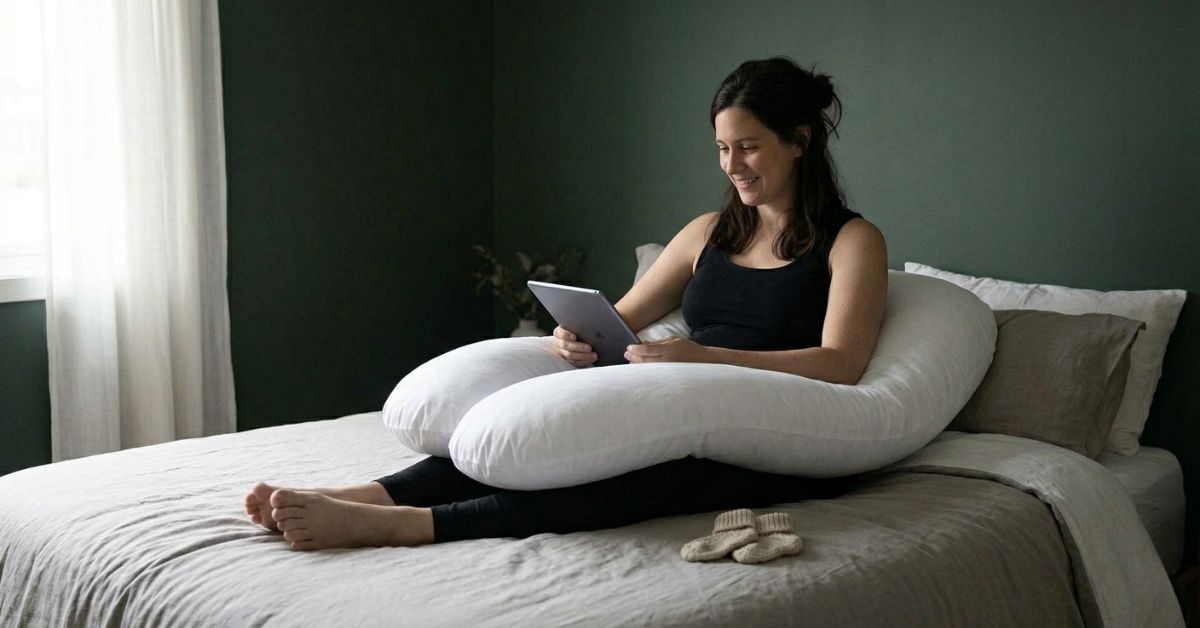
Side sleeping with a firm pillow between your knees is the position most consistently recommended for lower back pain relief. Draw your knees up slightly toward your chest and keep a pillow between them so your top leg does not drag your spine out of alignment. This keeps your hips, pelvis, and spine stacked properly and takes direct pressure off the lumbar region. A full length body pillow works well if you tend to shift positions during the night.
3. On Your Stomach, Only If You Cannot Sleep Any Other Way
Stomach sleeping is the hardest position on your back because it forces your neck to twist to one side and typically makes your lower back arch beyond its natural curve. If this is genuinely the only position you can fall asleep in, place a flat pillow under your pelvis and lower abdomen to reduce that arch, and consider skipping the head pillow altogether so your neck stays closer to neutral.
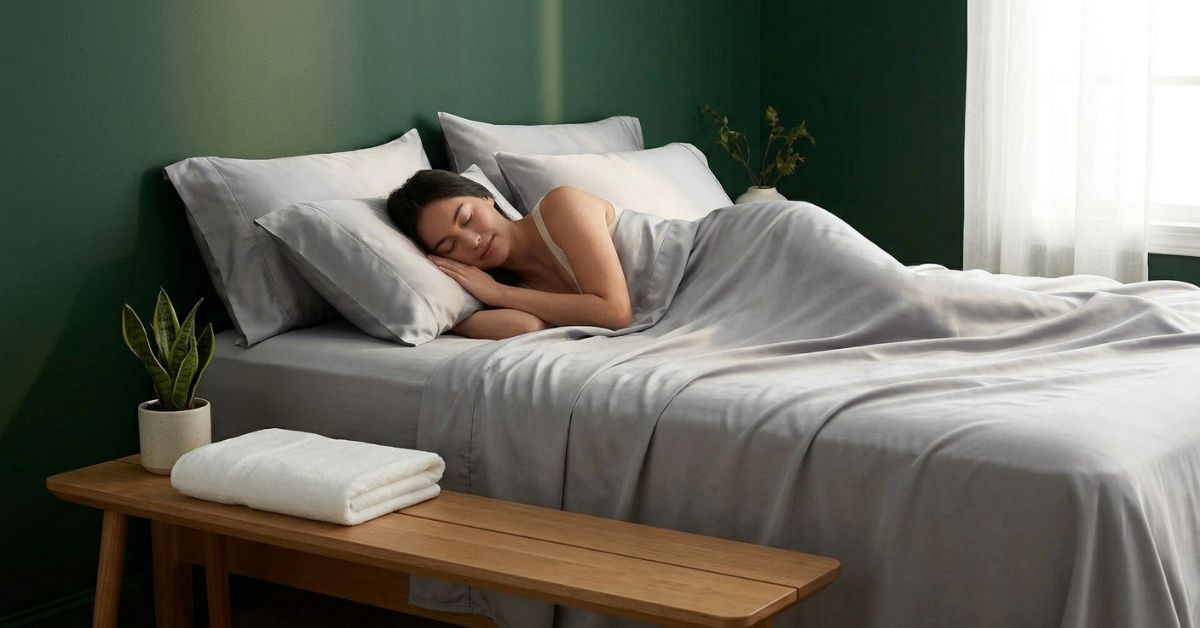
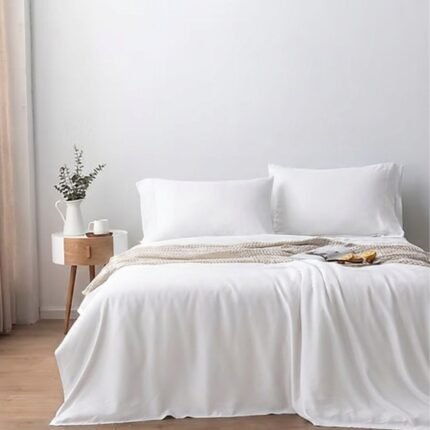
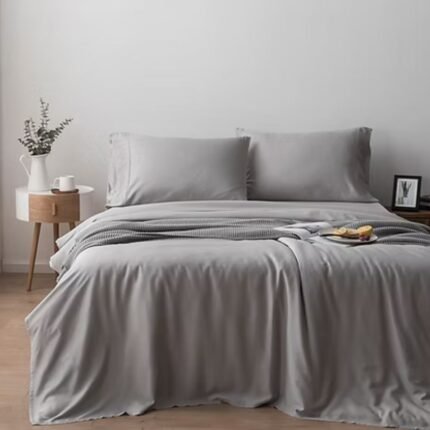
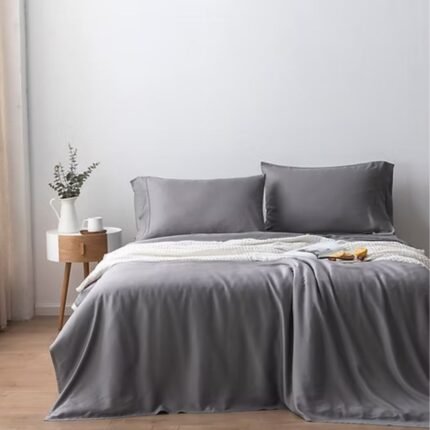
Whichever position you land on, pillow support only works if the fabric underneath you is not trapping heat or irritating your skin, since overheating and discomfort are two of the most common reasons people shift into unsupported positions during the night. Breathable bedding such as Oeko Tex certified bamboo sheets helps regulate temperature so you are less likely to twist out of alignment while you sleep.
Quick Comparison: Sleep Positions for Lower Back Pain
| Position |
How to Set It Up |
Main Benefit |
Watch Out For |
| Side (recommended) |
Pillow between slightly bent knees, gentle curl |
Keeps hips, pelvis, and spine aligned |
Skipping the knee pillow lets the top leg twist your spine |
| Back |
Small pillow or rolled towel under the knees |
Even weight distribution, neutral spine |
Needs a supportive head pillow to avoid neck strain |
| Stomach (last resort) |
Flat pillow under the pelvis and lower abdomen |
May ease pressure for some disc conditions |
Twists the neck and can flatten the lumbar curve |
Building a Sleep Environment That Supports Your Back
Position is half the equation. The other half is the surface and the routine surrounding it.
- Mattress age: If your mattress is eight to ten years old or older, worn support could be undoing your positioning efforts. Look for a medium firm option that balances contouring with support.
- Pillow height for your head: Your head pillow should keep your neck aligned with the rest of your spine. Too thick pushes your head forward, too flat lets it tilt back.
- Bedroom temperature: A cooler room supports deeper, less interrupted sleep. The NHLBI recommends keeping your sleep space quiet, cool, and dark as part of a healthy sleep routine.
- Consistent sleep schedule: Going to bed and waking at the same time daily supports the deeper sleep stages your body uses for tissue repair, according to the NHLBI.
Choose Bedding That Keeps You in Position All Night
A supportive position falls apart quickly on bedding that bunches, overheats, or irritates sensitive skin, causing you to toss, turn, and undo the alignment you worked to set up. Many people find that switching to a Purely Organic Sheet Set or an organic cotton bed sheet set keeps the sleep surface cool and smooth, which makes it easier to stay in a supported back or side sleeping position through the night rather than waking up tangled or overheated.
Calming Your Mind Before Bed Helps Your Body Stay in Position
Pain related tension is not only physical. A racing mind keeps your muscles braced even after you have set up the perfect pillow arrangement. If you regularly lie awake replaying your day, our guide on how to stop your mind racing at night walks through practical ways to quiet mental noise before it turns into physical tension. For a deeper look at what is happening when your thoughts will not settle, see An Overactive Mind at Night: A Science Backed Look.
Simple wind down techniques can also make a real difference in how quickly your body relaxes into a supported position. Our article on relaxation therapy for sleep covers breathing and progressive muscle relaxation methods that pair well with the pillow support strategies above, and if falling asleep itself is the bigger struggle, how to fall asleep in 10 seconds outlines science backed methods worth trying. For a more complete mental reset before bed, how to turn your brain off to sleep offers a step by step routine.
Stretching and Gentle Movement Before Bed
Gentle movement earlier in the evening can loosen the muscles surrounding your lower back so they are not fighting your sleep position from the first minute you lie down. Simple stretches such as childs pose or a slow knee to chest pull are commonly recommended for this purpose. If you want the full research picture on whether this habit is worth adding to your routine, read Does Stretching Before Bed Help You Sleep? A Research Backed Look.
When Pain Disrupts Sleep During the Day, Too
Poor overnight sleep does not stay contained to nighttime. Many people with lower back pain notice they feel unusually drowsy during quiet daytime activities, including reading. If that sounds familiar, our piece on why do I feel sleepy when reading explains the connection between disrupted sleep and daytime fatigue.
Some people also ask whether medication can help them get through a rough stretch of back pain related sleep loss. If you are weighing that option, Do Muscle Relaxers Help You Sleep? walks through what these medications do and do not do for sleep, so you can have an informed conversation with your provider rather than guessing.
When to See a Doctor
Position changes and better bedding solve most nighttime back discomfort, but not all of it. The National Institute of Arthritis and Musculoskeletal and Skin Diseases advises seeking a professional evaluation when pain is severe, does not improve with home care, or is paired with warning signs. MedlinePlus specifically flags loss of bowel or bladder control, unexplained weight loss, fever, or leg weakness as reasons to seek care promptly rather than waiting it out.
- Pain that wakes you up consistently in the middle of the night
- Numbness, tingling, or weakness that spreads into your legs
- Pain following a fall, accident, or sudden injury
- Pain accompanied by fever, unexplained weight loss, or bladder changes
- No improvement after a few weeks of consistent position and bedding changes
Our Recommendation
If you only make one change tonight, start here: side sleeping with a firm pillow between your knees gives most people the fastest, most noticeable relief because it is the easiest position to support correctly on the first try. Back sleeping with a pillow under your knees is an excellent second option, especially if you tend to shift positions overnight and do not want to depend on staying curled on your side.
- Start with side sleeping, pillow between the knees, for at least one full week before judging results
- Add a rolled towel under the waist if you are a back sleeper and still feel a gap in support
- Replace bedding that traps heat. Breathable, natural fiber sheets such as Oeko Tex certified bamboo sheets or an organic cotton bed sheet set support staying in position through the night.
- Pair positioning with a short wind down routine using the relaxation and stretching resources linked above
- If pain persists beyond a few weeks, or includes any of the warning signs above, book an appointment rather than continuing to self manage
Sources
- MedlinePlus, National Library of Medicine: Taking Care of Your Back at Home
- MedlinePlus, National Library of Medicine: Low Back Pain, Acute
- National Institute of Arthritis and Musculoskeletal and Skin Diseases (NIAMS), NIH: Back Pain, Diagnosis, Treatment, and Steps to Take
- National Heart, Lung, and Blood Institute (NHLBI), NIH: Healthy Sleep Habits
- National Heart, Lung, and Blood Institute (NHLBI), NIH: Get Enough Good Quality Sleep
- National Heart, Lung, and Blood Institute (NHLBI), NIH: How Much Sleep Is Enough
- Centers for Disease Control and Prevention (CDC): About Sleep