We have all been there — you crawl into bed, mentally exhausted from a long day, but your body missed the memo. Maybe your shoulders are up around your ears from sitting at a desk all day, or your legs feel restless and twitchy the moment the lights go out.
If you find yourself tossing and turning, or experiencing that frustrating trouble sleeping after workout sessions in the evening, a simple and low-effort routine might be the missing piece of your night.
So, does stretching before bed actually help you sleep? The short answer is a resounding yes. Let us walk through exactly why — backed by science, not guesswork.
What the Research Actually Says
This is not just anecdotal. A 2024 scoping review published in the European Journal of Applied Physiology analyzed 16 eligible studies on chronic stretch training and sleep quality. The findings showed a positive trend across multiple sleep parameters, including a 6.51% reduction in insomnia severity, an 8.88% increase in sleep efficiency, and a 14.70% improvement in total sleep time (PubMed, NIH).
The Centers for Disease Control and Prevention (CDC) also highlights that regular exercise and a consistent bedtime routine are among the most evidence-supported habits for improving sleep quality. Similarly, the National Heart, Lung, and Blood Institute (NHLBI) at NIH recommends building a relaxing pre-bed ritual — which stretching fits into naturally.
Why Does Stretching Make You Tired?
It feels almost magical — a few easy movements, and suddenly your eyelids feel heavy. The reason comes down to your nervous system.
Stretching activates the parasympathetic nervous system, the branch responsible for the body's "rest and digest" state. When you hold a gentle stretch, it signals to your brain that you are safe, which lowers your heart rate and reduces circulating cortisol (your primary stress hormone). According to research indexed on the National Institutes of Health's PubMed Central, stretching exercises modulate cortisol secretion and support autonomic nervous system balance, making it easier to fall and stay asleep.
Beyond hormones, stretching also improves blood circulation to the muscles being stretched, releasing beta-endorphins — the body's natural feel-good chemicals — which further deepen the sense of physical relaxation and ease the transition into sleep.
Expert Note: The MedlinePlus Medical Encyclopedia (National Library of Medicine / NIH) confirms that yoga and stretching practices improve overall fitness, reduce stress, and support better sleep — making them a well-validated part of any wind-down routine.
The Key Benefits of Stretching Before Bed
Stretching for just 5–10 minutes before sleep does far more than make you drowsy. Here is what the evidence supports:
- Switches Off the Stress Response
Evening stretching helps your mind and body transition away from the day's demands. It acts as a psychological bridge between a busy evening and a quiet night, reducing anxiety and calming a racing mind.
- Reduces Nighttime Muscle Cramps and Spasms
Pre-bed stretching elongates muscle fibres and reduces spontaneous muscle contractions overnight. If you have ever been jolted awake by a sudden leg cramp, targeted calf and hamstring stretches can reduce how often that happens. For more strategies on getting truly restful nights, our sleep guide of your dreams covers the full picture.
- Helps Those Who Exercise in the Evening
If you train at night, your core temperature and adrenaline stay elevated for hours. This is a key reason for the "trouble sleeping after workout" pattern many people experience. Gentle post-workout stretching acts as an effective cool-down, helping your body return to its resting state faster.
- May Ease Restless Leg Syndrome (RLS) Symptoms
The National Institute of Neurological Disorders and Stroke (NINDS) lists moderate exercise and leg massage as first-line lifestyle measures for managing RLS symptoms. Gentle stretching before bed, particularly targeting the calves and hamstrings, may help reduce the urge to move and improve sleep onset for those affected.
- Supports Spinal Health and Posture Recovery
Sitting at a desk for hours compresses the spine and tightens the hip flexors. A short nightly stretch routine helps reverse postural strain accumulated during the day, reducing morning stiffness and chronic back discomfort.
- Creates a Consistent Sleep Cue
The NHS sleep hygiene guidelines recommend building a consistent pre-sleep routine as one of the most effective behavioural tools for better sleep. Repeating the same stretching sequence each night trains your brain to associate those movements with sleep — a powerful conditioning effect over time. Also worth reading: how far you should sleep from your phone for other simple habit changes that compound with stretching.
Quick Comparison: Stretching vs. Other Pre-Bed Habits
| Pre-Bed Habit |
Ease of Doing |
Time Needed |
Physical Benefit |
Mental Calm |
Best For |
| Stretching |
Very Easy |
5–10 min |
High (muscles, circulation) |
Moderate |
Muscle tension, cramps, post-workout |
| Yoga |
Moderate |
15–30 min |
High (full body) |
High |
Insomnia, anxiety, deep sleep |
| Meditation |
Easy |
10–20 min |
Low |
Very High |
Racing mind, stress |
| Warm Bath |
Easy |
15–20 min |
Moderate (temperature drop) |
High |
General wind-down |
| Reading |
Very Easy |
Open-ended |
None |
Moderate |
Mental stimulation reduction |
Recommendation: Stretching and yoga are not competitors — they are partners. For most people, a short 5–10 minute stretch is the most accessible starting point, especially on weeknights. On weekends or low-stress evenings, a fuller yoga session delivers deeper benefits. Start with stretching, add breathing, and build from there.
4 Easy Stretches to Do Before Bed
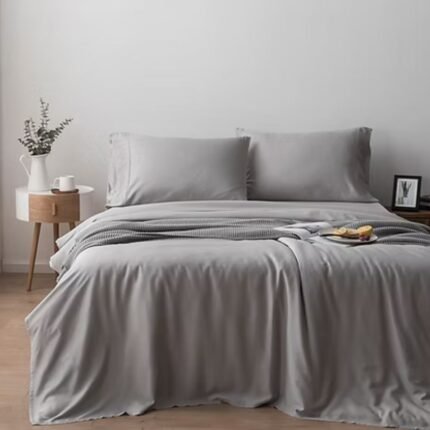
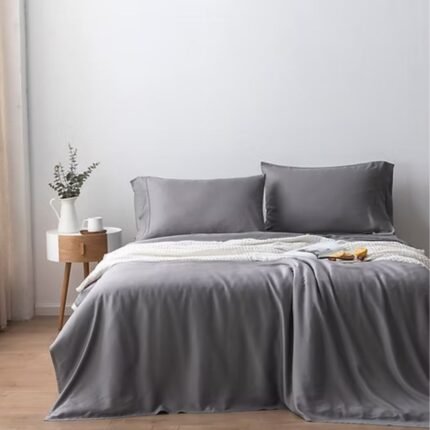
You do not need an intense session to see results. Keeping things low-intensity is essential — the goal is relaxation, not performance. All four of these can be done directly on your mattress. If you want a surface that stays cool and breathable while you stretch and sleep, our Oeko-Tex certified bamboo sheets are designed for exactly that.
1. Child's Pose (Balasana)
How to do it: Kneel on your bed, sit back on your heels, and fold your torso forward with arms extended ahead of you. Rest your forehead gently on the mattress.
Why it works: Child's Pose gently decompresses the lower back and opens the hips and shoulders — three areas that carry most of the day's physical stress. It also naturally turns your attention inward and slows the breath, making it an ideal starting position for a wind-down routine.
Hold for: 30–60 seconds, breathing slowly.
2. Legs-Up-the-Wall Pose (Viparita Karani)
How to do it: Lie on your back and shuffle your hips toward a wall or headboard, extending your legs straight up against it. Let your arms fall open at your sides and close your eyes.
Why it works: This gentle inversion encourages venous return — blood and fluid draining back from the legs toward the heart. It relieves lower body pressure, reduces ankle and foot swelling, and strongly activates the parasympathetic relaxation response. Many people feel deeply sleepy within minutes.
Hold for: 2–5 minutes.
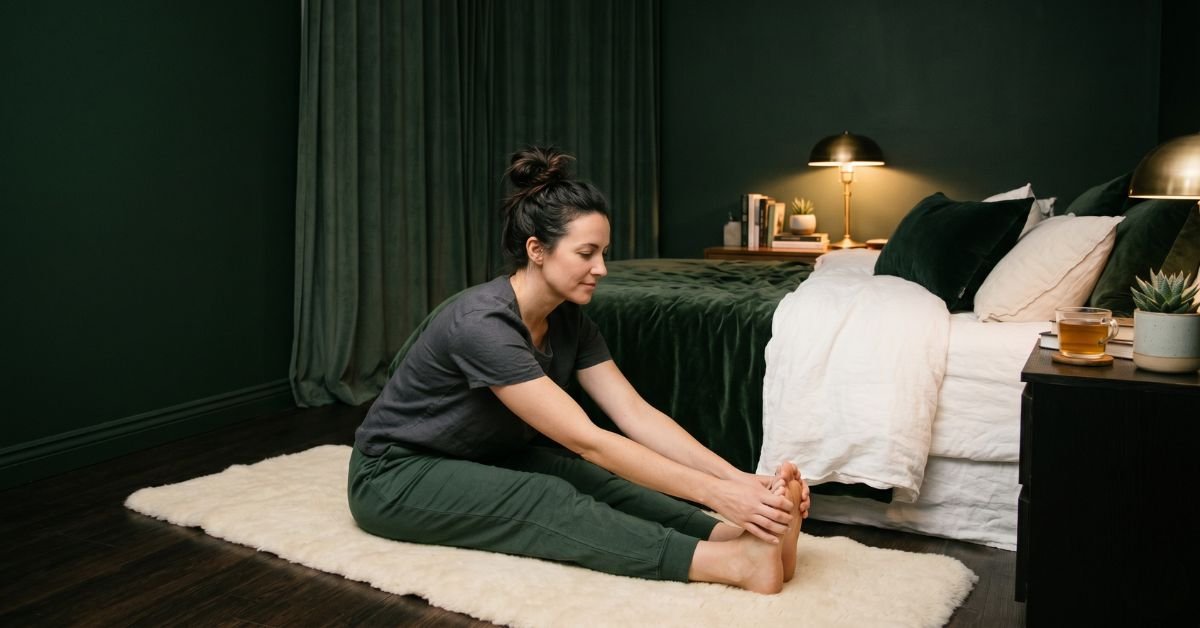
3. Seated Forward Fold (Paschimottanasana)
How to do it: Sit with both legs straight in front of you. Inhale to lengthen your spine, then exhale as you gently hinge at the hips, reaching toward your shins, ankles, or toes. Keep a slight bend in your knees if your hamstrings are tight — never force it.
Why it works: The hamstrings and calves absorb enormous tension from walking and standing throughout the day. This stretch targets both, releasing built-up tightness that can otherwise translate into restless movement at night. If you are also dealing with disrupted sleep from nasal congestion, pairing this with the tips in our guide on how to sleep with a blocked nose can make a real difference.
Hold for: 30–60 seconds per side.
4. Supine Spinal Twist
How to do it: Lie flat on your back. Draw your right knee into your chest, then gently guide it across your body to the left, keeping both shoulders flat on the bed. Gaze to the right. Hold, then repeat on the other side.
Why it works: This twist moves through the full length of the spine, releasing tension in the paraspinal muscles and stimulating the digestive organs. It is also deeply satisfying after a long day of sitting. Our linen bed sheets provide a naturally breathable surface that stays comfortable during these kinds of movements.
Hold for: 30–45 seconds each side.
How to Build a 10-Minute Pre-Sleep Stretching Routine
| Time |
Movement |
Purpose |
| 0:00 – 1:00 |
Slow, deep diaphragmatic breathing |
Signal body to shift into rest mode |
| 1:00 – 3:00 |
Child's Pose |
Decompress spine, open hips |
| 3:00 – 5:00 |
Seated Forward Fold |
Release hamstrings and calves |
| 5:00 – 7:00 |
Legs-Up-the-Wall |
Drain legs, activate relaxation response |
| 7:00 – 9:30 |
Supine Spinal Twist (both sides) |
Release spinal tension |
| 9:30 – 10:00 |
Final deep breaths, eyes closed |
Transition to sleep |
Pro Tip: If you travel frequently and want to maintain this routine away from home, check out our guide on how to fall asleep on an airplane — several of these seated stretches adapt well for long-haul flights.
Your Sleep Environment Matters Too
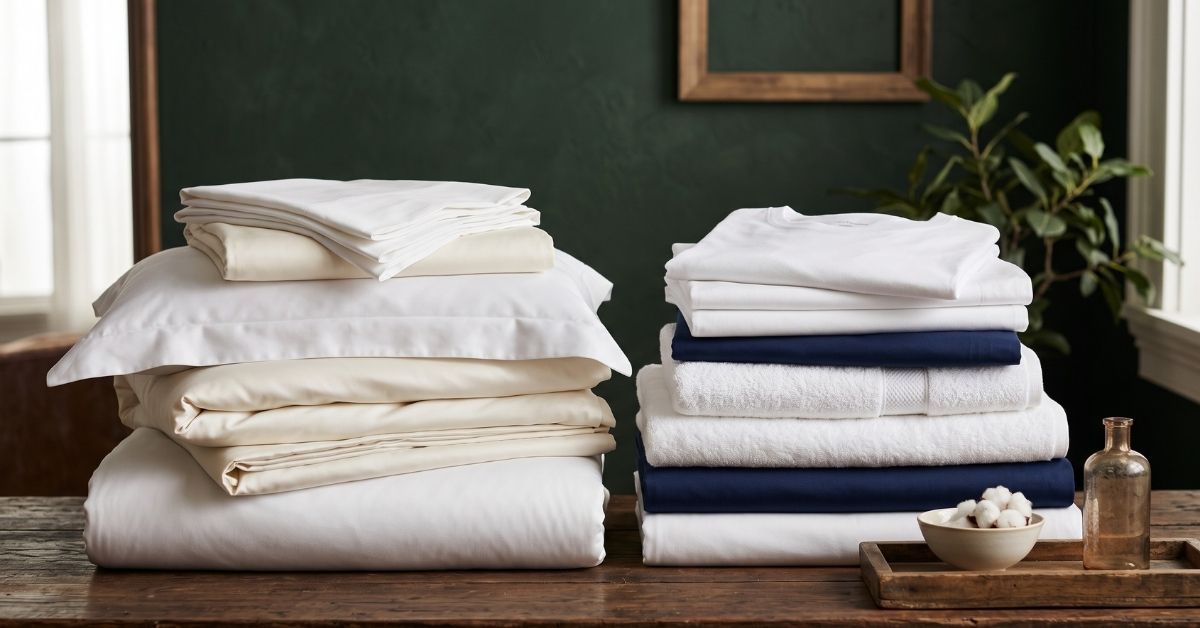
Stretching primes your nervous system, but the surface you return to matters just as much. An overheated, rough, or uncomfortable bed undoes a lot of the relaxation work you just did. Natural, breathable bedding — like an organic sheet set — maintains a neutral sleep temperature so your body can stay in the parasympathetic state your stretches created. And if you share a bed, adjustable bed sheets help keep everything secure no matter how much you or your partner moves overnight.
For anyone looking to overhaul their full sleep setup, our 5 Essential Sleep Hacks including the 90-Minute Rule pairs well with the stretching routine above.
Summary
Getting high-quality sleep does not have to feel like a chore. Just 5 to 10 minutes of gentle, intentional movement before bed can quiet a racing mind, release physical tension, and trigger the biological signals your body needs to transition smoothly into deep, restorative sleep.
The evidence is clear. Government health bodies from the CDC to the NHLBI to the NHS all agree: a consistent, relaxing pre-bed routine is one of the most effective non-pharmaceutical tools for better sleep. Stretching is one of the simplest ways to build that routine.
Give these four stretches a try tonight. Breathe slowly, release the tension, and enjoy the rest you have earned.
Sources
- Alimoradi M et al. (2024). A scoping review of the effect of chronic stretch training on sleep quality in people with sleep disorders. European Journal of Applied Physiology. https://pubmed.ncbi.nlm.nih.gov/38918221/
- National Institutes of Health — PubMed Central. Stretch training and sleep: mechanisms and outcomes. https://pmc.ncbi.nlm.nih.gov/articles/PMC11365825/
- Centers for Disease Control and Prevention (CDC). About Sleep. https://www.cdc.gov/sleep/about/index.html
- National Heart, Lung, and Blood Institute (NHLBI), NIH. Your Guide to Healthy Sleep. https://www.nhlbi.nih.gov/files/docs/public/sleep/healthy_sleep.pdf
- MedlinePlus (National Library of Medicine / NIH). Healthy Sleep. https://medlineplus.gov/healthysleep.html
- MedlinePlus (National Library of Medicine / NIH). Yoga for Health. https://medlineplus.gov/ency/patientinstructions/000876.htm
- National Institute of Neurological Disorders and Stroke (NINDS), NIH. Restless Legs Syndrome. https://www.ninds.nih.gov/health-information/disorders/restless-legs-syndrome
- Kingston and Richmond NHS Foundation Trust. Sleep Hygiene. https://www.kingstonandrichmond.nhs.uk/patients-and-families/patient-leaflets/sleep-hygiene
- Wye Valley NHS Trust. Sleep Basics and FAQs. https://www.wyevalley.nhs.uk/services/community-services/pain-management-service/sleep/sleep-4-basics-faqs.aspx
- National Center for Complementary and Integrative Health (NCCIH), NIH. Yoga: What You Need To Know. https://www.nccih.nih.gov/health/yoga-what-you-need-to-know