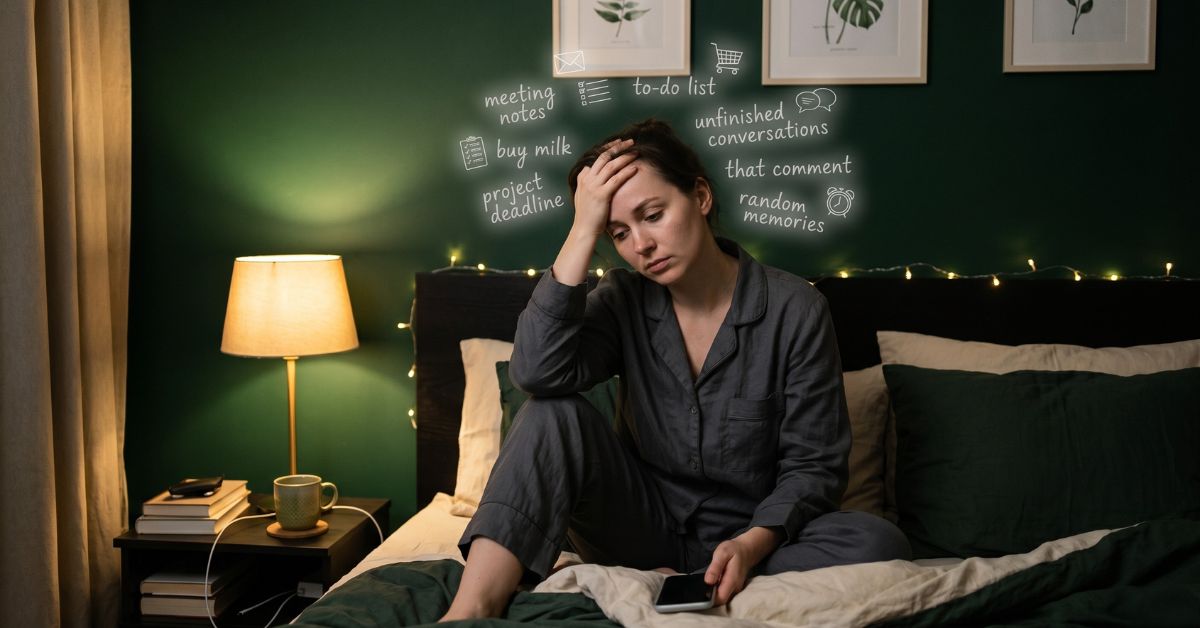
It's 2:00 AM and you are staring at the ceiling again. Your body is exhausted, but your brain is running a marathon. You're replaying an awkward comment from three years ago, mentally drafting tomorrow's emails, and calculating exactly how many hours of sleep you'll get if hypothetically you fall asleep right now.
You are not alone. According to CDC's 2024 National Health Interview Survey data, 30.5% of American adults sleep fewer than 7 hours per night, with an overactive mind and stress being the most frequently reported barriers. A racing mind at bedtime is not a character flaw — it is a well-documented physiological response that can be understood and addressed.
This guide brings together evidence-based strategies, government health guidance, and practical sleep hygiene recommendations to help you stop fighting your brain at bedtime and start actually resting.
What Is an Overactive Mind at Night?
An overactive mind at night — sometimes called cognitive hyperarousal or psychophysiological arousal — occurs when the brain remains in a high-alert state at bedtime despite the body being physically tired. It's the mental equivalent of leaving all the browser tabs open when you try to shut down your computer.
The NHLBI (National Heart, Lung, and Blood Institute) confirms that sleep deficiency disrupts the brain's ability to regulate emotions, make decisions, and process memories — all of which worsen the cycle of nighttime rumination. The less you sleep, the more anxious your brain becomes, which makes it even harder to sleep.
Understanding the Difference: Overactive Mind vs. Clinical Insomnia
Many people confuse an overactive mind with clinical insomnia. They share symptoms but require different approaches:
| Feature |
Overactive Mind |
Clinical Insomnia |
| Primary cause |
Stress, racing thoughts, habits |
Chronic sleep disorder |
| Frequency |
Occasional or situational |
3+ nights/week for 3+ months |
| Duration |
Days to a few weeks |
1 month or longer |
| Best approach |
Sleep hygiene, wind-down routine |
CBT-I therapy, medical evaluation |
| See a doctor when |
Persists beyond 2–3 weeks |
As soon as possible |
If you suspect clinical insomnia, the MedlinePlus insomnia overview from the NIH is an excellent starting resource before consulting a physician.
Why Does Your Mind Race Specifically at Night?
During the day, external tasks occupy most of your mental bandwidth. When those distractions disappear at bedtime, the brain enters what neuroscientists call default mode network (DMN) activity: it begins internally processing unresolved thoughts, emotions, and decisions that had been set aside.
A peer-reviewed study in the NIH National Library of Medicine found that sleep disturbances are highly prevalent in anxiety disorders, and a clear bidirectional relationship exists: anxiety disrupts sleep, and poor sleep amplifies anxiety. The study found that 24–36% of people with insomnia also meet clinical criteria for an anxiety disorder.
Separately, the NHLBI explains that when it gets dark, the brain releases melatonin — the hormone that signals sleep readiness. Stress hormones like cortisol, artificial light from screens, and irregular bedtimes all counteract melatonin, keeping the brain in daytime mode long after the sun goes down.
Most Common Nighttime Triggers
- Unresolved work stress: Problems resurface when the mental to-do queue finally gets quiet
- Evening cortisol spike: Stress hormones counteract melatonin, delaying sleep onset
- Blue light exposure: Screens suppress melatonin production — even 30 minutes of exposure matters
- Irregular sleep schedule: Disrupts the circadian rhythm, making it harder for the brain to switch off
- Default mode rumination: The brain fills silence with unprocessed thoughts from the day
Even where you keep your phone matters more than most people realize. Our guide on how far you should sleep from your phone covers the evidence-based distance recommendations that protect melatonin and nighttime quality.
How to Stop Thinking About Work at Night
Nighttime insomnia is often a daytime problem in disguise. When you transition directly from high-stress work mode into bed without a buffer, the brain's stress response stays active. The solution is a deliberate psychological boundary — a ritual that formally ends the workday so your brain can begin the descent toward rest.
Strategy 1: The Brain Dump
Before bed, write down every pending task, unresolved problem, and nagging worry in a dedicated notebook. This isn't journaling — it's offloading. A 2018 Florida State University study found that writing a to-do list for tomorrow (rather than reflecting on the past day) reduced the time to fall asleep by nearly 9 minutes. When the brain knows its concerns are "stored," it stops rehearsing them.
Close the notebook. The physical act of closing it sends a "file saved" signal to your brain.
Strategy 2: Digital Shutdown Ritual
The CDC's sleep guidelines recommend turning off electronic devices at least 30 minutes before bed. Every late-night glance at email restarts the cortisol cycle and re-engages the problem-solving brain — the exact state you are trying to exit.
A more structured approach is the 10-3-2-1-0 Sleep Rule:
10 hours before bed — cut caffeine;
3 hours — no food or alcohol;
2 hours — stop work;
1 hour — no screens;
0 — no snooze button.
This gradual countdown gives your nervous system a genuine deceleration runway.
Strategy 3: Scheduled Worry Time
Set aside 15–20 minutes in the mid-afternoon as a designated worry period. Write your concerns down, identify what you can control, then mentally close the folder. When the same worries surface at midnight, you can truthfully say: I already addressed that. It can wait until tomorrow's worry window. This technique is a core component of CBT-I (Cognitive Behavioral Therapy for Insomnia).
The Effortless Sleep Method: Stop Trying So Hard
One of the most counterintuitive truths about sleep is this: the harder you try to force it, the more elusive it becomes. Sleep scientists call this "sleep effort" and it's one of the biggest drivers of chronic insomnia. The anxiety of not sleeping becomes the thing that stops you from sleeping.
This is what researchers describe as orthosomnia or fear of sleeplessness — the obsessive focus on sleep metrics and sleep quality that paradoxically undermines both. Our deep dive into the fear of sleeplessness explores this cycle in detail.
The Effortless Sleep Method is grounded in Acceptance and Commitment Therapy (ACT) for insomnia, an evidence-based approach validated by research including work cited by the NIH (NHLBI) on insomnia treatment. The NHLBI recognizes CBT-I — of which ACT is a component — as the first-line, recommended treatment for chronic insomnia.
The Three Core Shifts
Shift 1: Acknowledge, Don't Fight
Instead of telling yourself "I need to fall asleep NOW," try: "My mind is busy right now, and that's okay. I can still rest my body." This simple reframe removes the performance pressure that triggers cortisol. You are not failing at sleep — you are resting.
Shift 2: Redefine the Goal
Change your bedtime goal from "fall asleep" to "enjoy quiet rest in a comfortable bed." The moment sleep stops feeling like a task to complete, the nervous system can actually relax enough to let it happen naturally.
Part of that comfort comes from your physical environment. If you regularly toss and turning from bunched-up sheets or an uncomfortable surface, deep pocket sheet sets that stay anchored through the night can remove one irritation from the equation. Pair that with breathable organic cotton sheets and you've made your bed genuinely hard to leave.
Shift 3: Use the 20-Minute Rule
The NHLBI's CBT-I guidance recommends a technique called stimulus control: if you have been lying awake for more than 20 minutes feeling anxious, get out of bed. Move to a dimly lit room and engage in a calming activity — reading a physical book, gentle stretching, or slow breathing — until you feel genuinely sleepy. Return to bed only then.
This prevents your brain from building a conditioned association between your bed and frustration. Your bed should be a place the brain associates with sleep and rest — not problem-solving.
For more techniques on quieting an active brain, our guide on how to turn your brain off to sleep covers a full toolkit of scientifically grounded approaches.
Designing a Calm Wind-Down Routine
The most reliable path to calmer nights is a consistent pre-sleep routine that tells your nervous system: "It is safe to stop being vigilant." According to the CDC's NIOSH sleep improvement guidelines, consistent sleep times, reduced light exposure, and physical relaxation before bed are among the most effective evidence-based sleep interventions available.
Light Management
As the NHLBI explains in their circadian rhythm guidance, light is the most powerful signal the body uses to regulate its sleep-wake cycle. Artificial light in the evening — including light from phones, TVs, and overhead LEDs — suppresses melatonin production and delays sleep onset. Dim your home lighting 60–90 minutes before bed.
Temperature Regulation
Core body temperature naturally drops as part of sleep preparation. If your bedroom or bedding keeps you too warm, this process is disrupted. Our article on why you get so hot when you sleep explains the physiology in detail.
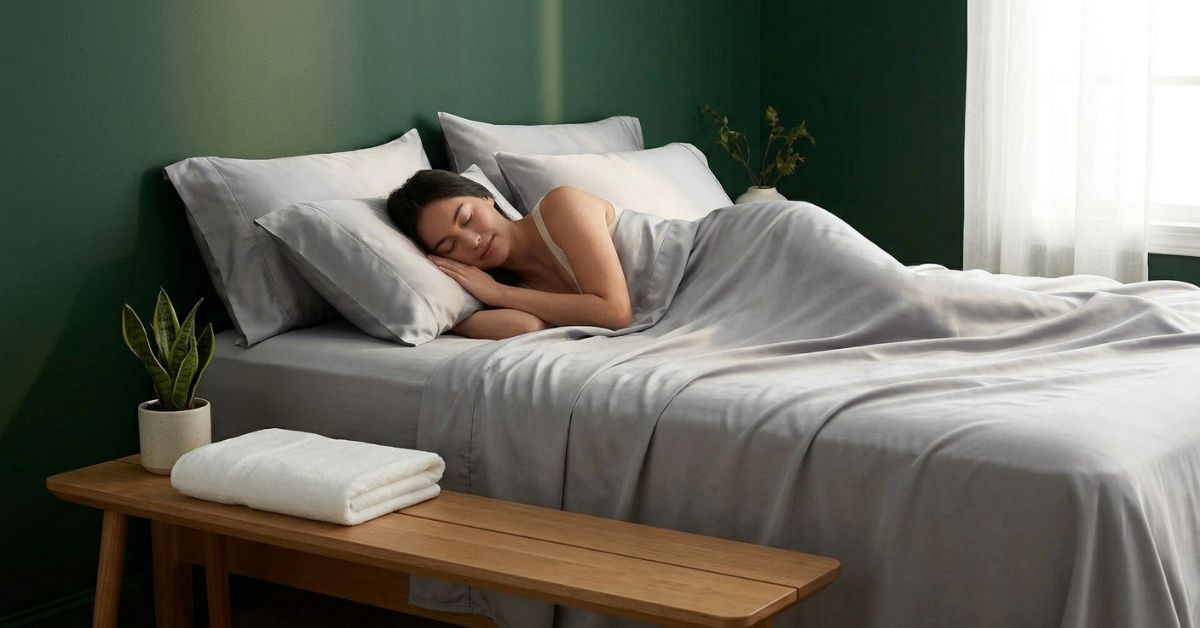
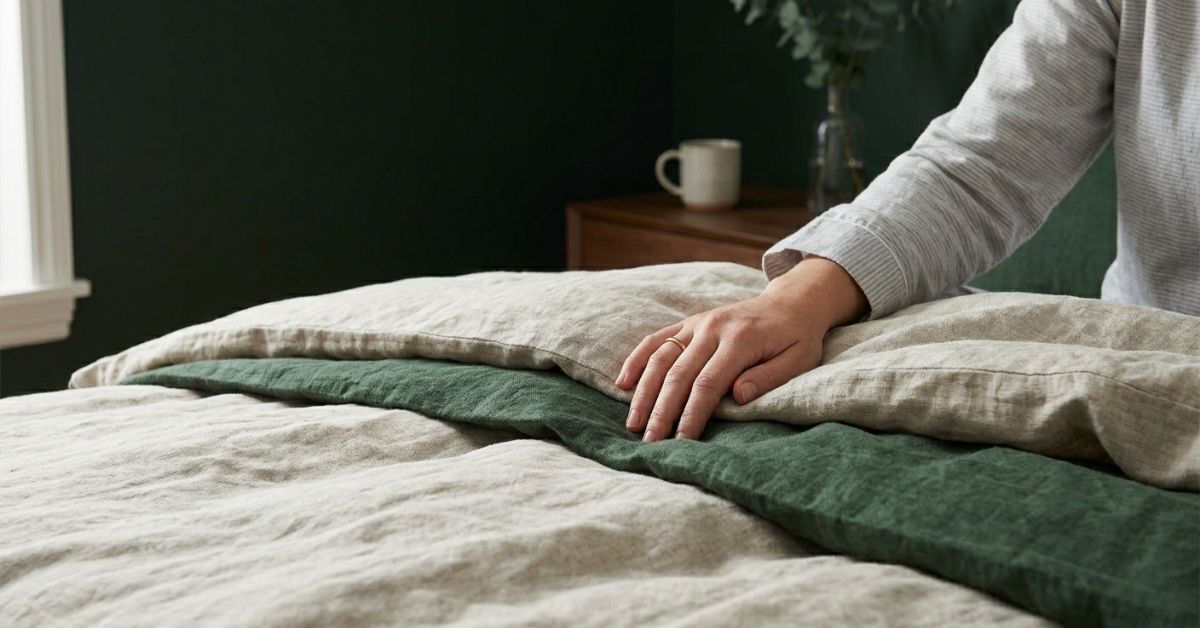
Temperature-regulating bedding makes a practical difference. Oeko-Tex certified bamboo sheets naturally wick heat and moisture, while vintage linen bed sheets are prized for their exceptional breathability. For adjustable bed users, adjustable bed sheets ensure your fitted sheet stays in place through position changes so the sheets don't become their own source of nighttime frustration.
Gentle Physical Wind-Down
Gentle movement before bed helps release muscular tension that builds up from hours of desk work or screen time. Our guide on whether stretching before bed helps you sleep covers the research behind this approach. Even 10–15 minutes of slow, gentle stretches can meaningfully lower physical arousal levels.
Deep breathing exercises — particularly 4-7-8 breathing (inhale 4 counts, hold 7, exhale 8) — activate the parasympathetic nervous system, countering the stress response that drives nighttime rumination.
Sensory Environment
A cool, dark, and quiet sleep environment is not a luxury — it is a functional requirement for quality sleep. The CDC recommends keeping your bedroom quiet, relaxing, and at a cool temperature as foundational to healthy sleep habits. Investing in quality bedding — like our purely organic sheet set — reduces sensory irritation during the night, making it easier to stay asleep once you've gotten there.
What Sleep Is Actually Doing for You
Understanding what your body accomplishes during sleep can motivate you to protect it more seriously. This isn't passive downtime — it is the most metabolically active period of your day for certain critical processes.
According to the NHLBI, during sleep your body: repairs damaged tissue, consolidates memories and learning, regulates hormones, clears metabolic waste from the brain (including proteins linked to Alzheimer's disease), and calibrates your immune system. Our article on whether sleep helps you heal faster explores the cellular repair evidence in more accessible depth.
The CDC also reports that adults sleeping fewer than 7 hours per night are significantly more likely to report health problems including heart disease, high blood pressure, and depression. During normal sleep, blood pressure naturally dips — disrupting that process through poor sleep raises cardiovascular risk over time.
If you regularly cut sleep short, you're not just tired the next day. You're accumulating sleep debt that compounds. Our guide on whether 4 hours of sleep is enough breaks down the science of what that deprivation actually costs — and why the body cannot fully compensate on weekends alone. If you're trying to maximize the restorative value of limited sleep, how to sleep 8 hours in 4 hours covers the sleep efficiency techniques that help.
Does Blinking Rapidly Help You Sleep?
This is a popular internet hack: blink your eyes as fast as possible for 30–60 seconds, supposedly tiring out your eyelid muscles. Does it work?
Blinking rapidly is not a clinically validated sleep technique. No peer-reviewed study supports it as a treatment for insomnia. However, as a mindfulness distraction — something that momentarily breaks a rumination loop by forcing attention onto a physical sensation — it may provide a brief mental reset for some people.
Think of it as a speed bump on the highway of anxious thoughts, not a destination. More effective evidence-based alternatives are covered in our comprehensive guide on how to turn your brain off to sleep.
Quick Reference: Match Your Problem to a Solution
Use this table to find the strategy and product most relevant to your specific nighttime challenge:
Further Reading: Related Ode Sleep Articles
Sources & References
Government & Institutional Sources (Verified):
- CDC (2024). Short Sleep Duration and Sleep Difficulties Among Adults: United States, 2024. https://www.cdc.gov/nchs/products/databriefs/db559.htm
- CDC. About Sleep — Healthy Sleep Habits. https://www.cdc.gov/sleep/about/index.html
- CDC. Sleep and Heart Health. https://www.cdc.gov/heart-disease/about/sleep-and-heart-health.html
- CDC / NIOSH. Improve Sleep: Tips to Improve Your Sleep When Times Are Tough. https://www.cdc.gov/niosh/bulletin/2020/sleep.html
- NHLBI, NIH. Sleep Deprivation and Deficiency — How Sleep Affects Your Health. https://www.nhlbi.nih.gov/health/sleep-deprivation/health-effects
- NHLBI, NIH. Insomnia — Treatment (CBT-I). https://www.nhlbi.nih.gov/health/insomnia/treatment
- NHLBI, NIH. Circadian Rhythm Disorders — Treatment (Melatonin & Light). https://www.nhlbi.nih.gov/health/circadian-rhythm-disorders/treatment
- NHLBI, NIH. Sleep Deprivation — What Makes You Sleep (Body Clock & Melatonin). https://www.nhlbi.nih.gov/health/sleep-deprivation/body-clock
- MedlinePlus, NIH. Insomnia Overview. https://medlineplus.gov/insomnia.html
- Labbé A, Sirois F, et al. Sleep and Anxiety Disorders (Peer-Reviewed). NIH PMC. https://pmc.ncbi.nlm.nih.gov/articles/PMC3181635/