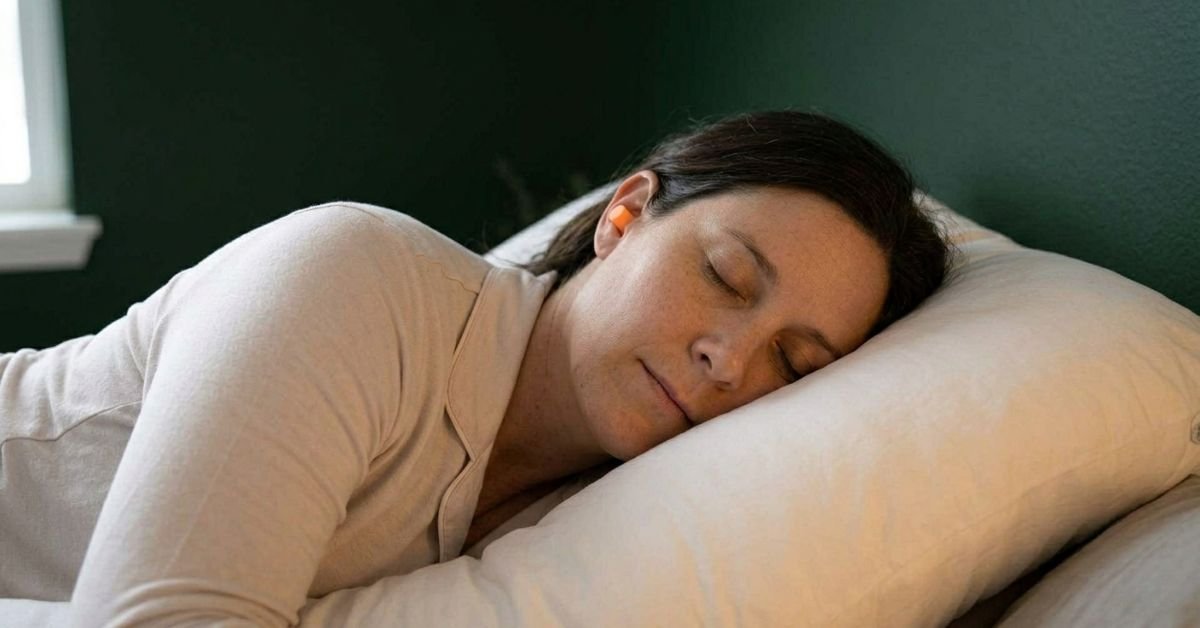
Side sleeping is often called the gold standard for pregnancy rest, but no one warns you how uncomfortable it can feel in practice. As your belly grows, gravity pulls your spine out of alignment, and a deep, stubborn hip ache shows up almost every night.
According to the Eunice Kennedy Shriver National Institute of Child Health and Human Development, NICHD, side sleeping is generally considered the safer position later in pregnancy, which is exactly why so many expecting parents reach for a pregnancy pillow.
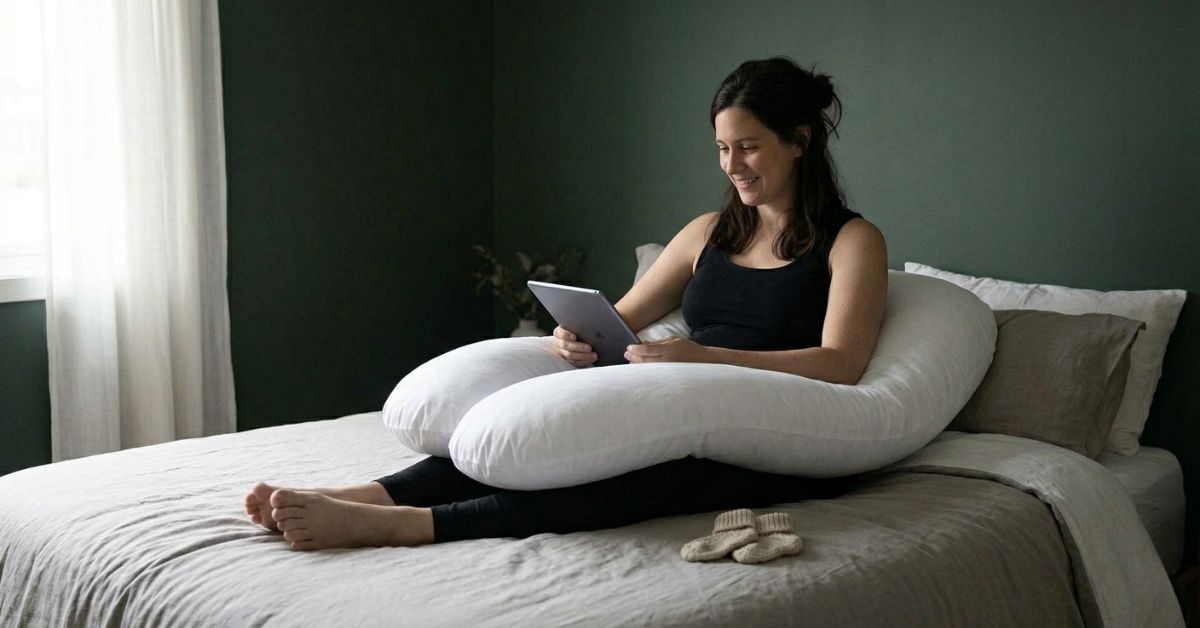
A pregnancy pillow can look like a giant, cozy cloud, yet climbing into one for the first time can feel like wrestling an oversized pool noodle. This guide walks through the research behind side sleeping, the best pregnancy pillow positions for every trimester, and how to manage the aches that come with a growing bump, so you can finally get consistent, restorative rest.
Why Side Sleeping Matters During Pregnancy
As your uterus expands, especially after 28 weeks, lying flat on your back can put pressure on the inferior vena cava, the large vein that returns blood to your heart. A review of current evidence published through the National Institutes of Health notes that sleeping posture research supports avoiding the back sleeping position later in pregnancy, while sleeping on either the left or right side appears equally safe.
Earlier work funded by NICHD also found that sleep position during the first 30 weeks of pregnancy did not meaningfully change the risk of complications, which is reassuring for anyone who struggles to stay on one side all night. The practical takeaway is simple: side sleeping is the position worth building your routine around, and a pregnancy pillow is the tool that makes staying there realistic for a full night.
Aligning Your Body With a Pregnancy Pillow
The goal of a specialized pillow is to take strain off your joints and keep your spine straight from your neck to your pelvis. The Office on Women's Health lists pillow support, tucked behind your back, between your knees, and under your belly, as one of the simplest ways to ease pregnancy related discomfort and sleep better.
When you lie on your side without support, your top leg drops forward, twisting your lower back and pulling on your hip sockets. Placing a thick section of your pillow between your knees and ankles keeps your knees stacked in line with your hips, which relieves that pressure and protects your sacroiliac joints.
If restless legs or a mind that will not switch off keep you tossing after you are already settled, pairing your pillow setup with a calming wind down routine, like the one described in How to Turn Your Brain Off to Sleep, can make the whole process easier.
Three Pregnancy Pillow Sleep Positions
Depending on the shape of your pillow, U shaped, C shaped, or a straight full body wedge, you can experiment with a few setups to find what suits your body and trimester.
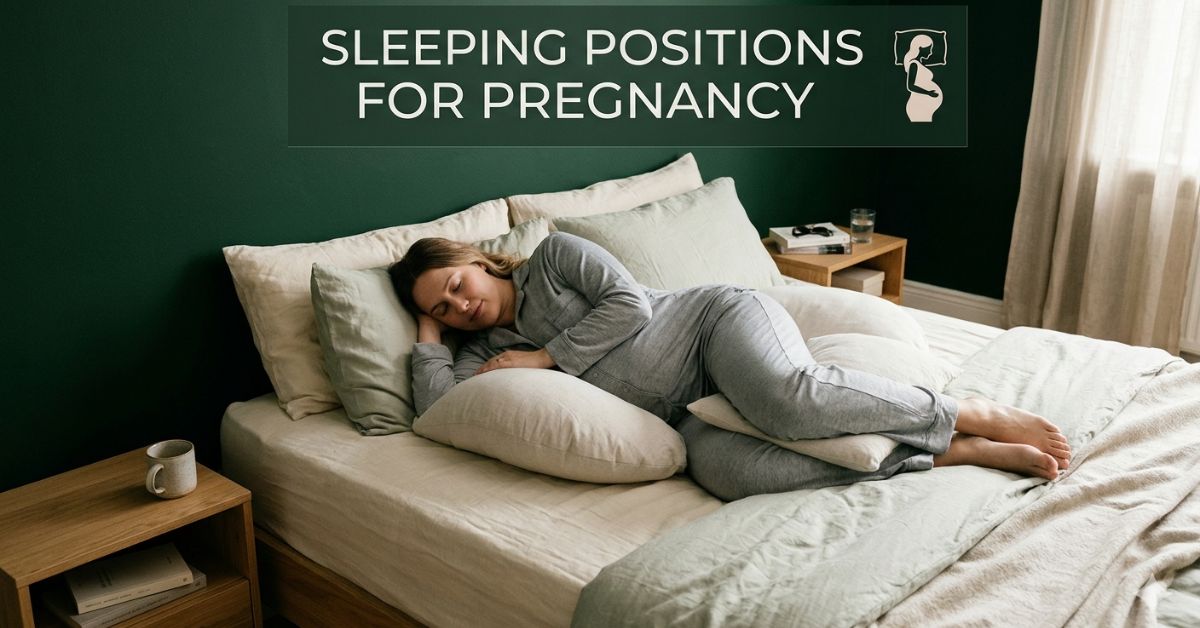
1. The Full Body Nest (Best for U Shaped Pillows)
If you keep waking up on your back or tossing between sides, a U shaped pillow is usually the best fit.
- Setup: Place the curve of the U at the head of your bed so it doubles as your regular pillow.
- Execution: Slide into the center of the two legs. Hug one side with your arms and tuck it between your knees, while the opposite leg rests against your back to stop you from rolling onto your spine overnight.
This design is especially helpful in the third trimester. Clinical evidence summarized through the National Institutes of Health found that a pregnancy pillow performed about as well as a regular pillow at reducing time spent flat on the back overnight, so either option can work well when it is positioned correctly.
2. The Front Facing Hug (Best for C Shaped Pillows)
A C shaped design gives targeted relief when your main complaint is a heavy, unsupported bump or lower belly pressure.
- Setup: Face the open part of the C toward you for chest and belly support, or away from you if you mainly need back support.
- Execution: Rest your head on the top hook, tuck the long middle section under your growing bump for lift, and clamp the bottom hook between your thighs and knees.
3. The Reclined Tilt (Best for Heartburn and Reflux)
When third trimester heartburn hits, lying completely flat on your side can make it worse.
- Setup: Angle a full body or wedge pillow behind your shoulder blades.
- Execution: Lean back at a gentle recline, roughly 20 to 30 degrees. This keeps the comforting sensation of back support while your body stays safely tilted to the side.
The Office on Women's Health explains that pregnancy hormones relax the valve between the stomach and esophagus, which is a major reason heartburn tends to worsen as the uterus pushes against the stomach later in pregnancy. Elevating your upper body uses gravity to keep stomach acid where it belongs.
Choosing the Right Pillow Shape
Every body carries pregnancy weight differently, so do not hesitate to change pillow shapes as your trimester progresses. Here is how the main options compare, along with our recommendation for each situation.
| Pillow Shape |
Best For |
Pros |
Our Recommendation |
| U Shaped |
Active sleepers, back to side rollers |
Full front and back support without repositioning |
Best overall pick for most people from the second trimester on |
| C Shaped |
Targeted hip pain, smaller mattresses |
Strong pelvic alignment in a compact design |
Good if you share a bed and need to save space |
| Wedge or Straight |
Spot relief, travel |
Easy to tuck under the belly or behind the back |
Great starter pillow or travel companion |
For most people, we recommend starting with a U shaped pillow from around 20 weeks onward, since it supports the back, belly, and knees at once. You can switch to a compact C shaped or wedge pillow later if bed space becomes tight or you are traveling.
Fabric and Material Matter Too
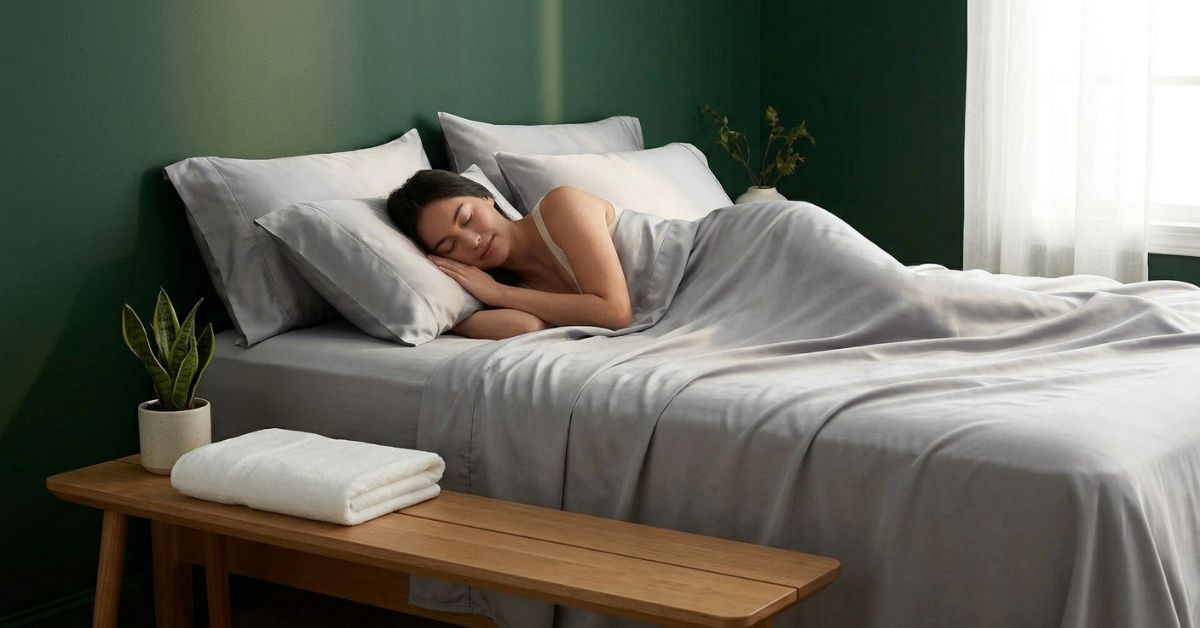
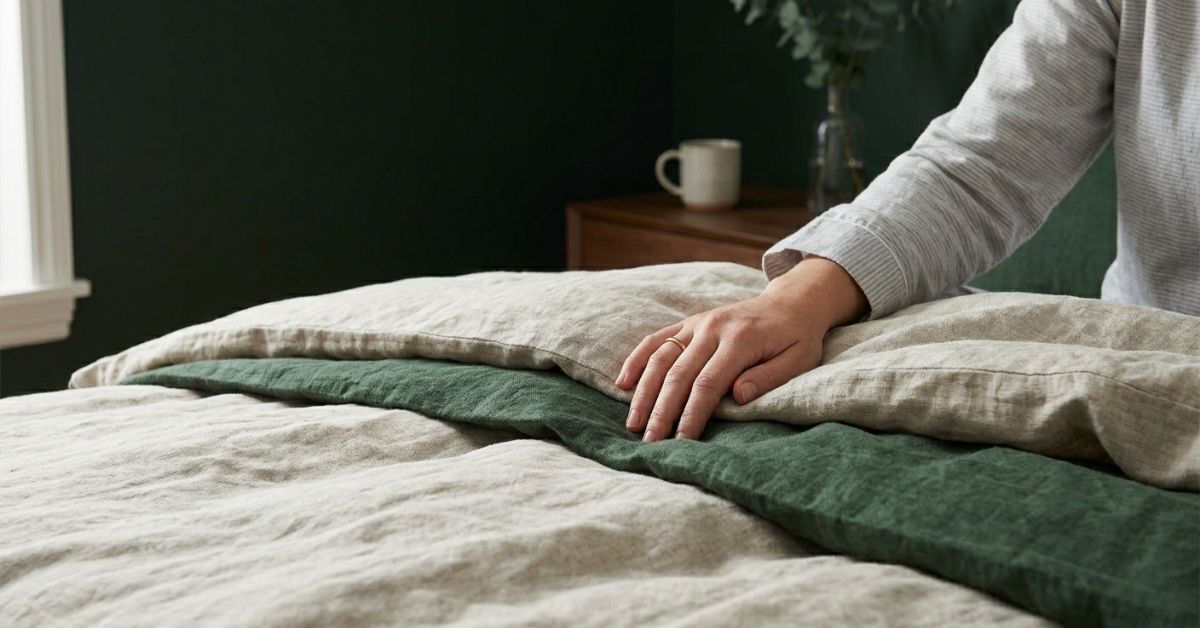
Pregnancy hormones can noticeably raise your core body temperature at night, so pair your pillow with breathable bedding rather than letting a great pillow fight against sheets that trap heat. Certified, natural fabrics tend to perform best, including Oeko Tex certified bamboo sheets, a purely organic sheet set, or an organic cotton bed sheet set. Each of these options is designed to stay cool and breathable, which matters even more once your pillow setup has you tucked in for the whole night.
Managing Common Pregnancy Sleep Discomforts
Back and Hip Pain
Roughly half of pregnant people experience low back pain at some point, and MedlinePlus recommends sleeping on your side with a pillow between your legs as one of the main ways to ease it. Combine that with your pregnancy pillow setup and gentle nightly stretching, such as the routine covered in Does Stretching Before Bed Help You Sleep, for extra relief.
Heartburn and Reflux
Beyond the reclined tilt position, eating smaller meals earlier in the evening and avoiding spicy or fried foods close to bedtime can reduce nighttime reflux, according to guidance from the Office on Women's Health.
Restless Nights and a Racing Mind
Physical discomfort is only part of the picture. Many pregnant people also deal with restless leg syndrome and pregnancy related anxiety, both of which the Office on Women's Health lists among the leading causes of pregnancy related insomnia. If your body is comfortable but your mind will not settle, techniques like the ones in How to Stop Your Mind Racing at Night or An Overactive Mind at Night are worth trying alongside your pillow routine. For a faster wind down, the method in How to Fall Asleep in 10 Seconds is built for exactly this kind of night.
The FDA Office of Women's Health also notes that most adults, pregnant or not, do best with a consistent bedtime and a dark, quiet room, and recommends talking with a health care provider if trouble sleeping continues most nights for more than two weeks.
When Falling Asleep Itself Is the Struggle
Sometimes the pillow is not the problem, your mind simply will not power down. If reading in bed makes you drowsy in a way that derails your evening, it helps to understand why, covered in Why Do I Feel Sleepy When Reading. If you would rather try a gentle wind down technique before reaching for anything else, Relaxation Therapy for Sleep is a good place to start. Some people also ask about muscle relaxers for nighttime cramping, addressed directly in Do Muscle Relaxers Help You Sleep, though any medication decision during pregnancy should go through your provider first.
Our Recommendation
If you are choosing your first pregnancy pillow, start with a U shaped design for full coverage, then adjust based on how your body responds. Pair it with breathable, certified bedding, such as Oeko Tex certified bamboo sheets, a purely organic sheet set, or an organic cotton bed sheet set, since overheating is common in pregnancy and cooler sheets make any pillow position more comfortable. If pain or reflux persists despite a good pillow setup, loop in your health care provider, since ongoing symptoms deserve a professional check rather than another pillow adjustment.
Sources