The modern world was not built for rest. Between the glow of smartphones and the mental loop of tomorrow's to-do list, your brain often stays "on" long after your head hits the pillow. But falling asleep is not something that merely happens to you — it is a physical process you can deliberately trigger.
If you are searching for how to fall asleep very fast, the key insight is this: stop trying to force sleep and start commanding your nervous system to relax. With the right techniques, learning how to go to sleep in 60 seconds or less is genuinely achievable.
According to the CDC, adults need at least 7 hours of quality sleep per night, yet roughly 1 in 3 American adults regularly fall short of that target. Poor sleep onset — lying awake frustrated — is one of the biggest contributors to that shortfall.
What Happens in Your Body When You Can't Fall Asleep
Before diving into techniques, it helps to understand why you stay awake. The National Heart, Lung, and Blood Institute (NHLBI) explains that your body clock is governed by two key hormones: melatonin, which rises in darkness to prepare you for sleep, and cortisol, which surges in the morning to wake you up.
When you lie awake anxious or overstimulated, your body treats the wakefulness as a mild stress event. Research documented in NCBI Bookshelf (NIH) found that adults with insomnia show elevated cortisol and ACTH levels over a 24-hour period compared to normal sleepers — the same stress hormones released during anxiety. In short, the frustration of not sleeping literally makes it harder to sleep.
This is why brute-force willpower fails. You need to interrupt that cortisol cycle at the physiological level, and the methods below are designed to do exactly that.
Related reading: If a blocked nose is keeping you up, see our guide on how to sleep with a blocked nose for targeted relief tips.
The 10-Second Shutdown: The Military Method
The most cited rapid sleep technique comes from a method reportedly used by U.S. military pilots to fall asleep under battlefield conditions. The "10-second" window is actually the final phase of a roughly 2-minute body relaxation sequence.
How to Do It
Step 1 — Relax your face (10–15 seconds) Start at the top. Consciously release the muscles in your forehead, around your eyes, and across your jaw. Let your lips part slightly. Eye tension alone is enough to keep your brain in a subtle state of alertness, so take your time here.
Step 2 — Drop your shoulders and arms (10 seconds) Let your shoulders fall as low as they will go. Then allow your dominant arm to go limp, followed by your non-dominant arm. Feel the weight of each hand sinking into the mattress.
Step 3 — Breathe out and release your legs (10 seconds) Take a slow, deep exhale. As you do, consciously relax your thighs, calves, and feet. There is no need to tense them first — just let go.
Step 4 — Clear your mind for 10 seconds With your body now heavy and still, you have a 10-second window to quiet the mind. Visualize one of two scenarios:
- A pitch-black, completely silent room
- Lying in a canoe on a calm lake, looking up at a clear sky
If thoughts intrude, repeat the mantra "don't think" slowly and steadily for those 10 seconds.
Most people who practice this method daily for 6 weeks report being able to fall asleep within 2 minutes consistently.
The 4-7-8 Breathing Technique: A 60-Second Override
If your mind is too loud for visualization, use your breath as a mechanical override. The 4-7-8 technique was popularized by Dr. Andrew Weil and is rooted in pranayama yogic breathing. It works as a natural tranquilizer for your autonomic nervous system.
The MedlinePlus Medical Encyclopedia (NIH) notes that slow, controlled breathing and relaxation techniques are among the most effective non-pharmacological tools for reducing sleep latency — the time it takes to fall asleep.
How to Do It
- Place the tip of your tongue against the ridge behind your upper front teeth and keep it there throughout.
- Inhale quietly through your nose for a count of 4.
- Hold your breath for a count of 7.
- Exhale forcefully through your mouth, making a "whoosh" sound, for a count of 8.
- That is one cycle. Repeat 3–4 times.
The extended exhale is the critical element. A slow 10-second exhalation activates the parasympathetic nervous system — the "rest and digest" branch — which directly counters the fight-or-flight cortisol response described earlier. Your heart rate slows, blood pressure drops, and your brain receives a clear physiological signal: it is safe to sleep now.
Also helpful: Combining breathwork with the 5 essential sleep hacks including the 90-minute rule can dramatically improve how quickly and deeply you fall asleep.
Progressive Muscle Relaxation (PMR): The Body-First Approach
Progressive Muscle Relaxation is a clinically validated technique endorsed by the NHLBI for managing sleep deprivation and insomnia. It works on the same principle as the Military Method but uses deliberate tension-and-release cycles.
How to do it:
- Starting with your feet, tense each muscle group firmly for 5 seconds, then release completely for 30 seconds.
- Move progressively upward: feet → calves → thighs → abdomen → chest → hands → arms → face.
- Pay particular attention to the jaw, forehead, and eye muscles — these hold the most tension for most people.
The contrast between tension and release trains your nervous system to recognize what true muscular relaxation feels like, making it easier to achieve passively over time.
Comparison of Fast Sleep Methods
| Method |
Time to Effect |
Best For |
Difficulty |
| Military Method (10-sec shutdown) |
10–120 seconds |
Body tension, busy mind |
Moderate — requires practice |
| 4-7-8 Breathing |
60 seconds |
Racing heart, anxiety |
Easy |
| Progressive Muscle Relaxation |
5–15 minutes |
Chronic tension, insomnia |
Easy |
| Visualization / Imagery |
2–5 minutes |
Overthinking, stress |
Easy–Moderate |
| Trigger Word / Anchor Cue |
Seconds (after conditioning) |
Habitual insomnia |
Requires 2–4 weeks of training |
Why Your Sleep Environment Matters
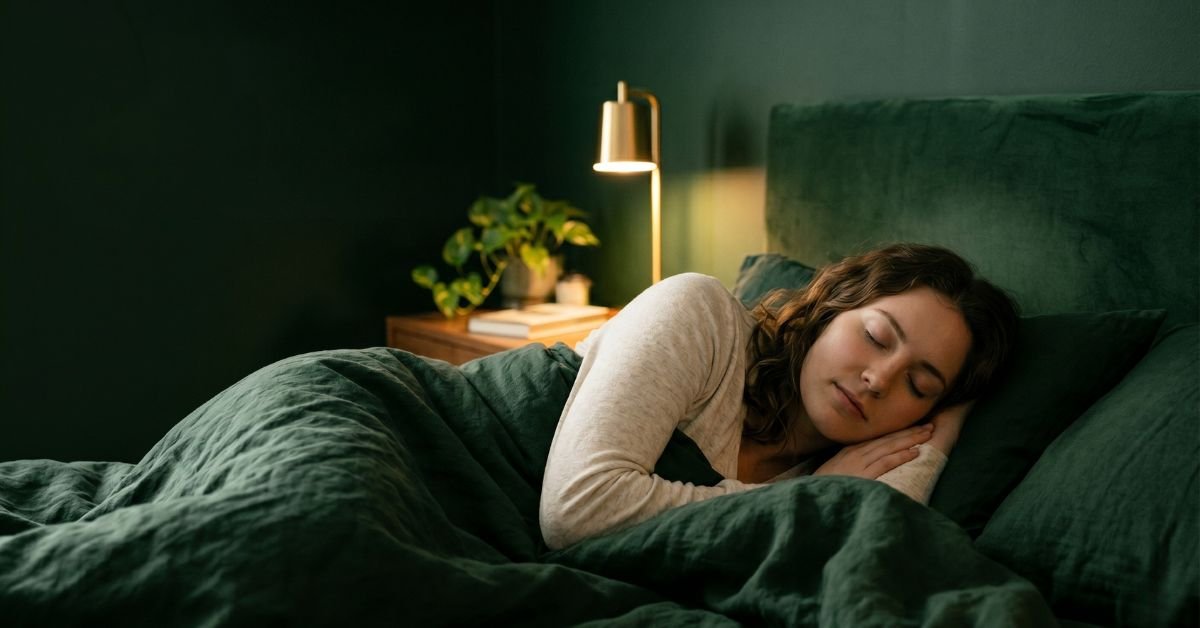
No technique works at its best in a poor sleep environment. The MedlinePlus sleep and health guide (NIH) emphasizes that your bedroom should be quiet, dark, and at a comfortable cool temperature — conditions that support the body's natural drop in core temperature needed to initiate sleep.
A room temperature between 60–67°F (15–19°C) is widely recommended, and research supports that cooler environments can make rapid-onset relaxation techniques measurably more effective. Your body needs to lose about 1–2°F of core temperature to transition into sleep, and a cool room accelerates that process naturally.
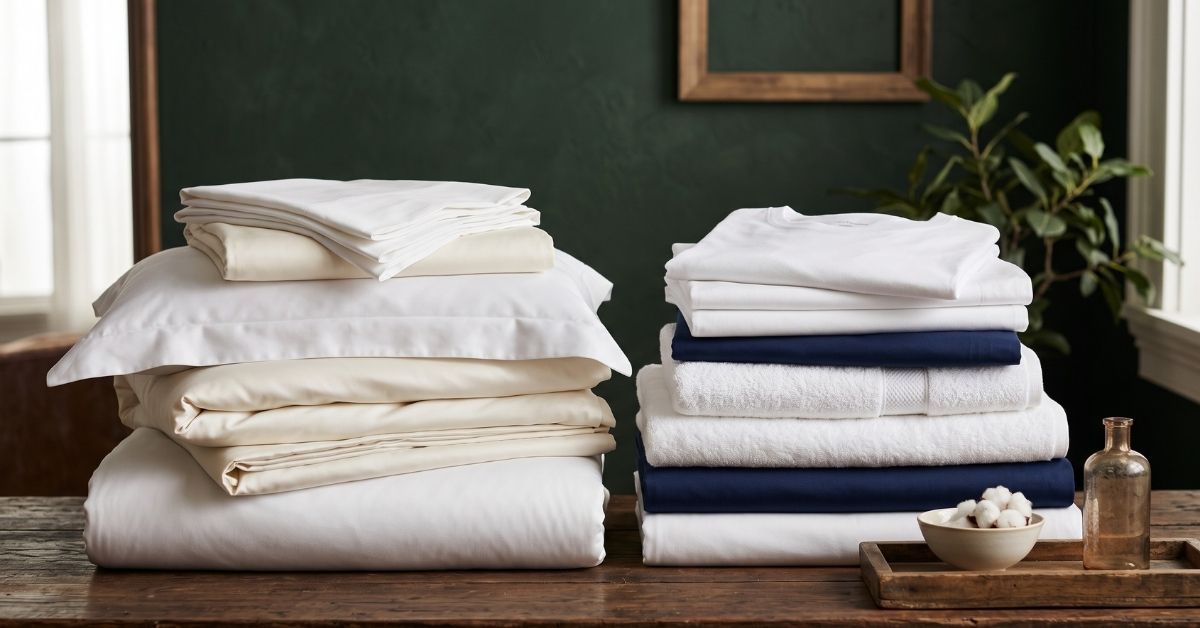
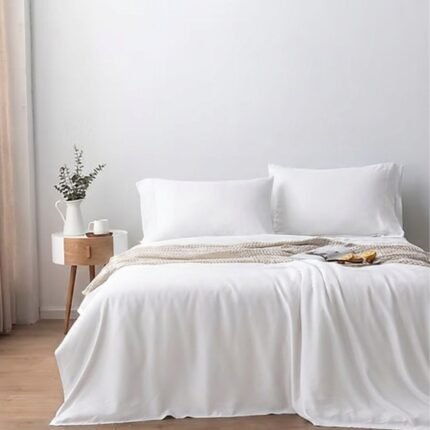
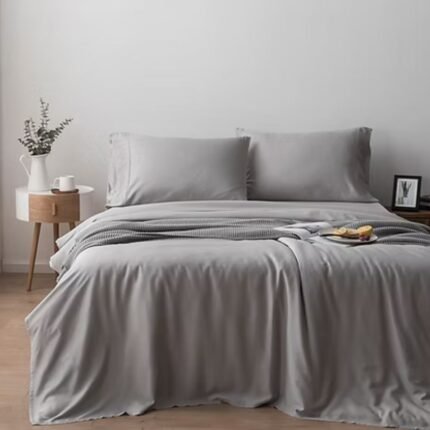
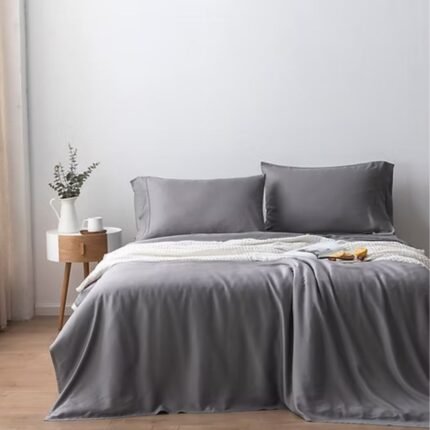
Your bedding plays a bigger role than most people realize. Sheets that trap heat or cause discomfort create a subtle physiological arousal that undermines even the best relaxation techniques. Consider breathable options like Oeko-Tex certified bamboo sheets — bamboo fabric is naturally thermoregulating and moisture-wicking, which supports that critical core temperature drop. If you share a bed or have an adjustable frame, adjustable bed sheets are designed to stay fitted and comfortable through the night without bunching or overheating.
Pro tip: For those who sleep hot, an organic sheet set made from natural fibers offers a chemical-free, breathable alternative. If you prefer a relaxed, cool texture, vintage linen bed sheets are among the most breathable options available and soften with every wash.
The Importance of Reducing Sleep Latency
Learning how to fall asleep faster is about far more than convenience. The time you spend tossing and turning — clinically called sleep latency — directly impacts sleep quality.
The NHLBI's research on sleep and health shows that poor sleep drives a cascade of health effects: impaired immune function, hormonal imbalances affecting hunger and mood, higher cardiovascular risk, and reduced cognitive performance the following day. When you reduce frustration and tension at bedtime, you also reduce the cortisol spike that pushes you into lighter, more fragmented sleep stages.
The CDC's sleep data brief (NCHS, 2024) found that 30.5% of U.S. adults get fewer than 7 hours of sleep — a figure that has remained stubbornly high for over a decade. Practicing rapid sleep onset techniques is one of the most accessible, zero-cost interventions available.
Further reading: For a comprehensive overview of sleep science and habits, visit our complete sleep guide — a full reference covering everything from sleep cycles to sleep debt.
Building a Trigger Word for Instant Sleep
One of the more powerful long-term strategies is conditioning your brain to associate a specific word or phrase with the feeling of falling asleep — essentially creating a Pavlovian sleep cue.
How to build it:
- Choose a simple, neutral word (examples: "drift," "heavy," "still," "calm").
- Every night, as you begin the Military Method or 4-7-8 breathing, say the word silently and slowly in your mind.
- Pair it with the sensation of your body relaxing — specifically the moment your muscles release.
- After 2–4 weeks of consistent practice, saying that word will begin to produce a measurable relaxation response on its own.
This works on the same neurological principle as any conditioned reflex. Your brain learns to expect sleep after the cue, and the physiological responses follow automatically.
Traveling soon? These same techniques apply on the go — read our guide on how to fall asleep on an airplane for environment-specific tips.
Recommendation
For most people, the fastest path to falling asleep consistently within 60 seconds involves combining three elements:
- Environment: Cool room, breathable bedding (such as bamboo or linen), and no screens for 30–60 minutes before bed. See: CDC healthy sleep habits.
- Body: Use the Military Method or PMR nightly until it becomes automatic. The physical relaxation sequence is the non-negotiable foundation.
- Breath: If anxiety or a racing heart is present, layer in the 4-7-8 breathing technique before the body scan. It primes the nervous system so the physical relaxation goes deeper.
Consistency is more important than perfection. Two to four weeks of nightly practice rewires the association between lying down and relaxing, making rapid sleep onset the default rather than the exception.
Sources
- Centers for Disease Control and Prevention. About Sleep. https://www.cdc.gov/sleep/about/index.html
- Centers for Disease Control and Prevention. Short Sleep Duration and Sleep Difficulties Among Adults: United States, 2024. https://www.cdc.gov/nchs/products/databriefs/db559.htm
- National Heart, Lung, and Blood Institute. Sleep Deprivation and Deficiency — How Your Body Clock Works. https://www.nhlbi.nih.gov/health/sleep-deprivation/body-clock
- National Heart, Lung, and Blood Institute. Sleep Deprivation and Deficiency — How Sleep Affects Your Health. https://www.nhlbi.nih.gov/health/sleep-deprivation/health-effects
- National Heart, Lung, and Blood Institute. Healthy Sleep Habits. https://www.nhlbi.nih.gov/health/sleep-deprivation/healthy-sleep-habits
- MedlinePlus (NIH/NLM). Can't Sleep? Try These Tips. https://medlineplus.gov/ency/patientinstructions/000853.htm
- MedlinePlus (NIH/NLM). Sleep and Your Health. https://medlineplus.gov/ency/patientinstructions/000871.htm
- NCBI Bookshelf (NIH). Extent and Health Consequences of Chronic Sleep Loss and Sleep Disorders. https://www.ncbi.nlm.nih.gov/books/NBK19961/