When it comes to synthetic textiles, two materials dominate the market: nylon and polyester. Together they show up in workout gear, winter jackets, backpacks, umbrellas, and of course, bed sheets. Because they look and feel similar at a glance, many shoppers ask a simple question: is nylon the same as polyester?
The short answer is no. Both are synthetic, petroleum based polymers, but their chemical structures give them different strengths, textures, and performance traits. This guide breaks down how nylon and polyester actually compare, backed by testing standards from U.S. federal agencies, peer reviewed research, and dermatology sources, so you can choose the right fabric for clothing, gear, or bed sheets with confidence.
Nylon and Polyester: What Are They Actually Made Of
Both fabrics are manufactured polymers derived from petroleum, but they are built from different chemical building blocks. Nylon is a polyamide, first developed in the 1930s as a synthetic alternative to silk. Polyester is a polyethylene terephthalate, or PET, the same base polymer used in plastic bottles. That underlying chemistry is why the two fabrics behave so differently once they are woven into fabric and put through wear, washing, and sunlight.
Fiber content on any bedding or clothing label is not just marketing language. Under the Textile Fiber Products Identification Act, enforced by the Federal Trade Commission, manufacturers are legally required to disclose the true generic fiber names and exact percentages by weight on every label. The rules that define how "nylon" and "polyester" must be listed, including tolerance limits and required disclosures, are spelled out in 16 CFR Part 303. So when a label reads "100% Polyester" or "90% Nylon, 10% Spandex," that claim is federally regulated, not a guess.
Strength and Durability: Which Fabric Wins
If your priority is rugged durability, tear resistance, and sheer toughness, one material clearly takes the lead. Nylon has an exceptional strength to weight ratio and is highly elastic, meaning it stretches significantly under load and springs back into shape without losing structural integrity. That is why nylon is the standard choice for parachutes, climbing ropes, heavy duty backpacks, and premium activewear.
Polyester is far from weak. It resists abrasion well and holds its shape over years of use, which is one reason it performs so well in polyester bed sheets and everyday apparel. What it lacks compared with nylon is extreme tensile strength and elasticity, so it is less forgiving under sudden, heavy stress.
Comfort and Texture: The Smoothness Test
If you are buying clothing, a lightweight jacket, or bedding, how a fabric feels against skin matters as much as how it performs. Between nylon and polyester, nylon generally wins on softness. Because it was originally engineered as a silk substitute, it retains a slick, soft, and slightly supple texture.
Polyester can feel rougher or more plastic like in cheaper garments, though modern manufacturing has closed that gap considerably. High grade polyester can now be brushed or woven into microfiber that mimics cotton or silk. If you want to see exactly how that microfiber engineering compares fiber by fiber, this breakdown of microfiber vs polyester goes deeper into weave structure and feel. Pound for pound though, raw nylon still tends to feel smoother and more luxurious against skin straight off the roll.
Moisture Wicking and Weather Resistance
How these two fabrics handle water and weather is another major differentiator, especially for outdoor and athletic gear.
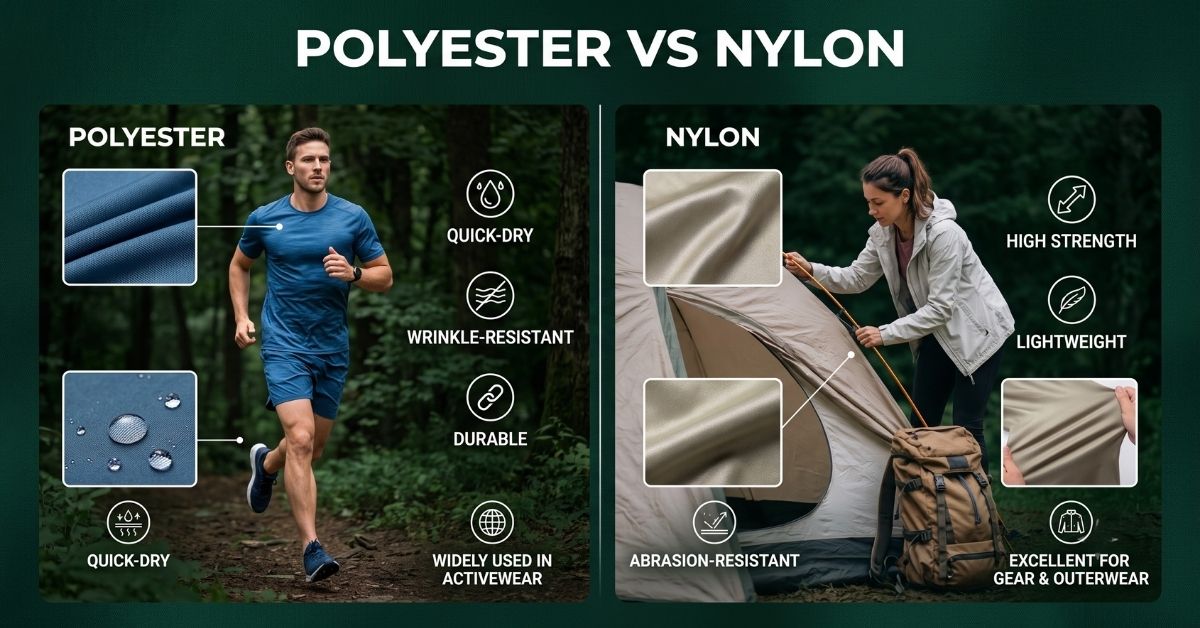
- Polyester is hydrophobic. It actively repels water, so sweat or rain evaporates off the surface quickly. It is also inherently resistant to ultraviolet light, so it will not degrade or fade easily under long term sun exposure.
- Nylon is hydrophilic. It absorbs small amounts of water, which causes the fibers to swell, adds weight, and slows drying time. Nylon is also more prone to UV fading than polyester unless it has been treated with a protective coating.
This is also part of why some shoppers weighing natural versus synthetic bedding compare polyester head to head against fabrics like linen, cotton, and bamboo. If breathability and moisture handling are a bigger priority for you than synthetic durability, it is worth reading how linen sheets compare with cotton sheets or how linen, cotton, and bamboo stack up together.
Nylon vs Polyester at a Glance
| Feature |
Nylon |
Polyester |
| Strength and stretch |
Winner. Extremely strong and elastic |
Good durability, but stretches less |
| Texture and smoothness |
Winner. Silky, soft, smooth feel |
Can feel slightly stiffer or textured |
| Water handling |
Absorbs moisture, slower to dry |
Winner. Repels water and dries fast |
| Sun protection |
Prone to UV degradation over time |
Winner. Highly UV and fade resistant |
| Wrinkle resistance |
Excellent |
Winner. Virtually impossible to wrinkle |
| Flammability class (typical) |
Meets Class 1, general apparel standard |
Meets Class 1, general apparel standard |
| Best for |
Swimwear, running tights, climbing gear |
Rain shells, workout tees, outdoor flags |
Note: flammability classification depends on fabric weight and construction, not fiber type alone. See the safety standards section below.
Safety Standards and Labeling Rules You Should Know
Both fibers are also regulated for consumer safety, not just labeling accuracy. The Flammable Fabrics Act, enforced by the U.S. Consumer Product Safety Commission, prohibits the sale of clothing textiles that are dangerously flammable. Under the general wearing apparel standard, 16 CFR Part 1610, plain and raised surface fabrics made of nylon, polyester, acrylic, olefin, or wool are exempt from routine flammability testing because these fibers consistently pass as the lowest risk classification, Class 1, regardless of weight. That is one reason both fabrics are considered safe defaults for apparel and bedding when manufactured to spec.
On the labeling side, the FTC requires that any product marketed with performance claims, such as "wrinkle resistant polyester" or "ultra strong nylon," back those claims with the true generic fiber name and accurate percentage by weight. If you want the full compliance picture, the FTC publishes a plain language guide called Threading Your Way Through the Labeling Requirements Under the Textile and Wool Acts.
Environmental Impact: Microplastic Shedding
Because nylon and polyester are both plastics at the fiber level, washing them releases microscopic plastic fragments called microfibers. The U.S. Environmental Protection Agency has documented that microfibers are now among the most common types of microplastic found in the environment, showing up in shorelines, remote national parks, and even snow. You can read the agency's consumer explainer, What You Should Know About Microfiber Pollution, for the full picture.
Peer reviewed research hosted by the National Institutes of Health backs this up with lab data. A widely cited shedding study published through the National Library of Medicine found that all three major synthetic fibers, acrylic, nylon, and polyester, shed measurable amounts of microfiber during a single wash cycle, with looser knit constructions and worn fabrics shedding noticeably more than tightly woven, newer textiles. If shedding and biodegradability matter to your purchase, natural fiber alternatives are worth a look, including how organic cotton compares with conventionally grown cotton and how eucalyptus and bamboo sheets compare for a lower shedding, biodegradable option.
Recommendation: If microplastic shedding is a dealbreaker for your bedding, an Oeko Tex certified bamboo sheet set or an organic cotton bed sheet set gives you the softness people look for in nylon or polyester without the synthetic fiber shed. Both are independently certified against harmful substances, which is worth checking regardless of which fabric you choose.
Sun Protection: Which Fabric Blocks UV Better
Polyester's tight molecular structure gives it a real advantage in ultraviolet protection. According to the Centers for Disease Control and Prevention, tightly woven, densely constructed fabric blocks more UV radiation than loosely woven or sheer fabric, and dark, dense synthetics like polyester routinely test at the upper end of UV protection factor ratings. The CDC's broader guidance on reducing skin cancer risk also recommends clothing that covers the arms and legs as a first line of defense, ahead of sunscreen reapplication.
Nylon offers some UV protection too, but it degrades and fades under prolonged sun exposure faster than polyester unless it is treated with a UV stabilizing finish, which is why polyester tends to be the fabric of choice for flags, awnings, and gear that lives outdoors long term.
Which Fabric Do You Actually Need
Choosing between them comes down to what you plan to do with the fabric.
- Choose nylon if you need something tough, lightweight, smooth against skin, and stretchy, such as swimwear, running tights, or high end camping gear.
- Choose polyester if you need something that dries instantly, resists wrinkles, stands up to intense sunlight, and holds its shape without stretching out, such as a rain jacket, an outdoor flag, or a daily workout tee.
For bedding specifically, the calculus shifts a little because you are sleeping against the fabric for roughly a third of your life. If wrinkle resistance and easy care matter most, polyester or a poly cotton blend is a practical pick, and this comparison of polyester versus cotton sheets walks through that tradeoff in detail. If you are specifically wondering whether synthetic bedding is safe to sleep on, this article on whether polyester is bad for you addresses that question directly.
Recommendation: For a natural fiber alternative that still feels smooth and holds its shape well, a purely organic sheet set is a solid middle ground between the crisp coolness of cotton and the softness people associate with synthetic microfiber, without the petroleum based fiber content.
Related Reads on Odesleep
Recommended Odesleep Bedding
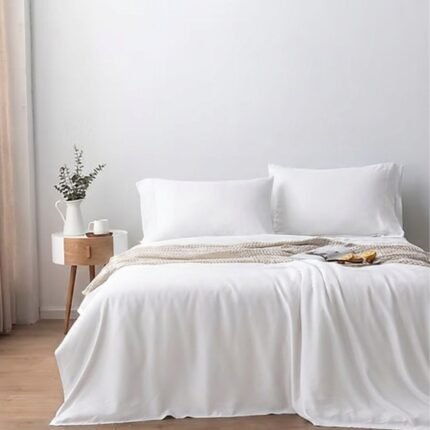
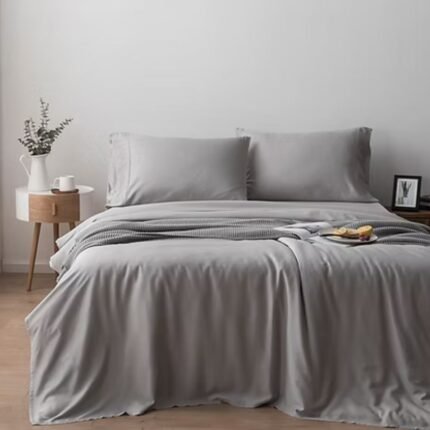
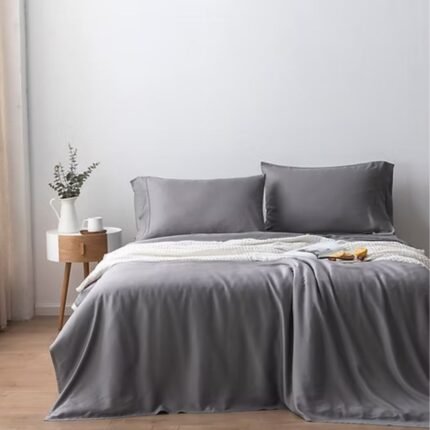
- Oeko Tex Certified Bamboo Sheets — a certified, low shed alternative if you like the smooth hand feel of synthetic microfiber but want a plant based fiber.
- Organic Sheet Set — a fully organic pick for anyone comparing wrinkle resistant polyester against a natural, breathable option.
- Organic Cotton Bed Sheet Set — a crisp, durable natural fiber set for shoppers who read this comparison and decided synthetic fiber content is not for their bed.
Sources and References