Falling into a deep, restorative slumber should not feel like a professional wrestling match with your mattress. Yet, for millions of adults, the night is filled with tension, tossing, and inexplicable movements that leave them waking up feeling exhausted. According to the Centers for Disease Control and Prevention (CDC), about 1 in 3 adults in the United States does not get the recommended amount of sleep each night — a statistic with serious consequences for physical and mental health.
If you have ever wondered why you wake up in a pretzel shape, raise your arms during sleep, or spend the night unconsciously shrugging your shoulders, this guide is for you. We will explore the science of nighttime movement, how to build a relaxing sleep environment, and which evidence-backed relaxation therapy techniques can genuinely transform your nights. We also look at how to pair these habits with the right bedding — because even the best relaxation routine works better when your sleep surface supports it.
Why Your Body Moves During Sleep: The Science of Nighttime Restlessness
Nighttime movement is far more common than most people realise. You fall asleep in a neutral, comfortable position — and wake up with your hands above your head, your shoulders bunched near your ears, or your limbs tangled in the sheets.
Understanding the root causes of these movements is the first step toward addressing them through relaxation therapy.
Raising Your Arms During Sleep
When people ask, "Why do I raise my arms in my sleep?", the answer is usually one of two things: unresolved shoulder and upper-back tension, or a subconscious attempt to open the ribcage for easier breathing. Research on sleep posture and sleep disorders published by MedlinePlus (NIH) suggests that physical discomfort and breathing difficulties are among the most frequent causes of unintended sleep movement.
Shoulder Shrugging During Sleep
Many people carry the day's stress and tension in the trapezius and neck muscles. Learning how to stop shrugging shoulders while sleeping starts before you ever lie down. Conscious muscle release — particularly progressive muscle relaxation techniques — teaches the nervous system to recognise what a fully dropped, de-tensioned shoulder actually feels like.
Muscle Twitches and Hypnic Jerks
Those sudden jolts or twitches as you drift off are known as hypnic jerks, a completely normal phenomenon. However, chronic restlessness, limb movements, and the urge to stretch while sleeping in unusual positions may point to issues like Restless Legs Syndrome (RLS). The NIH MedlinePlus Restless Legs page confirms that lifestyle changes — including consistent relaxation techniques and regular sleep routines — are a first-line recommendation before considering medication.
At a Glance: Relaxation Techniques for Sleep
The table below summarises the key techniques covered in this guide, so you can quickly find what fits your situation.
| Technique |
Best For |
Time Needed |
| Progressive Muscle Relaxation (PMR) |
Shoulder tension, body tightness, physical restlessness |
10–20 minutes |
| Box Breathing |
Racing thoughts, anxiety, cortisol spikes |
5–10 minutes |
| Pre-Sleep Stretching |
Arm raising during sleep, stiff morning muscles |
5–10 minutes |
| Guided Meditation |
Overthinking, shift workers, 2 AM wake-ups |
10–30 minutes |
| Sleep Environment Reset |
Chronic restlessness, poor sleep quality baseline |
Ongoing habit |
Building a Relaxing Therapy Environment for Sleep
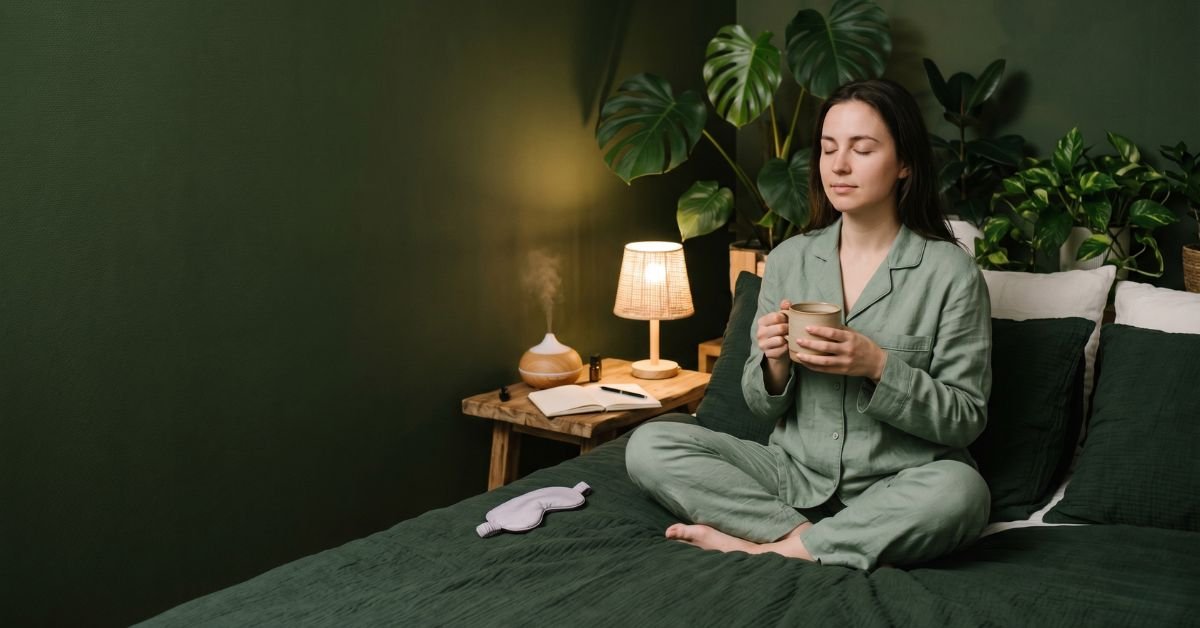
No relaxation technique will reach its full potential in a disorganised, overstimulating bedroom. The National Heart, Lung, and Blood Institute (NHLBI) recommends keeping your bedroom quiet, cool, and dark as a foundation of healthy sleep habits. Think of your room as a relaxing therapy environment — a space specifically designed to signal to your brain that the active day is over.
Sleep Environment Optimisation Table
| Factor |
Recommended Setting |
Why It Helps |
| Room Temperature |
16–18°C (60–65°F) |
Lower core body temp triggers sleep onset |
| Lighting |
Blackout curtains or eye mask |
Blocks blue light that suppresses melatonin |
| Sound |
White noise or silence (< 40 dB) |
Reduces cortical arousal during light sleep |
| Bedding |
Breathable, temperature-regulating sheets |
Prevents night sweats and overheating |
| Screen exposure |
No screens 30–60 min before bed |
Reduces alertness-triggering blue light |
| Scent |
Lavender essential oil or spray |
Activates parasympathetic nervous system |
Temperature
Aim for a room temperature between 16–18°C (60–65°F). As your core body temperature drops, it is a biological trigger for sleep onset. Heavy or non-breathable bedding can work against this process by trapping heat.
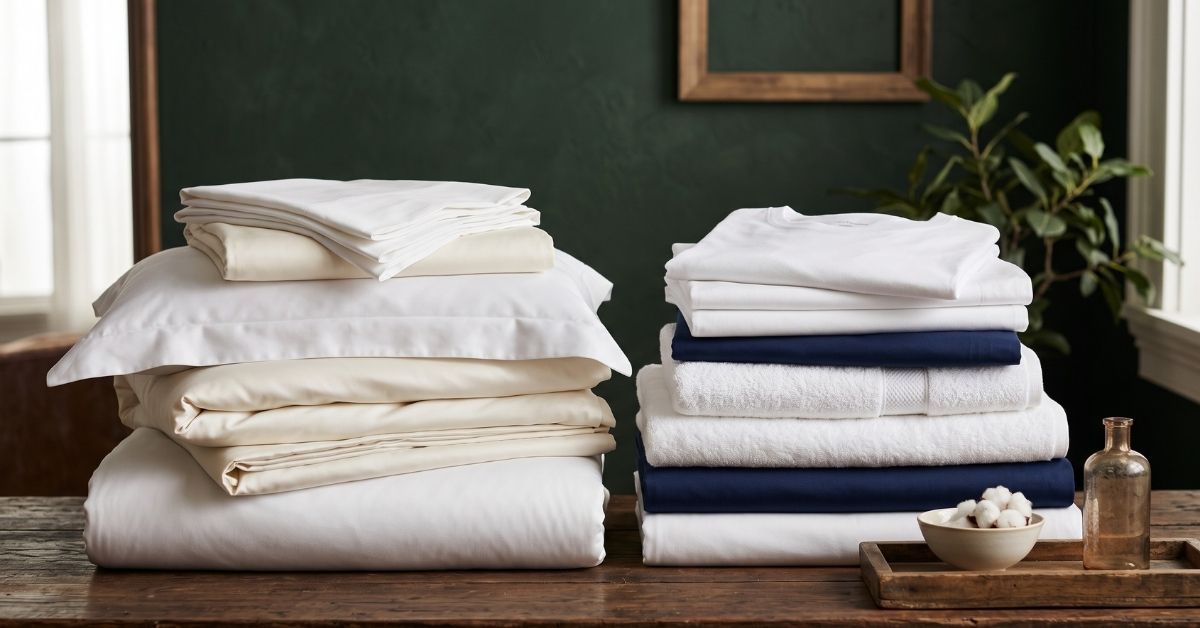
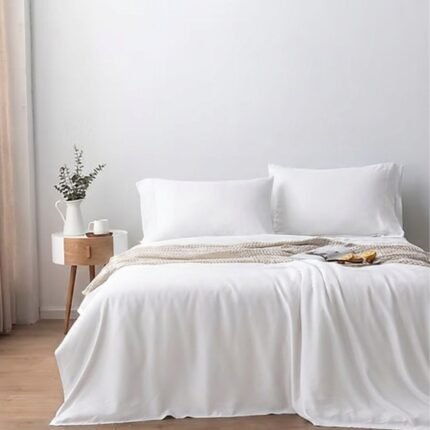
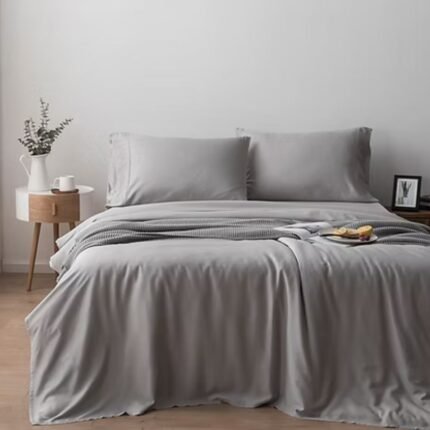
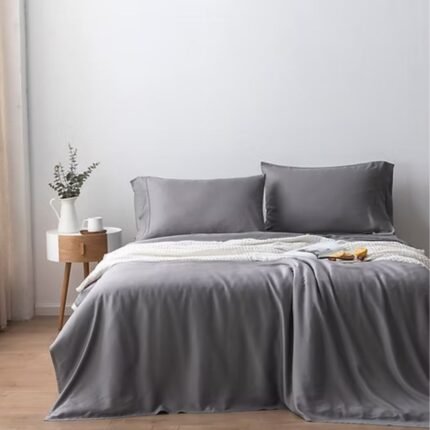
For people who overheat easily, investing in Oeko-Tex certified bamboo sheets can make a significant difference. Bamboo fibres are naturally temperature-regulating and moisture-wicking, keeping you comfortable without the need to constantly adjust your covers — one less reason for your body to move during sleep.
Light and Sound
Melatonin, the hormone that governs sleep onset, is suppressed by blue-spectrum light. Blackout curtains or a sleep mask help. For sound, low-frequency white noise or a fan can mask disruptive environmental sounds. The CDC NIOSH module on sleep environment reinforces that blocking noise and controlling light levels are evidence-based strategies for improving sleep quality.
Your Bedding Matters More Than You Think
If your sheets bunch, trap heat, or do not move with your body, they contribute to nighttime restlessness. For those who share a bed with an adjustable base, adjustable bed sheets are designed to stay fitted and smooth through all sleep positions, reducing physical friction and unnecessary movement. Pairing this with a set of deep pocket sheet sets ensures a secure, well-fitting foundation that supports stillness throughout the night.
Evidence-Based Sleep Relaxation Techniques You Can Try Tonight
The following techniques are grounded in clinical research and recommended by government health agencies including the NIH National Institute on Aging and MedlinePlus. They work best when practiced consistently as part of a nightly wind-down routine — not just on bad nights.
1. Progressive Muscle Relaxation (PMR)
Progressive Muscle Relaxation is one of the most rigorously studied techniques for reducing sleep-onset insomnia and physical tension. It involves deliberately tensing, then releasing, each major muscle group in sequence — from the feet up to the forehead.
How to practice PMR:
- Lie down in a comfortable position. Close your eyes.
- Starting with your feet, tense the muscles firmly for 5 seconds, then release completely for 10–20 seconds.
- Notice the contrast between tension and release. This teaches the brain to recognise full muscular relaxation.
- Move upward: calves, thighs, abdomen, hands, forearms, shoulders, neck, and face.
- Pay special attention to the shoulder and neck region — the area most associated with stress-driven shrugging during sleep.
According to MedlinePlus relaxation guidance (NIH), progressive muscle relaxation is particularly effective because it lowers blood pressure, slows heart rate, and activates the body's parasympathetic (rest-and-digest) response — the direct physiological opposite of the stress response.
2. Box Breathing: Meditation for Anxiety and Sleep
Anxiety is the single most common driver of restless nights. The National Institute of Mental Health (NIMH) identifies unmanaged stress and anxiety as key contributors to sleep disruption. Box breathing — also called four-square breathing — interrupts the physiological stress response by stimulating the vagus nerve through controlled exhalation.
The box breathing pattern:
- Inhale for 4 seconds
- Hold for 4 seconds
- Exhale for 4 seconds
- Hold for 4 seconds
- Repeat for 4–8 cycles.
If you find yourself waking at 2 AM with a tired but wired feeling — exhausted but mentally alert — box breathing combined with a body scan or guided meditation is your most effective tool. For more on shutting off racing thoughts at bedtime, read our guide on how to stop thinking about something when trying to sleep.
3. The Pre-Sleep Stretch and Release Routine
Performing gentle, deliberate stretches before getting into bed helps prevent the body from seeking that release unconsciously during sleep — which is often the cause of arms raised overhead or legs stretched to unusual angles. Pair this with your best sleeping position for maximum benefit.
A simple pre-sleep release sequence:
- Stand up and reach both arms overhead, hold for 3 seconds, then let them fall completely loose.
- Roll your shoulders backward slowly five times, then let them drop as low as they will go.
- Gently tilt your ear to one shoulder, holding for 15 seconds on each side to release the trapezius muscle.
- Finish with 2–3 slow, deep belly breaths before lying down.
This routine is especially helpful for those who want to understand how to stop shrugging shoulders while sleeping, as it resets the shoulder girdle to a neutral, low-tension position before sleep begins.
4. Sleep Hygiene and the 10-3-2-1-0 Method
Individual relaxation techniques work best within a structured pre-sleep framework. The 10-3-2-1-0 Sleep Rule is a practical system for timing your evening wind-down:
- 10 hours before bed: Stop caffeine intake
- 3 hours before bed: No more large meals or alcohol
- 2 hours before bed: Stop work-related tasks
- 1 hour before bed: No screens — start your relaxation routine
- 0: Snooze button hits. Get up without hesitation.
The CDC NIOSH sleep improvement resource similarly recommends beginning a relaxing pre-sleep routine at least 1.5 hours before bed and avoiding screen exposure during this window to lower cortisol levels and support melatonin production.
5. Relaxation Therapy for Shift Workers and Irregular Schedules
For those with non-traditional schedules — shift workers, night nurses, or frequent travellers — standard relaxation routines need adaptation. Short, portable techniques are key. The CDC NIOSH module on shift-worker sleep preparation suggests using brief guided breathing exercises and keeping light exposure low for 1–2 hours before any sleep period, regardless of whether it is day or night. See our guide on how to sleep while sick for similar adaptive strategies for compromised rest conditions.
How Sleep Quality Supports Healing and Recovery
Quality sleep is not passive. During deep slow-wave sleep and REM cycles, the body actively repairs tissue, consolidates memory, and regulates immune function. As explored in detail in our article on whether sleeping helps you heal faster, the restorative processes that occur during undisturbed sleep are among the most powerful healing mechanisms the body has.
Relaxation therapy directly supports this by reducing the frequency of arousals (brief, often unremembered awakenings) and lengthening the duration of deep sleep stages. For sleepers who are sensitive to skin irritants or recovering from illness, an Organic Sheet Set made from certified organic cotton can reduce skin-level disruptions that pull the body out of deep sleep cycles. Avoiding synthetic fabrics and chemical finishes is especially relevant for those whose relaxation therapy includes attention to sensory environment.
Also worth noting: the position you sleep in affects how well your body can carry out these restorative processes. Sleeping with wet hair, for example, can cause scalp irritation and cooling discomfort that disrupts sleep architecture — a topic we cover in our article on what happens when you sleep with wet hair.
Your Sleep Environment: Full Optimisation Checklist
Use this checklist as part of your nightly relaxation therapy setup. Each factor is supported by guidance from government health sources.
- Temperature: 16–18°C / 60–65°F (NHLBI, NIH)
- Darkness: Blackout curtains or eye mask — melatonin protection
- Sound: White noise machine or earplugs — blocks cortical arousal
- Screens: Off at least 30–60 minutes before bed — lowers cortisol
- Scent: Lavender spray or diffuser — activates parasympathetic response
- Bedding: Breathable, well-fitting sheets that move with your body
- Pre-sleep routine: PMR + box breathing + light stretching = 15–25 min total
Final Thoughts: From Restless to Restored
Quality sleep is not measured only in hours. It is measured by how deeply your body and mind are able to let go. Relaxation therapy — whether through progressive muscle relaxation, controlled breathing, or a mindful pre-sleep routine — gives your nervous system the signal it needs to transition from the stress response to the relaxation response, as defined by the MedlinePlus stress and relaxation guidance.
By addressing the root causes of nighttime movement — tension, anxiety, poor sleep environment, and inconsistent sleep habits — you can shift from a night of restless tossing to one of genuine, healing rest. Pair these habits with supportive bedding and a structured wind-down routine, and you give yourself every physical and psychological advantage for a restorative night's sleep.
Sources and Further Reading
The following government and authoritative sources were used in researching this article: