It is a scene most of us know well. You settle in with a gripping thriller, determined to finish just one more chapter. Within minutes, the words blur. The book hits the floor. If you have ever caught yourself thinking, "reading makes me sleep — am I just boring?" you are not alone. This is a recognised physiological response, not a character flaw.
Scientists have even coined a term for it: bibliosomnia — the tendency to fall asleep while reading. Understanding why it happens is the first step toward managing it, whether you want to stay sharp through a study session or use reading deliberately as a wind-down tool before bed.
The Brain on Low Power Mode
Reading is far more demanding than it looks. Your eyes move in rapid, rhythmic jumps called saccades, scanning lines of text while your brain simultaneously decodes language, builds meaning, and links new information to existing knowledge. That takes real energy.
At the same time, reading typically happens in a quiet, low-stimulation environment. According to research published by the Washington State University Sleep and Performance Research Center, the brain's billions of neurons — which process and store information — actively need rest after sustained effort. When your surroundings are calm and you are seated still, the brain interprets that as permission to wind down.
Reading can also activate the default mode network (DMN) — the brain system responsible for daydreaming and mind-wandering. Once the DMN kicks in, relaxation deepens and the path to drowsiness shortens considerably.
Key point: Mental effort plus a low-stimulation environment is a reliable recipe for sleepiness, regardless of how interesting the material is.
The Role of Eye Strain and Visual Fatigue
When you focus on small text for extended periods, your eye muscles work continuously. This visual effort has measurable consequences:
| What Happens |
Why It Matters |
| Blink rate decreases |
Eyes dry out faster, increasing discomfort |
| Ocular muscles fatigue |
The brain registers localised strain as general tiredness |
| Focus adjustments repeat constantly |
Sustained near-vision effort drains energy quickly |
| Poor lighting amplifies strain |
Dim light forces extra muscular effort to maintain focus |
Poor lighting, uncorrected vision, or prolonged screen exposure can compound this significantly. If you regularly experience headaches or blurred vision while reading, it is worth consulting an eye care professional.
Recommendation: Use bright, cool-toned lighting positioned to illuminate the page without glare. Natural daylight or a dedicated reading lamp at around 500 lux is ideal.
Your Environment Is Working Against You
The physical conditions of reading often mirror the conditions your body associates with falling asleep.
Reading position: Most people read while lying down or propped against pillows. This semi-reclined posture activates the parasympathetic nervous system — commonly called the "rest and digest" system — which actively slows the body down. Sitting upright in a firm chair gives your brain a very different signal.
Temperature and comfort: Being wrapped in a warm blanket causes a subtle drop in core body temperature. According to the National Heart, Lung, and Blood Institute (NHLBI), a falling core body temperature is one of the body's primary biological triggers for sleep onset. Feeling snug and cosy while reading is essentially telling your body the conditions are right for sleep.
Light levels: Dim or warm lighting signals to the brain that the day is ending, prompting the release of melatonin — the hormone that regulates the sleep-wake cycle. The CDC's NIOSH division notes that light and darkness are among the most powerful cues governing the body's internal circadian clock. Soft, warm reading lamps can therefore inadvertently push your brain toward sleep mode.
For more on how your sleep environment shapes rest quality, our sleep guide of your dreams covers bedroom optimisation in detail.
Sleep Debt: When Your Body Steals Every Opportunity to Rest
If you fall asleep while reading even in the middle of a caffeinated afternoon, your body may be carrying a sleep debt — a cumulative deficit that builds when you consistently get less rest than you need.
According to the CDC, adults aged 18–60 are recommended to get at least 7 hours of sleep per night to support optimal health. Despite this, a 2024 CDC National Health Interview Survey report found that 30.5% of U.S. adults sleep less than 7 hours on average in a 24-hour period.
When you are sleep-deprived, your brain looks for every opportunity to recover — including the moment you sit still with a book.
What Is a Good Sleep Efficiency Score?
Sleep efficiency is the ratio of total time spent asleep to total time spent in bed, expressed as a percentage. According to research published in the Journal of Clinical Sleep Medicine via the NIH's PubMed Central, a sleep efficiency score of 85% or higher is generally considered healthy. Scores consistently below that threshold can indicate insomnia or poor sleep quality, and the body will compensate by grabbing sleep whenever it can — even mid-sentence.
| Sleep Efficiency Score |
What It Suggests |
| 90%+ |
Excellent sleep quality |
| 85–89% |
Healthy, normal range |
| 75–84% |
Below optimal; may indicate mild sleep issues |
| Below 75% |
Poor quality; often associated with insomnia |
If you are sleeping 7–8 hours but still feel unrefreshed, it is worth speaking with a healthcare provider about evaluating your sleep patterns. Poor-quality sleep can be as problematic as short sleep. Our article on 5 Essential Sleep Hacks: The 90 Minute Rule has practical strategies for improving both duration and quality.
The CDC's MMWR report on healthy sleep duration recommends consistent sleep and wake times, a cool and dark bedroom, and removing screens from the bedroom as foundational habits for improving sleep health.
The Mystery of Why Sleep "Goes By So Fast"
Have you noticed that when you doze off mid-chapter, it suddenly feels three hours later? There is a neurological reason for this.
During deep sleep, the brain's prefrontal cortex — which governs time-keeping, memory encoding, and linear reasoning — goes largely offline. Research published in PubMed via NIH confirms that sleep deprivation and sleep itself both significantly affect hippocampal memory encoding. When you fall asleep mid-sentence, your brain stops recording memories in sequence. The result: that transition from "reading" to "three hours gone" feels completely instantaneous.
Your book genuinely becomes a time machine.
Does Your Bedding and Sleep Setup Play a Role?
Absolutely. The tactile comfort of your reading environment matters more than most people realise. Scratchy sheets, overheating, or an unsupportive surface can disrupt the body's ability to regulate temperature — a core factor in sleep onset.
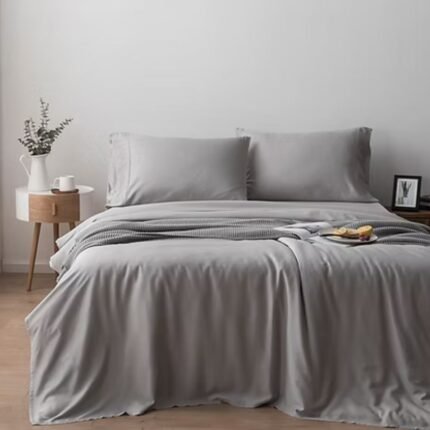
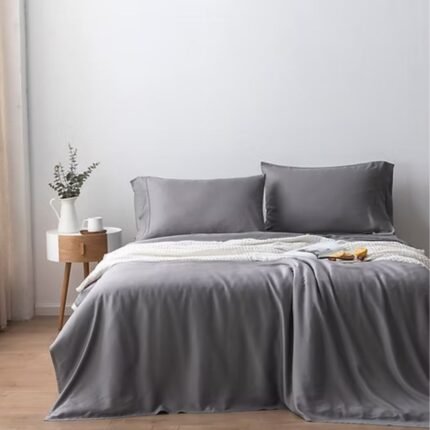
If reading in bed has become synonymous with immediately falling asleep, it may be time to examine your sleep environment as a whole. Breathable, thermoregulating bedding — such as Oeko-Tex certified bamboo sheets or a purely organic sheet set — can help maintain a comfortable, sleep-supportive temperature without becoming so cosy that daytime reading always ends in a nap.
For people who share a bed or have specific mattress setups, adjustable bed sheets are worth considering to ensure a proper fit that does not bunch or create discomfort during extended reading sessions. Linen bed sheets are another excellent option — naturally breathable and moisture-wicking, they prevent the overheating that often accelerates drowsiness.
Is Reading Before Bed Actually Good for You?
Yes — when used intentionally. Reading before sleep can be a powerful part of a healthy wind-down routine. It draws attention away from daily stress and mental chatter, easing the transition into sleep. The key is to use it deliberately rather than fighting to stay awake through it.
The NHLBI explains that the circadian clock responds to behavioural cues as much as light and darkness. A consistent pre-sleep reading ritual helps train the brain to associate that wind-down activity with sleep onset — making it easier to fall asleep naturally.
If respiratory issues interfere with your sleep quality, our guide on how to sleep with a blocked nose offers targeted advice. And for those who read during travel, the article on how to fall asleep on an airplane applies many of the same principles.
Also worth noting: the CDC's NIOSH sleep and fatigue guidance recommends keeping screens away from the bedroom and avoiding bright light exposure before sleep — so if you read on a tablet or phone, switching to a physical book or an e-ink reader with warm light significantly reduces sleep disruption. For more on device-related sleep impacts, see how far should you sleep from your phone.
Practical Tips to Stay Awake While Reading
| Strategy |
Why It Helps |
| Sit upright in a firm chair |
Deactivates the parasympathetic "rest" response |
| Use bright, cool-toned lighting |
Suppresses melatonin release and signals wakefulness |
| Sip cold water |
Mild metabolic stimulation keeps alertness up |
| Take a 5-minute break every 30–40 minutes |
Prevents sustained eye and cognitive fatigue |
| Read at your most alert time of day |
Works with your circadian rhythm rather than against it |
| Choose engaging material |
Emotionally engaging or fast-paced content activates more brain regions |
| Address underlying sleep debt |
The most effective long-term solution |
Sources