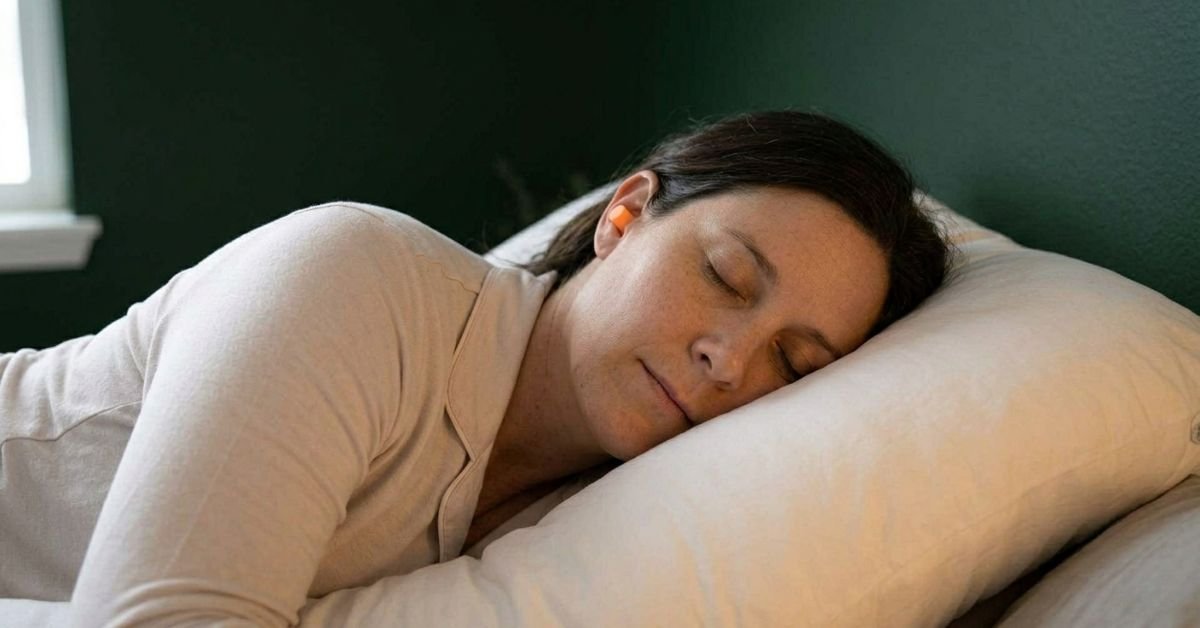
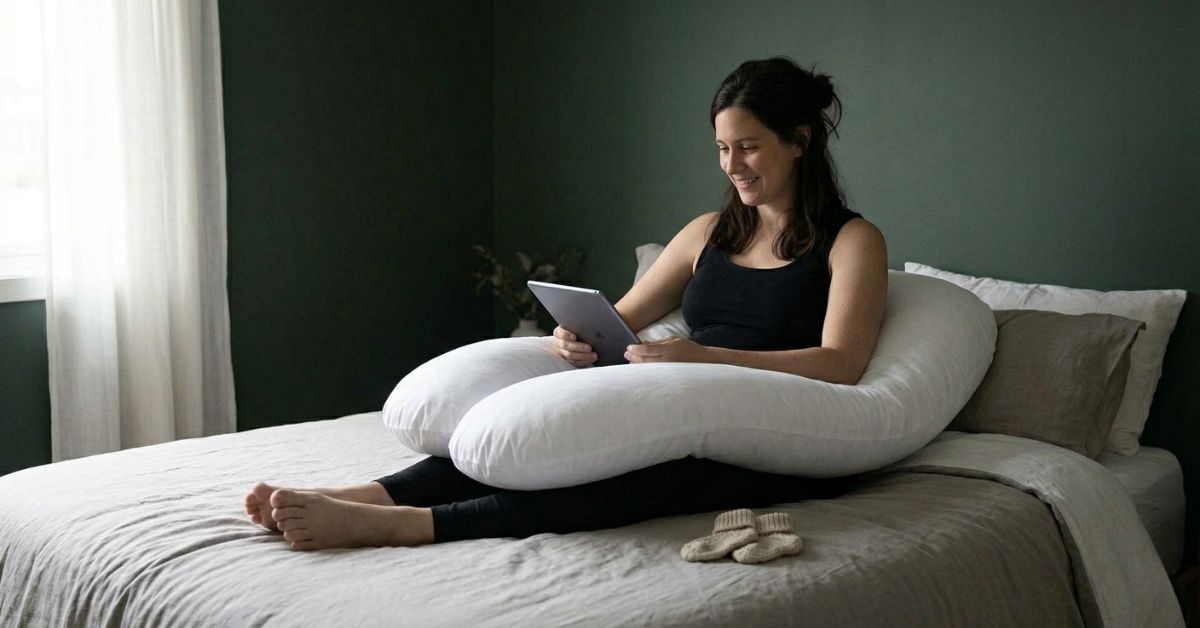
You fluff the pillow, pull up the covers, and close your eyes — only for your brain to launch into a full review of your finances, an embarrassing conversation from three years ago, and tomorrow's to-do list. If this sounds familiar, you are not alone. According to the Centers for Disease Control and Prevention (CDC), more than one-third of U.S. adults regularly fail to get the recommended seven or more hours of sleep per night, and racing thoughts at bedtime are one of the most frequently reported reasons.
This guide brings together evidence-based strategies from sleep science, breathing physiology, and cognitive behavioral therapy to help you learn how to turn your brain off to sleep — not by forcing silence, but by gently redirecting your nervous system toward rest.
Why Is Your Brain So Active at Night?
During the day, your brain is flooded with sensory input — emails, conversations, screens, and tasks. These distractions act as a buffer that prevents unprocessed thoughts from surfacing. When that stimulation vanishes at bedtime, your nervous system finally has the quiet space it has been waiting for to sort through the day's emotional and cognitive backlog.
The National Heart, Lung, and Blood Institute (NHLBI) explains that the brain remains highly active during the transition from wakefulness to sleep, managing hormone release, memory consolidation, and cellular repair. When anxiety or unresolved stress is present, the fight-or-flight response can remain activated, keeping cortisol and adrenaline elevated — making it physiologically difficult to fall asleep.
The good news is that this cycle is not a character flaw. It is biology — and biology can be redirected.
The Neuroscience of a Racing Mind
Research published through the National Institutes of Health (NIH) confirms that chronic sleep disruption stemming from nighttime rumination is closely linked to anxiety disorders, depression, and elevated cardiovascular risk. When the sympathetic nervous system (your fight-or-flight system) dominates at bedtime, your heart rate stays elevated, your breathing becomes shallow, and sleep onset is delayed significantly.
The solution is not to fight your thoughts — it is to activate the parasympathetic nervous system (your rest-and-digest system) through physical techniques that signal safety to your brain.
If you have wondered, does anxiety make you sleepy — the answer is complicated. Some people experience exhaustion from anxious hyperarousal without being able to actually fall asleep. This guide addresses both patterns.
Master Your Breathing to Calm Your Nervous System
To stop a racing mind, you need to calm your body first. When you shift your physiology from fight-or-flight into rest-and-digest, your thoughts slow naturally. The NHLBI healthy sleep guidelines specifically recommend relaxation techniques — including controlled breathing — as a first-line approach for managing nighttime wakefulness.
1. The Five-Finger Breathing Technique
This sensory grounding practice forces your attention into the present moment, leaving your brain no room to worry about tomorrow. It works by combining tactile sensation, spatial awareness, and rhythmic breathing — three sensory channels that compete directly with anxious thought loops.
How to do it:
- Hold one hand in front of you with your fingers spread wide.
- Use the index finger of your other hand to slowly trace the outside of your thumb.
- Breathe in through your nose as you trace up toward the tip.
- Pause briefly at the top of the thumb.
- Breathe out through your mouth as you trace back down the other side.
- Continue this pattern across all five fingers, moving slowly and focusing on the physical sensation.
This technique is a form of relaxation therapy for sleep that doubles as mindfulness practice — grounding your attention in the physical rather than the mental.
2. The Breath of Fire Technique (Evening Reset)
While Breath of Fire is typically an energizing practice, using it intentionally about one hour before sleep can clear accumulated mental tension, functioning like a hard reset for an overstimulated nervous system.
The technique involves rapid, rhythmic nasal breathing with equal emphasis on the inhale and exhale, driven by active abdominal contractions. Because it demands intense focus, it displaces ruminative thought patterns.
Important: Always follow this practice with slow, deep, cooling breaths — inhaling for 4 counts, holding for 4, exhaling for 6 — to complete the transition from activation to relaxation. If you are new to controlled breathing, the CDC's NIOSH sleep tips recommend starting gradually and pairing breathing exercises with a consistent pre-bed routine.
3. The 4-7-8 Breathing Method
Popularized from its roots in pranayama, the 4-7-8 method activates the vagus nerve and directly reduces heart rate. Inhale for 4 seconds, hold for 7 seconds, exhale slowly for 8 seconds. Repeat 4 cycles. This extended exhale is particularly powerful because it stimulates the parasympathetic nervous system. Learn more about this in our guide to how to fall asleep in 10 seconds.
Align Your Body for Better Rest
Physical discomfort and restricted airflow can keep your brain in a state of subtle alertness without you realizing it. According to MedlinePlus (NIH), proper sleep positioning supports healthy breathing patterns throughout the night, which in turn promotes deeper, more restorative sleep stages.
The best sleep position for open airways and optimal oxygen delivery is generally lying on your left side, or sleeping on your back with a slight elevation. When your body receives a steady, effortless oxygen supply, your heart rate drops and your brain receives the biological signal it needs to transition into sleep. Our guide on does stretching before bed help you sleep also explores how gentle pre-sleep movement prepares the body physically for rest.
Sleep Environment Recommendations
| Factor |
Recommendation |
Why It Matters |
| Temperature |
65-68°F (18-20°C) |
Cooler temps trigger sleep onset signals |
| Bedding |
Breathable, natural fabrics (bamboo, organic cotton) |
Regulates body temperature; reduces overheating |
| Light |
Complete darkness or blackout curtains |
Melatonin production requires dark conditions |
| Noise |
White noise or quiet environment |
Prevents micro-arousals during light sleep stages |
| Screens |
No devices 30-60 min before bed |
Blue light suppresses melatonin release |
| Air Quality |
Slightly humidified, well-ventilated room |
Supports airway health and comfortable breathing |
Your choice of bedding also plays a meaningful role. Breathable, temperature-regulating sheets help your body maintain the ideal sleep temperature. Our deep pocket sheet sets and Oeko-Tex certified bamboo sheets are designed with sleep comfort in mind — naturally moisture-wicking and gentle on sensitive skin.
If you prefer completely natural materials, our purely organic sheet set and organic cotton bed sheet set are GOTS-certified and free from synthetic chemicals that can cause overheating or skin irritation.
Quick Strategies to Break the Stress-Sleep Loop
The NHLBI sleep health guidelines and cognitive behavioral therapy for insomnia (CBT-I) — recognized by the MedlinePlus insomnia resource as the gold-standard treatment — both recommend the following stimulus-control and cognitive strategies:
Technique Quick-Reference Guide
| Technique |
Best For |
Time Needed |
Difficulty |
| 5-Finger Breathing |
Anxiety & spinning thoughts |
5 minutes |
Easy |
| Breath of Fire |
Mental clutter & tension |
3-5 min (1hr before bed) |
Moderate |
| Brain Dump Journaling |
Overthinking & worry loops |
5-10 minutes |
Easy |
| Left-Side Sleep Position |
Breathing & oxygen flow |
Ongoing |
Easy |
| Progressive Muscle Relaxation |
Physical tension & stress |
10-15 minutes |
Easy |
| Stimulus Control (Get Up Rule) |
Conditioned wakefulness |
Varies |
Moderate |
The 20-Minute Rule
If you have been lying awake for more than 20 minutes, do not stay in bed. This is a core principle of CBT-I, supported by NIH sleep deprivation research. Lying in bed while awake trains your brain to associate your bed with wakefulness. Get up, move to a dim room, and do something calm — reading a physical book, gentle stretching, or folding laundry — until you feel genuinely sleepy.
The Brain Dump Method
Keep a notepad beside your bed. When thoughts start racing, write them down — not to solve them, but to externalize them. Once the thought is on paper, your brain knows it has been captured and is more willing to let it go. Research in cognitive psychology confirms that written expression reduces rumination by offloading working memory.
Stop Clock-Watching
Turn your clock face away. Counting down the hours until your alarm fuels an adrenaline cycle. Watching the time creates performance anxiety around sleep, which is itself a cause of insomnia.
Passive Auditory Distraction
A low-stimulation podcast, audiobook, or white noise gives your brain something gentle to focus on without triggering active engagement. This can be especially useful if you want to know how to sleep fast in 40 seconds — pairing this with the breathing techniques above creates a powerful wind-down routine.
Sleep Hygiene: The Foundation You Cannot Skip
No single technique works in isolation. The CDC About Sleep page outlines the core evidence-based sleep hygiene practices that form the foundation of all other interventions:
- Consistent sleep schedule: Going to bed and waking at the same time daily — even on weekends — strengthens your circadian rhythm.
- No screens 30-60 minutes before bed: Blue light from phones and tablets suppresses melatonin production.
- Avoid caffeine after 2 pm: Caffeine has a half-life of 5-6 hours and can delay sleep onset even when consumed in the early afternoon.
- Exercise daily, but not within 3 hours of sleep: Regular physical activity is one of the most effective natural sleep aids available.
- Limit alcohol: Alcohol may help you fall asleep but it disrupts REM sleep and causes fragmented sleep in the second half of the night.
If you are wondering is 4 hours of sleep enough — research from the CDC's MMWR sleep study clearly shows it is not. Consistently sleeping fewer than 7 hours is associated with significantly elevated risks of obesity, type 2 diabetes, cardiovascular disease, and impaired cognitive function.
When to Seek Professional Help
If racing thoughts at bedtime persist for more than three months and are affecting your daytime functioning, you may be experiencing clinical insomnia. The MedlinePlus insomnia overview notes that chronic insomnia affects an estimated 12-20% of U.S. adults and can be effectively treated with Cognitive Behavioral Therapy for Insomnia (CBT-I) — a structured, non-medication therapy with strong clinical evidence.
Signs it may be time to see a doctor or sleep specialist:
- Difficulty falling or staying asleep at least three nights per week for three months or more
- Daytime fatigue that interferes with work, relationships, or daily activities
- Relying on sleep medications or alcohol to fall asleep
- Snoring, gasping, or waking with headaches (potential signs of sleep apnea)
Your primary care provider can refer you to a sleep specialist or recommend a sleep study to rule out sleep disorders such as sleep apnea, restless leg syndrome, or other conditions that can mimic or worsen insomnia.
Key Takeaways
Getting a good night's sleep is not about forcing your mind into silence. It is about working with your physiology — calming your nervous system, giving your brain a gentle anchor, and creating the environmental and behavioral conditions where sleep can arise naturally.
- Racing thoughts at night are a physiological response to the day's first sustained quiet — not a personal failing.
- Breathing techniques (5-finger, 4-7-8, Breath of Fire) activate the parasympathetic nervous system and slow mental activity.
- Body position and breathable bedding support oxygen flow, which sends biological safety signals to the brain.
- Behavioral strategies (the 20-minute rule, brain dumping, no clock-watching) break the conditioned wakefulness cycle.
- Consistent sleep hygiene is the foundation — no individual technique compensates for irregular schedules or screen exposure at bedtime.
- If insomnia persists beyond 3 months, seek professional evaluation. CBT-I is the evidence-based first-line treatment.
Sources & References
- CDC — About Sleep: General Information and Recommendations
- CDC — Sleep and Heart Health
- CDC — MMWR: Prevalence of Healthy Sleep Duration Among Adults, United States 2014
- CDC NIOSH — Tips to Improve Your Sleep
- NHLBI (NIH) — Why Sleep Is Important: How Sleep Works
- NHLBI (NIH) — Healthy Sleep Habits
- NHLBI (NIH) — Sleep Disorder Treatments
- MedlinePlus (NIH) — Healthy Sleep
- MedlinePlus (NIH) — Insomnia
Related OdeSleep Guides