The idea of compressing a full night's rest into a four-hour window is one of the most searched sleep topics on the internet and one of the most misunderstood. While certain productivity hacks can help you extract more quality from a shortened sleep window, the biology of sleep does not simply bend to your schedule. This article gives you an honest, research-based look at what is possible, what is not, and how to protect your health when short nights are unavoidable.
Important: The Centers for Disease Control and Prevention (CDC) and the National Heart, Lung, and Blood Institute (NHLBI) both recommend that adults aged 18–60 get at least 7 hours of sleep per night for optimal health. Chronic sleep restriction is associated with increased risk of obesity, cardiovascular disease, diabetes, and impaired cognitive function.
Why Your Body Needs 7–9 Hours: The Sleep Architecture Explained
Sleep is not a passive state of unconsciousness. According to the National Institute of Neurological Disorders and Stroke (NINDS), a typical night of sleep consists of four to six complete sleep cycles, each lasting roughly 90 minutes. Every cycle moves through distinct stages:
- NREM Stage 1 & 2 (Light Sleep): Heart rate slows, body temperature drops, and the brain begins to disengage from the waking environment.
- NREM Stage 3 (Deep Sleep / Slow-Wave Sleep): The most physically restorative stage. The pituitary gland releases growth hormone, tissues repair, and the immune system consolidates its defenses. According to the NHLBI's sleep stages overview, deep sleep is most abundant in the first half of the night.
- REM Sleep: The brain is almost as active as during waking. REM sleep is critical for memory consolidation, emotional processing, and creativity. REM periods grow longer toward morning — which is why cutting sleep short disproportionately robs you of REM.
When you truncate sleep to four hours, you typically preserve early deep-sleep stages but lose most of your REM sleep. Over time, this creates cumulative sleep debt. If you often wonder about other factors disrupting your rest, our guide on why you get so hot when you sleep explains the thermoregulation science in detail.
What Happens When You Only Get 4 Hours of Sleep?
The CDC's sleep data for adults shows that roughly one in three American adults regularly fall short of the recommended sleep duration. The consequences of chronic short sleep are well-documented:
| System Affected |
Short-Term Effect (1–3 nights) |
Chronic Effect (weeks/months) |
| Cognitive Function |
Brain fog, slower reaction times, impaired decision-making |
Significant memory loss, reduced executive function, increased dementia risk |
| Immune System |
Reduced cytokine production |
Greater susceptibility to infections, slower wound healing |
| Hormones |
Elevated cortisol and adrenaline spike |
Elevated cortisol chronically, disrupted leptin/ghrelin balance, weight gain risk |
| Cardiovascular |
Raised blood pressure |
Increased risk of hypertension, heart disease, and stroke |
| Mental Health |
Irritability, mood swings |
Heightened risk of anxiety and depression |
| Metabolism |
Sugar cravings, energy crashes |
Insulin resistance, increased type 2 diabetes risk |
Why Do I Sometimes Feel Alert After Only 4 Hours of Sleep?
Many people experience what feels like a productive, energized morning after a very short night — and then wonder if they simply need less sleep. This phenomenon has a clear physiological explanation.
When the brain detects severe sleep restriction, it activates a stress-response cascade, flooding the bloodstream with cortisol, adrenaline (epinephrine), and a short-lived spike of dopamine. This is a biological survival mechanism — your nervous system treats sleep deprivation as an emergency and temporarily overrides fatigue signals to keep you functional.
The result is a chemical high that typically lasts three to five hours before collapsing into a pronounced afternoon energy crash. For a deeper look at how your body prepares for rest, see our science-backed guide on relaxing on bed and winding down before sleep.
The "Short Sleeper" Gene: A Rare Exception
Research has identified a rare mutation in the ADRB1 gene that allows a very small percentage of people — estimated at well under 3% of the population — to function optimally on six hours or fewer of sleep. The National Human Genome Research Institute (NHGRI) notes that this trait is genuinely genetic and cannot be acquired through habit or willpower.
RECOMMENDATION: Assess Your Own Sleep Need Honestly
Track your sleep and daytime performance for two weeks without an alarm. If you naturally wake after 7–9 hours feeling refreshed, that is your true sleep need. If you rely on caffeine to function before noon, you likely carry sleep debt rather than a short-sleeper gene.
For structured, science-based approaches to managing your sleep schedule, the 10-3-2-1-0 sleep rule is an excellent starting framework.
How to Maximize Sleep Quality When a Short Night Is Unavoidable
When life genuinely demands a short sleep window — a newborn, a critical work deadline, travel across time zones — the following evidence-based strategies help you extract the most recovery value from limited time.
1. Optimize Your Sleep Environment for Rapid, Deep Sleep Onset
The three most impactful environmental variables, supported by the CDC's NIOSH guidance on sleep and shift work, are:
- Temperature: Keep your bedroom between 60–67°F (15–19°C). Core body temperature must drop to initiate and maintain deep sleep. Breathable Oeko-Tex certified bamboo sheets wick heat away from the body, and linen bed sheets offer natural temperature-regulating properties. If you sleep hot, our guide on why you get so hot when you sleep has targeted solutions.
- Darkness: Even low levels of ambient light suppress melatonin. Use blackout curtains or a sleep mask.
- Sound: Continuous white noise or earplugs prevent micro-arousals that fragment sleep architecture without your awareness.
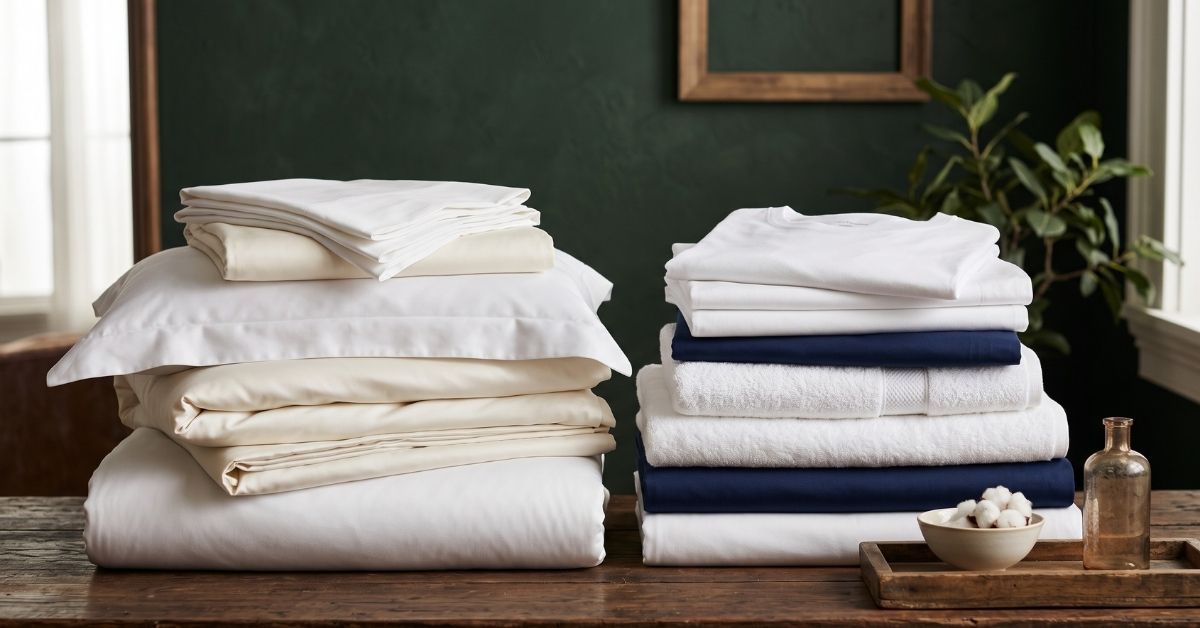
Your bedding matters more than you might think. Consider organic sheet sets or organic cotton bed sheet sets — free from synthetic finishes that can cause irritation. If you have a thicker mattress, deep pocket sheet sets keep sheets securely in place, while adjustable bed sheets are ideal for adjustable bases. For a comprehensive comparison of sleep fabric types, see our article on the best fabric to sleep in: cotton vs. bamboo vs. linen.
2. Apply Strategic Sleep Hygiene in the Hours Before Bed
- Caffeine cutoff: The half-life of caffeine in the average adult is five to seven hours. Cut off all caffeine at least six hours before your target bedtime.
- Alcohol: Despite inducing drowsiness, alcohol fragments sleep architecture and suppresses REM sleep. This is well-documented by the National Institute on Alcohol Abuse and Alcoholism (NIAAA).
- Blue light and screens: Short-wavelength blue light from devices signals daylight to your suprachiasmatic nucleus, suppressing melatonin. Put screens away at least 45 minutes before bed. Our guide on how to fall asleep in 10 seconds includes pre-sleep wind-down protocols.
- Relaxation practices: Progressive muscle relaxation and diaphragmatic breathing reduce sleep onset latency. Explore evidence-based options in our guide to relaxation therapy for sleep.
3. Use Polyphasic Sleep and Strategic Napping
If you know a short night is coming, a pre-emptive nap earlier in the day (before 3 pm) can partially buffer the deficit. A single 20-minute power nap between noon and 3 pm restores alertness without causing sleep inertia. If reading often makes you sleepy during the day, that may be a sign of underlying sleep debt — see our explainer on why you feel sleepy when reading.
4. Mind Your Sleep Position
Sleep position affects airway patency, spinal alignment, and the efficiency of glymphatic waste clearance. Poor positioning leads to more frequent micro-arousals. For a detailed breakdown, see our guide on best and worst sleeping positions.
RECOMMENDATION: The Short-Night Survival Protocol
- Take a 20-minute nap before 3 pm on the day of your short night.
- Stop all caffeine by 2 pm.
- Set your bedroom to 65°F / 18°C with blackout conditions.
- Do 5 minutes of slow diaphragmatic breathing before lying down — try the method from our guide on how to sleep fast in 40 seconds.
- Sleep on breathable, temperature-regulating bedding.
- Set a consistent wake time and get bright light within 10 minutes of waking to reset your circadian rhythm.
- Return to your full sleep schedule as soon as possible.
Special Considerations: Age and Sleep Needs
The CDC's sleep recommendations by age note that teenagers need 8–10 hours, school-age children 9–12 hours, and adults over 65 may experience changes in sleep structure — a topic we explore in depth in our article on why elderly people sleep a lot. Attempting to operate on four hours carries amplified risks for older adults, adolescents, pregnant individuals, and anyone recovering from illness.
The Bottom Line
You cannot biologically compress eight hours of restorative sleep into four. The sleep cycles that repair your body, consolidate your memories, regulate your hormones, and clean cellular waste from your brain require time — specifically, the 90-minute ultradian rhythm that repeats four to six times across a full night.
What you can do is maximize the efficiency of whatever sleep window you have: by controlling your environment, eliminating sleep disruptors, using strategic napping, and returning to adequate sleep as soon as circumstances allow.
Treat short nights as an occasional reality to manage — not a productivity strategy to optimize.
Sources