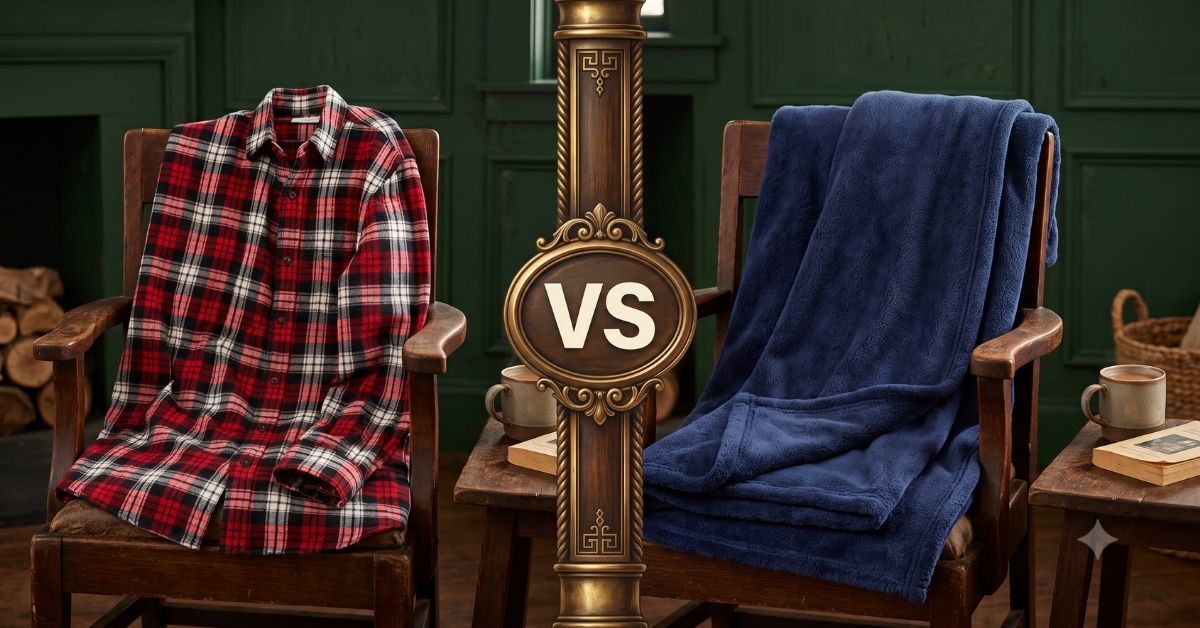
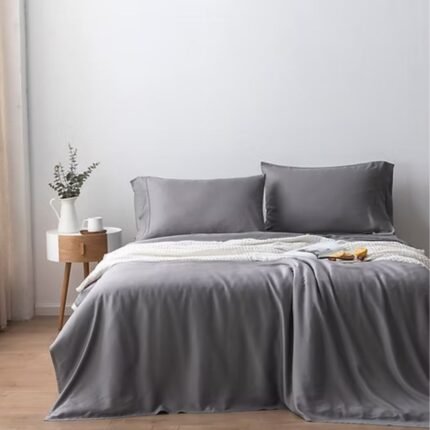
When temperatures drop, swapping crisp summer percale sheets for something warmer is one of the simplest upgrades you can make to your sleep setup. Two fabrics dominate the winter bedding aisle: fleece and flannel. At OdeSleep we research and test bedding materials year round, and shoppers consistently ask us the same question: which one is actually right for my bedroom?
This guide breaks down the raw materials, thermal performance, care requirements, and health considerations of both fabrics. Where it helps, we reference federal guidance from the Federal Trade Commission, the Consumer Product Safety Commission, the Centers for Disease Control and Prevention, the Environmental Protection Agency, and the United States Department of Agriculture, so you can shop with confidence rather than guesswork.
Understanding the Basics: Flannel and Fleece
What Is Flannel?
Flannel is a woven fabric that historically came from wool, though modern bedding flannel is almost always spun from cotton or a cotton polyester blend. Cotton remains the most widely produced natural fiber on the planet, and agricultural researchers continue to study ways to make cotton textiles softer, stronger, and more sustainable, as detailed by the USDA Agricultural Research Service. Because blended fibers are common in budget bedding, federal labeling rules enforced by the Federal Trade Commission require every fiber and its exact percentage to appear on the product label, which is worth checking if you are set on buying pure cotton flannel. You can review those requirements directly in the FTC's own guidance on textile and wool labeling.
The texture that makes flannel so cozy comes from a finishing process called napping. After the fabric is woven, mechanical brushes lift the loose fiber ends on the surface, creating a soft, fuzzy nap on one or both sides. That nap traps tiny pockets of air, which is what gives flannel its gentle, breathable warmth. If you would like a broader comparison of how cotton stacks up against other natural fibers, our guide on how linen, cotton, and bamboo compare walks through the tradeoffs in detail, and our piece on organic cotton versus conventional cotton covers how farming methods affect the finished sheet.
What Is Fleece?
Fleece is a knit fabric rather than a woven one, and it is entirely synthetic. It was developed in the late 1970s as a lightweight, water resistant alternative to wool. To make fleece, manufacturers knit polyester fibers into a dense fabric, run it through a napping machine to raise the pile, and then shear the loops to create a thick, plush loft. Because fleece is a manufactured polymer rather than a plant fiber, it falls under the same federal fiber content rules that govern any garment or bedding item, which are codified in 16 CFR Part 303 of the federal regulations.
If you want to see how polyester compares with other synthetics such as nylon, or whether sleeping on polyester is something to worry about, we cover both questions in Nylon vs. Polyester and whether polyester is bad for you. For a side by side look at the two most common budget fabrics, our article on polyester versus cotton sheets is a useful companion read.
Direct Comparison: Flannel Sheets vs. Fleece
1. Raw Materials: Is Flannel Polyester?
A common point of confusion for shoppers is wondering whether flannel is actually polyester. The short answer is no. High quality bedding flannel is typically one hundred percent cotton, though some low cost retail options blend in polyester to cut manufacturing costs and add wrinkle resistance.
Fleece, by contrast, is entirely synthetic. It is made from polyethylene terephthalate, the same polymer plastic water bottles are made from. If you prefer natural, plant based materials that let your skin interact with organic fibers, cotton flannel is the clear choice. If you prefer a moisture resistant, high tech synthetic, fleece wins on that front.
2. Insulation: Is Flannel or Fleece Warmer?
Weight for weight, fleece is technically the warmer fabric. Because fleece has a deeper, loftier pile than brushed flannel, it traps a larger volume of dead air, which creates a thicker thermal barrier between your skin and the cold air in your bedroom.
That high thermal efficiency is a double edged sword. Because fleece is synthetic, it holds onto heat aggressively, which can lead to overheating if your bedroom is not genuinely cold. Flannel provides plenty of cozy warmth, but its insulation curve is gentler, so it is less likely to trigger night sweats.
3. Breathability: Does Fleece Trap More Body Heat Than Flannel?
Yes, fleece traps more body heat than flannel, largely because polyester is hydrophobic (it repels water) and knit into a tight structure. As you sleep, your body naturally releases moisture vapor. Flannel absorbs that vapor and lets it evaporate through the breathable woven gaps in the cloth, which helps regulate your core temperature. Fleece tends to block that vapor from escaping, so moisture can pool underneath the covers instead of evaporating, creating a humid, clammy microclimate.
There is also an environmental angle worth knowing. Every time synthetic fleece is machine washed, it sheds tiny plastic fragments called microfibers, which research programs at the Environmental Protection Agency have been working to identify and track as they move through waterways. Natural cotton flannel does not contribute to this particular source of plastic pollution. If breathability and a lighter environmental footprint both matter to you, it is worth reading our comparison of Tencel and cotton, two of the most breathable natural options on the market.
Flannel vs. Microfleece: Understanding the Varieties
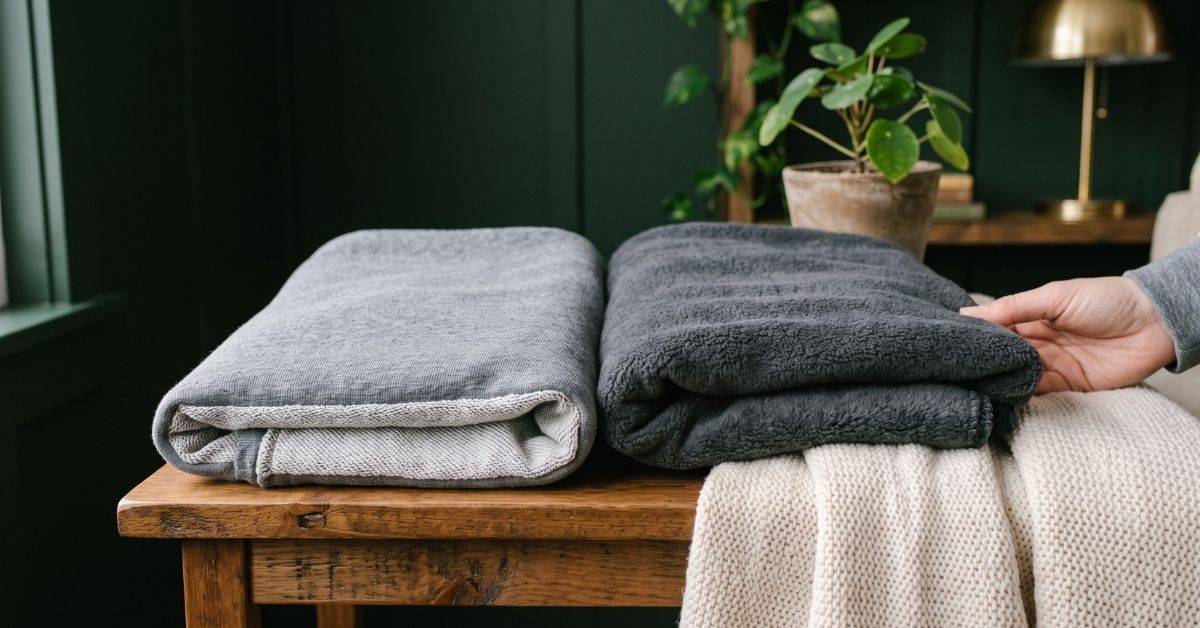
If you decide to go the synthetic route, you will quickly notice that fleece is not a single fabric. Microfleece is a specific category defined by its weight and fiber thickness. It is the thinnest, most lightweight form of fleece available, generally weighing less than two hundred grams per square meter, and its individual polyester fibers are exceptionally fine.
- Standard fleece: a deep, plush pile that traps a large amount of heat and works best for blankets and throws.
- Microfleece: a thin, lightweight, almost velvet like knit that breathes a bit better and suits fitted sheets rather than heavy blankets.
- Cotton flannel: a woven, brushed fabric with excellent moisture absorption and a balanced, gentle level of warmth.
Microfleece drapes closer to the body, feels velvety rather than fluffy, and is far less bulky than standard polar fleece. It is a reasonable middle ground if you want a lightweight sheet that still retains some synthetic warmth without the full weight of a fleece blanket. For a closer look at how thin synthetic knits perform against similar fabrics, see our guide to microfiber versus polyester sheets.
Comparison Table: Fleece vs. Flannel Bedding
Here is a functional, side by side breakdown of how the two fabrics perform across the metrics that matter most for sleep.
| Performance Feature |
Cotton Flannel Bedding |
Synthetic Fleece Bedding |
| Material composition |
Primarily 100% cotton, sometimes cotton and polyester blends |
100% polyester (PET) |
| Fabric structure |
Woven (plain or twill) and brushed |
Knit, then napped and sheared |
| Warmth level |
High, with a cozy, gentle insulation curve |
Very high, with aggressive heat retention |
| Breathability |
Excellent, allows air and moisture transfer |
Low to moderate, traps air and humidity |
| Moisture management |
Highly absorbent, pulls sweat away from skin |
Hydrophobic, can feel clammy against skin |
| Weight and feel |
Medium to heavy, structured, fuzzy texture |
Lightweight, stretchy, plush or velvety texture |
| Pilling resistance |
High, especially with long staple cotton |
Low, prone to surface fiber knotting |
| Shrinkage risk |
Moderate to high in hot water and high heat |
Minimal, though high heat can scorch fibers |
| Static and allergen pickup |
Low, naturally static resistant |
Higher, static charge can attract dust and dander |
Durability, Care, and Fabric Longevity
Do Flannel Sheets Shrink More Than Fleece?
Yes, flannel sheets generally shrink more than fleece. Because high quality flannel is made from natural cotton fibers, the yarn holds structural tension from the weaving process. Exposing those fibers to hot water and high dryer heat releases that tension, causing the fibers to contract back toward their natural, shorter state. A standard set of cotton flannel sheets can shrink by roughly three to five percent over its first few wash cycles.
Fleece sheets, being thermoplastic polyester, are essentially immune to that kind of fiber shrinkage. They come out of a warm wash close to the size they went in. Fleece has a different weakness though: high heat can melt the microfiber tips, leaving the fabric rough, scratchy, or scorched.
Why Does Fleece Pill After Just a Few Washes?
If you have owned a fleece blanket, you already know it can develop small, annoying fiber balls on the surface. Pilling happens when surface fibers experience friction, either during use or inside the washing machine. That friction causes loose fiber ends to break, tangle, and knot together into pills. Because polyester is an unusually strong, durable fiber, those tangled knots cannot break away from the fabric base, so they stay anchored permanently. Cotton flannel fibers can also break and tangle, but because cotton is a comparatively weaker fiber, the pills naturally snap off and wash away, keeping the surface smoother over time.
A Quick Note on Fire Safety
Both flannel and fleece are napped, pile like fabrics, and pile fabrics behave differently in a flame than flat, tightly woven cloth. For children's sleepwear specifically, the Consumer Product Safety Commission enforces the Flammable Fabrics Act, which sets flammability testing standards for garments such as pajamas and robes under 16 CFR Part 1615. Bed sheets and blankets are not sleepwear and are not covered by that particular standard, but the underlying reason it exists is worth keeping in mind: pile fabrics can flash across the surface faster than flat weaves. Keeping any bedding, flannel or fleece, away from open flames, space heaters, and lit candles is good practice regardless of fiber type.
Health and Sensitivity Considerations
Why Does Flannel Feel Softer Against the Skin Over Time?
Fleece feels plush and fuzzy on first touch, but many people find that flannel feels softer and more comfortable the longer they own it. That comes down to fiber behavior. Cotton flannel softens with every wash cycle as the yarns relax and break in, much like a well worn t shirt. Fleece, while velvety out of the box, relies on fine plastic tips that lose their uniform direction after repeated friction and exposure to laundry detergent, which can leave it feeling slightly stiffer or more synthetic over time.
Is Flannel Better for Sensitive Skin or Allergies?
Generally, yes. Natural cotton flannel is hypoallergenic and largely static free, so it does not generate the static charge that synthetic fabrics do. Fleece, being polyester, tends to act like a magnet for static electricity, and that static charge can attract and hold onto airborne dust mites, pet dander, and other household allergens within its plush knit pile.
Dust mites are one of the most common indoor asthma and allergy triggers, and most exposure happens while sleeping, since bedding is where mites and their allergen laden waste concentrate. The Centers for Disease Control and Prevention recommends allergen proof mattress and pillow covers as part of a broader asthma control routine, along with regular hot water washing of bedding. If you deal with winter allergies, eczema, or asthma, choosing a breathable, easy to wash natural fiber and following that guidance is a sensible combination.
OdeSleep Recommendation: Which Should You Choose?
Choosing between fleece and flannel comes down to your sleep style, your local winter climate, and how much effort you want to put into laundry care.
Choose Cotton Flannel Bedding If
- You run hot or deal with night sweats. Flannel's natural cotton fibers breathe well and absorb excess moisture instead of trapping it against your skin.
- You have sensitive skin, eczema, or environmental allergies. Cotton's hypoallergenic, static resistant nature makes it less likely to hold onto dust mites or irritate the skin.
- You want bedding that improves with age. High quality flannel becomes softer and more comfortable the more you wash it.
For a flannel alternative that combines that same breathability with certified purity, our Organic cotton bed sheet set and Organic Sheet Set are both grown and processed without synthetic pesticides. If you sleep hot even in flannel, our Oeko Tex certified bamboo sheets are independently tested for harmful substances and offer a naturally cooling alternative.
Choose Fleece Bedding If
- You sleep exceptionally cold or live in an unheated space. If your bedroom regularly drops below sixty degrees Fahrenheit, the aggressive insulation of fleece will keep you comfortably warm.
- You want low maintenance laundry care. Fleece resists shrinking and dries quickly without wrinkling, which makes it fairly hassle free to maintain.
- You love a plush, stretchy, velvety texture. If the cloud like feel of a fleece blanket appeals to you more than a structured woven sheet, microfleece is worth trying.
If neither fabric feels quite right, mid weight woven fibers such as our linen bed sheets offer a breathable, texturally different option for shoulder season sleepers who want warmth without the bulk of flannel or fleece. And if you are still weighing your options across fabric families more broadly, our roundup of the best fabric to sleep in and our comparison of eucalyptus and bamboo sheets are good next reads.
Sources
This article references guidance and data from the following government and public research sources.