When you shop for premium bedding or apparel, you will inevitably run into a classic showdown: Egyptian cotton versus Supima cotton. Both carry a legendary reputation for luxury, but they offer genuinely different experiences when it comes to sleep comfort, everyday durability, and price. This guide was researched and written by the OdeSleep editorial team using official grading and labeling standards published by the United States Department of Agriculture and the Federal Trade Commission, along with peer reviewed dermatology research, so you can shop with confidence instead of guesswork.
At OdeSleep, we know that high quality sleep starts with understanding exactly what touches your skin every night. Below we break down the real science, the regulatory background, and a practical buying framework so you can choose the right fabric for your bed.
What Is Supima Cotton?
If you are asking what Supima cotton actually is, you are looking at one of the most tightly regulated names in American textiles. The name Supima is a blend of the words Superior and Pima.
Supima cotton fabric is made from a specific species of cotton, Gossypium barbadense, grown almost exclusively in the United States, primarily across the sunny, irrigated fields of California, Arizona, New Mexico, and Texas.
What makes Supima uniquely elite is its status as an extra long staple cotton. Regular, short staple cotton fibers average around one inch, while Supima fibers average 1.5 inches or longer. That extra length means fewer fiber ends are exposed once the cotton is spun into yarn, which produces a fabric that is remarkably uniform, smooth, and resistant to pilling, the small fuzzy balls that form on lower grade sheets over time. The fiber grading and testing methods used to classify American cotton, including length, strength, and uniformity, are set and administered by the USDA Agricultural Marketing Service Cotton and Tobacco Program, which produces the physical reference standards used by classing laboratories around the world.
Is Supima Cotton Actually Good?
Yes. Supima represents less than one percent of all cotton grown worldwide. Because the trademark is strictly licensed and monitored by the Supima Association, buying a certified Supima product is a strong guarantee that you are getting one hundred percent pure extra long staple American cotton rather than a cheaper blend. In the United States, any fiber content claim printed on a label, including cotton type claims, also falls under the FTC Textile Fiber Products Identification Act, which makes false or misleading fiber content claims unlawful, giving shoppers a legal backstop against mislabeled sheets.
Is There a Real Difference Between Egyptian and Supima Cotton?
Yes, there is a substantial structural and regulatory difference between the two.
The core difference lies in geography and quality control. Supima is an American grown trademark that guarantees one hundred percent extra long staple quality on every certified product. Egyptian cotton, on the other hand, simply refers to cotton grown in the fertile soils of the Nile River Valley in Egypt.
Because of Egypt's unique climate, its cotton can also produce very long, fine fibers. However, not all Egyptian cotton qualifies as extra long staple. The term Egyptian cotton is widely used as a marketing label rather than a guaranteed grade. Unless a product carries an official certification seal from the Cotton Egypt Association, many Egyptian cotton sheets on the market are actually lower grade short staple cotton or blends sold under a prestigious sounding name. This kind of country of origin and fiber content confusion is exactly what the FTC's textile and wool labeling guidance is designed to prevent, since retailers are required to disclose accurate fiber content and origin information on labels, invoices, and advertising.
Egyptian Cotton vs Supima Cotton: Full Comparison
To help you visualize how these two fabrics stack up side by side, the table below summarizes the core structural and performance specifications.
| Feature |
Supima Cotton |
Egyptian Cotton |
| Country of origin |
United States, primarily the Southwest region |
Egypt, primarily the Nile River Delta |
| Fiber length |
Guaranteed extra long staple, 1.5 inches or longer |
Varies; can be extra long staple, but often only long or regular staple |
| Authenticity control |
Verified through the Supima Association's licensing and testing program |
Highly variable; meaningful risk of counterfeit or blended product without certification |
| Initial texture |
Crisp, clean, and structured |
Silky, buttery, and heavily plush |
| Durability factor |
Roughly 45 percent stronger than regular cotton, per Supima Association fiber testing |
Highly durable when genuinely 100 percent extra long staple |
| Color longevity |
Excellent, with deep dye absorption |
Very good, though more prone to gradual fading |
| Best suited for |
Hot sleepers, vivid colors, everyday durability |
Cold sleepers, classic white palettes, a silk like luxury feel |
How Fiber Grading Actually Works
Every bale of cotton produced in the United States, including the Pima cotton used for Supima, is tested and classed by the USDA Cotton and Tobacco Program's classing division, which measures color, fiber length, strength, uniformity, and micronaire on instrumentation calibrated against the official national standards. The official grade standards for American Pima cotton, which underpin the Supima designation, are published and maintained by the USDA Agricultural Marketing Service. Egypt runs its own national classing system through the Cotton Egypt Association, but that certification is voluntary at the retail level, which is why a printed hang tag alone is not proof of authenticity. Looking for the certification seal, rather than the word Egyptian by itself, is the most reliable way to confirm what you are buying.
OdeSleep's Buying Recommendation
Neither cotton is universally better. The right choice depends entirely on your sleeping style, environment, and priorities. Use the guide below.
Choose Supima cotton if:
- You sleep hot. Supima's uniform fibers create a clean, breathable weave that releases heat easily.
- You want rich, lasting color. Deep navy, emerald, or patterned sheets stay vibrant for years.
- You value verified authenticity. A licensed Supima Association trademark means your money is going toward genuine, American grown fiber with minimal counterfeit risk.
- You have sensitive skin. Minimal pilling and fewer loose fiber ends make it a gentle, soothing choice.
Choose Egyptian cotton if:
- You want a silky, hotel style feel. That slippery, luxurious drape is hard to match once the cotton is authentic.
- You tend to sleep cool. Traditional Egyptian cotton weaves run slightly warmer, which suits cooler bedrooms.
- You are willing to verify certification. Look for the official Cotton Egypt Association seal so you are not paying premium prices for standard cotton.
If you would rather compare cotton against an entirely different fiber before deciding, our guide on the best fabric to sleep in walks through how cotton stacks up against linen, bamboo, and synthetic blends for overall sleep comfort.
Explore More Fabric Guides
If you are still narrowing down the right bedding fabric, these OdeSleep guides dig into the other major materials on the market.
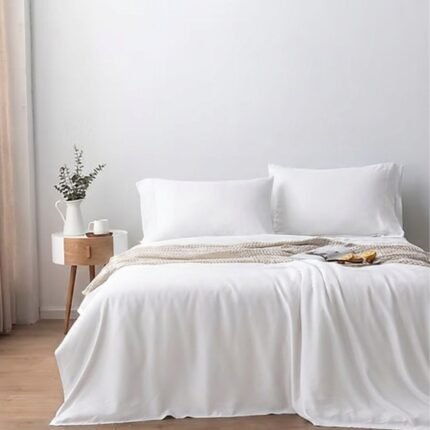
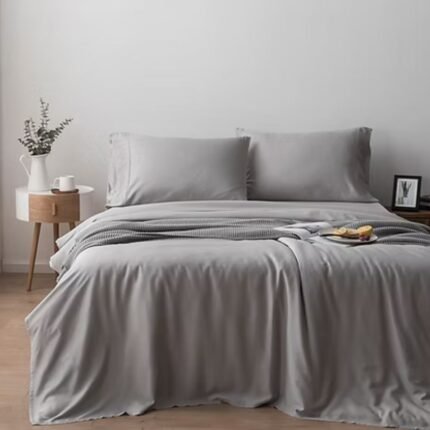
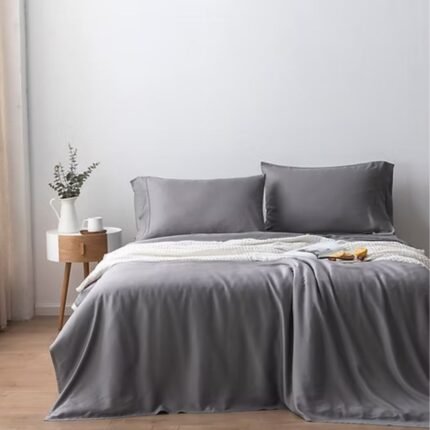
Shop OdeSleep Premium Bedding
Ready to upgrade your bed? Here are a few OdeSleep sets to consider depending on the fiber and feel you landed on above.
Sources
- USDA Agricultural Marketing Service, Cotton Fiber Testing and Standardization
- USDA Agricultural Marketing Service, American Pima Color and Leaf Grade Cotton Standards
- USDA Agricultural Marketing Service, Cotton Classing Services
- Federal Trade Commission, Textile Fiber Products Identification Act
- Federal Trade Commission, Threading Your Way Through the Labeling Requirements Under the Textile and Wool Acts
- National Library of Medicine, Scoping Systematic Review of Treatments for Eczema, Textiles Chapter
- U.S. Consumer Product Safety Commission, Flammable Fabrics Act
- U.S. Consumer Product Safety Commission, Mattresses, Mattress Pads, and Mattress Sets