Choosing the right material for your furniture, jacket, or accessories used to be simple: you either bought genuine leather or you did not. Today, walking into a showroom or browsing online feels like decoding a secret language. You will run into terms like PU leather, bonded blends, and leather effect, leaving you to wonder what you are actually paying for.
If you are caught in the classic comparison of leather, bonded leather, and faux leather, you are not alone. This guide strips away the marketing jargon, checks the claims against official U.S. regulatory guidance, and explains how each material performs so you can choose with confidence.
What Are You Actually Buying?
To make an informed choice, it helps to understand the structural makeup of each material and how U.S. regulators define them. The Federal Trade Commission maintains dedicated rules for this exact question, since mislabeling leather content is considered a deceptive trade practice.
1. Genuine Leather
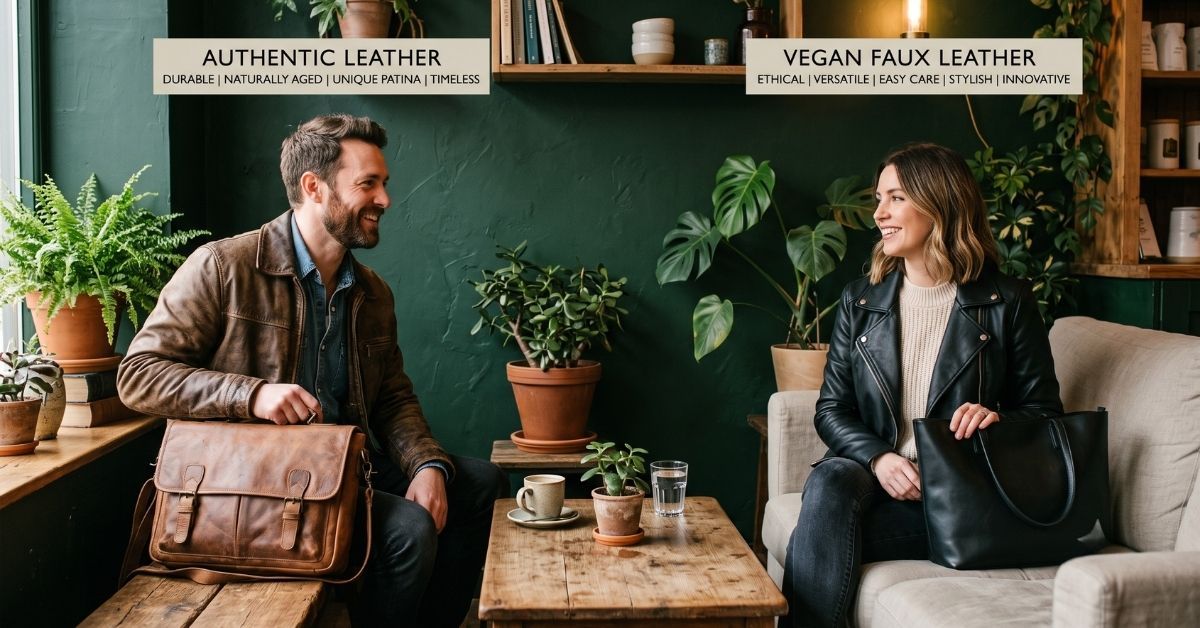
Genuine leather is a natural product made from processed animal hides. It is highly breathable, durable, and known for developing a rich patina, a soft sheen and character, as it ages. Under federal labeling rules, a product can only be called "leather" without qualification if it is composed in all substantial parts of real hide.
2. Faux Leather (Synthetic and Artificial Leather)
If you see terms like synthetic artificial leather, vegan leather, or PU polyurethane, you are looking at faux leather. Unlike genuine hide, faux leather is a manmade fabric. It typically consists of a textile base layer, such as polyester or cotton, coated with a plastic polymer, usually polyurethane (PU) or polyvinyl chloride (PVC). It is designed to mimic the texture and appearance of real hide without using animal products. The Federal Trade Commission's Apparel and Labeling guidance requires that products made from non leather material appearing to be leather clearly disclose that fact to shoppers.
Because it is manufactured chemically, there are several faux leather types on the market:
- PU Leather: Soft, flexible, and engineered to mimic the breathability of real leather.
- PVC Leather (Vinyl): Tougher, highly water resistant, and frequently used in commercial spaces or marine environments.
- Bio based Leathers: Emerging eco friendly alternatives made from pineapple leaves, mushroom mycelium, or apple peels.
3. Bonded Leather
Bonded leather is the closest thing to a composite in the textile world. It is not fully synthetic, nor is it a solid hide. Instead, it is made by shredding leftover scraps of genuine leather, mixing them with plastic binders such as polyurethane, and rolling the paste onto a paper backing. It often contains as little as 10 percent to 20 percent actual leather fiber. The FTC Leather Guides specifically require sellers to disclose the percentage of leather fiber versus non leather substance when marketing bonded leather products.
What Does Leather Effect Mean?
While shopping, you might encounter a description that boasts a sleek leather effect. Simply put, leather effect is a purely cosmetic descriptor. It means the product is not made of real leather, but has been embossed, stamped, or finished to visually resemble it. A leather effect jacket or armchair is almost always constructed from a budget conscious synthetic material. It gives you the look of luxury without the corresponding price tag, though under FTC guidance the true composition still has to be disclosed somewhere on the product or its packaging.
Are These Materials Regulated?
One reason this category feels confusing is that several federal agencies each oversee a different slice of it. Understanding who regulates what can help you evaluate a seller's claims more critically.
Composition and labeling. The Federal Trade Commission's 16 CFR Part 24 Leather Guides govern how leather, imitation leather, and bonded leather products must be described in advertising and on labels.
Furniture fire safety. Upholstered furniture sold in the United States, regardless of whether the cover is genuine leather, faux leather, or fabric, must comply with the CPSC flammability standard for upholstered furniture, which reduces the risk of smolder ignition in the home.
Chemical safety of vinyl coatings. Because PVC faux leather relies on plasticizers, the EPA's review of phthalates under the Toxic Substances Control Act is a useful reference for shoppers who want to understand how these additives are assessed and managed. The agency also tracks human exposure trends through its biomonitoring data on phthalates.
Eco and vegan marketing claims. If a product is advertised as sustainable, eco friendly, or vegan, that claim falls under the FTC's Green Guides for environmental marketing, which require sellers to back up any environmental benefit claim with competent evidence rather than vague marketing language.
Comfort, Longevity, and Care
How do these materials hold up in real life? The right choice depends entirely on your daily routine, budget, and lifestyle.
| Feature |
Genuine Leather |
Faux Leather (Synthetic) |
Bonded Leather |
| Average Lifespan |
15 to 20+ years |
3 to 5 years |
1 to 3 years |
| Breathability |
High, adapts to body temperature |
Low, can feel warm or sticky |
Low |
| Maintenance |
Requires periodic conditioning |
Wipe and go simplicity |
High risk of flaking over time |
| Pet Friendliness |
Scratches, but punctures often buff out |
Resists claws well, though thin coatings can rip |
Poor, claws cause rapid peeling |
| Typical Price Range |
Highest upfront cost |
Moderate and budget flexible |
Lowest upfront cost |
| Flammability Labeling |
Must meet CPSC upholstered furniture standard when used on furniture |
Must meet CPSC upholstered furniture standard when used on furniture |
Must meet CPSC upholstered furniture standard when used on furniture |
The Durability Factor
Genuine leather wins the longevity comparison by a wide margin. It stretches and softens over time. Faux leather does not stretch the same way. Instead, over years of flexing and exposure to sunlight, the plastic coating can begin to crack. Bonded leather is the most fragile of the three. Once the structural bond breaks down, it tends to peel away in large, unsightly flakes that cannot be easily repaired.
The Cleanup and Maintenance
If you have young kids or pets that spill often, synthetic faux leather is a major win. Because it is nonporous, liquids sit on the surface rather than soaking in, so you can wipe up coffee, ink, or mud with a simple damp cloth. Genuine leather, while tough, is porous. It requires specialized leather cleaners and periodic conditioning to prevent it from drying out and cracking. If you are also rethinking the textiles around your furniture, our guide to Linen Sheets vs Cotton Sheets covers similar durability and care tradeoffs for bedding.
Which Material Wins?
There is no single right answer, but there is a right choice for your specific project.
- Choose Genuine Leather if: you view your purchase as a long term investment, love the natural look and smell of real hide, and want furniture that gets more comfortable with age.
- Choose Faux Leather if: you want a sleek, modern aesthetic on a budget, prefer an animal free alternative, and need a low maintenance material that shrugs off spills.
- Approach Bonded Leather with caution: while highly affordable, it rarely survives the test of time in high traffic areas.
Our Recommendation
For most households, genuine top grain leather is the better long term investment for statement furniture that stays put for a decade or more, while PU faux leather is the smarter pick for kids rooms, rentals, or any space that needs to be wiped down often. PVC vinyl earns its keep in outdoor, marine, or commercial settings where water resistance matters more than softness. Bonded leather is the one material we recommend approaching with real caution, since its paper backed structure tends to peel within a few years of regular use.
| Best For |
Recommended Material |
Why It Works |
Shop |
| Living rooms and heirloom furniture |
Genuine top grain leather |
Ages into a patina, resists daily wear, and can last well beyond a decade with proper conditioning |
Organic Sheet Set |
| Kids rooms, rentals, and busy households |
PU faux leather |
Wipes clean instantly, resists small claws, and costs a fraction of genuine hide |
Oeko Tex certified bamboo sheets |
| Marine, outdoor, or commercial seating |
PVC vinyl leather |
Highly water resistant and simple to sanitize between uses |
Organic cotton bed sheet set |
| Tight budgets, short term use |
Approach bonded leather with caution |
Affordable at first, but the surface layer tends to crack and peel within a few years |
Not recommended for long term investment |
Complete the Room: Bedding and Textile Pairings
A leather or faux leather headboard looks best next to bedding that is equally well made. Consider pairing your new furniture with Oeko Tex certified bamboo sheets for a soft, breathable feel, an Organic Sheet Set if you prefer natural, low impact fibers, or an Organic cotton bed sheet set for everyday comfort that holds up to frequent washing.
Further Reading on Fabric and Material Comparisons
Choosing a material is easier when you can compare it against everything else in your home. These related guides cover the fabric side of the equation:
Sources
This article draws on the following government and regulatory resources, current as of publication:
- Federal Trade Commission, Leather Guides overview
- eCFR, Title 16 Part 24, Guides for Select Leather and Imitation Leather Products
- Federal Trade Commission, Apparel and Labeling guidance
- Federal Trade Commission, Green Guides for environmental marketing claims
- U.S. Consumer Product Safety Commission, Upholstered Furniture flammability FAQ
- U.S. Consumer Product Safety Commission, New Federal Safety Standard for Upholstered Furniture Fires
- U.S. Environmental Protection Agency, Phthalates under TSCA
- U.S. Environmental Protection Agency, Biomonitoring, Phthalates
By understanding exactly what goes into these materials, and how federal agencies regulate their labeling, safety, and marketing, you can bypass the marketing hype and choose a material that genuinely balances style, function, and longevity for your space.