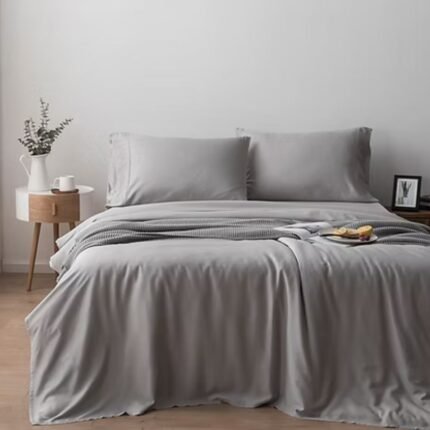
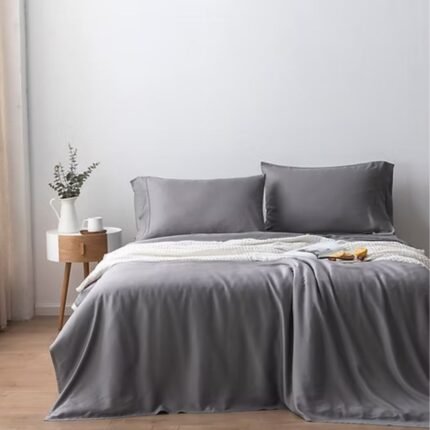
The modern world does not come with an off switch. We spend our days tethered to glowing screens and high-octane schedules, then wonder why our brains refuse to stop buzzing the moment our heads hit the pillow.
If you have ever spent hours staring at the ceiling, you already know that sleep is not something that just happens — it is something you have to invite in. This guide walks you through exactly how to do that: from understanding the biology of winding down, to building a bedroom environment that works for your body, to staying cool enough for deep, uninterrupted rest.
Understanding the Wind-Down: What Science Says
Before diving into the tips, it helps to understand why winding down matters in the first place. Think of your brain like a jet engine: you cannot cut the power mid-flight and expect a smooth landing.
Winding down is the intentional transition period where you shift your nervous system from "go mode" (sympathetic) to "rest and digest" mode (parasympathetic). By creating a buffer zone between your busy day and your sleep, you send a clear hormonal signal — specifically to melatonin, the hormone your pineal gland produces at night — that it is safe to take over.
According to the National Institutes of Health (NIH), melatonin regulates the body's sleep-wake cycles by interacting with the suprachiasmatic nucleus of the hypothalamus. Crucially, bright light suppresses melatonin production, which is why screen exposure close to bedtime delays the onset of sleep.
To learn more about building a complete sleep routine from the ground up, the sleep guide of your dreams is a helpful starting point for understanding how all the pieces fit together.
How to Calm Your Mind Before Sleep
When your mind is still racing at bedtime, the goal is not to force sleep — it is to create the conditions where sleep can arrive on its own. The CDC's National Institute for Occupational Safety and Health recommends following a relaxing routine before bedtime to help your body make the transition from being awake to sleeping, and keeping light levels low one to two hours before bed.
The U.S. Department of Homeland Security echoes this, advising that electronic devices be turned off or removed at least 30 minutes before bedtime and that your bedroom be kept quiet and relaxing. (Source: DHS — Good Sleep Hygiene)
Here are the best evidence-aligned activities for calming your mind:
- Progressive Muscle Relaxation (PMR) — Tense and then release each muscle group, starting from your toes and moving up to your jaw. A systematic review and meta-analysis published on PubMed confirms that PMR is a non-pharmacological intervention that improves sleep quality and mental health in adults. PMR is also registered as an active area of clinical research by the U.S. National Library of Medicine.
- Box Breathing — Inhale for 4 seconds, hold for 4 seconds, exhale for 4 seconds, hold for 4 seconds. This controlled breathing pattern activates the parasympathetic nervous system, helping to lower cortisol and heart rate before sleep.
- Light Reading — Choose a physical book or an e-reader with a warm-light filter. Avoid gripping thrillers or emotionally intense content that keeps your mind engaged.
- Journaling — If your brain is looping through tomorrow's to-do list, write it down. Exporting your thoughts onto paper reduces cognitive load and lowers pre-sleep anxiety.
- Gentle Stretching — A few minutes of the "legs up the wall" pose or gentle yoga can release physical tension accumulated during the day.
- Consistent Routine — Consistency is your most powerful tool. The NHLBI at NIH recommends using the hour before bed for quiet time and keeping the same sleep schedule even on weekends. Staying up late and sleeping in on weekends disrupts your body clock's sleep-wake rhythm. (Source: NHLBI/NIH — Healthy Sleep Habits)
For a structured, research-backed approach to your nightly timing, the 10-3-2-1-0 Sleep Rule breaks down exactly when to stop caffeine, food, work, and screens before bed. And if you want to maximise your sleep cycles, 5 Essential Sleep Hacks: The 90-Minute Rule explains how to align your bedtime with your natural sleep architecture.
The Architecture of Comfort: How to Make Your Bed More Comfortable
You can have the calmest mind in the world, but if your sleep surface is scratchy, lumpy, or overheated, quality sleep will remain out of reach. Getting the physical setup right is not a luxury — it is a foundation.
| Bed Element |
What to Look For |
Why It Matters |
| Mattress Topper |
Memory foam or latex |
Relieves pressure points and reduces nighttime movement |
| Sheets |
High-thread-count cotton, linen, or bamboo |
Softer against skin; natural fibres breathe better |
| Pillow |
Position-matched firmness |
Firm for side sleepers; thinner for stomach sleepers |
| Duvet/Blanket |
Breathable fill |
Prevents overheating, which disrupts sleep cycles |
When it comes to bedding, fibre choice matters more than most people realise. If you are looking to upgrade, Oeko-Tex certified bamboo sheets are a popular option for temperature regulation — the Oeko-Tex certification ensures the fabric has been tested for harmful substances. Vintage linen bed sheets are another excellent choice because linen becomes softer with every wash and naturally wicks moisture. For households with varied sleeping preferences, adjustable bed sheets offer a practical solution that fits a range of mattress depths and styles. If you prefer something closer to nature, an organic sheet set uses certified organic cotton free from synthetic pesticides and chemical finishes.
Recommendation: If you can only upgrade one thing, start with your sheets. The fabric closest to your skin has the most direct impact on how cool and comfortable you feel throughout the night. Look for natural fibres (bamboo, linen, or organic cotton) over polyester blends.
How to Stay Cool in Bed at Night
Your core body temperature needs to drop slightly to initiate and sustain deep sleep. This is one of the most well-established findings in sleep science. Staying cool at night is therefore not a comfort preference — it is a biological requirement.
The CDC recommends a bedroom temperature between 60 and 67 degrees Fahrenheit (approximately 15–19°C) for quality sleep. (Source: CDC — About Sleep) A peer-reviewed study supported by the NIH's Intramural Research Program found that optimising indoor temperatures can plausibly improve sleep health. (Source: NIH PMC — Perceived Indoor Temperature and Sleep Health)
Here is how to put that into practice:
Choose Breathable Fabrics — Natural fibres like bamboo, eucalyptus (Tencel), and linen wick moisture away from the body far more effectively than polyester. The Oeko-Tex certified bamboo sheets and vintage linen bed sheets mentioned above are worth considering specifically for this reason.
Try the Sock Trick — It sounds counterintuitive, but wearing thin socks to bed can actually help you feel cooler overall. Socks dilate the blood vessels in your feet, which helps your core body heat dissipate more efficiently — a process called peripheral vasodilation.
Improve Air Circulation — Keep a window cracked, run a floor or ceiling fan, or use a dedicated bedroom fan. Moving air feels cooler than still air at the same temperature.
Take a Warm Bath 1–2 Hours Before Bed — The NIH's National Heart, Lung, and Blood Institute recommends taking a warm bath before bed. The drop in skin temperature after you step out mimics the natural temperature decline your body initiates to enter sleep. (Source: NHLBI/NIH — Your Guide to Healthy Sleep)
Quick-Reference: Bedtime Wind-Down Checklist
| Time Before Bed |
What to Do |
| 2 hours |
Dim the lights; switch off overhead lighting |
| 90 minutes |
Stop intense exercise and heavy meals |
| 60 minutes |
Put devices away; start a calm activity (reading, journaling, stretching) |
| 30 minutes |
Begin PMR or box breathing; set your bedroom temperature |
| Bedtime |
Cool, dark, quiet room; natural-fibre bedding |
Sources
- NIH — NCBI Bookshelf: Melatonin (Updated February 2024) — https://www.ncbi.nlm.nih.gov/books/NBK534823/
- CDC/NIOSH — Module 6: Improving Your Sleep and Alertness — https://www.cdc.gov/niosh/work-hour-training-for-nurses/longhours/mod6/04.html
- CDC — About Sleep — https://www.cdc.gov/sleep/about/index.html
- NHLBI/NIH — Healthy Sleep Habits — https://www.nhlbi.nih.gov/health/sleep-deprivation/healthy-sleep-habits
- NHLBI/NIH — Your Guide to Healthy Sleep (PDF) — https://www.nhlbi.nih.gov/files/docs/public/sleep/healthy_sleep.pdf
- U.S. Department of Homeland Security — Good Sleep Hygiene — https://dhs.gov/employee-resources/news/2022/02/03/good-sleep-hygiene
- NIH PMC — Perceived Indoor Temperature and Sleep Health Among US Women — https://pmc.ncbi.nlm.nih.gov/articles/PMC12466784/
- ClinicalTrials.gov — Effect of Progressive Muscle Relaxation Exercise on Sleep Quality — https://clinicaltrials.gov/study/NCT05604820
- PubMed — Progressive Muscle Relaxation: Systematic Review and Meta-Analysis — https://pubmed.ncbi.nlm.nih.gov/41633054/