Few things match the feeling of sliding into a freshly made bed after a long day. But if you have ever bought a highly rated sheet set only to find yourself tossing, turning, or overheating, you already know that one weave does not fit every sleeper.
The culprit behind a restless night is usually the weave of your sheets, not the fiber alone. When shopping for premium cotton bedding, you will inevitably run into the classic debate: percale vs sateen sheets. Both are woven from the same natural fibers, yet they create two very different sleep experiences. This guide breaks down how each weave is made, how each one feels, what current government and public health guidance says about textile safety and temperature regulation, and how to match the right weave to your own sleep style.
What Is Percale?
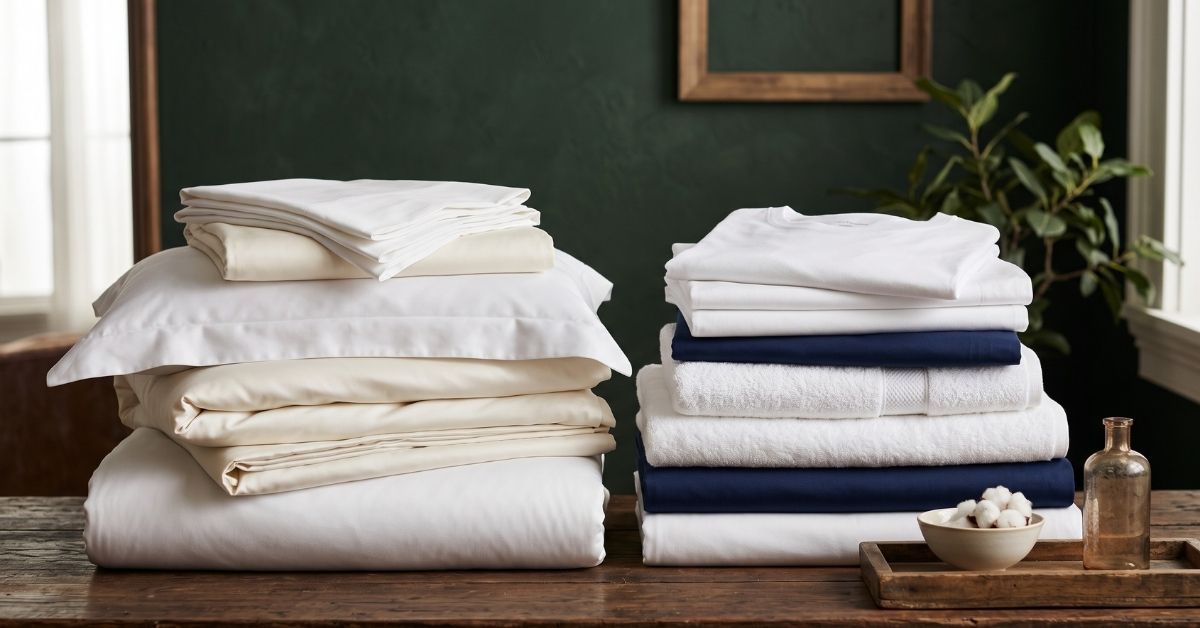
If you are new to buying premium bedding, your first question is likely: what is percale? Simply put, percale describes a specific weaving method, not a raw material. To qualify as true percale, fabric must be woven using a classic one over, one under plain weave, the textile equivalent of a checkerboard grid.
To be considered genuine percale, the fabric generally needs a thread count of at least 200. While blends exist, the gold standard is 100 percent cotton, which is what most shoppers mean when they ask what percale sheets are at their core: simple, tightly woven cotton bedding built for airflow and long term durability.
Because fiber content and weave claims directly affect what a label is legally allowed to say, the Federal Trade Commission requires accurate fiber content disclosure on most textile products sold in the United States, including bed sheets, so shoppers can verify what they are actually buying.
What Does Percale Feel Like?
If you have ever stayed at a high end boutique hotel, you already know the answer to what percale feels like. These sheets are crisp, cool, and lightweight. Brushing your hand over them gives you a matte finish with a satisfying, clean rustle, much like a freshly pressed cotton shirt.
Because the grid weave is so balanced, air passes through the fabric with very little resistance. This makes percale one of the most breathable options available, which is why it consistently keeps hot sleepers cool through the night.
What Is Sateen?
Sateen also starts with cotton, but the threads are arranged differently. Instead of a simple grid, sateen uses a four over, one under structure, meaning several vertical threads float over a single horizontal thread before dipping under. That floated construction exposes more fiber surface to light and touch, which is what gives sateen its signature silky hand and gentle sheen.
The tradeoff for that softness is weight and drape. Sateen sheets fall over the body with a heavier, more fluid feel, similar to a warm hug rather than a crisp sheet of paper.
Percale vs Sateen: Weave, Feel, and Warmth Compared
Use this side by side breakdown to see exactly how the two weaves differ before you shop.
| Feature |
Percale Sheets |
Sateen Sheets |
| Weave structure |
One thread over, one thread under, in a simple grid pattern |
Four threads over, one thread under, creating a floated surface |
| Feel |
Cool, crisp, and matte, similar to a pressed cotton shirt |
Silky, smooth, and slightly heavier with a soft drape |
| Warmth |
Highly breathable, best for hot sleepers and warm climates |
More insulating, best for cold sleepers and cooler rooms |
| Appearance |
Classic matte finish, tends to wrinkle casually |
Gentle sheen, naturally resistant to wrinkling |
| Durability |
Softens and improves with every wash over the years |
Soft immediately, but the longer floats can be more prone to snagging and pilling |
| Best for |
Hot sleepers, humid climates, anyone who likes a crisp hotel style bed |
Cold sleepers, dry climates, anyone who likes a silky, lustrous bed |
The Sleep Science Behind Weave and Temperature
Temperature regulation is not just a comfort preference, it is a documented part of healthy sleep. The Centers for Disease Control and Prevention recommends keeping the bedroom at a cool, comfortable temperature as one of the core habits that supports consistent, restorative sleep.
Research published through the National Institutes of Health also shows that ambient and skin temperature play a direct role in how quickly the body falls asleep and how well it stays asleep, since temperature is one of the environmental cues that helps regulate the sleep wake cycle. This is exactly why weave matters as much as thread count. A breathable percale weave helps dissipate body heat for people who tend to sleep hot, while the denser, insulating structure of sateen can help people who run cold feel cozy without extra blankets.
Durability, Care, and Safety Standards to Know
Because bedding sits directly against skin for roughly a third of every day, it is worth knowing that sheets sold in the United States fall under real federal oversight, not just marketing claims.
In terms of everyday care, percale tends to soften with every wash and can outlast sateen when it is laundered correctly, while sateen delivers a luxuriously soft feel right out of the package but is somewhat more prone to snagging and pilling over time because of its longer floating threads.
Which One Is Right for Your Bed?
The hot sleeper test: if you regularly wake up kicking off the blankets or live in a warm climate, choose percale. Its airy, grid style structure is built to let body heat escape rather than trapping it against your skin.
Choose percale if you want that classic, airy, hotel crisp feeling and do not mind a few natural wrinkles that soften with every wash.
Choose sateen if you prefer a silky, lustrous touch, want a heavier drape for cooler nights, and like a smooth, wrinkle resistant look right out of the dryer.
By matching the weave to your personal sleep temperature and texture preference, rather than thread count alone, you can turn an ordinary bed into a genuine sanctuary.
Our Recommendations
Weave is only half the decision. The fabric underneath that weave changes how a sheet breathes, drapes, and ages over time, so it is worth choosing fiber and weave together rather than one at a time.
- Cotton: the most common fiber for both percale and sateen. Long staple and organic cotton tend to feel softer and last longer than shorter staple, mass produced cotton.
- Bamboo: naturally silky and moisture wicking, often compared to sateen for its smooth hand, but with more built in temperature regulation for hot sleepers.
- Linen: a heavier, more textured fabric than either cotton weave. It breathes well like percale but has a relaxed, lived in look rather than a crisp one.
- Blends and synthetics: fabrics such as polyester or microfiber can mimic the softness of sateen at a lower price point, though they typically breathe less well than natural fibers.
If you are still narrowing down a fiber before you commit to a weave, what is the best fabric to sleep in is a good place to start, and Organic Cotton vs Conventional Cotton is worth a look if sustainability is part of your decision.
Once you know your fiber, these options make it easy to shop by weave and fabric:
Prefer a natural cotton percale but want the option to go fully organic? Start with the Organic Cotton Bed Sheet Set or the Purely Organic Sheet Set. Sleeping hot and curious about fibers outside of cotton entirely? The Oeko Tex Certified Bamboo Sheets are worth comparing. Cold sleepers who like texture over silkiness often prefer the Vintage Linen Bed Sheets as a sateen alternative.
Related Reading
Percale and sateen are both cotton weaves, but fiber choice matters just as much as weave. These guides go deeper into how cotton compares with other popular sheet materials:
Sources