If you have ever brushed a hand across a plush couch or wrapped yourself in a soft, textured blanket, you have likely met chenille. It is a fabric that invites you to sit down and stay a while. This guide walks through what chenille actually is, how it performs on furniture and bedding, what the research and federal consumer safety agencies say about textile labeling, flammability, and allergen control, and how to care for it so it lasts.
What Is Chenille Fabric
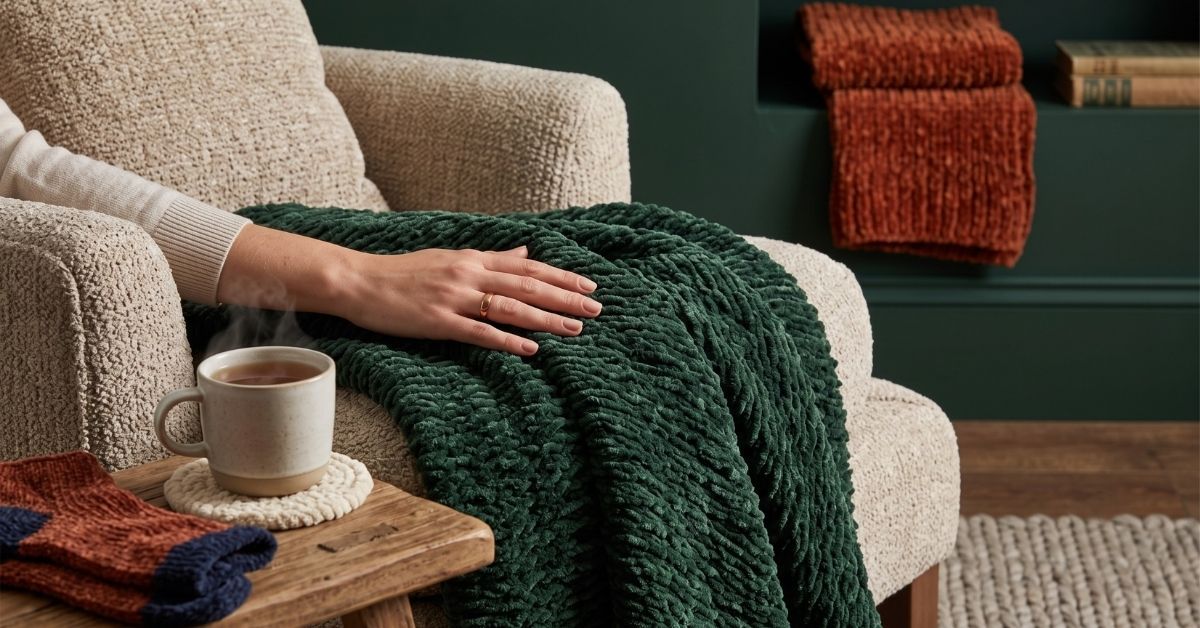
Chenille is defined by how it is made rather than the single fiber it comes from. The word chenille is French for caterpillar, a nod to the fuzzy, tufted look of the yarn. Manufacturers create it by placing short lengths of yarn, called pile, between two core yarns and twisting them tightly together. The pile edges stand at right angles to the core, which gives the material its soft hand and layered, dimensional look. Chenille can be woven from cotton, silk, or wool, or from synthetic fibers such as polyester and rayon, which are the most common choices in home furnishings today.
Because chenille is sold as a finished textile product, it falls under the Textile Fiber Products Identification Act, a federal law enforced by the Federal Trade Commission that requires accurate fiber content, country of origin, and manufacturer information on the label of most textile goods, including chenille throws, upholstery, and bedding.
What Does Chenille Feel Like
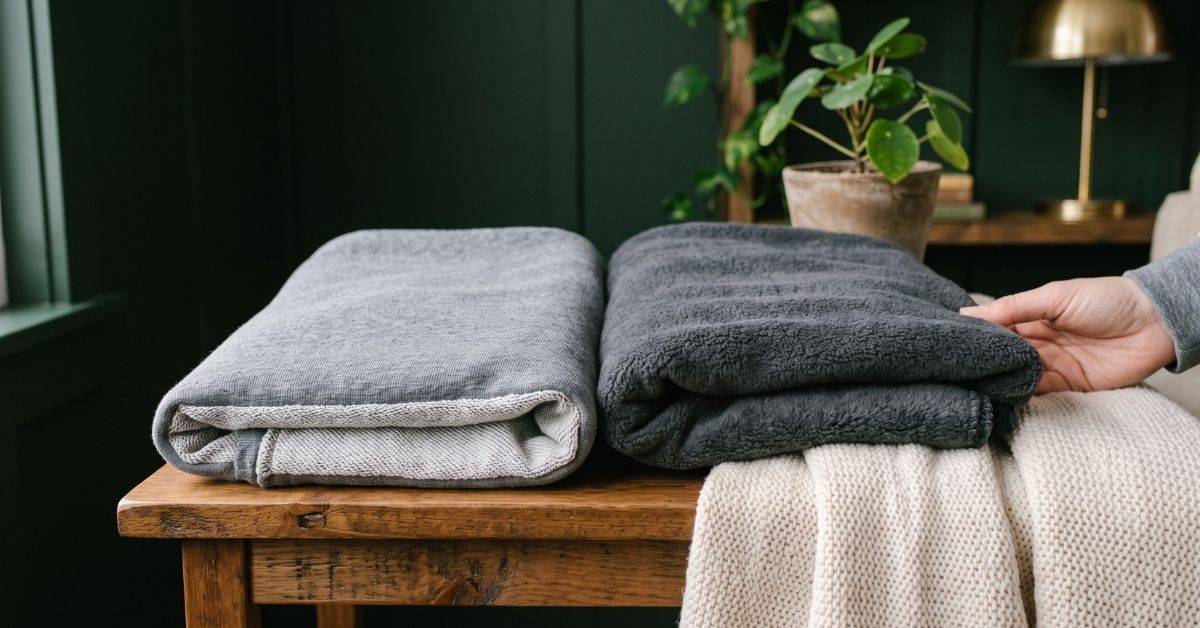
Chenille feels like a soft blend between velvet and terry cloth. It is thick, plush, and gentle against the skin. Because the tufted yarns catch light from different angles, chenille also carries a subtle sheen that seems to shift depending on how you view it, which is part of why it reads as a luxurious choice for throws and upholstery.
Is Chenille a Good Fabric
In short, yes, chenille is a good fabric, though the right use depends on your goals. It excels in cozy items such as throw blankets, sweaters, and heavy curtains, and it is a standout choice for upholstery in living rooms and bedrooms alike.
Is Chenille Fabric Good for Sofas
Chenille sofas are a popular pick when comfort is the top priority. The deep pile makes a room feel warmer and more inviting and provides an exceptionally soft surface for lounging. Upholstered furniture sold in the United States, including chenille sofas, must also meet the CPSC flammability standard for upholstered furniture, which sets smolder resistance testing and labeling requirements for cover fabrics, filling, and decking materials. You can review how the Consumer Product Safety Commission defines covered seating in its upholstered furniture guidance. Because chenille behaves differently from flat woven fabrics, it is worth weighing the pros and cons below before you buy.
Chenille Fabric Sofa Pros and Cons
| Pros |
Cons |
| Unmatched softness, far cozier than cold leather or scratchy linen |
Prone to snagging on zippers, buttons, and jewelry |
| Excellent heat retention that stays warm through colder months |
Absorbent nature means spills sink in quickly |
| Thick pile adds visual depth and hides minor dust |
Needs regular vacuuming and often specialized or dry cleaning |
| Wide range of natural and synthetic fiber options |
Loosely woven versions wear thin faster than tight weaves |
Chenille Fabric Disadvantages
Despite its comfort, a few chenille fabric disadvantages are worth planning around:
- Prone to snagging, since the raised loops of yarn can catch on zippers, buttons, and jewelry.
- Absorbent nature, meaning liquid spills sink in fast and full saturation can shrink or stretch the fabric out of shape.
- Maintenance needs, including regular vacuuming to keep dirt out of the deep pile and, for tough stains, specialized or dry cleaning.
Before you buy or clean any textile, it helps to check the permanent care label. Under the FTC Care Labeling Rule for apparel and home textiles, manufacturers must attach instructions that tell you how to safely wash, dry, or dry clean the item, which is especially useful for a pile fabric like chenille that reacts differently to heat and moisture than flat weaves.
Durability and Living with Pets
In a busy household, chenille fabric durability depends heavily on how tightly the yarn is woven. A high quality, tightly woven synthetic chenille, such as polyester, can withstand years of daily use without thinning out. Loosely woven versions, on the other hand, show wear much faster.
Is Chenille Pet Friendly
If you share your home with animals, the answer is mixed. The thick, dense texture is good at trapping loose pet hair and keeps it from spreading to your clothes, and unlike leather, it does not scratch easily. On the other hand, those raised fuzzy loops are an easy target for cat and dog claws, and a pet that likes to dig into cushions can pull the threads loose and leave unsightly snags.
Chenille, Allergies, and Indoor Air Quality
Any thick pile fabric, chenille included, can trap dust and allergens along with the pet hair it catches. The National Library of Medicine's consumer health resource MedlinePlus guidance on allergies, asthma, and dust notes that fabric and upholstered furniture can collect dust mite allergens and recommends frequent washing and vacuuming for anyone with sensitive airways. If allergies are a concern in your household, pair a chenille sofa or throw with a consistent cleaning routine rather than avoiding the fabric altogether.
Fiber choice also affects the environmental footprint of chenille. Synthetic chenille made from polyester sheds tiny plastic fibers during washing, which the Environmental Protection Agency discusses in its overview of microfiber pollution from synthetic textiles. Natural cotton chenille avoids that particular issue, and the quality of the raw cotton itself is tracked through the fiber testing and grading system run by the USDA Agricultural Marketing Service cotton program, which measures the properties that determine how a cotton fiber will perform once it is spun into yarn.
How to Clean and Care for Chenille
- Vacuum weekly with an upholstery attachment to lift dust and pet hair out of the deep pile.
- Blot spills immediately with a clean, dry cloth instead of rubbing, since rubbing can push liquid deeper into the pile.
- Spot clean with a mild detergent and cool water, then air dry away from direct heat.
- Always check the permanent care label first, since some chenille blends require professional or dry cleaning only.
- Rotate cushions regularly on chenille sofas to spread out wear evenly.
Chenille Compared to Other Popular Fabrics
Chenille is often chosen alongside or instead of other well known textiles. If you are comparing materials for bedding or upholstery, these related guides go deeper on each matchup: Nylon vs Polyester, Tencel vs Cotton, how linen, cotton, and bamboo stack up together, polyester versus cotton sheets, whether polyester is bad for you, Eucalyptus vs Bamboo Sheets, and Organic Cotton vs Conventional Cotton.
| Fabric |
Feel |
Durability |
Care Level |
Best For |
| Chenille |
Plush, velvet like pile |
Good with a tight weave |
Moderate to high |
Sofas, throws, curtains |
| Cotton |
Soft, breathable |
Good, improves with washing |
Low |
Bedding, everyday apparel |
| Polyester |
Smooth, slightly synthetic |
Very durable |
Low |
Budget friendly upholstery |
| Linen |
Crisp, textured |
Very durable, softens over time |
Moderate |
Warm climate bedding |
| Velvet |
Smooth, dense pile |
Moderate, can crush |
High |
Formal upholstery, drapery |
Recommended Products to Pair with Chenille Décor
A textured chenille sofa or throw pairs naturally with soft, breathable bedding elsewhere in the room. A few options worth a look:
| Product |
Why It Works With Chenille |
Link |
| OEKO TEX Certified Bamboo Sheets |
A cool, breathable counterpoint to a heavy chenille throw, tested for harmful substances |
View product |
| Organic Sheet Set |
A natural fiber match for cotton chenille upholstery and pet friendly homes |
View product |
| Organic Cotton Bed Sheet Set |
Soft, breathable cotton that echoes the plush comfort of a chenille sofa |
View product |
| Vintage Linen Bed Sheets |
A crisp, textured contrast that balances a heavily piled chenille room |
View product |
Our Recommendation
Choose chenille if softness and warmth matter more to you than easy maintenance. A tightly woven, high quality synthetic chenille sofa suits busy households and light pet traffic well, while natural cotton chenille suits anyone prioritizing breathability and sensitive skin. Whatever you choose, keep the permanent care label, follow a simple weekly vacuuming routine, and pair it with breathable, easy care bedding elsewhere in the home to balance the room.
Sources
- Federal Trade Commission, Textile Fiber Products Identification Act
- Federal Trade Commission, Apparel and Labeling, Care Labeling Rule
- Consumer Product Safety Commission, Flammable Fabrics Act business guidance
- Consumer Product Safety Commission, Upholstered Furniture FAQ
- MedlinePlus, National Library of Medicine, Allergies, Asthma, and Dust
- Environmental Protection Agency, Learn About Aquatic Trash, microfiber pollution
- USDA Agricultural Marketing Service, Cotton Fiber Testing and Standardization