You glance at the clock and your stomach drops. It is 2:00 AM and your alarm is set for 6:00. Whether a work deadline ambushed you, a flight delay ate your night, or a doom-scroll spiral stole three hours you cannot get back, the question is the same: is 4 hours of sleep enough to actually function tomorrow? The short answer is no not for optimal health or peak performance. But the longer answer is more nuanced and far more useful.
Most adults need between seven and nine hours of nightly rest, according to the sleep duration guidelines published by the CDC. During those hours, the brain cycles through light sleep, deep slow-wave sleep, and REM (rapid eye movement) sleep each stage serving a distinct biological function, from cellular repair to memory consolidation to emotional regulation. Cut that cycle short and the consequences are real, even after a single night.
This article explains exactly what happens in your brain and body on four hours of sleep, gives you an honest look at the science, and hands you a practical survival plan for the days when rest is simply not on the table. For a broader look at winding down effectively, see the science-backed guide to relaxing on bed.
Why 4 Hours Falls Short: The Sleep Science
Sleep is not passive rest — it is an active biological process governed by two interlocking systems. The first is the circadian rhythm, a roughly 24-hour internal clock regulated by the suprachiasmatic nucleus (SCN) in the hypothalamus. The second is sleep pressure (adenosine accumulation), a build-up of the neurotransmitter adenosine throughout the day that drives the urge to sleep. After only four hours, both systems are still signalling urgently for more rest.
The National Heart, Lung, and Blood Institute explains that inadequate sleep disrupts the balance of hormones including cortisol, leptin, ghrelin, and insulin. It also impairs the glymphatic system the brain's waste-clearance network which is most active during deep slow-wave sleep. When this system is starved of time, metabolic by-products like beta-amyloid accumulate, a factor researchers have linked to long-term cognitive decline.
A single night of short sleep triggers a measurable spike in cortisol and adrenaline. This is why many people feel deceptively alert after a four-hour night. It is not genuine energy it is a stress-hormone surge your body uses as an emergency override. According to the NIH's MedlinePlus sleep resource, this state of hyperarousal still carries a significant cognitive and physical cost, even when it masks fatigue in the short term.
Quick-Reference: Problems, Causes, and Solutions
| Common Problem | Why It Happens | Evidence-Based Solution |
|---|
| Persistent morning grogginess | Melatonin still elevated; circadian rhythm not reset | 10-15 min of outdoor bright light within 30 min of waking |
| Early-afternoon energy crash | Cortisol and dopamine spike from overnight stress depletes by early afternoon | 20-minute power nap before 3 PM to avoid disrupting night sleep |
| Impaired focus and decision-making | Prefrontal cortex function reduced; slow-wave sleep consolidation incomplete | Delay high-stakes tasks; use written checklists to compensate |
| Increased hunger and cravings | Ghrelin (hunger hormone) rises; leptin (satiety hormone) drops | Prioritise protein-rich meals; avoid processed sugar spikes |
| Irritability and emotional reactivity | Amygdala overactivates; prefrontal cortex cannot regulate it effectively | Postpone difficult conversations; practise box breathing before interactions |
| Weakened immune response | Cytokine production and T-cell activity diminish without adequate sleep | Recover with a full 8-9 hour night as soon as possible to restore immune function |
Step 1: Win the Morning With Sunlight
One of the most powerful and underused tools for managing a sleep-deprived morning is natural light. When photons hit the retina, they signal the SCN to suppress melatonin production and begin resetting your circadian clock for the day ahead. The National Institute on Aging confirms that light exposure is one of the most reliable external cues (zeitgebers) for keeping your internal clock calibrated.
On a sleep-deprived morning, this matters even more. Even 10 to 15 minutes of outdoor light — or a 10,000-lux light therapy lamp used indoors — can meaningfully reduce sleep inertia, that heavy grogginess caused by waking abruptly from deeper-than-usual sleep stages. This is not a cure for lost sleep, but it can sharpen alertness enough to make the first hours of your day manageable.
If your sleep trouble is becoming a pattern and you find yourself lying in bed unable to wind down even when exhausted, the science of relaxation therapy for sleep is worth exploring as a longer-term strategy.
Recommendation: Step outside within 30 minutes of waking — no sunglasses. Even an overcast sky provides significantly more lux than indoor lighting. Pair this with slow, deliberate breathing to lower morning cortisol gently.
Step 2: Strategise Your Caffeine Timing
Reaching for coffee the moment your alarm goes off is tempting on a four-hour night, but it is actually counterproductive. Your body naturally produces a cortisol surge in the first 30 to 90 minutes after waking a process called the cortisol awakening response (CAR). Consuming caffeine during this window blunts the CAR, reduces the effectiveness of the caffeine, and worsens the crash that arrives later.
Research indexed on PubMed on caffeine and adenosine receptor dynamics shows that caffeine works by binding to adenosine receptors, temporarily blocking sleep-pressure signals. When you delay your first cup by 90 to 120 minutes, you allow the natural cortisol peak to do its work first, making the caffeine far more effective when it does arrive and significantly smoothing the afternoon energy drop.
Limit total caffeine intake to 400 mg or less (roughly two to three standard cups of coffee), and avoid any caffeine after 2:00 PM. Because caffeine has a half-life of five to seven hours, an afternoon coffee can still be active in your bloodstream at midnight, sabotaging the recovery sleep you desperately need. If you're wondering why tiredness seems to creep up unpredictably, read about the 90-minute sleep cycle rule.
Recommendation: Wait 90 minutes after waking before your first coffee. Hydrate first — mild dehydration (common after short sleep) contributes to brain fog and can mimic fatigue symptoms independently.
Step 3: Deploy the Strategic 20-Minute Power Nap
When cognitive fog peaks around early-to-mid afternoon, a disciplined power nap offers a genuine neurological reset. The key word is disciplined. A nap of 20 minutes or less keeps you in lighter NREM Stage 1 and Stage 2 sleep, which provides a measurable boost to alertness and working memory without triggering sleep inertia — the grogginess caused by waking from deep slow-wave sleep.
The NCBI research on napping and cognitive performance consistently shows that even a brief nap can restore reaction time, improve mood, and reduce subjective sleepiness. Setting an alarm for 25 minutes (giving you five minutes to fall asleep) is enough. Anything beyond 30 minutes risks entering slow-wave sleep and will leave you feeling worse on waking defeating the purpose entirely.
Having a comfortable, cool sleep environment matters even for a brief nap. Breathable bedding that does not trap body heat helps you fall asleep faster in a short window something worth considering if you regularly run warm at night. See our related guide on why you get so hot when sleeping for practical solutions.
Recommendation: Set a timer for 25 minutes, lie down in a dim, cool room, and let yourself drift. Even if you do not fully fall asleep, the rest lowers cortisol. A 'nappuccino' (coffee immediately before the nap) can help you wake feeling more alert — caffeine takes about 20 minutes to absorb.
Step 4: Postpone High-Stakes Decisions
Sleep deprivation impairs the prefrontal cortex — the region responsible for executive function, impulse control, and risk assessment — more severely than almost any other part of the brain. According to the CDC's sleep and chronic disease resource, insufficient sleep is associated with significantly impaired judgment and a measurably elevated error rate in complex cognitive tasks.
A common pattern people notice is that they feel overconfident on a sleep-deprived day certain that their thinking is fine right up until they review their work later and find errors they would never normally make. This is called impaired metacognition: the part of the brain that monitors your own performance quality is among the first to be affected by sleep loss. You genuinely cannot tell how compromised you are.
Practical strategies include: postponing any major financial decisions or critical medical consultations; flagging emails rather than replying immediately; and relying on written checklists to compensate for working memory deficits. For those who need to perform under pressure the next morning, the 10-3-2-1-0 sleep rule is a structured protocol that can help set up a much better recovery night.
Recommendation: Write a 'defer list' before your day begins tasks that require fine judgment, emotional sensitivity, or creative problem-solving. Mark them for tomorrow. Protecting others from your sleep-deprived decision-making is as important as protecting your own performance.
Step 5: Make Recovery Sleep an Absolute Priority That Evening
Surviving a four-hour night is a short-term crisis, not a strategy. The science of sleep debt is unambiguous: the NHLBI's overview of sleep deprivation explains that accumulated sleep debt cannot be fully repaid by a single long night, but beginning repayment quickly minimises cumulative harm to immune function, metabolic health, and cardiovascular risk.
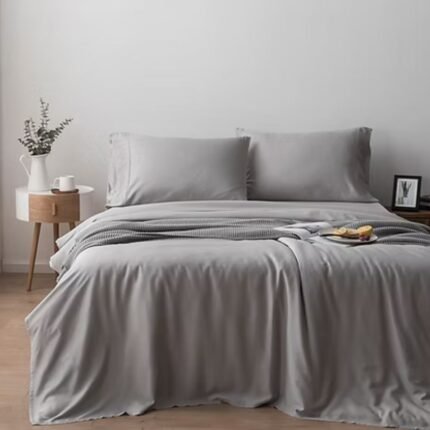
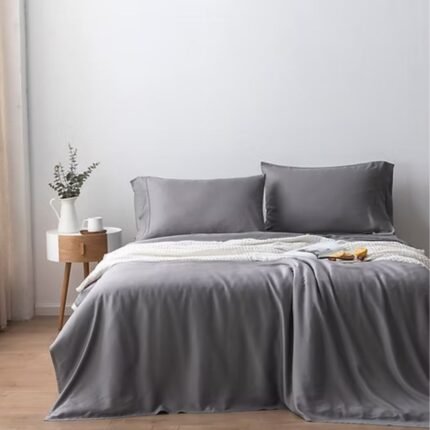
Your recovery night is not the time to set a 5:30 AM alarm out of guilt or productivity pressure. Aim for a full nine hours in a cool, dark, quiet room. Consistency in your sleep and wake times matters more than sleeping in follow your usual wind-down routine, avoid screens for an hour before bed, and consider whether your sleep environment supports deep rest. Breathable, temperature-regulating bedding, like Oeko-Tex certified bamboo sheets, can meaningfully reduce night waking caused by overheating.
If you consistently struggle to fall asleep even when exhausted, explore how to fall asleep in 10 seconds or the how to sleep fast in 40 seconds techniques both are grounded in real neurophysiology and often work quickly for situational insomnia.
Recommendation: Before your recovery night: lower your room temperature to 65-68°F (18-20°C), use blackout curtains or a sleep mask, keep your phone outside the bedroom, and maintain your usual bedtime. Do not rely on alcohol to 'knock yourself out' it suppresses REM sleep and worsens overall sleep quality.
Advanced Strategies for Managing Sleep Deprivation
| Strategy | What It Is | Best For | Where to Learn More |
|---|
| Cortisol Awakening Response optimisation | Delaying caffeine 90 min post-waking to allow natural cortisol peak | Anyone using caffeine to manage morning grogginess | PubMed: caffeine and adenosine |
| Strategic napping (Stage 2 nap) | 20-min nap before 3 PM to restore alertness without sleep inertia | Shift workers, students, caregivers with fragmented sleep | NCBI: napping and cognition |
| Circadian light therapy | Morning bright light exposure to suppress melatonin and reset the SCN | Anyone with disrupted sleep schedule or seasonal low energy | NIA: sleep and aging |
| Sleep hygiene protocol | Fixed bedtime, dark/cool environment, pre-sleep wind-down routine | Anyone building a sustainable recovery strategy after poor sleep | MedlinePlus: sleep hygiene |
| Cognitive Behavioural Therapy for Insomnia (CBT-I) | Structured psychological approach to breaking chronic poor sleep patterns | Chronic insomnia; those who have tried sleep hygiene without success | NHLBI: sleep disorders |
| Glymphatic enhancement | Lateral sleep position shown to improve brain waste clearance during sleep | Those concerned about long-term cognitive health and deep sleep quality | Best sleeping positions guide |
Special Considerations
Shift Workers and Irregular Schedules
Shift workers face a compounded challenge: not only is their total sleep duration often below seven hours, but their sleep occurs at circadian phases when the body actively resists it. The resulting circadian misalignment significantly amplifies the harm of short sleep, increasing the risk of metabolic syndrome, cardiovascular disease, and mood disorders well beyond what the sleep duration alone would predict. The CDC's sleep health page identifies shift work as one of the primary structural causes of chronic sleep insufficiency in the working population.
For shift workers, the survival strategies in this article are not just useful for a single bad night they become part of a regular toolkit. Strategic napping before a night shift, timed light exposure, and minimising alcohol are all particularly important. A consistent, dark, cool sleep environment is especially critical when sleeping during daylight hours. Organic sheet sets and deep-pocket sheet sets designed with breathability in mind can help reduce the additional barrier of thermal discomfort when sleeping against the body's natural rhythm.
Older Adults
Sleep architecture changes significantly with age. Older adults naturally spend less time in deep slow-wave sleep, experience more frequent nighttime awakenings, and often find their circadian rhythm shifts earlier (advance phase disorder). This means a four-hour night hits an older adult's cognitive and physical recovery harder than it does a younger person's there is less restorative slow-wave sleep to compress in the first place.
According to the National Institute on Aging's guide to sleep, sleep disorders are not a normal part of ageing and should be evaluated by a healthcare provider when they persist. Older adults with sleep difficulties should be especially cautious about daytime napping length (keeping naps to 20 minutes or less), maintaining consistent schedules, and discussing sleep with their physician before using any sleep aid. For further context, see why elderly people sleep a lot.
Sources & Further Reading
[1] CDC — Sleep and Sleep Disorders
[2] NHLBI — Sleep Deprivation and Deficiency
[4] National Institute on Aging — A Good Night's Sleep
[5] PubMed — Caffeine and Adenosine Receptor Dynamics
[6] NCBI PMC — Napping and Cognitive Performance
[7] NHLBI — How Sleep Works
[8] Health.gov — Dietary Guidelines: Sleep