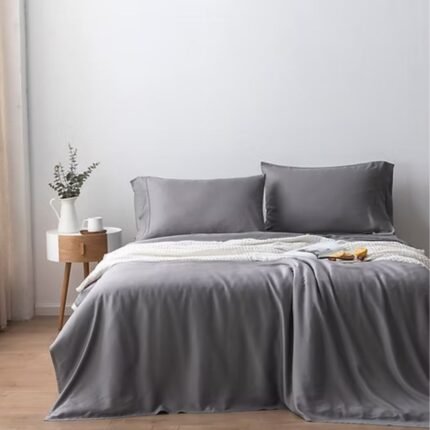
When the heat of summer rolls around, or when you are looking to upgrade your bedding, two natural fabrics always dominate the conversation: linen and cotton. Both have been used for thousands of years, both come from the earth, and both are staples in premium wardrobes and homes.
Yet despite their shared popularity, they are genuinely different textiles. Many people upgrading their sheets or summer wardrobe find themselves asking the same question: is linen the same as cotton?
The short answer is no. While they can look similar from a distance, their origins, texture, performance, and durability are quite distinct. According to the U.S. Department of Agriculture, cotton alone accounts for roughly a quarter of total world fiber use, while flax, the plant behind linen, has been cultivated for textiles since ancient times. This guide breaks down the essential difference between linen and cotton, backed by government and peer reviewed sources, so you can choose the right one for your home and closet.
What Are They Made Out Of
To understand why these fabrics behave so differently, it helps to look at where they actually come from.
What Is Linen Made Out Of
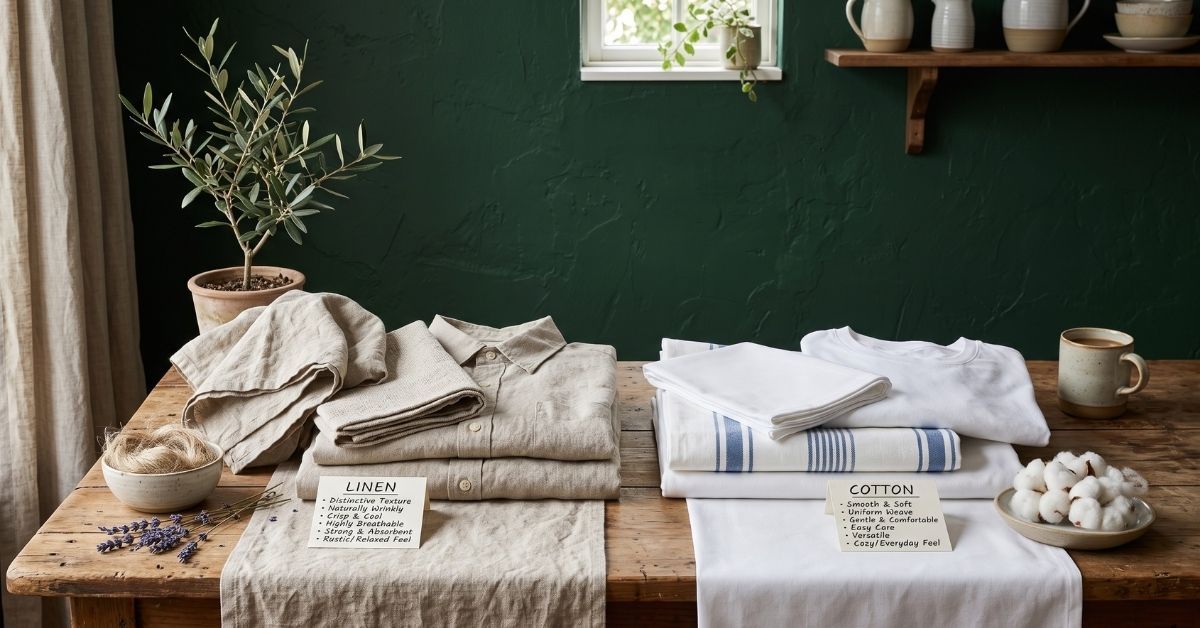
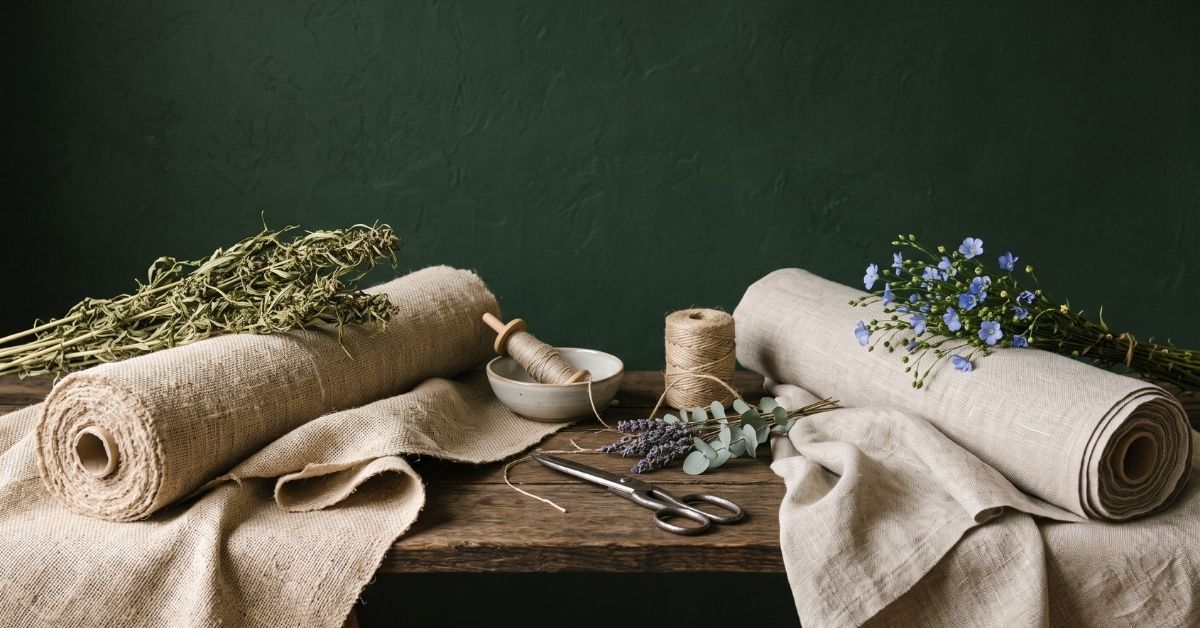
If you have ever wondered what linen is made out of, the answer lies in the flax plant, scientific name Linum usitatissimum. Linen is woven from the long, strong cellulose fibers found inside the stem of the plant. Extracting these fibers is a careful, time consuming process, which is why premium linen often carries a higher price tag than cotton. Research published by the USDA Agricultural Research Service notes that flax is two to three times stronger than cotton, making it one of the strongest natural fibers known, and that flax growers in the United States are working to reestablish a domestic flax fiber industry.
What Is Cotton Made Out Of
Cotton, by contrast, grows in soft, fluffy capsules called bolls that form around the seeds of the cotton plant. These fine fibers are relatively easy to harvest, spin into yarn, and weave into everything from crisp denim to lightweight tee shirts. The USDA Economic Research Service reports that a single bale of cotton, about 480 pounds of cleaned lint, can produce more than 200 pairs of jeans or 1,200 tee shirts, and that the United States is the world's third largest cotton producer and its leading exporter.
Linen vs Cotton at a Glance
A quick side by side summary before we go deeper into performance, care, and sustainability.
| Feature |
Linen |
Cotton |
| Source Plant |
Flax plant stem |
Cotton plant boll |
| Fiber Structure |
Long, thick, hollow |
Short, fine, twisted |
| Texture |
Textured, earthy, develops a soft patina |
Smooth, uniform, crisp |
| Moisture Absorption |
Up to about 20 percent of its weight before feeling damp |
Absorbs moisture but retains it longer than linen |
| Relative Strength |
About two to three times stronger than cotton |
Strong, but softer fiber overall |
| Wrinkling |
Wrinkles easily, part of its relaxed look |
Wrinkles less, especially in tighter weaves |
| Break In Period |
Softens more with every wash |
Soft from the very first use |
| Typical Lifespan |
Often decades with proper care |
Several years, varies with weave and thread count |
Linen vs Cotton: Beating the Heat
The most common question people ask about these two fabrics centers on comfort in warm weather: is linen or cotton more breathable, and is linen actually cooler than cotton?
If you are trying to stay comfortable through peak summer humidity, linen tends to win on both counts.
The Anatomy of Breathability
Flax fibers are naturally thicker and are woven in a looser structure than cotton. More importantly, the fibers themselves are hollow, which lets air and moisture move through the fabric with less resistance. A peer reviewed study in the National Institutes of Health database PubMed Central found that breathable, moisture managing fabrics play a measurable role in thermal wear comfort, supporting what many linen users notice firsthand.
Moisture Management
Linen can absorb close to 20 percent of its own weight in moisture before it begins to feel damp against the skin. Because it releases that moisture back into the air quickly, it dries fast and tends to avoid the sticky, clinging feeling that heavier fabrics can create. A lightweight cotton poplin or voile is certainly breathable too, but cotton fibers generally hold onto moisture longer than flax fibers do. For pure cooling efficiency, linen functions almost like a natural cooling system for the body.
For a deeper, side by side comparison of how these two materials feel specifically on a bed, see our full breakdown of linen sheets versus cotton sheets, or, if you are weighing a third natural option, our guide to linen, cotton, and bamboo sheets.
Durability, Care, and Sustainability
How Long Each Fabric Lasts
Linen is widely regarded as one of the strongest natural fibers in the world, roughly two to three times stronger than cotton, according to the USDA research cited above. A well made set of linen sheets can genuinely last for decades. Cotton is also durable and, because of automated harvesting and global supply chains documented by the USDA Economic Research Service, is widely accessible across a huge range of price points and weaves, including percale, sateen, and flannel.
Water Use and Environmental Footprint
Flax generally requires less irrigation and fewer pesticides to grow than conventional cotton, and it can thrive in poorer soil conditions where other crops struggle. Water conservation is a broader concern the Environmental Protection Agency tracks closely through its WaterSense program, which promotes water efficient products and practices across homes and industry in the United States. If sustainability and farming practices matter most to you, our detailed comparison of organic cotton versus conventional cotton walks through certifications, water use, and chemical inputs in far more depth.
Labeling, Safety, and What the Label Actually Tells You
In the United States, textile content on labels is not just marketing. Under rules enforced by the Federal Trade Commission, most textile products must disclose the generic names and percentages of the fibers used, the manufacturer, and the country where the product was processed. Bedding sold in the United States must also meet flammability requirements set by the Consumer Product Safety Commission, which regulates mattresses, mattress pads, and other bedding items under the Flammable Fabrics Act. Checking for these disclosures is a simple, reliable way to confirm that a linen or cotton product is what it claims to be.
The Distinct Benefits of Linen vs Cotton
When choosing between linen and cotton for clothing or home textiles, each material brings its own set of advantages to the table.
Benefits of Linen
- Unmatched longevity: Linen is one of the strongest natural fibers in the world, roughly two to three times stronger than cotton, so a quality set of linen sheets can last for decades.
- Gets better with age: While cotton is at its softest on day one, linen transforms with every wash. Washing gradually breaks down the stiff pectin in the flax fibers, making the fabric softer and more fluid over time.
- Naturally sustainable: Flax typically requires less water and fewer pesticides than conventional cotton, and it can grow well in poorer soil, as reflected in the water conservation research the EPA publishes through its WaterSense program.
Benefits of Cotton
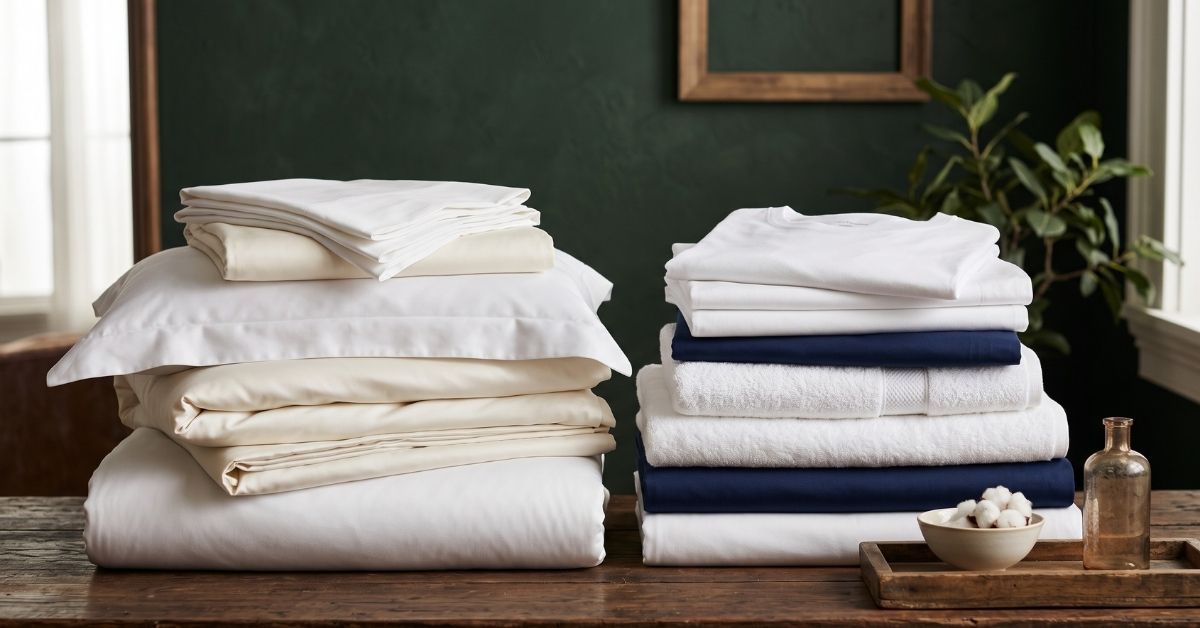
- Immediate softness: Cotton requires no break in period. It feels smooth, uniform, and gentle against sensitive skin right out of the package.
- Easy maintenance: Cotton is elastic and handles standard machine washing and drying with ease. It resists wrinkling far better than linen, making it simple to keep a polished, pressed look.
- Affordability and versatility: Thanks to automated harvesting and global supply chains, high quality cotton is available across a wide range of price points and weave styles.
If sensitive skin is your main concern, our guide comparing bamboo and Egyptian cotton for sensitive skin looks at that specific question in detail. And if you are comparing natural fibers against synthetic alternatives more broadly, our reviews of microfiber versus polyester sheets, whether polyester is bad for you, and polyester versus cotton sheets cover durability, breathability, and price side by side.
Curious about other plant based fibers beyond linen and cotton? Our comparisons of eucalyptus versus bamboo sheets and organic cotton versus bamboo lyocell are a helpful next read.
Which Material Should You Choose
Ultimately, choosing between these two classic textiles comes down to your personal sense of style and how you sleep.
Recommendation
Choose linen if: you love a relaxed, lived in look, tend to run warm or sweat at night, and want an heirloom quality fabric that softens beautifully over years of use.
Choose cotton if: you prefer a smooth, crisp, uniform texture, want bedding that resists wrinkling, and would rather skip the break in period entirely.
Still undecided: consider our organic cotton bed sheet set for classic cotton comfort grown without conventional pesticides, our organic sheet set for an easy, versatile everyday option, or our Oeko Tex certified bamboo sheets if you want to compare a third fiber known for softness and moisture control.
Sources
This article draws on the following government and peer reviewed sources for factual accuracy.
- U.S. Department of Agriculture, Economic Research Service, Cotton and Wool
- U.S. Department of Agriculture, Economic Research Service, Cotton Sector at a Glance
- U.S. Department of Agriculture, Agricultural Research Service, Flax Fiber Offers Cotton Cool Comfort
- Federal Trade Commission, Labeling Requirements Under the Textile and Wool Acts
- U.S. Consumer Product Safety Commission, Flammable Fabrics Act
- Environmental Protection Agency, WaterSense Program
- National Institutes of Health, PubMed Central, Moisture Vapor Permeability and Thermal Wear Comfort of Ecofriendly Fiber Embedded Woven Fabrics
- National Institutes of Health, PubMed, Effect of Weave and Weft Type on Mechanical and Comfort Properties of Hemp Linen Fabrics