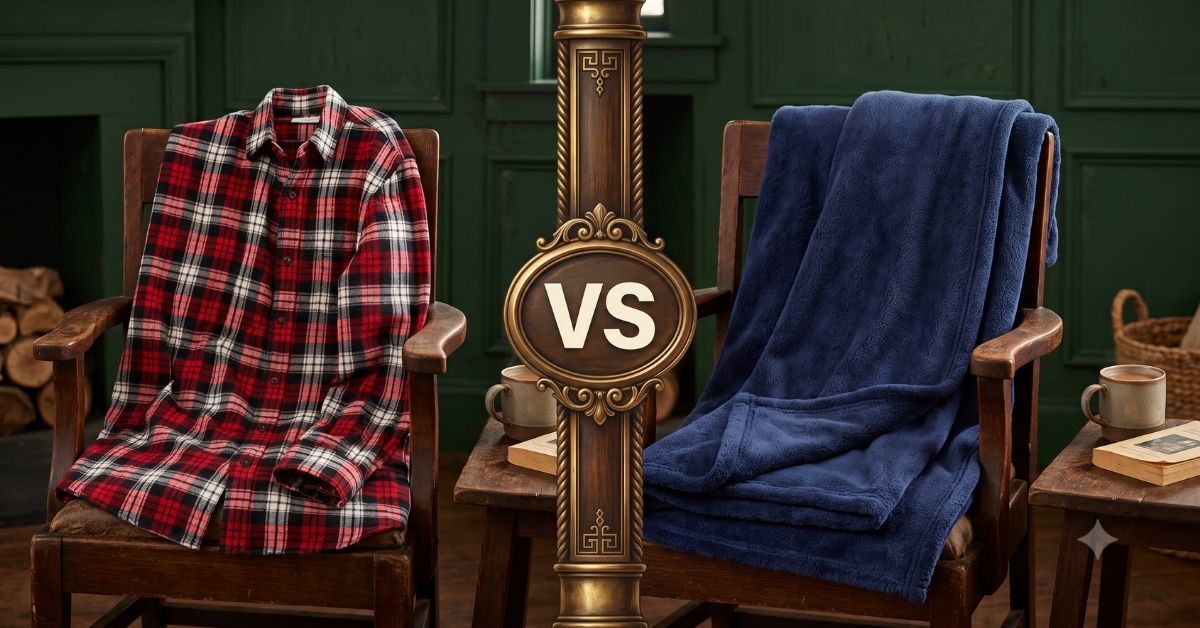
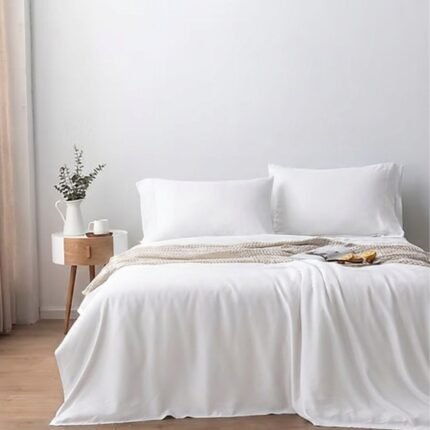
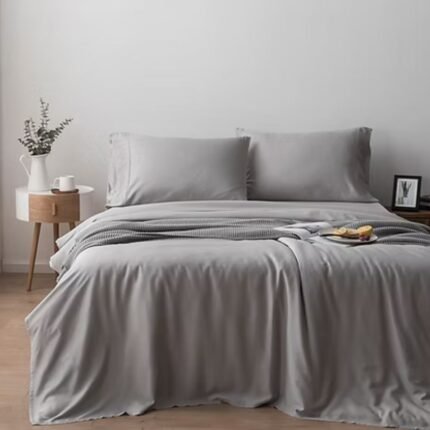
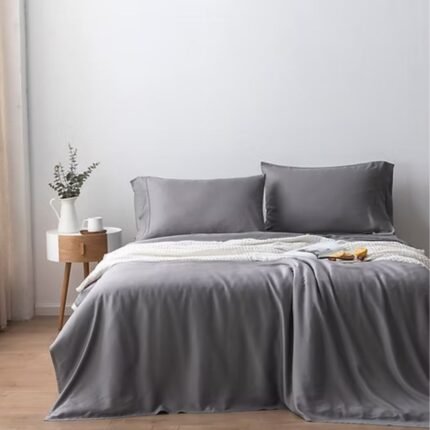
We spend roughly one-third of our lives in bed — a figure consistently cited by the Centers for Disease Control and Prevention (CDC) when it discusses the critical role sleep plays in overall health. The surface you sleep on matters just as much as the hours you clock. When it comes to natural bedding fibers, the decision almost always comes down to the same classic matchup: linen sheets vs cotton sheets.
Both materials have clothed human civilization for millennia. Both are natural, breathable, and durable. But they offer genuinely different tactile experiences, longevity profiles, and environmental footprints. This guide draws on peer-reviewed research, government data, and practical bedding expertise to help you make a confident, well-informed choice.
Already interested in expanding your research? Our related guides on linen vs cotton vs bamboo sheets and polyester vs cotton sheets cover the wider bedding landscape.
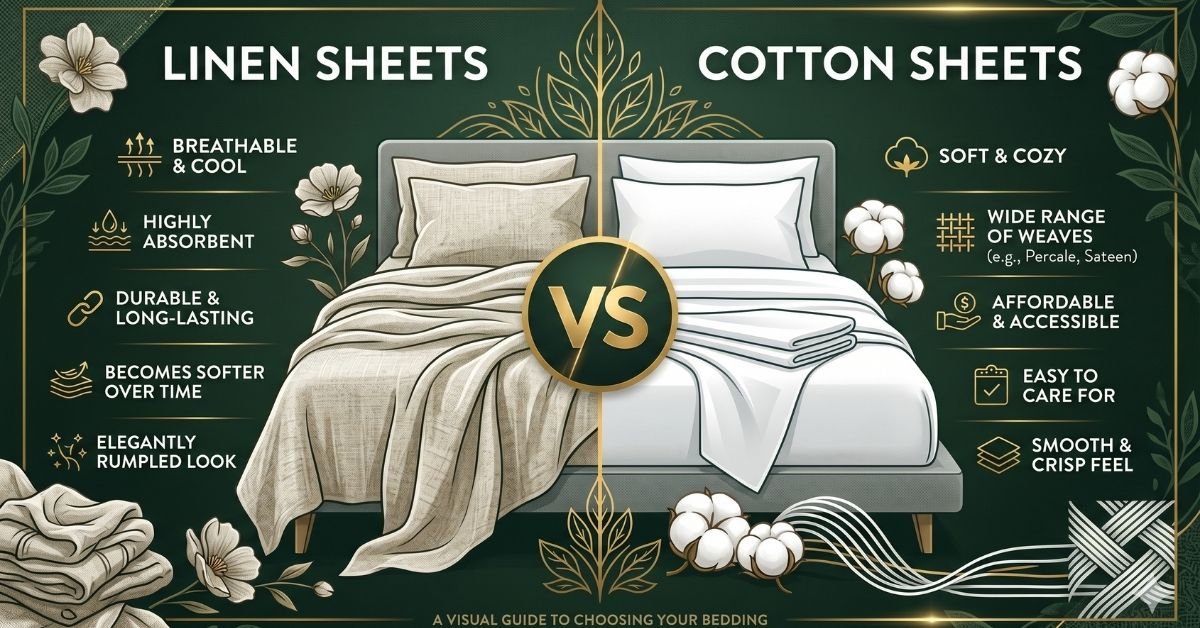
Key Takeaway: Neither fabric is universally superior. Linen excels at temperature regulation and longevity; cotton delivers immediate softness and wide price accessibility. Your ideal choice depends on your sleep style, climate, and priorities.
Understanding the Fibers: What Are You Actually Sleeping On?
Cotton (Gossypium spp.)
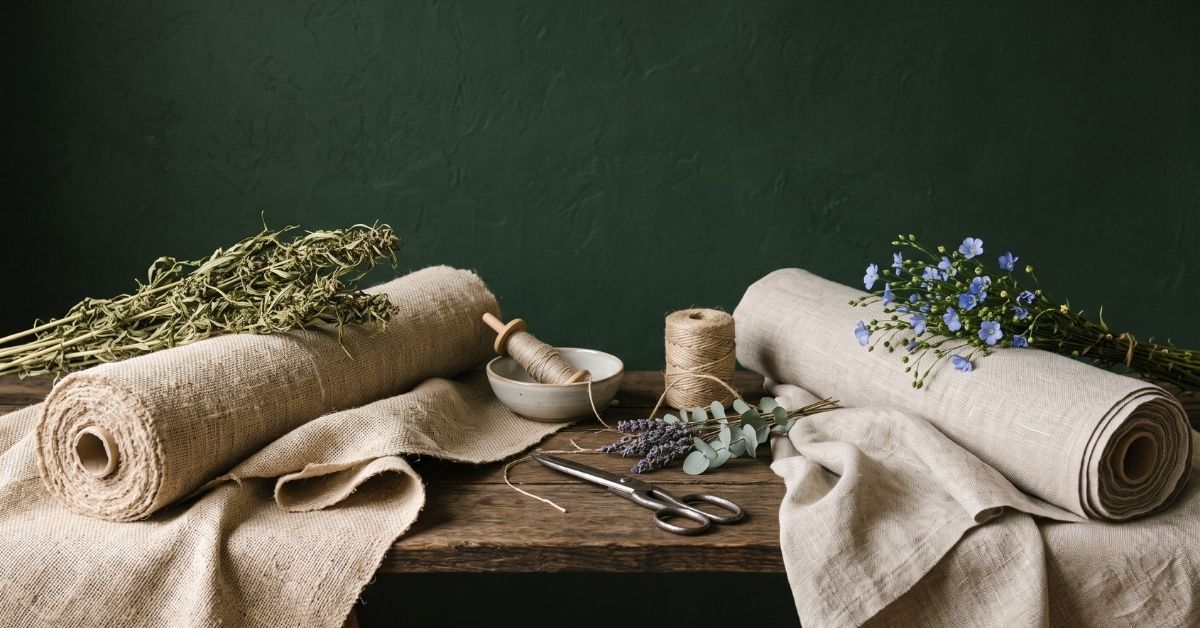
Cotton is harvested from the seed pods of the Gossypium plant and spun into one of the world's most widely used textile fibers. The USDA Agricultural Marketing Service maintains the internationally recognized quality grading standards for cotton — standards that have been the global benchmark since the Universal Cotton Standards Agreement of 1923. Higher-grade, long-staple varieties — Egyptian (Gossypium barbadense) and Pima cotton — produce smoother, stronger yarns that resist pilling and soften beautifully with washing.
Linen (Linum usitatissimum)
Linen is derived from the bast fibers of the flax plant. Researchers at the USDA Agricultural Research Service have found that flax is two to three times stronger than cotton, making it one of the most structurally robust natural fibers known. Its hollow fiber structure promotes airflow and rapid moisture evaporation — properties responsible for linen's legendary cooling performance.
Benefits of Cotton Sheets
Cotton's dominance in the global bedding market is no accident. It offers a reliable, versatile sleep surface that suits most people across most climates.
Immediate, Familiar Softness
High-quality long-staple cotton — Egyptian or Pima — is smooth against skin from the first night. There is no break-in period. If you share a bed with a partner who is texture-sensitive, cotton is typically the path of least resistance.
Weave Variety: Percale and Sateen
A percale weave (one thread over, one under) produces a matte, crisp, cool-to-the-touch surface — ideal for warm sleepers and summer months. A sateen weave (four threads over, one under) creates a silkier drape and subtle sheen, favored in cooler seasons.
Ease of Care
Cotton tolerates frequent, hot laundering well — an important factor for hygiene. Research published on PubMed Central (NIH) confirms that natural fiber type meaningfully influences the thermal and moisture microclimate at the skin surface, underscoring why regular laundering of bedding matters for skin health.
Accessibility and Price Range
Budget-friendly cotton options exist at every thread count, and premium long-staple varieties offer a luxury feel without the premium price of linen. If you need a set that fits a specialty mattress, our deep pocket sheet sets are engineered for thicker mattresses.
Hypoallergenic Potential
For sleepers with eczema or sensitive skin, soft, tightly woven cotton is often the gentler choice. See our guide on best sheets for allergies and asthma for more. Our Organic Sheet Set is made from certified organic cotton — free from pesticide residues and harsh processing chemicals.
Benefits of Linen Sheets
Linen carries a higher upfront price than most cotton options, but for many sleepers — especially those in warm climates or with night sweats — it represents the better long-term investment.
Superior Breathability and Thermoregulation
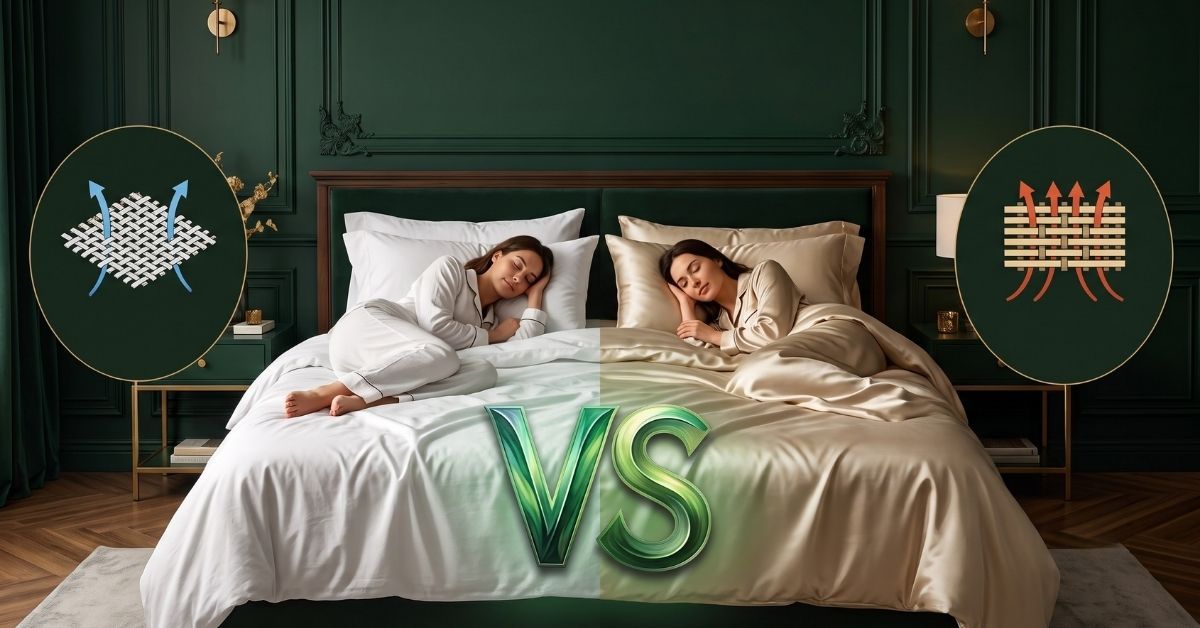
Linen's hollow fiber structure allows air to circulate freely and wicks moisture away from the body faster than cotton. A peer-reviewed systematic review published via the National Institutes of Health (NIH/PMC) specifically found that linen bedsheets improved sleep quality under warm ambient conditions in young adults — making linen the evidence-backed recommendation for hot sleepers.
Exceptional Longevity
Because flax fibers are structurally two to three times stronger than cotton, a quality linen set can last 20 or more years — often becoming heirloom bedding. Cotton sheets typically perform well for five to seven years before thinning. Over a decade, linen's higher cost per set is often offset by its longer replacement cycle.
Gets Better with Every Wash
Unlike most textiles, linen softens with each laundering cycle, becoming more pliable and lustrous over time. The characteristic initial stiffness gives way to a supple, lived-in texture that many experienced linen users describe as incomparable.
Naturally Antibacterial and Hypoallergenic
Linen's moisture-wicking ability keeps the sleep environment drier, reducing the conditions that allow dust mites and bacteria to proliferate. For allergy sufferers, see our in-depth guide on best sheets for allergies and asthma.
Environmental Sustainability
Flax cultivation requires significantly less water and fewer pesticides than conventional cotton farming. The EPA's textiles data shows that 17 million tons of textiles entered the waste stream in 2018 alone, with only a 14.7% recycling rate — a stark reminder that longer-lasting bedding directly reduces environmental impact. Choosing linen, or certified organic options overseen by the USDA Agricultural Marketing Service, is one of the most practical ways to reduce your bedding footprint.
For a broader look at eco-conscious bedding, see our guide on natural and non-toxic sheets.
Linen Sheets vs Cotton Sheets: Side-by-Side Comparison
| Feature |
Cotton Sheets |
Linen Sheets |
| Primary Fiber |
Gossypium (cotton plant) |
Linum usitatissimum (flax) |
| Texture & Feel |
Smooth, crisp (percale) or silky (sateen) |
Textured, airy; softens with age |
| Cooling |
Good — especially percale |
Excellent — best for hot sleepers |
| Moisture Wicking |
Moderate |
Superior — faster evaporation |
| Lifespan |
5–7 years |
20+ years |
| Break-In Period |
None — soft from first use |
A few washes to peak softness |
| Hypoallergenic |
Good — organic cotton especially gentle |
Very good — resists dust mites & bacteria |
| Night Sweats |
Adequate |
Superior — faster moisture release |
| Eco Footprint |
Moderate (lower with organic) |
Lower — flax uses less water & pesticides |
| Aesthetic |
Polished, neat, hotel-crisp |
Relaxed, effortlessly wrinkled |
| Price Range |
Low to high |
Medium to high |
Are Linen Sheets Comfortable? Addressing the Texture Question
If you have spent your entire life on silky sateen, your first encounter with linen may feel surprising. So it is fair to ask: are linen sheets actually comfortable?
The straightforward answer is yes — but it is a different kind of comfort. Linen has a characteristic texture, sometimes described as a "slub," that feels earthy, grounding, and substantial. Out of the packaging, it can feel slightly stiff. After two to three washes, however, linen relaxes into a supple, breathable, subtly weighted feel that many longtime users say is the most comfortable bedding they have ever experienced. Unlike cotton, which gradually thins and smooths until it feels papery, linen grows richer over time.
Think of the difference this way: cotton delivers comfort immediately; linen rewards patience.
Sleep Science: What the Research Says About Bedding Fiber and Sleep Quality
Bedding material directly influences thermoregulation, which in turn governs sleep architecture. The CDC's sleep health guidelines explicitly recommend maintaining a cool bedroom environment to support uninterrupted, restorative sleep. Bedding that traps heat undermines this goal regardless of your thermostat setting.
A systematic review indexed by the National Institutes of Health (NIH) examined nine clinical studies comparing sleep quality across fiber types and found that linen bedsheets specifically improved objective sleep quality measures under warm sleeping conditions. A separate PubMed study using polysomnography confirmed that sleepwear fabric type meaningfully affects sleep onset latency and the proportion of deep sleep stages — supporting the practical wisdom that breathable bedding matters.
Organic Certification: What It Means for Your Bedding
Both cotton and linen can be grown organically. The USDA's National Organic Program (NOP) classifies raw natural fibers — including cotton, wool, and flax — as agricultural products subject to organic crop production standards. Products certified to these standards may carry the USDA organic seal and must contain at least 95% certified organic content.
Organic certification matters for bedding because conventionally grown cotton is among the most pesticide-intensive crops in the world. Our Organic Sheet Set meets certified organic standards, offering a cleaner sleep surface. For more context see our guide to natural and non-toxic sheets.
If you prefer bamboo's sustainability profile, our Oeko-Tex certified bamboo sheets carry independent third-party verification that the fabric is free from over 100 harmful substances.
Choosing by Sleep Profile: A Practical Decision Guide
Choose Cotton Sheets If You...
- Prefer immediate, smooth softness with no break-in time
- Sleep cool or at neutral temperatures
- Have eczema, psoriasis, or highly sensitive skin
- Want maximum style versatility (crisp percale to silky sateen)
- Are working with a tighter budget or buying for a guest room
- Need an easy-care sheet that tolerates hot machine washing
- Use an adjustable or deep-pocket mattress — our Adjustable Bed Sheets and deep pocket sheet sets are engineered to fit
Choose Linen Sheets If You...
- Run hot or experience frequent night sweats
- Live in a warm or humid climate
- Prioritize environmental sustainability
- Want bedding that improves and lasts for decades
- Love a relaxed, effortlessly wrinkled aesthetic
- Are looking for naturally antibacterial properties to reduce allergen buildup
- Want to invest once rather than replace every few years
Not sure whether to go with linen, cotton, or bamboo? Our three-way comparison of linen vs cotton vs bamboo sheets breaks down the decision by use case. And if silk is on your radar, the guide on bamboo vs silk sheets adds another dimension to the natural fiber conversation.
Caring for Your Sheets: Practical Tips to Extend Lifespan
| Care Step |
Cotton |
Linen |
| Wash Temp |
Warm to hot (up to 60°C) |
Cold to warm (30–40°C) |
| Drying |
Tumble dry medium; remove promptly |
Line dry preferred; tumble dry low |
| Ironing |
Optional — percale benefits from ironing |
Iron damp or embrace the wrinkle |
| Storage |
Fold in cool, dry place |
Roll to prevent crease lines |
| Frequency |
Wash weekly |
Every 1–2 weeks |
Sources & References
- CDC — About Sleep: https://www.cdc.gov/sleep/about/index.html
- NIH/PMC — Sleepwear and Bedding Fiber Types & Sleep Quality (Systematic Review): https://www.ncbi.nlm.nih.gov/pmc/articles/PMC11596996/
- PubMed — Effects of Fabric on Sleep at Different Ambient Temperatures: https://pubmed.ncbi.nlm.nih.gov/27217803/
- NIH/PMC — Effect of Hospital Linens on Pressure Injuries (RCT): https://pmc.ncbi.nlm.nih.gov/articles/PMC7909321/
- USDA ARS — Flax Fiber Offers Cotton Cool Comfort: https://agresearchmag.ars.usda.gov/2005/nov/fiber/
- USDA AMS — Cotton Grades & Standards: https://www.ams.usda.gov/grades-standards/cotton
- USDA AMS — Organic Textiles Program: https://www.ams.usda.gov/grades-standards/organic-textiles
- EPA — Textiles: Material-Specific Waste Data: https://www.epa.gov/facts-and-figures-about-materials-waste-and-recycling/textiles-material-specific-data