When you are shopping for new deep pocket sheet sets, gym gear, or cleaning supplies, two fabric names keep showing up: polyester and microfiber. Because they are closely related, many shoppers ask the same question: Is microfiber the same as polyester?
The short answer is almost, but not quite. While the two share the same chemical origin, the way each is engineered changes everything: how your sheets feel, how well your cleaning cloths perform, and even how much these fabrics affect the air quality in your bedroom. This guide breaks it all down clearly, so you can make a genuinely informed choice.
Understanding the Basics: What Is the Core Difference?
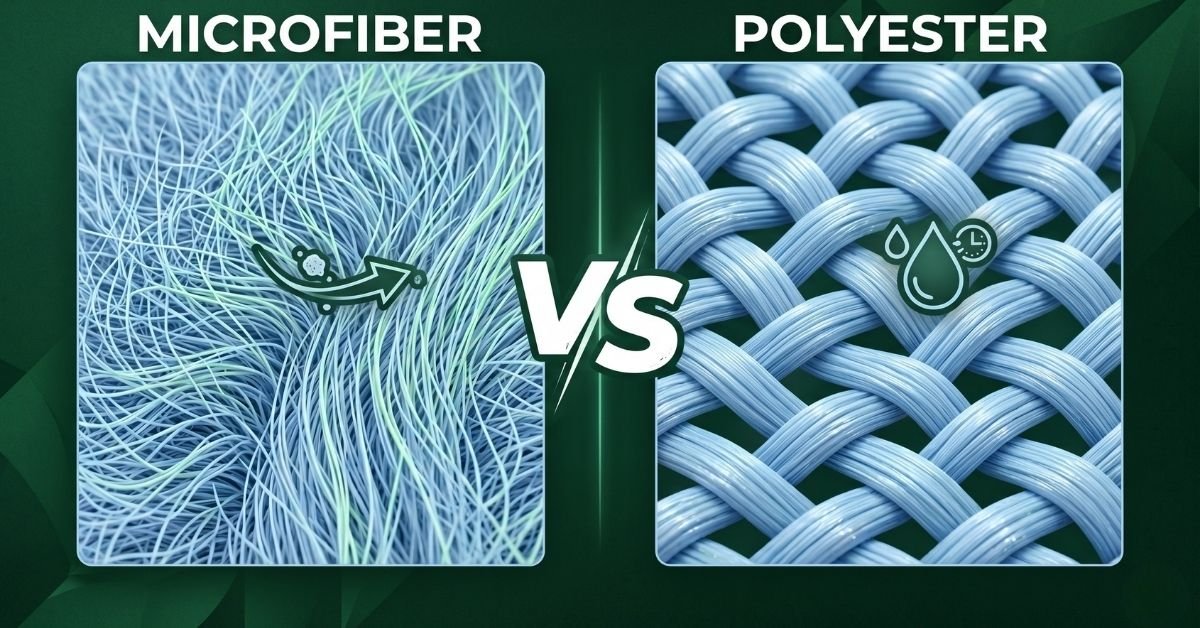
Think of it like squares and rectangles. All microfiber is made from polyester (sometimes blended with nylon), but not all polyester is microfiber. The key distinction is fiber fineness - how thin each individual strand is.
- Standard polyester is a synthetic fiber derived from petroleum-based chemicals (specifically polyethylene terephthalate, or PET). It is durable, moisture-resistant, and wrinkle-resistant.
- Polyester microfiber is a specialized form of polyester where fibers are split into strands thinner than a human hair, typically less than one denier in diameter. This mechanical splitting is what gives microfiber its distinctive softness and cleaning ability.
Quick Definition: "Microfiber" describes fiber size (ultra-fine), while "polyester" describes the material itself. When a label says "polyester microfiber," both terms are true at once.
Microfiber vs Polyester: Side-by-Side Comparison
| Feature | Standard Polyester | Polyester Microfiber |
|---|
| Fiber Thickness | Thicker, more rigid strands | Ultra-fine, mechanically split fibers (less than 1 denier) |
| Texture and Feel | Crisp, firm, sometimes plasticky | Silky, velvety, or suede-like |
| Absorbency | Low - repels moisture | High - split fibers absorb and trap liquid |
| Cleaning Performance | Pushes dirt around surfaces | Grabs and traps dust, bacteria, and moisture |
| Heat Retention | Moderate | Higher - can trap body heat |
| Breathability | Low | Low - not ideal for hot sleepers |
| Durability | Very high over many washes | Good, but fibers can pill on high heat |
| Best Uses | Outerwear, upholstery, outdoor gear | Bedding, cleaning cloths, gym wear |
| Price Point | Budget-friendly | Budget-friendly to mid-range |
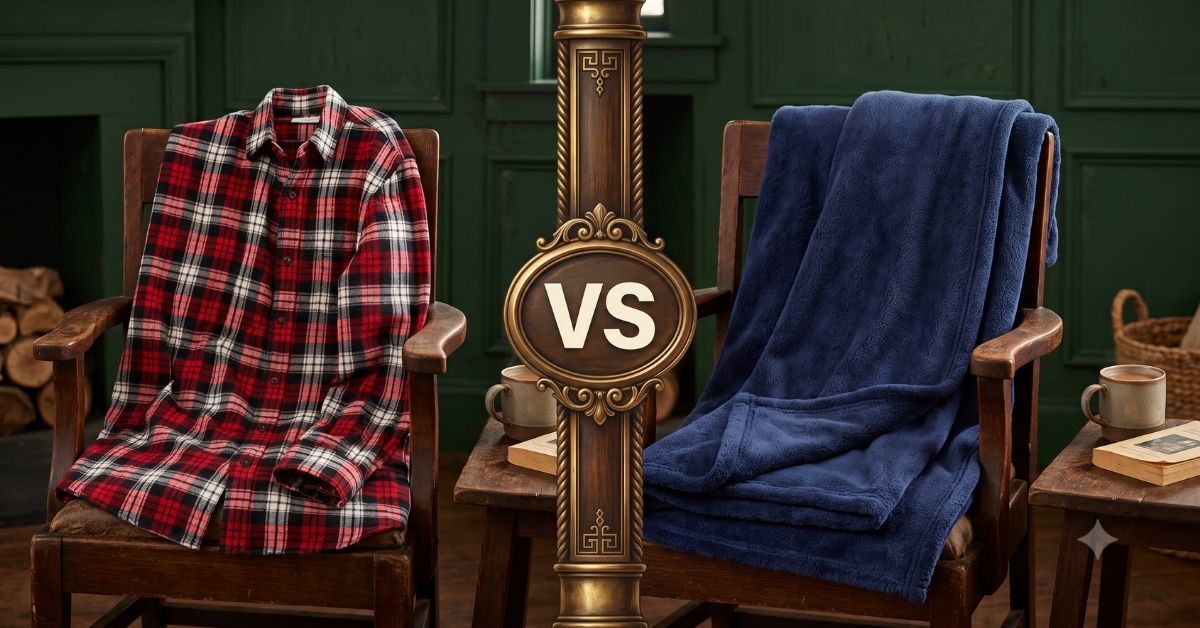
Microfleece vs Microfiber: What Is the Difference?
You will often see these two terms used interchangeably on winter blanket and robe labels. They are not the same thing.
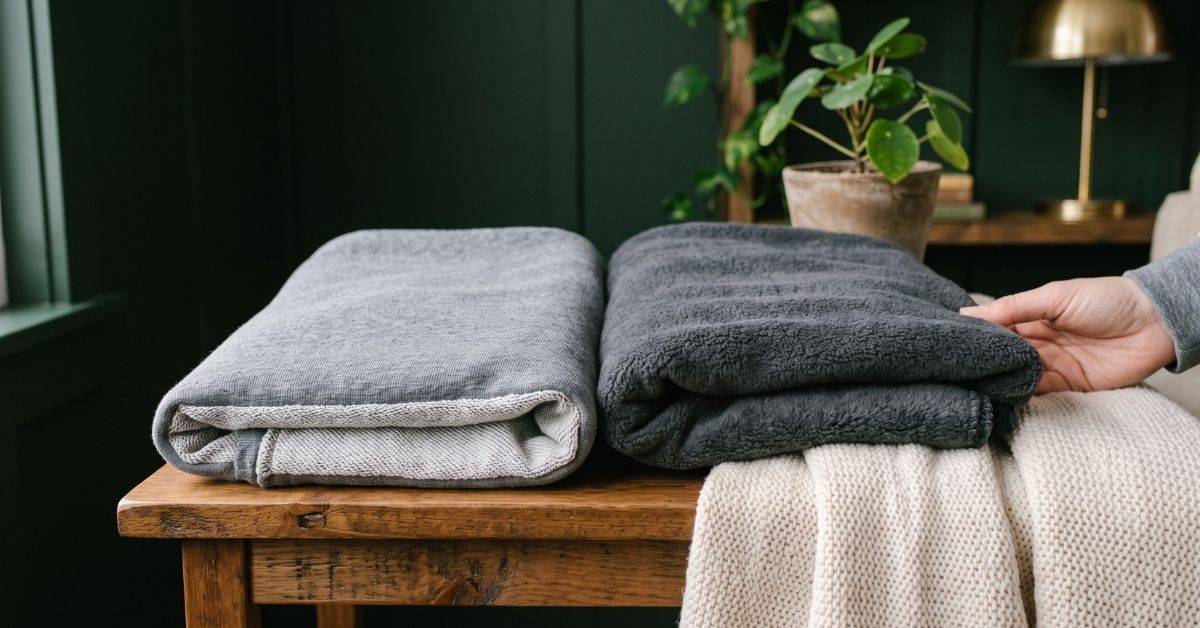
- Microfleece is a knit fabric engineered to mimic the warmth of wool. It has a deliberately fuzzy, pile surface that traps heat - excellent for cold-weather layering.
- Microfiber is typically woven tightly to produce a smooth, suede-like, or silky surface. It prioritizes softness and absorbency over insulation.
What Is Better for Bedding: Polyester or Microfiber?
Neither material is universally superior. The right choice depends entirely on how you sleep and what matters most to you.
1. Softness and Comfort
Standard polyester sheets can feel stiff or plasticky next to the skin. Microfiber sheets are noticeably softer and more affordable than cotton alternatives. That said, if you value truly breathable, natural-feeling bedding, both fall short compared to materials like bamboo or organic cotton. For a broader view, see our guide on the best fabric to sleep in: cotton vs bamboo vs linen.
2. Temperature Regulation
This is where microfiber's biggest weakness shows. Because the fibers are so tightly packed, microfiber sheets are notorious for trapping body heat - a real problem for hot sleepers. Standard polyester behaves similarly. If night sweats or overheating are concerns, our Oeko-Tex certified bamboo sheets offer significantly better moisture-wicking and temperature regulation.
3. Durability and Care
Traditional polyester is a workhorse. Its thicker fibers hold up reliably over hundreds of wash cycles, making it ideal for heavy-duty upholstery or outdoor gear. Microfiber is also durable, but the ultra-fine fibers can pill or become matted over time if dried on high heat. Always wash microfiber on a gentle, cool cycle and tumble dry low.
4. Allergens and Dust Mites
Microfiber's tightly woven structure can act as a barrier against dust mites and allergens. The National Institute of Environmental Health Sciences (NIEHS) notes that dust mites live in mattresses, bedding, and upholstered furniture, and that reducing allergen exposure in bedding is a key strategy for managing allergic disease and asthma.
Allergy Tip: The U.S. Consumer Product Safety Commission (CPSC) recommends washing bedding frequently in water above 130 degrees Fahrenheit to kill dust mites - one of the most effective strategies for allergy sufferers.
Cleaning Performance: Where Microfiber Has a Clear Edge
When it comes to cleaning cloths, microfiber wins by a wide margin. The split fibers create a microscopic hook-shaped structure that physically grabs and lifts dust, bacteria, and moisture from surfaces rather than just pushing it around the way standard polyester does. Microfiber cloths used with plain water can reduce surface bacteria significantly, making them a practical, low-chemical cleaning option.
Health and Indoor Air Quality: What the Research Shows
Both polyester and microfiber shed tiny fibers during washing and drying - a category of pollution researchers call microplastic fibers. Research published on the U.S. National Library of Medicine (NIH/PubMed) has found that microfibers are released during both washing and tumble drying, and that quantities emitted from dryer exhaust are comparable to those released down the drain during washing.
Beyond fiber shedding, synthetic textiles can also off-gas volatile organic compounds (VOCs), particularly when new or exposed to heat. The U.S. Environmental Protection Agency (EPA) has documented that VOC concentrations indoors are consistently higher than outdoors - often two to five times higher - and that household furnishings and textiles are among the contributing sources.
For those concerned about chemical finishes in bedding, read our guide on understanding natural and non-toxic sheets. Our Organic Sheet Set and Oeko-Tex certified bamboo sheets are produced without harmful chemical finishes.
Recommendation: Wash New Synthetic Sheets Before First Use. New polyester and microfiber bedding may contain residual chemical finishes from manufacturing. Washing before first use helps remove these residues and reduces the risk of skin irritation - especially worth doing for anyone with sensitive skin or eczema.
Polyester vs Cotton vs Microfiber: Where Does Cotton Fit In?
Cotton remains the benchmark for breathability and comfort. For hot sleepers or those prone to night sweats, cotton's natural fiber structure wicks moisture more effectively than polyester or microfiber. See our guide on polyester vs cotton sheets for a detailed comparison.
For those who want the softness of microfiber without synthetic drawbacks, bamboo-derived fabrics offer a compelling middle ground. See our eucalyptus vs bamboo sheets breakdown for more on natural alternatives.
Fabric Safety and Flammability
Polyester fabrics are among the materials that the U.S. Consumer Product Safety Commission (CPSC) has found to consistently pass Class 1 flammability tests - the safest classification under the Flammable Fabrics Act. Plain polyester fabrics are exempt from additional testing requirements because they reliably meet safety standards.
Sensitive Skin: Polyester, Microfiber, and Skin Reactions
Synthetic fabrics including both polyester and microfiber can occasionally cause irritation in people with sensitive skin or eczema. Research indexed on PubMed (NIH) indicates that synthetic fabrics can produce itching and skin irritation, particularly because of heat retention, trapped moisture, and chemical finishes applied during manufacturing.
Microfiber bedding may also trap body heat, sweat, and oils against the skin, potentially exacerbating acne or clogged pores. If you have sensitive skin, look for certified natural fiber sheets or consider our adjustable bed sheets in breathable materials that reduce heat buildup.
Environmental Impact: A Brief Note
Both polyester and microfiber are petroleum-derived synthetic materials that shed microplastic fibers when washed. Studies catalogued by the NIH National Library of Medicine have measured significant microfiber release from synthetic fabrics during domestic laundry, with mechanically treated polyester shedding the most. Practical steps to reduce shedding: use a fine-mesh laundry bag, wash on gentle cycles in cold water, and avoid high-heat drying.
Which Should You Choose? The Final Verdict
| Your Priority | Best Choice | Why |
|---|
| Rugged durability (upholstery, outdoor gear) | Standard Polyester | Thicker fibers resist wear over hundreds of wash cycles |
| Soft, affordable bedding on a budget | Polyester Microfiber | Ultra-fine fibers deliver silky softness at low cost |
| Household cleaning cloths | Microfiber | Split fibers physically trap and lift dust and bacteria |
| Hot sleepers / night sweats | Natural fiber (bamboo, cotton) | Both polyester and microfiber trap body heat |
| Allergy management | Tightly woven microfiber or allergen-proof covers | Dense weave creates a barrier against dust mites |
| Sensitive skin / eczema | Certified organic cotton or bamboo | Natural fibers are less likely to cause irritation or trap moisture |
| Non-toxic / chemical-free priority | Oeko-Tex certified bamboo or Organic sheets | Third-party certified free from harmful substances |
OdeSleep Recommendation: If you are upgrading your sleep environment and want something genuinely better than microfiber, consider our Oeko-Tex certified bamboo sheets - soft, temperature-regulating, and certified free from harmful chemicals. For non-standard mattress depths, our deep pocket sheet sets and adjustable bed sheets offer a secure fit without sacrificing material quality.
Sources and References
- U.S. Environmental Protection Agency (EPA) - Volatile Organic Compounds' Impact on Indoor Air Quality: [https://www.epa.gov/indoor-air-quality-iaq/volatile-organic-compounds-impact-indoor-air-quality](https://www.epa.gov/indoor-air-quality-iaq/volatile-organic-compounds-impact-indoor-air-quality)
- National Institute of Environmental Health Sciences (NIEHS) - Dust Mites and Allergens: [https://www.niehs.nih.gov/health/topics/agents/allergens/dustmites](https://www.niehs.nih.gov/health/topics/agents/allergens/dustmites)
- NIEHS - Study Shows Simple Steps Can Reduce Dust Mite Allergens in Bedrooms: [https://www.niehs.nih.gov/news/newsroom/releases/2001/august06/index.cfm](https://www.niehs.nih.gov/news/newsroom/releases/2001/august06/index.cfm)
- U.S. Consumer Product Safety Commission (CPSC) - Indoor Air Pollution: Introduction for Health Professionals: [https://www.cpsc.gov/safety-education/safety-guides/home/indoor-air-pollution-introduction-health-professionals](https://www.cpsc.gov/safety-education/safety-guides/home/indoor-air-pollution-introduction-health-professionals)
- U.S. Consumer Product Safety Commission (CPSC) - Flammable Fabrics Act (FFA): [https://www.cpsc.gov/Business--Manufacturing/Business-Education/Business-Guidance/Flammable-Fabrics-Act](https://www.cpsc.gov/Business--Manufacturing/Business-Education/Business-Guidance/Flammable-Fabrics-Act)
- NIH/PubMed - Microfiber release from washing and tumble drying of synthetic and natural textiles (PMC8985936): [https://www.ncbi.nlm.nih.gov/pmc/
articles/PMC8985936/] - (https://www.ncbi.nlm.nih.gov/pmc/
articles/PMC8985936/) - NIH/PubMed - Domestic laundry and microfiber pollution: fiber shedding from consumer apparel textiles (PMC8270180):
[https://pmc.ncbi.nlm.nih.gov/
articles/PMC8270180/]
(https://pmc.ncbi.nlm.nih.gov/
articles/PMC8270180/) - PubMed (NIH) - Fabrics for atopic dermatitis: synthetic fabrics and skin irritation (PMID 18512638):
[https://pubmed.ncbi.nlm.nih.gov/
18512638/]
(https://pubmed.ncbi.nlm.nih.gov/
18512638/)