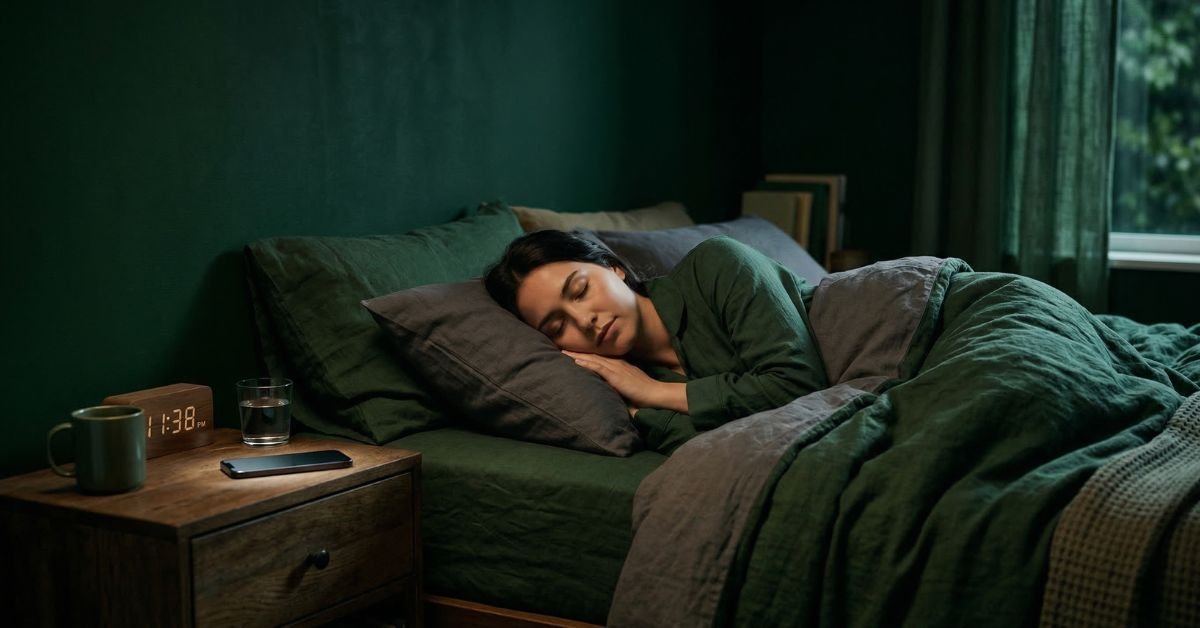
For most of us, the last thing we see before closing our eyes isn't a loved one or a book, it’s a glowing screen. We scroll through feeds, set our alarms, and then place the device mere inches from our heads. But as we become more aware of how technology affects our biology, a pressing question arises: How far away should your phone be when you sleep?
While it feels like a digital limb, your smartphone is a complex piece of machinery that emits light, signals, and heat. Creating a healthy boundary between your pillow and your processor isn't just about digital detoxing; it’s about optimizing your brain’s ability to recover.
The Science of Distance: How Far is Far Enough?
If you are looking for a magic number, many experts suggest a minimum of three to five feet. Keeping your phone on a dresser across the room rather than your nightstand serves two purposes: it reduces your exposure to Radio Frequency (RF) energy and prevents the mindless reach where you check notifications the moment you wake up.
According to guidance from the California Department of Public Health (CDPH), reducing the time you spend with your phone close to your body—especially while sleeping—is a key step in minimizing RF exposure.
Does a Charging Phone Emit Radiation?
One of the most common anxieties involves the invisible signals our phones use to stay connected. Your phone emits non-ionizing radiation in the form of RF waves. To provide a balanced view, the CDC states that while there is no definitive scientific link between health problems and cell phone use, maintaining distance is a proactive way to reduce any potential risk.
Is it Bad to Sleep Next to a Charging Phone?
Beyond the invisible waves, there is a very tangible concern: heat. Batteries naturally warm up while they are drawing power. If you leave your phone charging on your mattress or tucked under a heavy duvet, you are creating a fire hazard.
Moreover, is it bad to sleep next to a charging phone for your sleep quality? Absolutely. If the phone is charging right next to your ear, you are more likely to hear the ping of an incoming email or see the screen light up with a promotional notification. These micro-disturbances pull you out of deep, restorative sleep cycles, even if you don't fully wake up.
Why Do People Sleep With Their Phone Under Their Pillow?
It sounds uncomfortable, yet it’s a remarkably common habit. Why do people sleep with their phone under their pillow? For some, it’s a matter of security, the phantom limb feeling of needing the device within reach. For others, it’s a way to muffle an alarm so it doesn't wake a partner, or a way to listen to sleep podcasts without headphones.
However, this is arguably the most dangerous way to sleep with a device.
- Heat Trapping: While your phone needs airflow, your body needs temperature regulation to reach deep sleep. Switching to a breathable organic bamboo bed sheet is one of the most effective ways to prevent heat-trapping, as the natural fibers wick away moisture and keep your sleep surface significantly cooler than traditional cotton.
- Radiation Proximity: This puts the source of RF energy directly against your skull, which is the exact opposite of the recommended safety distance.
- Neck Strain: Even a slight bump under the pillow can throw off your spinal alignment, leading to a stiff neck in the morning.
Should You Turn Your Phone Off at Night?
If you find it impossible to move the phone to another room, you might wonder whether you should turn your phone off at night.
From a health and battery-life perspective, the answer is a resounding yes. Turning the device off eliminates RF emissions, ensuring your sleep is 100% uninterrupted. If you use your phone as an alarm, however, this might not be practical.
Airplane Mode
If you can't turn it off, Airplane Mode is your best friend. It cuts off the cellular and Wi-Fi transmitters, meaning the phone stops searching for towers. This significantly reduces RF emissions and saves your battery, all while allowing your morning alarm to function perfectly.
The Blue Light Factor
The distance from your phone also helps mitigate the effects of blue light. Our brains are wired to associate blue light with the morning sun. When we stare at a screen late at night, it inhibits the production of melatonin. National Institute for Occupational Safety and Health (NIOSH) suggests stopping the use of electronic screens at least 30 minutes before bedtime to help the brain prepare for deep, restorative sleep.
By establishing a rule for how far away your phone should be when you sleep, you naturally create a buffer zone. If you have to get out of bed to reach your phone, you are less likely to fall into a scroll hole at 2:00 AM.
At OdeSleep, we believe the environment is just as important as the equipment. Minimizing blue light is the first step toward a restorative night. By creating a 'no-phone zone' around your bed, you allow our organic materials to do what they do best: provide a sanctuary for uninterrupted, natural sleep cycles.
Practical Steps for a Better Night’s Sleep
Transitioning to a phone-free bedside can be tough, but you can do it in stages. For those looking to fully optimize their nighttime routine, combining these device boundaries with other Essential Sleep Hacks can drastically improve your morning energy levels.
- The "Three-Foot" Rule: Start by moving your charging station to a desk or dresser instead of the nightstand.
- Invest in an Analog Alarm Clock: If your excuse for having the phone nearby is the alarm, buy a dedicated clock. It removes the temptation to check Reddit the moment you hit snooze.
- Set a Digital Curfew: Stop using the phone 30 to 60 minutes before you intend to sleep.
- Use Grayscale Mode: If you must look at your phone, turn the screen to grayscale. It makes the apps look far less stimulating and easier to put down.