Brown Noise vs Pink Noise for Sleep: Which Sound Color Helps You Rest Best

· Medically reviewed
Updated guide. Reviewed against current research from the National Institutes of Health, the CDC, and peer reviewed sleep journals.
If you have ever stared at the ceiling, distracted by traffic outside, a ticking clock, or an overactive mind, you are not alone. For millions of people, total silence is not calming. It is deafening. In a quiet room, every small sound becomes magnified, pulling your brain out of its natural sleep rhythm.
To block out intrusive background sound and quiet a racing mind, many people turn to sound therapy. White noise used to be the default choice, but softer colored noise options, especially pink noise and brown noise, have become the preferred tools in the sleep wellness space.
This guide breaks down how pink noise and brown noise actually work, what current research says about their benefits, whether rain sounds genuinely improve rest, how loud is too loud for a sound machine, and how pairing the right acoustic environment with a cool, comfortable bed can help you reach deeper, more restorative sleep. According to the National Library of Medicine, sleep is a natural process that helps the body restore energy and supports learning and memory, which is exactly why the right sleep environment matters so much.
The Physics of Sound Colors: How Frequencies Affect Sleep
Not all noise is created equal. Sound colors are classified by how their acoustic energy is spread across high, middle, and low frequencies. The table below breaks down the three most common types used for sleep.
| Sound Color | Frequency Balance | Sounds Like | Best Suited For |
|---|---|---|---|
| White Noise | Equal energy across every frequency | Static or a hissing fan | Masking sudden, sharp sounds |
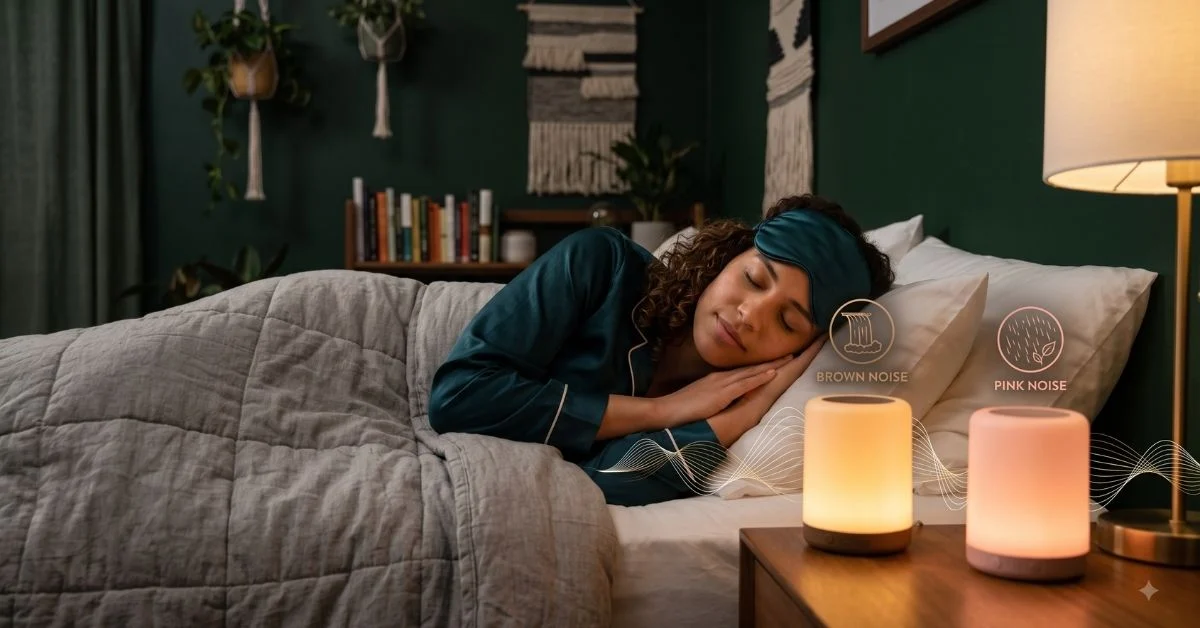
| Pink Noise | Softer high frequencies, balanced overall tone | Steady rainfall or wind through leaves | Deep sleep support and light sleepers |
| Brown Noise | Deep drop in high frequencies, heavy bass | Distant thunder or a rushing river | Racing thoughts, tinnitus, and urban noise |
White noise distributes equal energy across all audible frequencies, similar to television static. Because human ears are especially sensitive to high pitches, white noise can sometimes sound harsh.
Pink noise reduces power as pitch increases, producing a deeper, more natural sound that mimics rustling leaves or steady rain.
Brown noise (sometimes called red noise) drops high frequencies even further, pushing most of its energy into the lowest bass registers, which creates a heavy rumble similar to ocean waves or distant thunder.
What Is Pink Noise Good For? Benefits and Science
When people research pink noise benefits, they usually find that this frequency balance does more than mask background sound. A peer reviewed study published through the National Library of Medicine notes that applying pink noise during sleep has been linked to enhanced sleep dependent memory consolidation, although researchers caution that its effect on higher level cognitive processes like insight and creativity is still being studied and is not guaranteed to be positive for every sleeper.
Key Pink Noise Benefits
- Supports deep sleep stages: Some studies show pink noise timed to brain wave activity may help the brain settle into restorative sleep.
- May aid memory: Research suggests gentle pink noise during sleep can be linked with better next day memory recall, though results vary between studies.
- Smooth audio masking: Because high frequency intensity is reduced, pink noise can mask sharp disruptions, such as a barking dog or a slamming door, without sounding intrusive.
If you enjoy steady, natural rhythms like gentle wind or falling rain, pink noise is usually the more comfortable place to start. Pairing it with a calming pre bed routine, such as the practices covered in our guide to relaxation therapy for sleep, can make it easier to fall asleep in the first place.
Understanding Brown Noise: Deep, Heavy Relaxation
While pink noise offers a balanced, natural hiss, brown noise cuts high frequencies aggressively to deliver a deep, immersive rumble that many people describe as grounding.
How Brown Noise Helps You Sleep
- Soothes racing thoughts: Many people with ADHD or high evening anxiety report that brown noise quiets internal mental chatter more effectively than higher pitched sounds. If a busy brain is your main obstacle at night, our guides on how to stop your mind racing at night and an overactive mind at night walk through additional calming techniques.
- Strong acoustic isolation: The heavy low end works like an acoustic blanket, absorbing sudden ambient spikes in busy households or apartment buildings.
- May soften tinnitus discomfort: For people who experience ringing in the ears, a deep rumble can make high pitched internal buzzing less noticeable, though the National Institute on Deafness and Other Communication Disorders notes that tinnitus should still be evaluated by a hearing professional if it is persistent.
If your mind tends to spiral the moment your head hits the pillow, it may help to work on switching off mentally before you even reach for a sound machine. Our article on how to turn your brain off to sleep and our tips on how to stop thinking about something when trying to sleep pair well with brown noise for exactly this reason.
Does Listening to Rain Sounds Help You Sleep?
A common question people ask when setting up a sound machine is whether rain sounds actually help with sleep. Based on current evidence, the short answer is yes, and rain sounds naturally belong to the pink noise spectrum.
Why Rain Sounds Work
- Rhythmic rain is a biologically familiar, non threatening sound, which can signal to the nervous system that the environment is safe enough to rest in.
- Rain provides a steady stream of sound without sudden tonal changes, which helps prevent the brain’s threat detection center from triggering a wake up response.
The MedlinePlus sleep hygiene guide from the National Library of Medicine specifically recommends controlling sound in the bedroom and suggests a fan, soft music, or a sound machine as a way to create a consistent background tone that supports sleep.
Is It Better to Sleep in Silence or With Noise?
Whether silence or colored noise works better for you depends largely on your environment and how your brain processes sensory input.
| Preference | Best Environment | Why It Works |
|---|---|---|
| Silence | Dead quiet suburban or rural rooms | Works well for people who wake up at any sensory input |
| Pink or Brown Noise | Urban areas, shared homes, light sleepers, racing minds | Provides steady auditory masking that smooths out sharp environmental sounds |
If total silence makes you hyper aware of subtle creaks or your own thoughts, adding pink or brown noise can provide a steady acoustic baseline that lets your nervous system relax. If you already sleep with earplugs and are wondering whether that habit is doing more harm than good, our breakdown of whether sleeping with earplugs is bad for you covers the tradeoffs in more detail.
How Loud Is Too Loud? Sound Machine Safety
Sound therapy is only helpful if it is used safely. The CDC’s National Institute for Occupational Safety and Health sets a recommended exposure limit of 85 A weighted decibels averaged over an eight hour period for hazardous noise, and notes that repeated exposure at or above that level can cause permanent hearing loss over time. OSHA uses the same 85 decibel threshold as the point where hearing protection becomes necessary in workplace settings.
A bedroom sound machine should sit well below that threshold. As a general rule of thumb, keep the volume under 60 decibels, roughly the level of a quiet conversation, and place the speaker a few feet away from your head rather than directly beside your pillow. The NIDCD also recommends lowering volume and moving away from a sound source whenever possible as simple, effective ways to protect hearing over the long term.
Beyond Sound: Building a Complete Sleep Ecosystem
Sound therapy is a powerful tool for calming an overactive mind, but audio masking alone cannot overcome physical discomfort. According to the NIH’s guide to healthy sleep, getting consistent, restorative sleep depends on a combination of habits and environment, not sound alone. If your brain is relaxed by brown or pink noise but your body is overheating on synthetic bedding, your sleep cycle can still be interrupted by physical micro awakenings.
Regulate Temperature With Breathable Fabrics
As your body enters deep sleep, its core temperature naturally drops. Synthetic bedding traps heat and moisture, which can trigger night sweats and repeated waking. If you regularly find yourself flipping the pillow or kicking off the covers, it is worth reading why you might get so hot when you sleep and reviewing our roundup of the best cooling sheets for hot sleepers. Choosing a high quality, breathable weave, such as the options in our guide to the best thread count for sheets, helps air circulate freely so you stay cool through the night.
Choose Soft, Chemical Free Bedding
Soft, chemical free linens provide gentle sensory comfort against your skin, matching the calming acoustic environment created by your sound machine. A few options that pair well with a temperature controlled, low noise bedroom include our deep pocket sheet sets for a secure, no slip fit, our Oeko Tex certified bamboo sheets for breathable, third party tested comfort, and our organic cotton bed sheet set for a classic, fully organic feel. For sensitive skin, the Purely Organic Sheet Set is another gentle option worth considering.
Quieting a Racing Mind Before You Reach for a Sound Machine
Sound therapy works best as one part of a broader wind down routine rather than a standalone fix. If evening anxiety tends to keep you awake, our explainer on whether anxiety can make you feel sleepy may help you understand the pattern, and our complete sleep guide lays out a full, step by step approach to building healthier sleep habits alongside sound therapy.
Our Recommendation
Choose pink noise if: you like the sound of steady rain or wind, you are a light sleeper who wakes at small noises, or you want a gentle, natural background tone that also may support memory and deep sleep stages.
Choose brown noise if: you deal with racing thoughts, ADHD related restlessness, tinnitus discomfort, or heavy urban noise such as traffic and neighbors, and you want a deeper, more immersive rumble to anchor your attention.
Either way: keep the volume under 60 decibels, place the speaker a few feet from your head, and pair your sound choice with a cool, breathable, chemical free sleep surface for the best results.
Sources
This article was updated using current guidance from the following government and peer reviewed sources:
- MedlinePlus, National Library of Medicine, National Institutes of Health: Healthy Sleep
- MedlinePlus, National Library of Medicine: Sleep Hygiene Patient Instructions
- National Heart, Lung, and Blood Institute, NIH: Your Guide to Healthy Sleep
- NIH News in Health: Good Sleep for Good Health
- National Library of Medicine, PubMed Central: Overnight Exposure to Pink Noise and Sleep Dependent Insight
- CDC, National Institute for Occupational Safety and Health: Noise and Hearing Loss
- National Institute on Deafness and Other Communication Disorders, NIH: Noise Induced Hearing Loss
- Occupational Safety and Health Administration: Occupational Noise Exposure
Frequently Asked Questions (FAQs):
What is the main difference between brown noise and pink noise for sleep?
Pink noise balances high and low frequencies and sounds like steady rain or wind. Brown noise heavily dampens high frequencies, creating a deeper, bass heavy rumble similar to distant thunder or heavy ocean waves.
What is pink noise good for compared to white noise?
Pink noise is generally softer on the ears than white noise. While white noise can sound harsh due to equal high frequency volume, pink noise mimics natural rhythms and has been studied for its potential role in supporting deep sleep and memory.
Does listening to rain sounds count as pink noise?
Yes. Steady rain sounds naturally fall within the pink noise frequency spectrum, offering a gentle, rhythmic profile that can help calm the nervous system before sleep.
Can listening to brown noise all night cause hearing damage?
Is it better to sleep in complete silence or with pink or brown noise?
If you live in a quiet area and sleep deeply, silence may work best. If you live in a noisy environment, experience tinnitus, or struggle with racing thoughts, pink or brown noise can provide acoustic masking that promotes better rest.
Disclaimer: This article is for general informational purposes only and does not constitute medical or legal advice. Always consult a qualified professional before making any medical or legal decisions.

MBBS · PMDC registered
Registered Medical Practitioner (PMDC), Senior Medical Editor and Medical Reviewer for OdeSleep. Medical Officer in Paediatrics & NICU at Children's Hospital Lahore, combining frontline clinical experience with medical fact-checking.
View full profile →