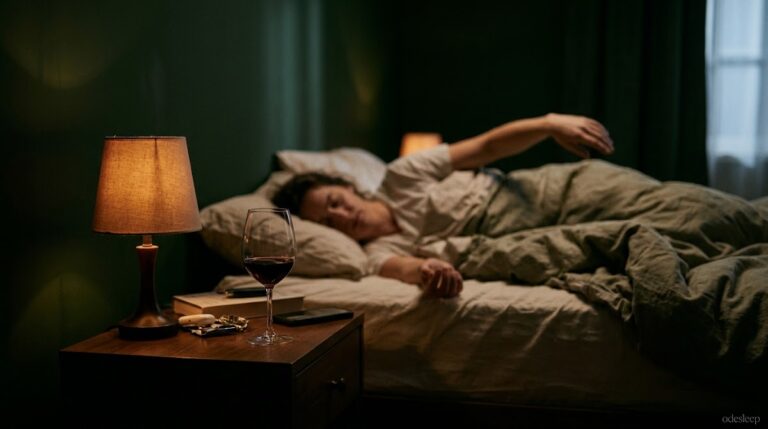
How Do You Stop Talking in Your Sleep?

· Medically reviewed
Key Takeaways
- Sleep talking, medically called somniloquy, is common and usually harmless. The American Academy of Sleep Medicine (AASM) reports that up to two in three people talk in their sleep at some point, while about 5% of adults do so on an ongoing basis.
- No treatment has been proven to stop it outright. The most reliable approach is to reduce triggers: sleep loss, stress, alcohol, fever, a hot bedroom, and other sleep disorders.
- Cleveland Clinic advises seeing a sleep specialist if sleep talking starts suddenly in adulthood or involves intense fear, screaming, or violent actions.
- A cool, breathable sleep setup from OdeSleep can remove one common cause of restless, fragmented nights.
What Is Sleep Talking and How Common Is It?
Sleep talking is speaking aloud during sleep without being aware of it. It is classed as a parasomnia, meaning an unusual behavior during sleep, and it is usually not a medical problem.
It ranges from mumbling to full sentences. A laboratory study of sleep talkers, Arnulf and colleagues in the journal Sleep, found that the speech often resembles ordinary waking speech and frequently includes swearing. Large population surveys of parasomnias, such as Bjorvatn and colleagues in Sleep Medicine, show that sleep talking is one of the more frequently reported sleep behaviors.
What Causes People to Talk in Their Sleep?
The exact cause is not fully understood. The leading explanation is that a brief partial arousal lets the brain’s speech areas activate while you stay asleep.
Cleveland Clinic notes that anything known to disrupt sleep can contribute. The table below summarizes the most common triggers.
| Trigger | Why it matters | What helps |
|---|---|---|
| Sleep deprivation | Fragmented, unstable sleep raises the odds of partial arousals | Fixed bedtime and wake time |
| Stress and a racing mind | Keeps the brain more alert overnight | Wind down routine, worry list |
| Alcohol | Lighter, more disturbed sleep as it is metabolized | Stop drinking 3 to 4 hours before bed |
| Fever or illness | Disrupts normal sleep cycling | Rest, hydration, treat the illness |
| Heat and poor bedding | Causes restless wake ups | Cool room, breathable sheets |
| Sleep apnea or RBD | Breathing events or dream enactment disrupt sleep | Medical evaluation |
Note: Occasional sleep talking after a stressful week, a late night, or a drink is not a cause for alarm. Frequency is what matters, not the occasional episode.
Can Stress and Sleep Loss Make Sleep Talking Worse?
Yes, both are well recognized triggers. Poor or short sleep makes sleep less stable, and an anxious mind at bedtime tends to carry that alertness into the night.
If your thoughts spin at bedtime, this guide on how to stop your mind racing at night offers practical techniques.
Does Alcohol Make Sleep Talking More Likely?
Alcohol can make it more likely because it degrades sleep quality overnight. A National Institute on Alcohol Abuse and Alcoholism review of alcohol and sleep documents reduced REM sleep and altered sleep stages with alcohol use.
Alcohol also affects breathing during sleep. NIH research notices state that alcohol can aggravate sleep disordered breathing. To understand why a drink makes you drowsy but wrecks your rest, read why alcohol makes you sleepy.
Can an Overheated Bedroom Trigger Sleep Talking?
Heat can contribute indirectly, because it causes restless, broken sleep. A direct link between room temperature and sleep talking has not been proven, but cooling the bed is a low risk step.
Breathable fabrics help. Browse OdeSleep Oeko Tex certified bamboo sheets, and see this guide to the best cooling sheets for hot sleepers.
Could Sleep Talking Signal Another Sleep Disorder?
Sometimes. Sleep talking has been linked with obstructive sleep apnea, and Cleveland Clinic recommends a specialist visit when speech involves intense fear, screaming, or violent actions.
That pattern can point toward REM sleep behavior disorder, where the normal muscle relaxation of REM sleep is incomplete and people act out dreams. If gasping or loud snoring is also present, compare sleep apnea vs snoring. If the episodes are screaming or confusion rather than words, see night terrors vs nightmares.
Note: Violent movements, injuries, or choking sounds during sleep deserve a medical evaluation, not home remedies.
How Can You Stop Talking in Your Sleep?
You reduce it by removing triggers and protecting sleep quality, since no method is guaranteed. Consistent timing, a calm evening, limited alcohol, and a cool, quiet bedroom are the steps with the most support.
Keep a Consistent Sleep Schedule
Go to bed and get up at the same time every day, including weekends. This stabilizes your sleep cycles and reduces sleep loss.
Build a Calming Evening Routine
Spend 30 to 45 minutes winding down without screens. Try slow breathing, write tomorrow’s tasks on paper, and keep lights dim and warm.
Protect Sleep From Alcohol
Finish your last drink at least three to four hours before bed, and drink water alongside it.
Make the Bedroom Cool, Dark, and Quiet
Aim for roughly 65°F to 68°F (18°C to 20°C). Choose breathable sheets, and consider steady background sound, comparing options in white noise vs brown noise for sleep.
Help a Bed Partner Cope
If you share a bed with a sleep talker, steady background noise or earplugs can help. Read whether sleeping with earplugs is bad before nightly use.
When Should You See a Doctor About Sleep Talking?
See a sleep specialist if sleep talking begins suddenly in adulthood, involves fear, screaming, or violent actions, or comes with gasping, choking, loud snoring, or daytime exhaustion. These patterns can point to a treatable sleep disorder rather than harmless somniloquy.
Recommendations
- Keep a fixed sleep and wake schedule seven days a week.
- Give yourself a 30 to 45 minute screen free wind down.
- Stop alcohol three to four hours before bed.
- Keep the bedroom around 65°F to 68°F with breathable bedding, such as OdeSleep sheets.
- Use steady sound masking if outside noise wakes you.
- Track episodes for two weeks, noting stress, alcohol, illness, and bedtime.
- Book a sleep specialist visit if you notice any red flags above.
References / Sources
- American Academy of Sleep Medicine, Sleep Education. Sleep Talking. https://sleepeducation.org/sleep-disorders/sleep-talking/
- Arnulf I, et al. What does the sleeping brain say? Syntax and semantics of sleep talking in healthy subjects and in parasomnia patients. Sleep. 2017. https://pubmed.ncbi.nlm.nih.gov/29029239/
- Bjorvatn B, Gronli J, Pallesen S. Prevalence of different parasomnias in the general population. Sleep Medicine. 2010. https://pubmed.ncbi.nlm.nih.gov/21093361/
- Cleveland Clinic. Talking in Your Sleep? Here’s What That Could Mean. https://health.clevelandclinic.org/talking-in-your-sleep-heres-what-that-could-mean
- National Institute on Alcohol Abuse and Alcoholism, Alcohol Research and Health. Review of alcohol and sleep. https://pmc.ncbi.nlm.nih.gov/articles/PMC2778757/
- National Institutes of Health. Alcohol Abuse, Sleep Disorders and Circadian Rhythms (funding notice PA 12 178). https://grants.nih.gov/grants/guide/pa-files/PA-12-178.html
Frequently Asked Questions (FAQs):
Is sleep talking a sign of a mental health problem?
Usually not. It is a common parasomnia, though stress and depression can increase how often it happens. Discuss frequent episodes with a doctor.
Can you reveal secrets while talking in your sleep?
Rarely in any meaningful way. Sleep speech is often mumbled or fragmentary and does not work like a truth serum.
Does sleep talking run in families?
It can. Some people appear more susceptible, which is one reason triggers matter more than willpower.
Can a bed partner do anything to reduce the disruption?
Yes. Sound masking, earplugs, a cooler bedroom, and temporarily sleeping apart on bad nights can protect the listener’s sleep.
Disclaimer: This article is for general informational purposes only and does not constitute medical or legal advice. Always consult a qualified professional before making any medical or legal decisions.

MBBS · PMDC registered
Registered Medical Practitioner (PMDC), Senior Medical Editor and Medical Reviewer for OdeSleep. Medical Officer in Paediatrics & NICU at Children's Hospital Lahore, combining frontline clinical experience with medical fact-checking.
View full profile →