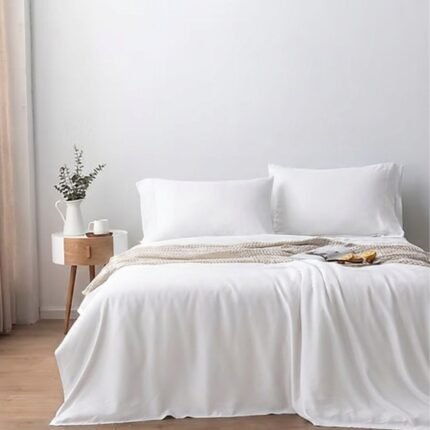
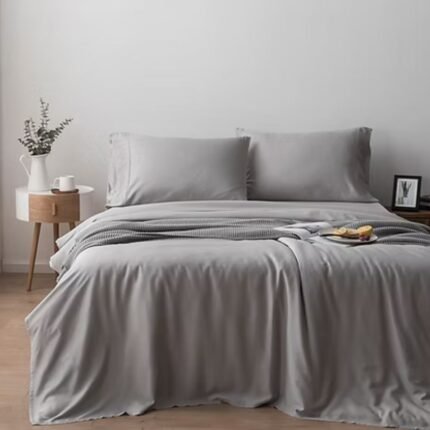
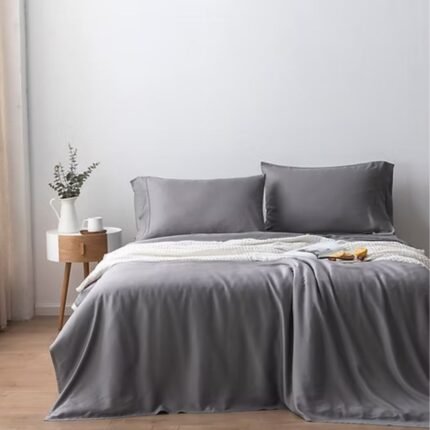
There is nothing quite like the frustration of waking up at 3:00 AM drenched in sweat, flipping your pillow to the cool side, and realizing your mattress has turned into a literal furnace. If you are a naturally warm sleeper, standard cotton sheets can quickly become a heavy, heat-trapping nightmare.
Finding cooling sheets that actually work is not just about chasing a crisp, clean aesthetic. It is about building a sleep environment that lets your body naturally drop its core temperature for deep, uninterrupted rest. The CDC lists keeping your bedroom quiet, relaxing, and at a cool temperature as one of the simplest habits that supports better sleep, and bedding fabric plays a direct role in whether your bedroom actually feels that way at 2 a.m.
If you are tired of night sweats, here is a well-researched, source-backed guide to the best breathable sheets for hot sleepers, plus the labeling rules and certifications that help you separate real cooling performance from clever marketing.
Why Bedroom Temperature and Fabric Work Together
Sleep researchers and public health agencies consistently point to a cooler sleep environment as one of the most reliable ways to support deeper rest. According to a NIOSH sleep bulletin published by the CDC, a comfortably cool room, roughly 65 to 68 degrees Fahrenheit for most adults, paired with the right covers, is one of the core recommendations for improving sleep quality. Your sheets are the layer closest to your skin all night, so if that layer traps heat and moisture, even a cool thermostat setting will not stop you from waking up overheated.
Best Material for Hot Sleepers
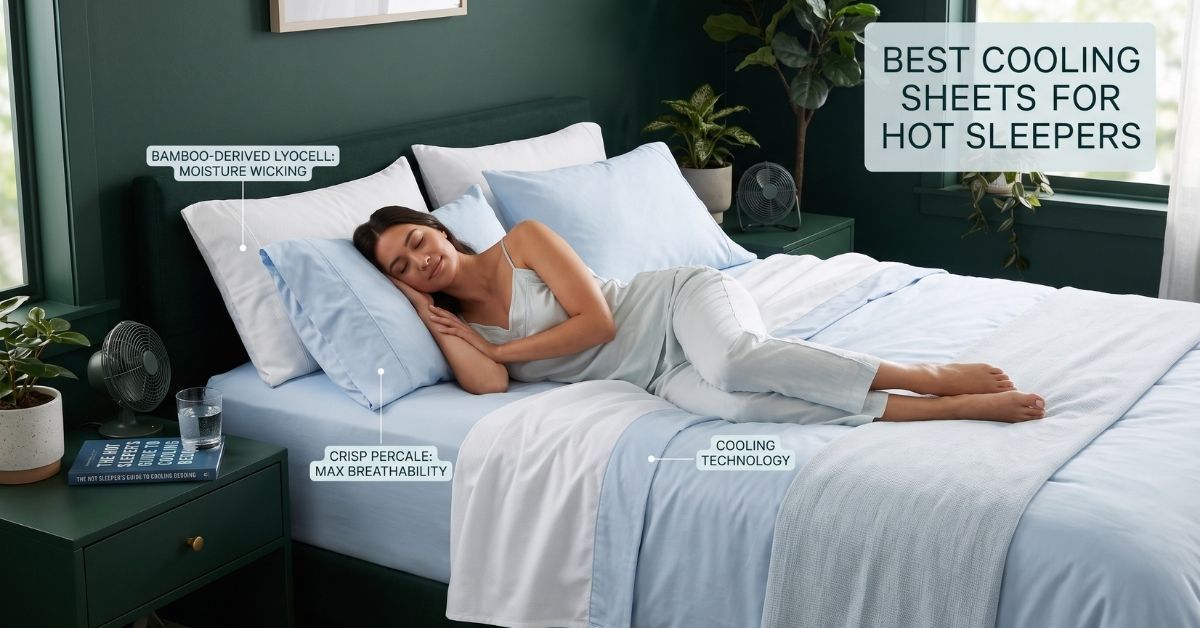
When you are hunting for bedding that keeps night sweats at bay, look past the thread count on the package and focus on the fiber itself. The best material for hot sleepers is almost always a natural, moisture-wicking fiber rather than a tightly woven synthetic.
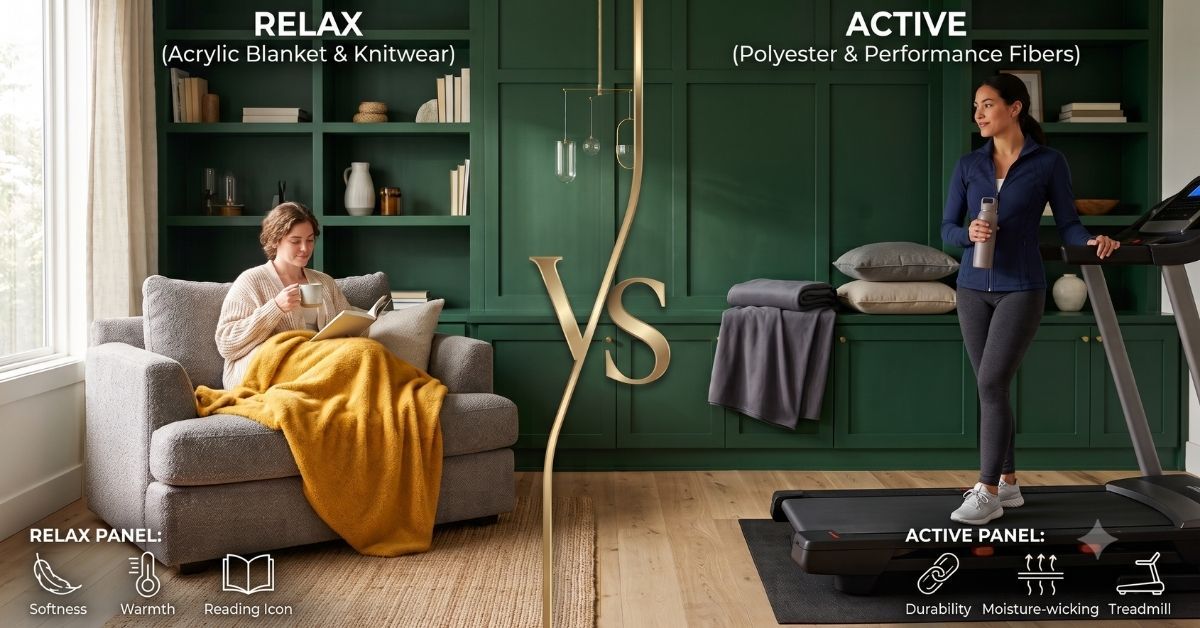
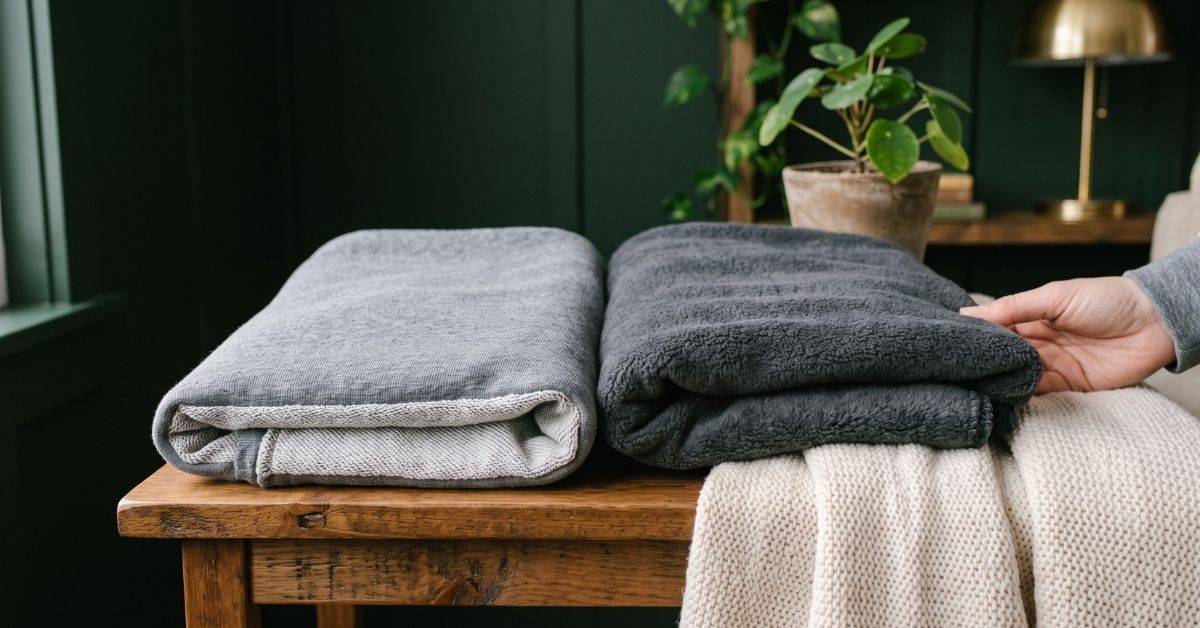
Synthetic fabrics, such as polyester or traditional microfiber, act like a plastic wrap over your mattress. They trap heat and lock moisture against your skin instead of releasing it. For a closer look at how these fabrics compare, see our guides on microfiber vs polyester and whether polyester is bad for you. To stay cool, look for materials that pull moisture away from your body and allow continuous airflow.
Linen
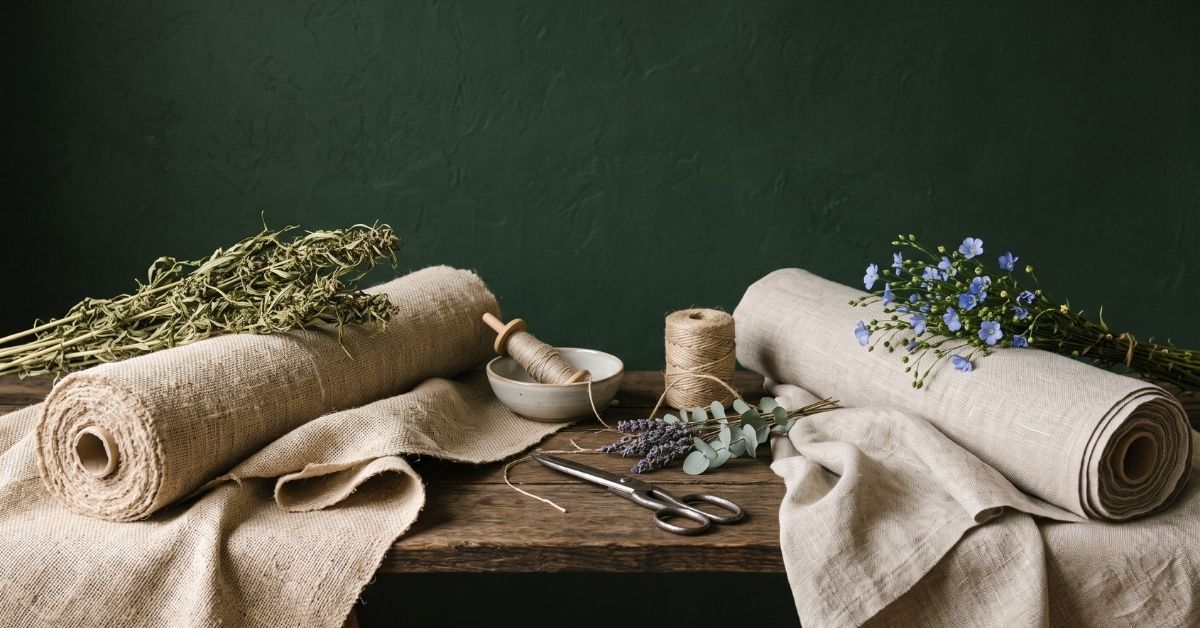
Derived from the flax plant, linen is the undisputed champion of airflow. Its fibers are naturally thicker than cotton, so they must be woven more loosely, which creates a built in ventilation system for your bed. Linen can also absorb up to 20 percent of its own weight in moisture before it starts to feel damp. If you want a deeper side by side breakdown, our linen sheets vs cotton sheets comparison covers feel, durability, and price.
Bamboo Viscose and Tencel Lyocell
These modern, plant-based fibers are smooth, cool to the touch, and able to absorb significantly more moisture than cotton without feeling wet. Because bamboo processing can involve heavy chemical use, look for finished products carrying an independent safety certification such as OEKO-TEX certified bamboo sheets, which confirms the fabric has been tested for harmful substances rather than relying on the raw plant name alone. If you are deciding between plant-based fibers, our eucalyptus vs bamboo sheets guide and our bamboo vs Egyptian cotton comparison for sensitive skin can help you narrow it down.
Long Staple Cotton, Percale Weave
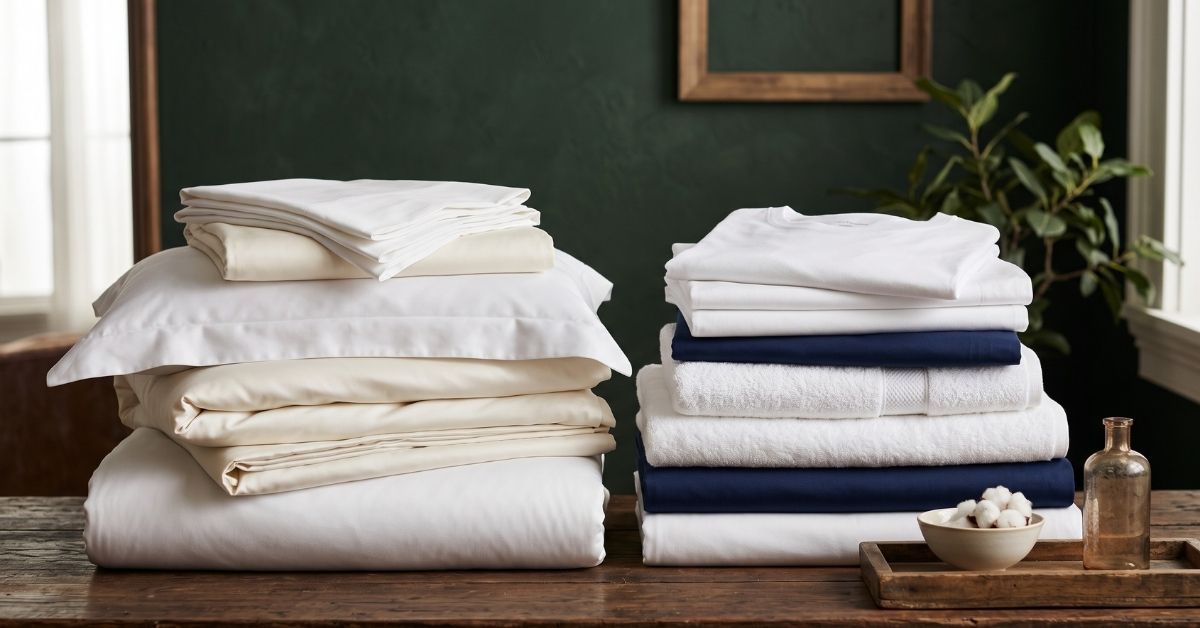
If you love the classic crispness of hotel bedding, look for cotton percale. The lightweight, grid-like weave allows maximum air circulation, and long-staple cotton fibers reduce the pilling and heaviness that make short-staple cotton feel stuffy. For a certified option, an organic cotton bed sheet set gives you that crisp percale feel with third-party oversight on how the fiber was grown.
Are Linen Sheets Good for Hot Sleepers?
If you have researched premium summer bedding, you have likely wondered whether linen sheets are actually good for hot sleepers. The answer is a resounding yes. Linen is arguably the single coolest sheet material for summer available today. It has a distinct, slightly textured, matte look rather than a silky texture, but it softens with every wash and largely eliminates the clammy, sticky feeling that shows up on humid nights. For more on how it stacks up against other fibers, see our full linen vs cotton vs bamboo sheets comparison.
Understanding Sheet Labels: What Thread Count and Fiber Content Actually Mean
Thread count is not a reliable measure of coolness on its own. A very high thread count often means a tighter weave, which can trap body heat rather than release it. What matters far more is fiber content, and in the United States that content is not just a marketing choice. Under the FTC Textile Fiber Rule, covered textile products sold in the United States must carry a label disclosing the generic names and percentages by weight of every fiber used, along with the manufacturer and country of processing. The Federal Trade Commission's guide, Threading Your Way Through the Labeling Requirements Under the Textile and Wool Acts, is the authoritative source for how these disclosures are supposed to work.
This matters directly for bamboo bedding. The Federal Trade Commission has taken enforcement action against major retailers for marketing sheets as bamboo when the fabric was actually rayon made from bamboo cellulose using a chemically intensive process. The agency's Green Guides for environmental marketing claims cover this directly, and its plain language business guidance on how to avoid bamboozling customers with bamboo claims explains that products should be labeled rayon or rayon made from bamboo unless the fabric is literally woven bamboo fiber. Reading the fiber content line on the label, not just the product name, is the fastest way to avoid this kind of mislabeling.
Organic and Certified Cooling Sheets
If chemical exposure and environmental impact matter to you as much as temperature, look for third-party certification rather than the word organic on its own. The USDA's Agricultural Marketing Service confirms that raw cotton, wool, and flax fall under the National Organic Program's crop standards, but a finished textile can only carry the USDA organic seal if the entire product, including processing, meets those federal regulations. Because that full chain certification is hard to achieve for finished sheets, many organic bedding brands instead rely on the Global Organic Textile Standard, a private certification that covers growing and processing together. Our organic cotton vs conventional cotton guide and organic cotton vs bamboo lyocell comparison both walk through what those certifications actually guarantee. If you want a set that leans fully into that standard, a purely organic sheet set is worth a look.
Materials to Avoid If You Sleep Hot
Traditional microfiber, satin, and low-grade polyester blends are the biggest offenders for trapping heat. These synthetic weaves do not absorb moisture the way natural fibers do, so sweat sits on the surface of the fabric instead of evaporating. Our polyester vs cotton sheets comparison breaks down exactly where synthetic fabric falls short for temperature regulation, and it is a useful reference if you are trying to figure out why a past set of sheets always felt sticky by morning.
Finding Your Perfect Cooling Match
To help you choose the right material for your specific sleep style, here is how the top breathable options compare side by side.
| Material |
Feel and Texture |
Cooling Style |
Certifications to Look For |
Best For |
| Linen |
Textural and airy, softens over time |
Unrivaled ventilation from an open weave |
OEKO-TEX Standard 100, GOTS for organic flax |
Maximum airflow and humidity control |
| Bamboo Viscose or Tencel Lyocell |
Silky and smooth with a draping feel |
Cool-to-the-touch contact cooling |
OEKO-TEX Standard 100, FSC for wood sourcing |
Hot sleepers who prefer a slick, smooth fabric |
| Cotton Percale |
Crisp and matte, like a pressed shirt |
Lightweight breathability from a grid weave |
USDA organic listing, GOTS, OEKO-TEX |
Traditionalists who want a light, breathable shield |
| Organic Cotton |
Soft, natural feel similar to standard cotton |
Breathable with lower chemical residue |
USDA National Organic Program, GOTS |
Sensitive skin and chemical conscious households |
A Quick Note on Bedding Safety
Cooling performance should never come at the expense of basic safety. Mattress pads and mattress sets sold in the United States are subject to federal flammability rules enforced by the Consumer Product Safety Commission, which set smoldering and open flame resistance standards under 16 CFR Parts 1632 and 1633. Fitted and flat sheets themselves are not mattress pads and generally fall outside that specific standard, but it is worth knowing this framework exists, especially if you are shopping for a mattress pad or protector alongside your new sheets.
Recommendation
If you overheat easily and want the safest starting point, begin with a certified natural fiber rather than a synthetic blend. For most hot sleepers, an OEKO-TEX certified bamboo sheet set offers the smooth, cool-to-the-touch feel people expect from bamboo, with lab testing behind the safety claim. If you prefer a crisp, traditional feel, an organic cotton bed sheet set in a percale weave is the better match. For households prioritizing full supply chain transparency over feel, a purely organic sheet set is the most thorough choice. Whichever you pick, check the label for the actual fiber name and any third-party certification mark before checking out.
Final Tips for a Sweat Free Night
- Pair breathable sheets with a breathable mattress protector and avoid thick polyurethane barriers.
- Choose a lightweight, open weave duvet or quilt instead of a heavy synthetic comforter.
- Keep the room itself cool. The CDC recommends roughly 65 to 68 degrees Fahrenheit as a starting point, then adjust bedding layers from there.
- Wash sheets regularly. A build up of body oils and detergent residue can reduce a fabric's natural breathability over time.
Related Reading
Sources
- Centers for Disease Control and Prevention, About Sleep (government source)
- Centers for Disease Control and Prevention, NIOSH Science Bulletin, Tips to Improve Your Sleep (government source)
- Federal Trade Commission, Textile Fiber Rule (government source)
- Federal Trade Commission, Threading Your Way Through the Labeling Requirements Under the Textile and Wool Acts (government source)
- Federal Trade Commission, Green Guides for Environmental Marketing Claims (government source)
- Federal Trade Commission, How to Avoid Bamboozling Your Customers, business guidance on bamboo and rayon labeling (government source)
- United States Department of Agriculture, Agricultural Marketing Service, Organic Textiles (government source)
- United States Consumer Product Safety Commission, Mattresses, Mattress Pads, and Mattress Sets (government source)