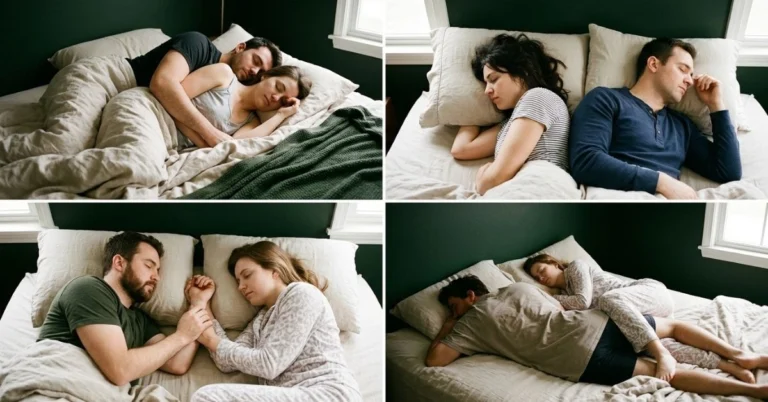
What Is a Sleep Divorce? Pros, Cons, and How Sleeping Apart Can Save Your Relationship

· Medically reviewed
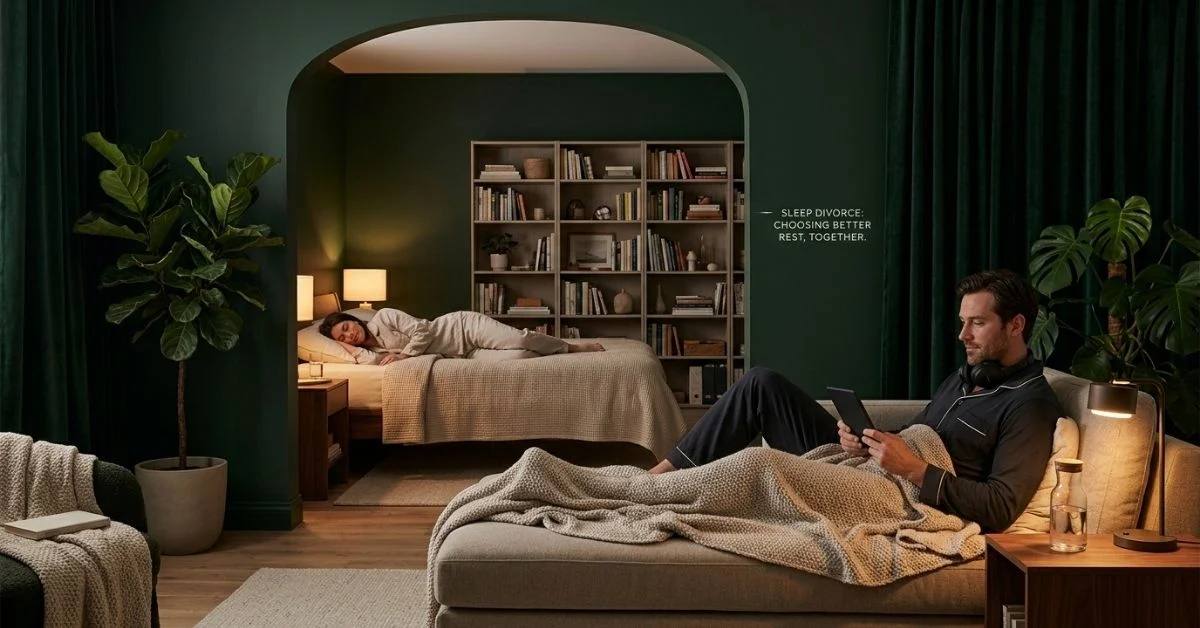
A sleep divorce is a conscious, mutual decision between romantic partners to sleep in separate beds or separate bedrooms in order to protect the quality of their rest. Despite the dramatic name, a sleep divorce is not a sign that a relationship is failing. It is a practical sleep hygiene strategy that couples use to reduce nighttime disruptions such as chronic snoring, mismatched work schedules, restless movement, or conflicting temperature preferences.
Sleep insufficiency is a genuine public health concern, not a niche complaint. According to the Centers for Disease Control and Prevention, only about 69.5 percent of U.S. adults reported getting sufficient sleep in 2024. That gap between the sleep people need and the sleep they actually get is exactly why so many couples are willing to consider separate sleeping arrangements as one option among several for protecting both partners’ health.
Why Couples Choose Separate Beds
Sharing a bed means sharing light, sound, movement, and thermal environment with another person. When two people have different sleep needs, partners often experience micro awakenings that interrupt deeper slow wave and REM sleep. The National Heart, Lung, and Blood Institute (NHLBI) explains that consistent, uninterrupted sleep supports physical restoration, memory, and emotional regulation, which is exactly what gets disrupted when two sleepers are working against each other every night.
Chronic Snoring and Sleep Apnea
Loud snoring is one of the most common triggers behind a sleep divorce conversation. According to MedlinePlus, obstructive sleep apnea occurs when the throat muscles relax during sleep and the airway narrows or briefly closes, producing loud snoring, gasping, and repeated awakenings. If a partner’s snoring is keeping you up, our comparison of sleep apnea vs snoring explains how to tell the two apart and when it is time to see a doctor.
Persistent snoring paired with choking sounds, gasping, or daytime fatigue deserves a medical evaluation, since untreated sleep apnea is linked to high blood pressure, heart disease, and stroke, according to NHLBI supported research. Positive airway pressure therapy is one established treatment option, and our guide to CPAP vs BiPAP breaks down how each device works so couples can discuss treatment before assuming separate rooms are the only fix.
Mismatched Chronotypes and Shift Work
One partner may be a night owl while the other rises early for work, or one works overnight shifts, leading to disruptive alarms and late night movement that neither partner can fully control.
Temperature Disagreements
Disputes over thermostat settings, blanket weight, and midnight cover tugging create ongoing friction. If you tend to run warm at night, it helps to understand why you get so hot when you sleep before assuming your partner or the mattress is the sole problem. Pairing that insight with a set of cooling sheets built for hot sleepers resolves the issue for many couples without needing a separate room at all.
Restless Leg Syndrome and Tossing
Physical movement on a reactive mattress can wake a light sleeping partner repeatedly through the night, even when the movement itself is involuntary and outside anyone’s control.
Sleep Divorce: Pros and Cons
Weigh how a separate sleeping arrangement affects both your rest and your daily connection before making the change permanent.
| Dimension | Pros | Cons |
|---|---|---|
| Sleep Quality | Fewer awakenings and deeper rest, with some couples reporting roughly 37 more minutes of sleep per night | Some light sleepers feel less secure or more alert without a partner’s presence nearby |
| Relationship Health | Less morning irritability and fewer arguments driven by exhaustion | Fewer spontaneous moments of cuddling and casual conversation before sleep |
| Practical Logistics | Full control over temperature, lighting, mattress firmness, and wake times | Requires a spare room or two beds, plus extra bedding and laundry to manage |
Do Couples Who Sleep Apart Grow Apart?
The worry that couples who sleep apart grow apart is common, but the research points to poor sleep itself, not the sleeping arrangement, as the greater risk to a relationship. Chronic sleep debt raises cortisol, shortens patience, and reduces what psychologists call empathic accuracy, meaning the ability to correctly read a partner’s emotions. The National Institute on Aging notes that consistently missing quality sleep is connected to irritability, poor concentration, and a lower overall quality of life at any age, which is exactly the pattern that erodes goodwill between partners over time.
That said, separate rooms can lead to genuine emotional distance if couples do not replace incidental nighttime bonding with intentional connection. Couples who do well with a sleep divorce tend to treat bedtime as two distinct phases:
- The Connection Phase: twenty to thirty minutes of cuddling, talking, or reading together before moving to separate rooms.
- The Recovery Phase: time in separate sleeping spaces dedicated entirely to uninterrupted, restorative rest.
Small habits make the recovery phase more effective. Our roundup of five essential sleep hacks and our guide on how to increase deep sleep cover simple, evidence informed habits couples can use whether or not they share a bed.
Sleep Divorce vs Real Marital Separation
It is worth distinguishing a voluntary sleep divorce between committed partners from an actual marital separation. When couples legally separate or divorce, living and sleeping arrangements vary widely. Some continue living in the same home, and occasionally the same bed, for anywhere from a few months to over a year during the process, often driven by housing costs, lease terms, coparenting logistics, or ongoing financial settlements. Unlike a sleep divorce, which is a mutual and health focused decision, continuing to share a bed after a real separation can prolong emotional recovery and create confusion about boundaries for both partners.
Healthy Alternatives Before Sleeping in Separate Rooms
If you would rather protect your sleep without moving to a separate bedroom, try these steps first.
1. The Scandinavian Sleep Method
Use two separate twin duvets on one shared mattress instead of a single top sheet, so each partner can choose their own preferred warmth. Pairing this with breathable, temperature balanced bedding, such as an Oeko Tex certified bamboo sheet set, helps prevent the overheating that often triggers blanket wars in the first place.
2. Upgrade Bedding for Motion Isolation and Comfort
A supportive mattress paired with well fitted bedding reduces disturbance from tossing and turning. Deep pocket sheet sets are cut to stay securely fitted on thicker mattresses and toppers, which matters when one partner moves around a lot during the night. Reviewing the best and worst sleeping positions can also help partners choose postures that put less strain on shared space.
3. Choose High Performance, Natural Sleep Textiles
Breathable natural materials regulate temperature better than many synthetic blends. An organic cotton bed sheet set or a purely organic sheet set can reduce night sweats and skin irritation for partners who run hot or have sensitive skin. Households managing allergies should also review the best sheets for allergies and asthma before assuming a separate room is the only answer.
4. Manage Noise Without a Separate Room
If snoring or a partner’s late bedtime is the main disruptor rather than temperature, sound masking is often enough on its own. Our comparisons of white noise vs brown noise for sleep and whether sleeping with earplugs is bad walk through the safest options for blocking out a partner’s noise.
5. Address Underlying Medical Issues
If snoring is the core issue, ask a doctor about screening for obstructive sleep apnea, described in detail by MedlinePlus. According to the NHLBI, continuous positive airway pressure, or CPAP, therapy has been shown to be an effective treatment and remains a leading option for managing the condition without separating couples at night.
6. Consider an Adjustable Base
For couples with different incline needs, such as one partner who needs elevation for reflux or snoring and one who prefers to sleep flat, adjustable bed sheets are cut with extra give so the bedding stays fitted as the base moves, avoiding the untucked, bunched sheets that make adjustable beds harder to share.
Our Recommendation: Matching the Fix to the Problem
Use this table as a starting point for deciding what to try before, or instead of, a full sleep divorce.
| Main Issue | Try This First | Helpful Resource |
|---|---|---|
| Overheating or night sweats | Switch to breathable, moisture wicking bedding before considering separate rooms | Oeko Tex certified bamboo sheets |
| Restless movement or a partner who tosses and turns | Choose a motion isolating mattress plus sheets that stay securely fitted | Deep pocket sheet sets |
| Snoring without a diagnosed sleep disorder | Start with sound masking and schedule a sleep evaluation | Sleep apnea vs snoring guide |
| Mismatched incline needs, such as reflux or reading in bed | Use an adjustable base with properly fitted linens | Adjustable bed sheets |
| Sensitive skin or allergies | Switch to a natural, hypoallergenic fabric | Organic cotton bed sheet set |
| Still disrupted after trying alternatives | Trial a sleep divorce with an intentional connection phase before recovery sleep | Purely organic sheet set |
Sources
- Centers for Disease Control and Prevention, National Center for Health Statistics: Sleep Health FastStats
- National Heart, Lung, and Blood Institute: Sleep Health
- National Heart, Lung, and Blood Institute: Sleep Apnea Research
- MedlinePlus (National Library of Medicine): Obstructive Sleep Apnea, Adults
- MedlinePlus (National Library of Medicine): Sleep Apnea
- National Institute of Child Health and Human Development: How Much Sleep Do I Need
- National Institute on Aging: A Good Night’s Sleep
Frequently Asked Questions (FAQs):
Is a sleep divorce a sign of an impending breakup?
No. A sleep divorce is a health and lifestyle decision, not an emotional rejection of a partner. Many couples say better rest actively strengthens their relationship by removing exhaustion driven conflict.
How common is sleeping in separate beds?
It is common. Survey data cited by sleep researchers suggests roughly one in three adults in relationships sleep separately at least occasionally, with younger generations leading the trend.
How do you bring up a sleep divorce without hurting your partner's feelings?
Frame the conversation around your own sleep health rather than your partner’s habits. Try language such as “I am struggling with broken sleep and want to try a temporary arrangement so I can function better,” instead of pointing to snoring or movement as the cause.
Can a sleep divorce be temporary?
Yes. Many couples use separate rooms only during high stress periods, recovery from illness, or the newborn stage, then return to sharing a bed once the disruption passes.
How do couples maintain physical intimacy while sleeping apart?
Through intentional routines, such as a shared connection phase before bed, morning check ins, and dedicated time for closeness that does not depend on falling asleep in the same bed.
Does sleeping apart improve sleep quality right away?
For many people, yes. Reduced awakenings and more uninterrupted REM and deep sleep can produce a noticeable difference within the first few nights, though results vary by individual and underlying health.
Disclaimer: This article is for general informational purposes only and does not constitute medical or legal advice. Always consult a qualified professional before making any medical or legal decisions.

MBBS · PMDC registered
Registered Medical Practitioner (PMDC), Senior Medical Editor and Medical Reviewer for OdeSleep. Medical Officer in Paediatrics & NICU at Children's Hospital Lahore, combining frontline clinical experience with medical fact-checking.
View full profile →