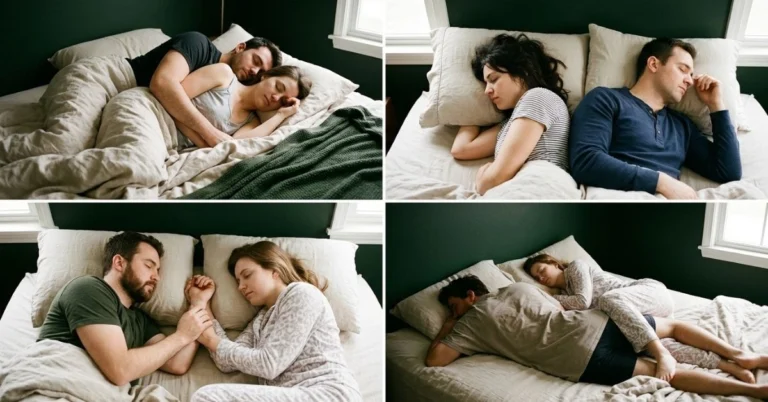
Did Married Couples Sleep in Separate Beds? The History of Twin Beds and the Modern Sleep Divorce

· Medically reviewed
Last updated November, 2026.
Executive Summary: Key Takeaways
- Yes, many married couples slept in separate beds. Historian Hilary Hinds traces the rise and fall of twin beds between 1870 and 1970, and notes they never entirely replaced double beds (Lancaster University).
- The reason was health, not romance. Late nineteenth century doctors worried about illness and lost vitality from shared sleep, and twin beds became a modern, hygienic ideal (Hinds).
- The backlash came in the 1950s, when twin beds began to signal a distant marriage, and by the late 1960s few couples wanted them (Lancaster University).
- Today, roughly one in three Americans has tried a “sleep divorce.” A 2025 AASM survey found 31 percent of US adults have slept apart from a partner (AASM).
- You can improve shared sleep without moving out. Separate blankets, motion control, and temperature fixes help many couples.
Did Married Couples Historically Sleep in Separate Beds?
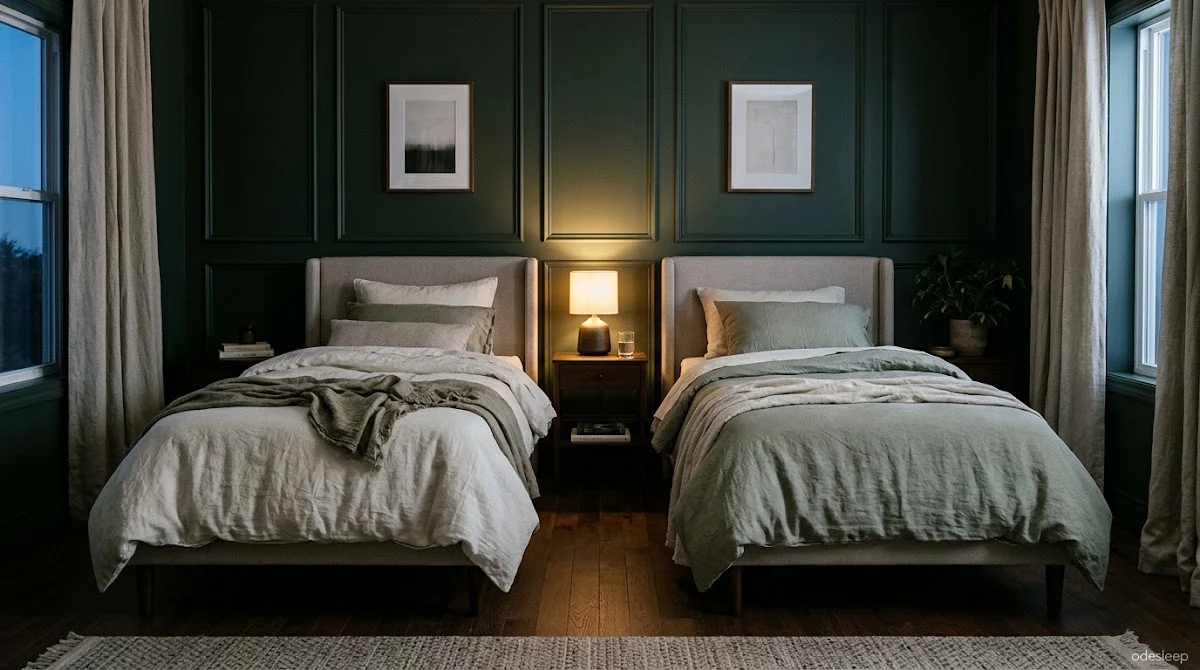
Yes. Between about 1870 and 1970, twin beds were a recognized and often fashionable choice for married couples in Britain and the United States, although double beds never disappeared (Lancaster University).
Hinds found that twin beds were seen as the sign of a modern, forward thinking couple, balancing togetherness at night with separateness and autonomy. By the 1930s and 1940s they were common enough to be unremarkable (Lancaster University).
| Period | What was happening | Why it mattered |
|---|---|---|
| 1870s to 1890s | Doctors promoted separate sleeping, and the term “twin beds” took hold by the 1890s | Health anxieties about illness and shared air |
| Early 1900s to 1940s | Twin beds became stylish and, by the 1930s and 1940s, commonplace | Seen as modern, hygienic, and respectful of individual rest |
| 1950s to 1960s | Backlash against twin beds intensified | Separate beds came to signal a distant or failing marriage |
| Late 1960s onward | Few married couples saw twin beds as desirable | Shared double beds became the cultural default |
| Today | Rise of the “sleep divorce” | Couples prioritize sleep health over stigma |
Why Did Doctors Recommend Separate Beds?
Late nineteenth century health writers worried that sharing a bed spread illness and drained the vitality of the weaker sleeper. Dr Benjamin Ward Richardson promoted what he called the “single bed system,” and by the 1890s the separated marital beds were known as twin beds (Hinds).
Note: These were historical medical beliefs, not current science. Modern sleep medicine supports separate sleep spaces for a different reason: protecting sleep quality when a partner snores, moves, or keeps a different schedule.
Furniture makers matched the advice with matching bedsteads sold in major stores, and the style came to represent a forward thinking approach to marriage and the home (Hinds).
Why Did Couples Return to Sharing One Bed?
Cultural attitudes shifted in the mid twentieth century, and twin beds came to signal marital distance. Historians place the intensifying backlash in the 1950s, and by the late 1960s few couples saw twin beds as a desirable choice (Lancaster University).
Other factors often cited include larger bedrooms in newly built homes and improved mattresses that reduced motion between partners, although historians weigh these differently. The shift shows how sleeping arrangements track social ideas about intimacy as much as medical advice.
How Common Is a Sleep Divorce Today?
About 31 percent of US adults have opted for a “sleep divorce,” according to the American Academy of Sleep Medicine (AASM) 2025 survey of 2,007 adults. The term describes sleeping in another bed in the same room or another space in the home to accommodate a bed partner (AASM, 2025).
| Survey | Finding |
|---|---|
| AASM 2025 survey of 2,007 US adults | 31 percent have slept in a separate bed or space to accommodate a partner |
| AASM 2024 survey of 2,006 US adults | 29 percent have done so; 10 percent have tried the “Scandinavian sleep method” of separate blankets |
| AASM 2023 survey | 20 percent sleep in another room occasionally and 15 percent consistently |
The AASM spokesperson explains that the term “might sound alarming, but it is not about ending a relationship,” and instead about prioritizing sleep health (AASM, 2024).
Why Do Couples Choose to Sleep Apart?
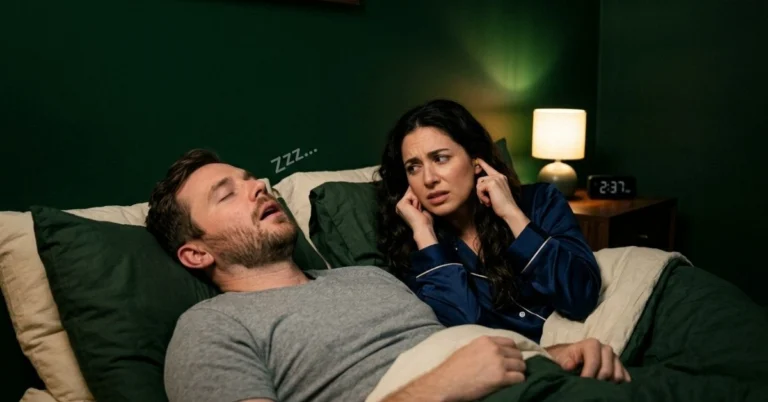
The most common reasons are snoring, tossing and turning, and different sleep schedules (AASM, 2024). These disruptions cut into sleep for the lighter sleeper and can build resentment over time.
- Snoring and possible sleep apnea: if loud snoring is the cause, the AASM advises encouraging your partner to talk to a doctor about obstructive sleep apnea. Our guide to sleep apnea vs snoring explains the difference.
- Temperature differences: one partner runs hot while the other is cold. See why you get so hot when you sleep and our picks of the best cooling sheets for hot sleepers.
- Mismatched body clocks: a morning person paired with a night owl will disturb each other. Learn more in circadian timing vs wind down support.
- Noise: compare options in white noise vs brown noise for sleep.
Can You Improve Shared Sleep Without Separate Bedrooms?
Yes. Separate blankets, better motion control, and fixes for the specific disruption help many couples keep one bed. Ten percent of Americans in the 2024 AASM survey had already tried the Scandinavian sleep method (AASM, 2024).
- Scandinavian sleep method: share a mattress but use two separate duvets. This ends blanket stealing and suits different temperatures. See our comparison of comforter vs duvet.
- Split the sleep surface: with a split setup, each partner can set their own base. OdeSleep makes adjustable bed sheets for adjustable mattresses.
- Cool the bed: breathable sheets help hot sleepers without changing the room for both partners.
- Protect your evening routine: try the 15 minute evening routine audit so you both fall asleep faster.
- Keep intimacy intentional: many couples who sleep apart spend time together in one bed before heading to separate spaces.
Note: If snoring is loud, or you notice pauses in breathing, do not just move to another room. Ask a clinician about a sleep apnea evaluation, and use sleepeducation.org to find an accredited sleep center.
Recommendations: What to Do Next
- Name the problem: snoring, movement, heat, light, noise, or schedule. Fix the specific cause first.
- Try a low commitment change such as separate duvets or a cooler sheet set from OdeSleep.
- Test a split setup if you have different comfort needs, for example with adjustable bed sheets for an adjustable base.
- Run a two week trial of any new arrangement and check in with each other.
- Get loud snoring checked for sleep apnea.
- Preserve connection with a set time together before sleep.
References and Sources
- New survey data: sleep divorce (2025 AASM Sleep Prioritization Survey) (American Academy of Sleep Medicine)
- Americans opting for sleep divorce to accommodate a bed partner (2024 AASM survey) (American Academy of Sleep Medicine)
- The curious history of the rise and fall of twin beds (Lancaster University)
- A Cultural History of Twin Beds, Hilary Hinds (Bloomsbury Academic, open access via Taylor and Francis)
- Modern design (chapter), A Cultural History of Twin Beds, Hilary Hinds (Lancaster University scholar, open access chapter)
- Sleep Education: find an accredited sleep center (American Academy of Sleep Medicine)
Frequently Asked Questions (FAQs):
Does sleeping in separate beds mean a relationship is failing?
No. The AASM says a sleep divorce is about prioritizing sleep health and addressing issues that can erode a relationship, such as snoring, tossing and turning, or differing schedules (AASM, 2024). Poor sleep is linked with more conflict between partners, so better rest can help.
Did royalty sleep in separate beds?
Often, yes. European royal and aristocratic couples commonly kept separate private bedchambers, which provided privacy and uninterrupted rest. This arrangement long predates the twin bed craze.
How can I suggest separate beds without hurting my partner?
Frame it around sleep and health rather than frustration, and propose a short trial. Explain how poor sleep affects your mood and focus, affirm how much you value your partner, and agree to review after two weeks.
Is a sleep divorce permanent?
Not necessarily. Many couples sleep apart only on some nights, during illness, or when schedules clash, and then share a bed again.
Disclaimer: This article is for general informational purposes only and does not constitute medical or legal advice. Always consult a qualified professional before making any medical or legal decisions.

MBBS · PMDC registered
Registered Medical Practitioner (PMDC), Senior Medical Editor and Medical Reviewer for OdeSleep. Medical Officer in Paediatrics & NICU at Children's Hospital Lahore, combining frontline clinical experience with medical fact-checking.
View full profile →