If you have ever lain in bed exhausted but wired, heart ticking a little too fast, thoughts looping, body just not getting the memo that it is bedtime, you have felt the gap between being tired and being able to sleep. That gap is where somatic exercises live.
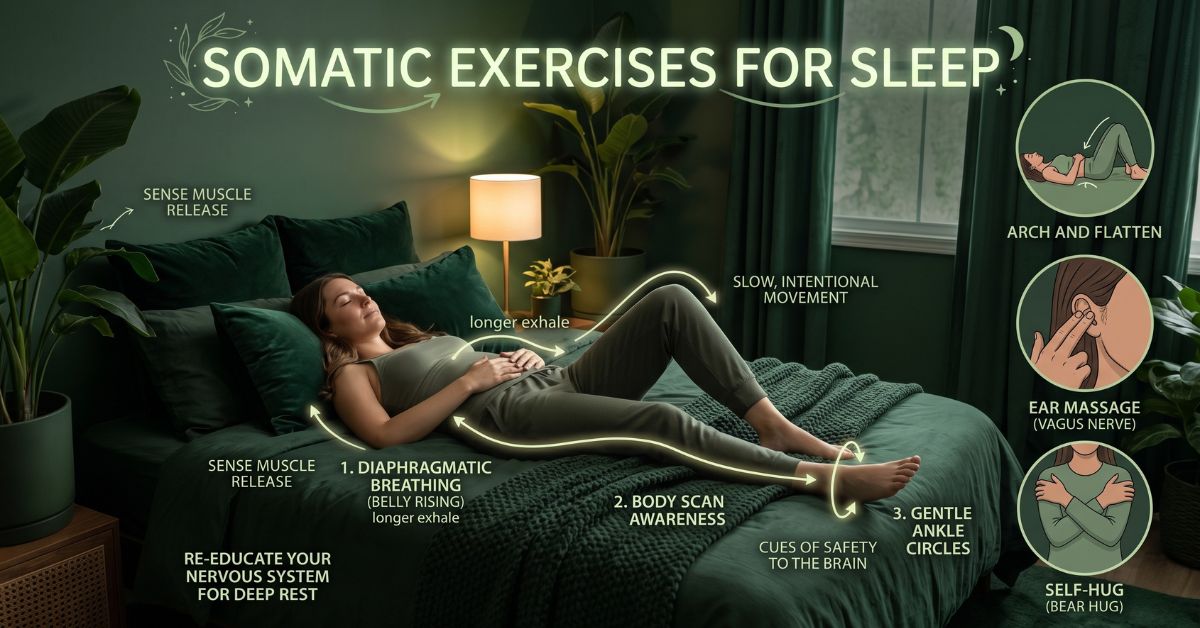
Somatic exercises are slow, body based movements and sensory practices, shaking, rocking, humming, gentle stretching, hand on chest breathing, that work through the body to settle the nervous system, rather than trying to think your way calm. Unlike meditation, which asks the mind to lead, somatic work asks the body to lead and lets the mind follow. For many people who have tried everything else, melatonin, white noise, simply avoiding a phone before bed, this bottom up approach is often the missing piece, because chronic stress and a lingering fight or flight state can physically keep the body alert long after the day's stressors are gone.
This is not fringe wellness theory. The National Center for Complementary and Integrative Health (NCCIH), part of the National Institutes of Health, notes that the body has a built in relaxation response that counteracts the stress response, and that practices combining breath, movement, and focused attention can trigger it deliberately.
Key Takeaways
- Somatic exercises calm the body first, which allows the mind to settle as a downstream effect, rather than asking the mind to lead.
- The relaxation response described by NCCIH involves slower breathing, lower blood pressure, and a reduced heart rate, the physiological opposite of the stress state that keeps people awake.
- A short routine of breathing, shaking, muscle relaxation, and humming can be completed in about ten minutes before bed.
- Most people feel some effect within minutes, but consistent improvement in sleep quality tends to build over one to three weeks of nightly practice.
- Somatic work is a helpful complement to good sleep hygiene, not a replacement for medical care if insomnia is chronic or severe.
Why Your Nervous System Will Not Let You Sleep
Falling asleep is not just a matter of being tired. It requires your autonomic nervous system to shift out of sympathetic, or go, mode and into parasympathetic, or rest and digest, mode. When stress hormones stay elevated into the evening, your heart rate, muscle tension, and mental alertness stay elevated too, even if you are physically exhausted. If this pattern sounds familiar, our guide on why your stress level is high when you sleep looks at this mechanism in more depth.
According to NCCIH's overview of relaxation techniques, the relaxation response is characterized by slower breathing, lower blood pressure, and a reduced heart rate, essentially the physiological opposite of the stress state that keeps people staring at the ceiling. Somatic exercises are simply structured ways of cueing that shift on purpose, instead of waiting for it to happen on its own.
The CDC's overview of sleep similarly frames good sleep as something you actively prepare your body for, not something that just happens once you are horizontal, which reinforces why a deliberate wind down practice matters more than willpower alone. Stress and sleepiness are also more tangled together than they seem; our piece on whether anxiety can make you sleepy explains why the same activation that keeps you up at night can leave you drained during the day.
How Somatic Exercises Differ from Meditation and Melatonin
Meditation is often taught as a top down practice: you ask the mind to settle, and the body is expected to follow. For people with a genuinely overactivated nervous system, that is a hard ask, roughly like asking a revving engine to idle just because you asked nicely. Somatic work flips the order. You move, shake, breathe, or self touch first, and the calming of the mind follows as a downstream effect of the body settling. If you have tried mental techniques without success, our guide on how to turn your brain off to sleep walks through six approaches that work alongside a body first method like this one.
Melatonin, meanwhile, is a hormone that helps regulate your sleep wake timing. It is not a sedative that forces your nervous system into a relaxed state. If your body is still physiologically activated, tense shoulders, shallow chest breathing, a racing heart, melatonin cannot undo that on its own. This is a common reason people report that supplements alone stopped working once their stress baseline crept up.
| Approach |
Direction of Effect |
What It Actually Changes |
Best Used For |
| Somatic exercises |
Bottom up, body to mind |
Muscle tension, stored stress activation, breathing rate |
Physical restlessness and a wired but tired feeling |
| Meditation |
Top down, mind to body |
Attention and thought patterns |
Racing or ruminating thoughts once the body is already fairly calm |
| Melatonin |
Internal clock signal |
Timing of sleep onset, not physical tension |
Circadian misalignment, such as jet lag or shift work |
A Ten Minute Somatic Routine for Nervous System Shutdown
This sequence is designed to be done in bed or on the floor, in dim light, roughly ten to fifteen minutes before you intend to sleep.
| Minutes |
Exercise |
What It Does |
| 0 to 2 |
Physiological sigh breathing: two short inhales through the nose, one long exhale through the mouth, repeated |
Rapidly lowers heart rate and signals safety to the brainstem |
| 2 to 4 |
Full body shaking: stand or sit and gently shake arms, legs, and torso, like a wet dog |
Discharges stored muscular tension and excess adrenaline |
| 4 to 6 |
Progressive muscle relaxation: tense each muscle group for five seconds, then release, moving from foot to head |
Teaches the body the felt difference between tension and release |
| 6 to 8 |
Butterfly hug: cross arms over chest, tap left and right slowly while breathing |
Bilateral stimulation that quiets mental looping |
| 8 to 10 |
Humming or extended exhale: hum gently on each exhale for several breaths |
Stimulates the vagus nerve through vibration, deepening relaxation |
Progressive muscle relaxation in particular has government reviewed backing. NCCIH's digest on mind and body practices for sleep disorders notes that a systematic review of progressive muscle relaxation in older adults found it promising for reducing anxiety and depression, with effects that lasted well beyond the practice session itself. If sore or tight muscles are part of what keeps you tense at night, you may also find it useful to read whether muscle relaxers actually help you sleep and how that compares with an active technique like this one.
Why Shaking Before Bed Sounds Ridiculous, But Works
Shaking looks more like a warm up at the gym than a sleep ritual, which is exactly why people are skeptical the first time they try it. The logic, though, is straightforward. When the body senses threat or stress, it produces excess muscular tension and stress hormone activation that often never gets physically discharged, since you do not actually run from the thing that stressed you, so the energy stays stored in the tissue. Gentle, voluntary shaking mimics the natural tremor response many mammals use to release that stored activation. People often feel a wave of heaviness or sleepiness within a few minutes, which is the parasympathetic system taking back over.
How Long Before You Feel Results?
Most people notice some shift, slower breathing, a heavier body, quieter thoughts, within the first five to ten minutes of a single session. That immediate effect is real, but it is the short term layer of benefit.
The deeper, more durable change, actually falling asleep faster on a regular basis, staying asleep, waking less activated, tends to build over one to three weeks of consistent nightly practice. This mirrors what NCCIH says about relaxation techniques broadly: they are skills, and like other skills, they need practice, and people who use them frequently are more likely to benefit. Do not judge the practice on night one. Judge it after two weeks of consistency.
If you are already running on a shortened sleep schedule while you build this habit, it is worth understanding the real cost of that trade off. Our article on whether four hours of sleep is enough covers what chronic short sleep does to the body even when a routine like this one is helping you fall asleep faster.
A Note on Evidence and Expectations
It is worth being honest about what the research does and does not say. NCCIH's review of mind and body approaches for stress and anxiety notes that while relaxation techniques are safe and easy to use, the evidence for insomnia specifically is smaller and lower quality than the evidence supporting Cognitive Behavioral Therapy for Insomnia, commonly known as CBTI, which remains the gold standard first line treatment recommended by sleep medicine professionals.
Somatic exercises are best understood as a genuinely helpful nightly practice and a complement to good sleep hygiene, not a replacement for medical care if you have chronic, severe insomnia. If sleep problems persist for more than a few weeks, the CDC recommends talking to a healthcare provider, who can check for an underlying sleep disorder. If what keeps you up is less about physical tension and more about a fear of not being able to fall asleep at all, that is a distinct pattern worth naming; our guide on somniphobia and the fear of sleeplessness explains how that anxiety shows up and how it is typically addressed.
Building It Into a Full Wind Down Routine
Somatic exercises work best layered on top of, not instead of, basic sleep hygiene. The CDC's NIOSH program on improving sleep recommends starting a relaxing routine about ninety minutes before bedtime, dimming lights, stepping away from screens, and easing the body's transition rather than expecting it to switch off instantly. Pairing that wind down window with a ten minute somatic practice gives your nervous system two compounding cues that it is safe to power down, instead of one. Gentle movement is not limited to the exercises above either; our guide on whether stretching before bed helps you sleep covers a complementary, lower intensity option for the same wind down window.
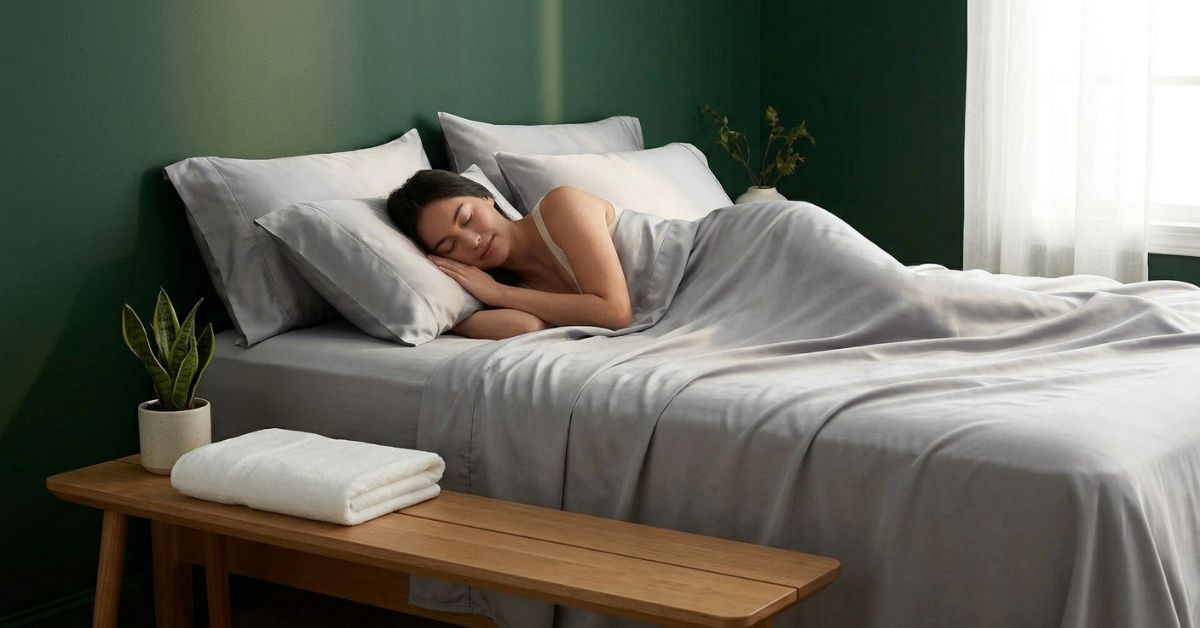
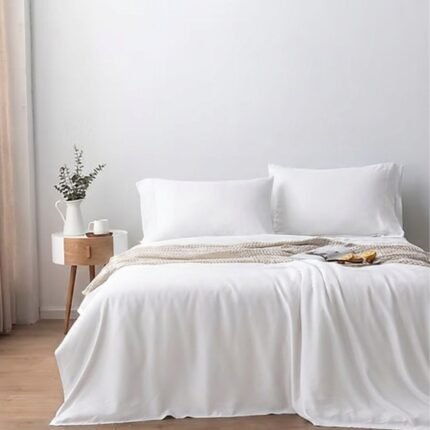
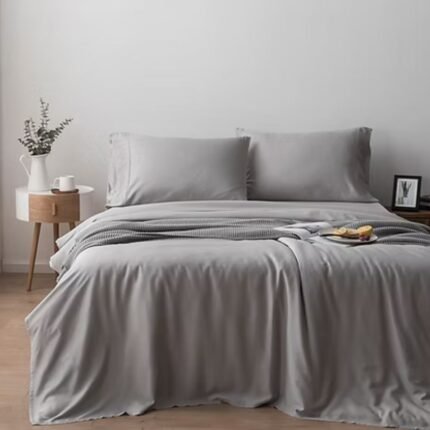
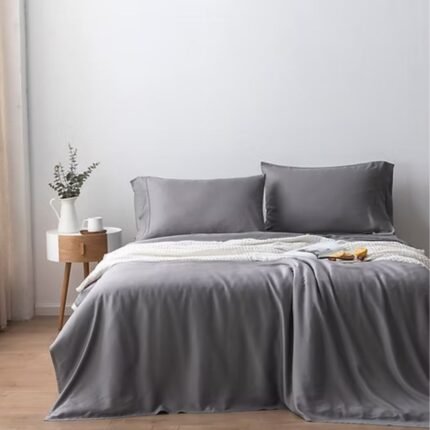
A genuinely dark, cool, and quiet bedroom also matters more than people expect. The CDC's sleep environment training module notes that a very dark, quiet, and cool environment measurably improves sleep, so somatic work pairs naturally with blackout curtains, a cool room, and a phone that is actually out of reach. What is actually touching your skin while you do this matters too. Breathable, temperature regulating bedding, such as Oeko Tex certified bamboo sheets, an organic sheet set, or an organic cotton bed sheet set, can support the cooler, calmer physical environment that a somatic routine is trying to create, rather than working against it with heat trapping synthetic fabric.
If racing thoughts tend to show up the moment your head hits the pillow, regardless of how relaxed your body feels, it is worth reading our dedicated guide on how to stop your mind racing at night, which pairs well with the physical techniques covered here, as well as our broader piece on dealing with an overactive mind at night for a wider set of strategies.
Recommendation
If you are new to this, do not try all five techniques above on night one. Pick one, physiological sighing or full body shaking are the easiest entry points, and use it consistently for a week before adding another. Consistency at a small scale beats an elaborate routine you abandon after three nights.
If you have a trauma history, epilepsy, or a diagnosed psychiatric condition, check with a healthcare provider first, since NCCIH notes that relaxation techniques can occasionally intensify symptoms in those specific situations.
Final Thoughts
Sleep is not something you can force by trying harder. It is something your nervous system allows once it believes it is actually safe to power down. Somatic exercises give the body a direct, physical way to send that signal, rather than leaving the job entirely to willpower or a supplement. Paired with consistent sleep hygiene, a calmer wind down window, and a genuinely comfortable sleep environment, a short nightly practice like the one above can close the gap between being exhausted and actually being able to sleep.
Sources and References
- National Center for Complementary and Integrative Health, NIH: Stress
- National Center for Complementary and Integrative Health, NIH: Relaxation Techniques, What You Need To Know
- National Center for Complementary and Integrative Health, NIH: Things To Know About Relaxation Techniques for Stress
- National Center for Complementary and Integrative Health, NIH: Mind and Body Practices for Sleep Disorders
- National Center for Complementary and Integrative Health, NIH: Mind and Body Approaches for Stress and Anxiety, What the Science Says
- Centers for Disease Control and Prevention: About Sleep
- CDC, NIOSH: Improve Sleep, Tips to Improve Your Sleep When Times Are Tough
- CDC, NIOSH: Module 6, Improving Your Sleep and Alertness, Create a Good Sleep Environment