You close your eyes, drift off, and expect your body to enter a state of deep, restorative rest. Instead, you wake up in the middle of the night with a racing heart, damp sheets, or a mind that is instantly running a marathon.
It feels deeply unfair. You aren't actively thinking about your bills, your job, or your endless to-do list while you're unconscious, so why is your body experiencing high stress during sleep?
The truth is, sleep is not an off switch for your brain. If your daytime life is fueled by chronic pressure, your internal biology doesn't magically reset the moment your head hits the pillow. If nighttime worry is a big part of this for you, our guide on dealing with a fear of sleeplessness digs deeper into that specific cycle. Understanding this nocturnal stress spike is the first step to finally getting the rest you deserve.
Why This Happens: The Science Behind High Stress During Sleep
When we look at people sleeping, we tend to assume their bodies are entirely at peace. However, sleep is a highly dynamic neurological process. Under normal conditions, your heart rate slows down, your blood pressure drops, and your nervous system shifts into a restorative rest-and-digest state.
But chronic stress throws a wrench into this system, and it does so through two specific mechanisms.
The Cortisol Trap: Cortisol is your body's primary stress hormone, and it follows a natural daily rhythm. The National Institute on Aging explains that cortisol normally drops to its lowest levels around midnight and peaks in the early morning to help you wake up. When you are chronically overwhelmed, your brain loses control of this valve, causing cortisol to spike prematurely in the middle of the night.
The Hyperarousal State: If you go to bed anxious, your sympathetic nervous system, the body's fight-or-flight response, stays quietly active. According to the National Institute of Mental Health, this kind of sustained stress activation can persist even during rest. Even though you are technically asleep, your brain remains on high alert for danger, triggering minor adrenaline spikes that pull you into a shallow, exhausting version of sleep.
Quick-Reference Table
| Common Problem | Why It Happens | Evidence-Based Solution |
|---|
| Waking up at 2–3 AM with a racing heart | Premature cortisol spike disrupting the normal overnight low | Avoid checking the clock; practice diaphragmatic breathing to calm the nervous system |
| Feeling exhausted despite 7–8 hours of sleep | Body stays in shallow sleep due to sympathetic nervous system activation | Pre-bed wind-down routine and a 30-minute screen-free buffer |
| Sleeping 9–12 hours but still feeling depleted | Stress-induced hypersomnia reduces deep sleep and REM quality | Address the underlying stress load, not just sleep quantity |
| Mind racing the moment you lie down | Lack of daytime processing time pushes unresolved thoughts into bedtime | Brain dump journaling before bed |
| Waking up hot, sweaty, or restless | Stress raises core body temperature and heart rate | Cool, breathable bedding and a cooler room temperature |
| Wearable shows stress spikes overnight | Heart rate variability naturally shifts across sleep stages, amplified by stress | Track trends over time rather than reacting to single nightly spikes |
The Paradox: Can Stress Cause You to Sleep More?
While many people associate tension with insomnia, others experience the exact opposite reaction. You might find yourself asking: can stress cause you to sleep more?
Absolutely. The human brain views prolonged emotional or mental strain as a massive drain on physical resources. When the cognitive load becomes too heavy to process, your brain can trigger a defense mechanism known as hypersomnia, an overwhelming urge to sleep for nine, ten, or even twelve hours a day. If your schedule only allows for a short sleep window in the first place, our breakdown of whether four hours of sleep is ever enough explains why stress makes a short night even harder to recover from.
The Quality vs. Quantity Dilemma: Even if stress causes you to log more hours under the covers, you will likely wake up feeling entirely depleted. Because high cortisol prevents your body from spending enough time in deep sleep and REM cycles, your brain is essentially spinning its wheels. For people trying to compress recovery into a tighter window, our guide on how to sleep 8 hours in 4 hours covers practical ways to improve sleep efficiency when time is limited.
| Recommendation: If you're sleeping long but waking up drained, track how you feel rather than just how many hours you logged. Persistent fatigue despite long sleep is worth raising with a healthcare provider. |
Offload Your Brain Before Bed
Breaking the loop of nighttime hyperarousal requires changing how you approach the transition from your day to your night. Knowing how to sleep when stressed and anxious isn't about forcing your mind to go blank; it's about signaling to your nervous system that it is genuinely safe to stand down.
Never try to transition directly from a stressful task, like answering work emails or checking the news, into sleep. Give yourself a 30-minute buffer zone. Spend five minutes doing a brain dump: write down every single worry, task, or thought onto a physical piece of paper. For a deeper set of techniques to quiet a racing mind at night, see our guide on how to turn your brain off to sleep.
By leaving your worries outside your head, you tell your subconscious that it doesn't need to hold onto those problems overnight. The National Institute of Mental Health notes that structured stress-management practices are among the most consistently effective ways to reduce the physiological markers of chronic stress.
| Recommendation: Keep a notepad on your nightstand and commit to a five-minute brain dump every night for one week before judging whether it helps. |
Cool Your Body Down
Because psychological stress raises your core body temperature and heart rate, you need to use physical triggers to reverse the effect. Keep your bedroom cool, ideally between 60°F and 67°F (15°C to 19°C). A drop in ambient temperature mimics the body's natural metabolic slowdown during deep sleep, helping to manually suppress high stress levels.
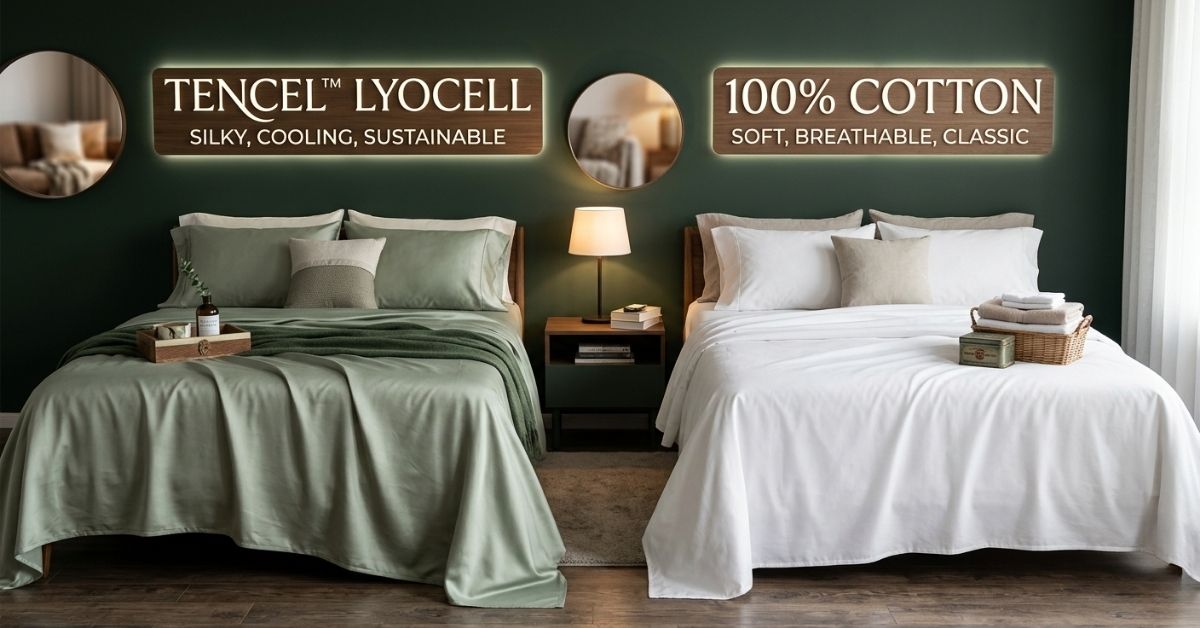
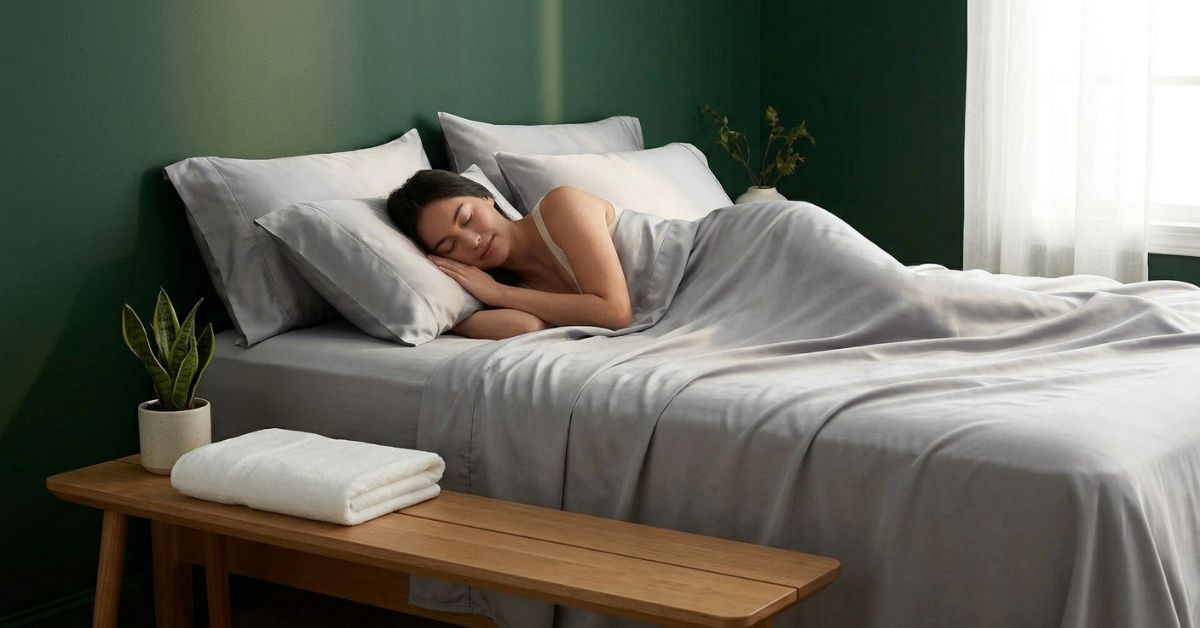
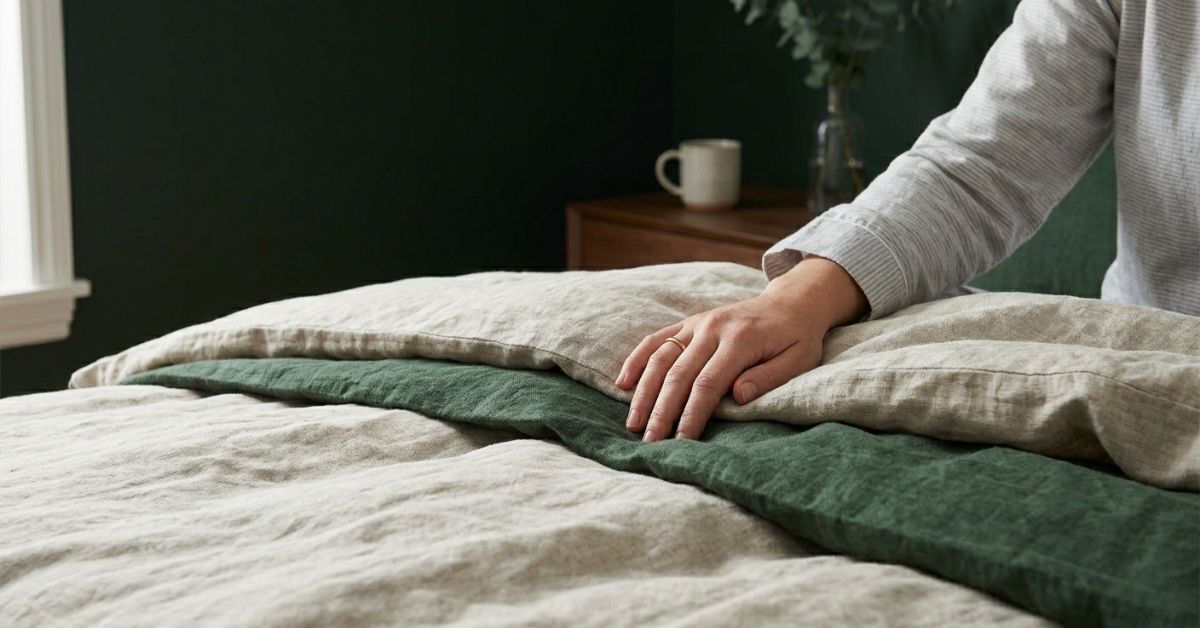
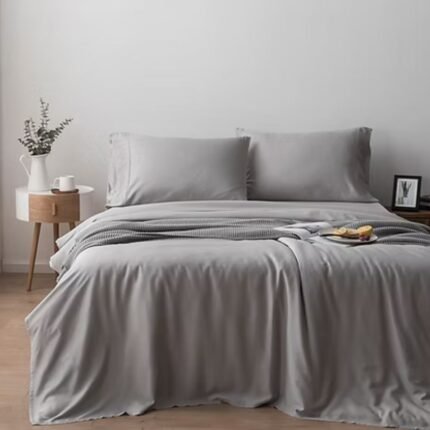
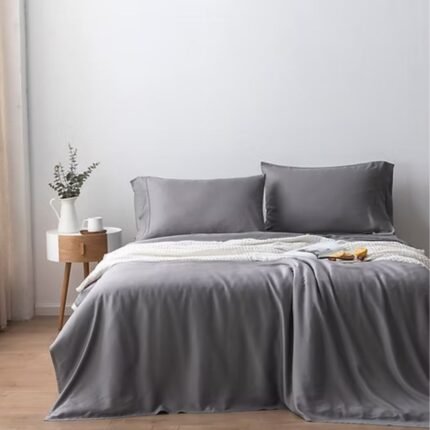
What you sleep on matters just as much as room temperature. Breathable, moisture-wicking bedding like Oeko-Tex certified bamboo sheets or vintage linen bed sheets can help regulate temperature throughout the night instead of trapping heat against your skin.
Gentle pre-bed movement also supports this cool-down process. Our article on whether stretching before bed helps you sleep explains how slow stretching lowers physical tension that often accompanies elevated stress hormones. If you're updating your bedroom setup, options like deep pocket sheet sets and an organic cotton bed sheet set are worth considering for both comfort and breathability.
| Recommendation: Set your thermostat to the lower end of 60–67°F about an hour before bed, and choose breathable, natural-fiber sheets over synthetic blends. |
Change Your Reaction to Waking Up
If you do wake up in a panic at 3:00 AM, the worst thing you can do is check the clock and calculate how many hours of sleep you have left. This instantly triggers a fresh wave of cortisol. People who struggle specifically with the anxiety of being awake at night often find it helpful to read our piece on the fear of sleeplessness, since the panic around not sleeping often does more damage than the lost sleep itself.
If you can't fall back asleep within 20 minutes, get out of bed. Move to a dimly lit room and do something quiet, like reading a physical book or practicing slow, diaphragmatic breathing, until your eyelids feel heavy again. A common pattern people notice is that the anticipatory dread of a sleepless night is often more stressful than the night itself.
| Recommendation: Pre-decide your 3 AM plan now, while calm, so you don't have to think during a stressed, half-asleep moment. |
Sources
[1] National Institute of Mental Health — Stress publications
[3] National Heart, Lung, and Blood Institute — Sleep phases and stages
[4] CDC — Sleep and health
[5] National Institute of Arthritis and Musculoskeletal and Skin Diseases — Back pain and muscle tension
[6] National Center for Complementary and Integrative Health — Relaxation techniques for health
[7] MedlinePlus — Stretching and mobility instructions