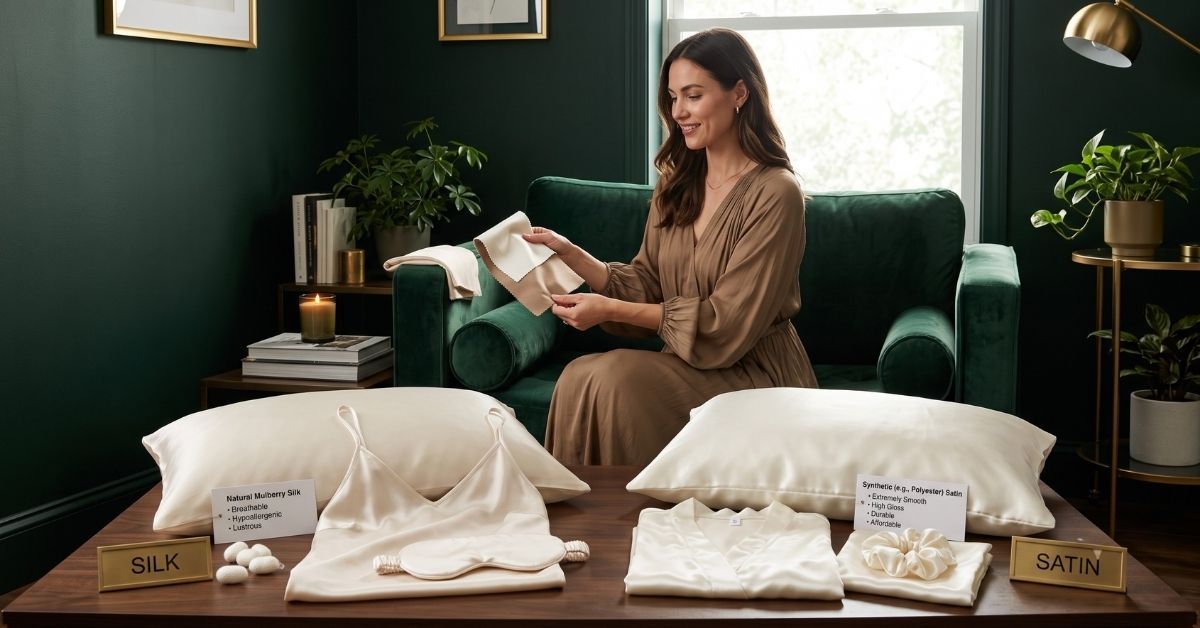
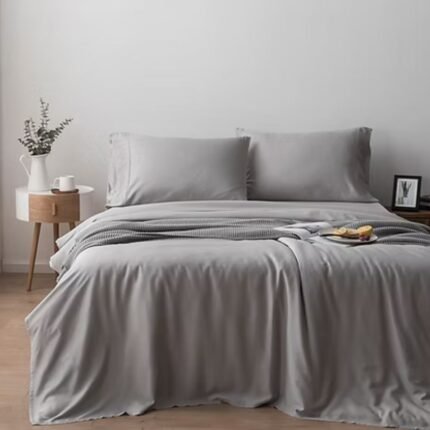
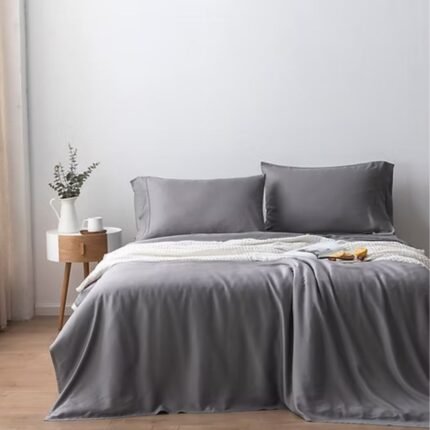
If you have scrolled through bedding options or shopped for luxury sleepwear, you have almost certainly asked yourself: is satin the same as silk? Both look sleek, glide over the skin, and carry an air of luxury, so the confusion is understandable.
Because they look so similar at a glance, many shoppers wonder whether satin and silk are the same thing. The short answer is no. While the two share a glossy finish, they are fundamentally different, and understanding why comes down to how each is made, what it is made of, and how it performs at home.
This guide was researched using official U.S. government sources, including the Federal Trade Commission, the Consumer Product Safety Commission, the National Institutes of Health, and the Environmental Protection Agency, so you can shop with confidence.
Fiber vs Weave: The Core Difference
The easiest way to untangle the confusion is to remember a simple rule of textile science: silk is a fiber, while satin is a weave.
Silk is a natural protein fiber produced by silkworms, primarily the Bombyx mori moth. It has been cultivated for thousands of years and is prized for its strength, natural temperature regulation, and organic origin.
Satin is not a raw material at all. It is a specific weaving pattern in which four or more warp yarns float over a single weft yarn. This structure creates a glossy, light reflecting front side and a duller, matte back side.
Because satin is simply a method of weaving threads together, is satin a natural fabric? Not typically. You can weave natural silk fibers into a satin pattern, often sold as silk satin or charmeuse, but most commercial satin on the market today is woven from synthetic polymers such as polyester, nylon, or rayon. In the United States, any product sold as silk, satin, or a fiber blend must accurately state its true fiber content under the Textile Fiber Products Identification Act, enforced by the Federal Trade Commission, so a label reading one hundred percent silk cannot legally contain hidden synthetic content.
This matters more than it sounds. The FTC has published detailed guidance, Threading Your Way Through the Labeling Requirements, explaining exactly how fiber percentages, ornamentation, and country of origin must appear on every qualifying label, which is a useful reference if you ever want to verify a product before buying it.
Satin vs Silk Sheets: Head to Head
When upgrading a bedroom, the choice usually comes down to a classic matchup: satin sheets against silk sheets. Both feel wonderful compared with standard cotton, yet they offer very different sleeping experiences.
| Feature |
Silk Sheets |
Satin Sheets (Polyester) |
| Material origin |
100% natural protein fiber from the silkworm cocoon |
Typically synthetic polyester, sometimes nylon or rayon |
| Breathability |
Highly breathable; regulates temperature naturally |
Traps heat; can feel warm through the night |
| Durability |
High when cared for properly; can last many years |
Prone to snagging, though it is machine washable |
| Care routine |
Delicate detergent, hand wash or gentle cycle, air dry |
Standard machine wash; simple upkeep |
| Price point |
Premium investment |
Budget friendly |
| Best for |
Hot sleepers, sensitive skin, allergy concerns |
Shoppers who want the glossy look on a smaller budget |
If you tend to sleep hot, silk is the clear winner because its natural fibers let air and moisture circulate freely. Synthetic satin traps body heat, which can lead to night sweats. Satin, however, is far easier to machine wash, whereas genuine silk usually needs delicate detergent, hand washing, or a gentle cycle followed by air drying.
If you are curious how satin compares with other popular synthetic blends, our guide to microfiber versus polyester breaks down how each performs for breathability and durability, and polyester versus cotton sheets compares a synthetic weave against a natural one in more detail.
Skin and Hair Benefits
Beauty influencers often recommend switching bedding for better skin and hair health. Are satin sheets good for your skin, or do you have to spend on real silk to see a difference?
Both options offer real beauty benefits because their frictionless surfaces reduce the tugging that damages delicate skin and hair. When you toss and turn at night, a smooth surface prevents the fabric from pulling at your face, which reduces sleep creases. The same slippery surface keeps hair cuticles smooth, helping to prevent frizz, tangles, and breakage.
If you have sensitive or acne prone skin, real silk has a slight edge. Silk is naturally hypoallergenic, resistant to dust mites, and does not absorb facial oils and serums the way synthetic fibers can. Reducing exposure to dust mite allergens in bedding is a documented public health strategy: a study led by the National Institute of Environmental Health Sciences, part of the National Institutes of Health, found that allergen proof bedding covers combined with weekly hot water washing meaningfully reduced dust mite allergen levels in bedrooms. The National Library of Medicine's consumer health overview of dust mite allergies also notes that mite proof mattress and pillow covers, along with regular washing at high temperatures, are among the most effective home strategies for reducing symptoms.
That said, high quality synthetic satin still provides solid anti friction benefits at a fraction of the cost. If eco friendly natural fibers matter to you as much as skin comfort, it is worth comparing eucalyptus versus bamboo sheets and bamboo versus Egyptian cotton for sensitive skin, both of which are gentle, breathable alternatives to synthetic satin.
Safety, Care, and Regulation
Bedding sold in the United States is also subject to federal flammability standards. Under the Flammable Fabrics Act, the Consumer Product Safety Commission sets mandatory flammability requirements for mattresses, mattress pads, and other bedding materials, including how sheets and other textiles used near a mattress must perform when tested. This is one more reason to buy sheets, whether silk or satin, from reputable retailers who can confirm compliance.
On the care side, satin is machine washable and low maintenance, while silk asks for a gentler routine: cool water, a mild pH neutral detergent, and air drying away from direct heat or sunlight. Treat silk well and it can last for many years; treat it roughly and it will show wear quickly.
Environmental Considerations
Because most commercial satin is woven from polyester, it shares the same environmental footprint as other synthetic textiles. The Environmental Protection Agency's microplastics research explains that synthetic textiles are a recognized source of secondary microplastics, tiny particles that break away from larger synthetic materials over time, including through ordinary washing. The EPA's textile waste data also tracks how many tons of sheets, pillowcases, and other textiles end up in landfills each year, which is a useful reminder to choose durable, long lasting bedding whenever the budget allows.
Silk, being a natural protein fiber, biodegrades far more readily at the end of its life. If durability and lower synthetic waste matter to you, it is worth reading our comparisons of organic cotton versus conventional cotton and organic cotton versus bamboo lyocell, both of which weigh natural fiber options against their environmental cost.
Which Is Better, Silk or Satin?
There is no single right answer. The better choice depends on your budget, lifestyle, and personal preferences.
Choose silk if: you want a fully natural, highly breathable material, you struggle with temperature regulation at night, you have sensitive skin, and you do not mind a stricter laundry routine. It is a premium investment that lasts for years when treated well.
Choose satin if: you want the luxurious look and anti friction benefits associated with silk, but you are working within a budget. Satin also suits anyone who prefers low maintenance, machine washable bedding.
Our Recommendation Table
| If you are... |
Our recommendation |
| A hot sleeper or night sweater |
Choose real mulberry silk, or a breathable natural alternative such as bamboo or organic cotton |
| Working with a tight budget |
Choose polyester satin for the glossy look, or a certified organic cotton set for natural fiber comfort at a lower price |
| Prone to acne or sensitive skin |
Choose 100% mulberry silk or an Oeko Tex certified natural fiber sheet set that limits synthetic buildup |
| Wanting easy laundry care |
Choose polyester satin or a machine washable organic cotton set |
Natural Fiber Alternatives Worth Considering
If neither silk nor satin feels like the perfect fit, several natural fiber options offer a similar smooth feel with easier care. Our Oeko Tex certified bamboo sheets are independently tested for harmful substances and offer a breathable, silky hand feel that suits hot sleepers who still want an easy care routine.
For shoppers who prefer a fully organic option, our Organic Sheet Set is grown and processed without the synthetic inputs used in conventional cotton farming, while our Organic Cotton Bed Sheet Set gives you the crisp, breathable comfort of certified organic cotton at a more accessible price point than silk.
You may also want to compare linen sheets versus cotton sheets or linen versus cotton versus bamboo sheets if you are open to fibers beyond silk and satin altogether, and our guide on whether polyester is bad for you if synthetic content in your bedding is a health concern for you.
Sources
- Federal Trade Commission. Threading Your Way Through the Labeling Requirements Under the Textile and Wool Acts.
- Electronic Code of Federal Regulations. 16 CFR Part 303, Rules and Regulations Under the Textile Fiber Products Identification Act.
- Federal Trade Commission. Textile Fiber Products Identification Act.
- U.S. Consumer Product Safety Commission. Flammable Fabrics Act, Business Guidance.
- National Library of Medicine, National Institutes of Health. Overview: Dust Mite Allergies.
- U.S. Environmental Protection Agency. Microplastics Research.
- U.S. Environmental Protection Agency. Textiles: Material Specific Data.