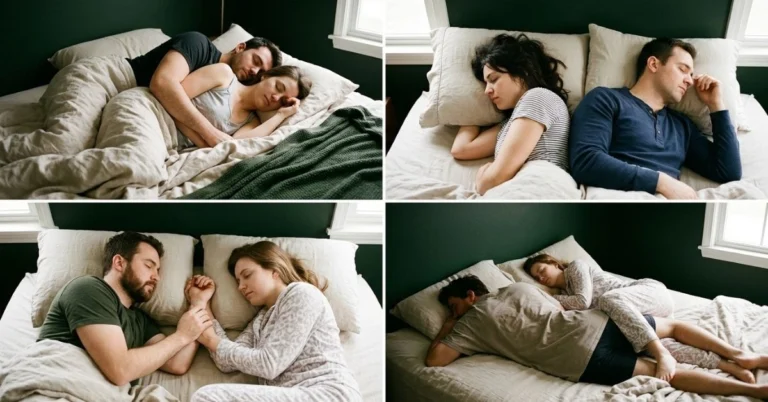
Couples Sleeping in Separate Beds: Psychology, Benefits, and How to Protect Intimacy

· Medically reviewed
Updated August 2026 · Reviewed against survey data from the American Academy of Sleep Medicine and health guidance from the CDC and the National Institutes of Health.
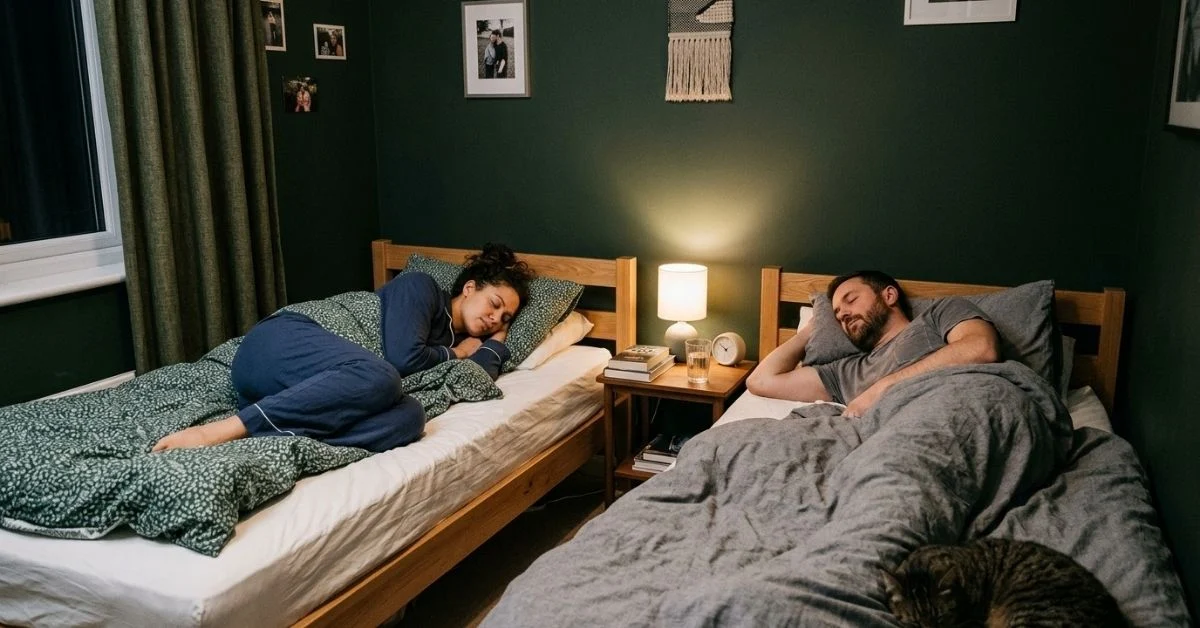
The idea that a healthy relationship requires sharing a bed every single night is deeply ingrained in modern culture. However, a growing number of couples are challenging this norm. Choosing to sleep in separate beds or different rooms is increasingly recognized not as a symptom of a failing romance, but as an intentional decision to protect physical health and relational harmony.
Whether driven by severe snoring, mismatched work schedules, differing temperature preferences, or restlessness, sleeping apart, often called a sleep divorce, is helping many couples wake up happier, healthier, and more connected. This guide combines the latest national survey data with federal health guidance so you can make an informed decision that fits your relationship.
What Percent of Couples Sleep in Separate Beds
Sleeping apart is far more common than most people realize. According to the most recent nationwide survey from the American Academy of Sleep Medicine (AASM), close to one in three American adults, about 31 percent, have chosen to sleep in another bed or another room, at least occasionally, to accommodate a partner.
- About 31 percent of U.S. adults have tried a sleep divorce, sleeping in a separate bed in the same room or in a different room entirely, according to the AASM 2025 survey.
- Millennials lead the trend at roughly 43 percent, compared with about 22 percent of Baby Boomers, based on AASM survey data reported by CBS News.
- Men are almost twice as likely as women to relocate to another room or the sofa, about 45 percent versus 25 percent, when nighttime disruptions occur.
- Adults aged 35 to 44 are the most likely age group to sleep apart, at about 39 percent, while adults 65 and older are the least likely, at about 18 percent.
This is not a purely modern habit. From the Victorian era through the middle of the twentieth century, twin beds for married couples were considered both hygienic and modern, and were widely recommended by doctors of the time to reduce disturbed sleep and limit the spread of illness.
Poor sleep is also a well documented public health concern on its own. The CDC reports that roughly one third of American adults do not regularly get the seven or more hours of sleep recommended for good health, and the National Heart, Lung, and Blood Institute (NHLBI), part of the NIH, notes that ongoing sleep deficiency is linked to heart disease, high blood pressure, obesity, and weakened immunity, regardless of what is causing the sleep loss.
| Group | Approximate Share Who Sleep Apart |
|---|---|
| All U.S. adults | 31% |
| Millennials | 43% |
| Generation X | 33% |
| Generation Z | 28% |
| Baby Boomers | 22% |
| Men | 45% |
| Women | 25% |
| Adults 35 to 44 (highest by age) | 39% |
| Adults 65 and older (lowest by age) | 18% |
Source: American Academy of Sleep Medicine national surveys, reported by AASM and CBS News.
What Happens When Couples Stop Sleeping Together: The Psychology Explained
When sleep suffers, relationships often suffer quietly along with it. Understanding the psychology behind separate sleeping arrangements helps explain why they can protect, rather than damage, emotional bonds.
The Cost of Chronic Sleep Disruption
Sharing a bed with someone who tosses, snores, or keeps an opposite schedule triggers repeated brief awakenings through the night. Even when you do not fully wake up, these interruptions keep you from reaching the deep, restorative stages of sleep. NHLBI research shows that this kind of ongoing sleep deficiency can affect mood, memory, and the body’s ability to fight off illness.
- Reduced emotional regulation, meaning less patience and a shorter temper during daily interactions.
- Impaired empathy, making it harder to accurately read a partner’s tone or facial expression.
- Quiet resentment, where exhaustion gets blamed on a partner and creates lingering daytime friction.
If snoring is the main disruptor, it is worth having it checked rather than simply working around it. MedlinePlus, a consumer health resource maintained by the National Library of Medicine, notes that loud, frequent snoring can sometimes signal obstructive sleep apnea, a condition worth discussing with a doctor. Our guide on sleep apnea versus snoring explains the difference in more detail.
The Psychological Relief of Autonomy
When partners sleep separately, bedtime shifts from a nightly negotiation into a personal sanctuary. Each person regains control over mattress firmness, ambient room temperature, bedding weight, and a wind down routine that actually suits them, whether that is reading, white noise, or dim lighting.
If a racing mind is part of the problem, our guide on how to stop your mind from racing at night is a good place to start, and the article on circadian timing versus wind down support explains how the two work together to help you fall asleep faster.
Removing nightly friction allows partners to associate each other with warmth and support rather than sleep frustration.
Key Benefits of Separate Sleeping Arrangements
| Benefit | Shared Bed | Separate Beds or Bedrooms |
|---|---|---|
| Sleep quality | Subject to a partner’s movement, snoring, and alarms | Undisrupted, personally customized sleep environment |
| Morning mood | Higher risk of fatigue and irritability | Rested, refreshed, and emotionally grounded |
| Intimacy dynamics | Often passive or routine | Active, intentional, and planned |
| Environmental control | Requires mutual compromise on warmth, noise, and light | Full individual personalization |
How to Sleep in Separate Beds Without Losing Intimacy
The primary concern for most couples is whether physical distance at night leads to emotional distance overall. In practice, the transition succeeds when couples replace automatic bedtime contact with deliberate connection.
- Build a nightly wind down ritual: spend 15 to 30 minutes together, talking, reading, or cuddling, before retreating to your individual sleeping spaces.
- Make morning check ins a habit: start the day with a brief visit to your partner’s room for affection or shared coffee.
- Be intentional about physical romance: schedule dedicated time for connection and sex that is free from the pressure of falling asleep right afterward.
- Frame the move around health, not rejection: keep the conversation focused on rest and daily energy rather than personal space or emotional withdrawal.
If age related changes in sleep are part of the conversation, the National Institute on Aging’s overview of sleep and older adults is a useful, government reviewed starting point for couples navigating this topic later in life.
Middle Ground Alternatives Before Full Separation
If you want to improve your sleep without setting up separate bedrooms, consider these intermediate solutions.
The Scandinavian Sleep Method
Share the same mattress, but use two separate individual duvets or comforters. This removes sheet hogging and lets each person choose their own blanket weight and thermal rating. Pairing this method with Oeko Tex certified bamboo sheets or an organic cotton bed sheet set adds a breathable, temperature balancing layer that suits two different sleepers on one mattress.
Dual Firmness or Split Mattresses
A split king or two individual twin XL mattresses on an adjustable base mean movement on one side does not transfer to the other. Because adjustable and split setups often use nonstandard depths, adjustable bed sheets and deep pocket sheet sets help the fitted sheet stay anchored through the night instead of sliding off at the corners.
Specialized Bedding and Accessories
Temperature regulating linen, breathable fabric, and a cooling mattress topper can quietly resolve a lot of nighttime friction. If you run hot at night, start with our guides on the best cooling sheets for hot sleepers and why you may get hot when you sleep. A white noise machine can also help; our comparison of white noise versus brown noise for sleep explains which is better for masking a partner’s movement or snoring.
Our Recommendation: Matching the Fix to the Problem
Full separation is not the first step for most couples, and it does not have to be permanent even when you try it. A reasonable path is to start with the least disruptive change, agree on a two week trial period, and only move toward a separate room if the lighter options do not resolve the problem. The table below matches common situations to a recommended approach and a bedding option worth considering.
| Situation | Recommended Approach | Bedding to Consider |
|---|---|---|
| Loud snoring or suspected sleep apnea | Ask a doctor about a sleep study first, then try a separate room while it is being addressed | Organic cotton bed sheet set for the interim shared bed |
| One partner runs hot, the other runs cold | Try the Scandinavian sleep method with two individual duvets | Oeko Tex certified bamboo sheets |
| Mismatched work or sleep schedules | Separate rooms with a shared wind down window earlier in the evening | Deep pocket sheet sets for whichever bed becomes the primary one |
| Sensitive skin, allergies, or asthma | Prioritize certified, breathable, chemical free fabrics | Purely organic sheet set |
| Using a split king or adjustable base | Choose fitted sheets designed to stay anchored on movement | Adjustable bed sheets |
Whichever path you choose, keep the conversation collaborative. A sleep divorce is a joint decision about rest, not a verdict on the relationship.
Sources
Government and clinical sources referenced in this article:
- Centers for Disease Control and Prevention, About Sleep
- Centers for Disease Control and Prevention, Adult Sleep Facts and Stats
- National Heart, Lung, and Blood Institute (NIH), Sleep Deprivation and Deficiency: Health Effects
- National Heart, Lung, and Blood Institute (NIH), How Much Sleep Is Enough
- National Institute on Aging (NIH), Sleep and Older Adults
- MedlinePlus (National Library of Medicine, NIH), Snoring in Adults
- National Institute of Child Health and Human Development (NIH), Sleep
- National Library of Medicine (NIH), Recommended Amount of Sleep for a Healthy Adult, joint consensus statement
- American Academy of Sleep Medicine, New Survey Data on Sleep Divorce
- CBS News, More Than a Third of Americans Have a Sleep Divorce, Survey Finds
Frequently Asked Questions (FAQs):
Does sleeping in separate beds mean our marriage is failing or hurt our sex life?
No. Sleeping separately is a functional strategy aimed at better rest, and when chosen collaboratively it frequently strengthens relationships by removing the daytime irritability and resentment caused by exhaustion. Many couples also report an improved sex life, because they are better rested and approach intimacy with more intention and energy rather than default routine.
Did married couples sleep in separate beds in history?
Yes. In the late nineteenth century and through the first half of the twentieth century, twin beds were a standard fixture in master bedrooms across Europe and North America, and were heavily recommended by health experts for hygiene and uninterrupted rest.
What percent of couples sleep in separate beds?
Survey data from the American Academy of Sleep Medicine shows that about 31 percent of U.S. adults regularly or occasionally sleep in separate beds or different rooms.
How do we bring up the conversation with a spouse without hurting their feelings?
Frame the conversation around sleep quality, health, and how exhaustion affects your daily mood. Reassure your partner of your commitment, and propose a temporary two week trial rather than a permanent change.
What is the Scandinavian sleep method?
It involves sharing one mattress but using two individual duvets instead of a single shared comforter, which prevents midnight blanket battles and temperature conflicts.
How do we know if separate beds are right for us?
If one or both partners regularly experience poor sleep due to snoring, tossing, differing schedules, or temperature preferences, and daytime fatigue is causing strain, it is worth testing a separate sleeping arrangement for a couple of weeks.
Disclaimer: This article is for general informational purposes only and does not constitute medical or legal advice. Always consult a qualified professional before making any medical or legal decisions.

MBBS · PMDC registered
Registered Medical Practitioner (PMDC), Senior Medical Editor and Medical Reviewer for OdeSleep. Medical Officer in Paediatrics & NICU at Children's Hospital Lahore, combining frontline clinical experience with medical fact-checking.
View full profile →