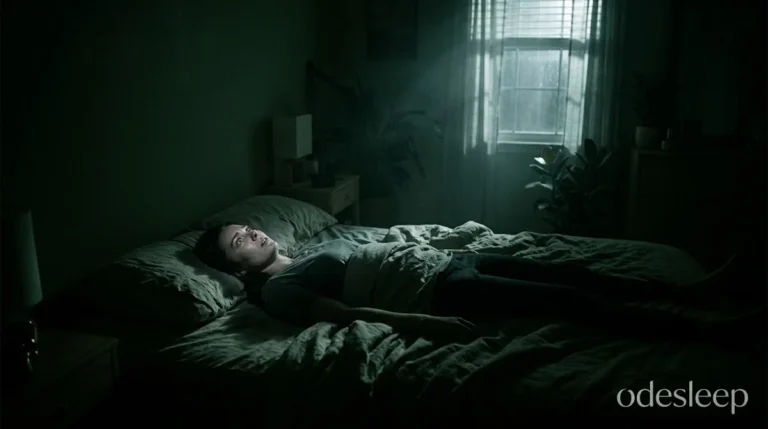
Why Can’t I Sleep?


· Medically reviewed
Summary
You cannot sleep because something is keeping your alertness system switched on or your body clock out of step. The usual causes are stress, evening light, caffeine, alcohol, a warm or noisy room, an irregular schedule, and health problems such as sleep apnea. Short bouts of poor sleep often clear up on their own. If trouble sleeping happens at least 3 nights a week for 3 months or more, it is chronic insomnia, and the NHLBI says cognitive behavioral therapy for insomnia (CBT I) is usually the first treatment recommended.
- Most common triggers: stress, screens at night, caffeine, alcohol, heat, noise, and shift or travel schedules.
- Quick fix: if you are awake for about 20 minutes, get up, keep the lights low, and return to bed when sleepy.
- Chronic threshold: 3 or more nights a week for 3 or more months.
- See a doctor if: loud snoring, gasping, leg discomfort, low mood, or daytime sleepiness comes with the sleeplessness.
Why Can’t I Sleep at Night?
Your brain is staying alert when it should be winding down. Sleep needs two things: enough sleep pressure built up during the day, and a calm nervous system at night. When stress, light, or stimulants keep you alert, bedtime feels like a challenge instead of a rest. The NHLBI explains that insomnia can be short term (acute) or long lasting (chronic), and that it can be its own problem or a sign of another health issue.
Insomnia is common. The NIH Office of Research on Women’s Health notes that more than one in four women in the United States report insomnia symptoms, compared with fewer than one in five men, and the NHLBI lists age, family history, stress, lifestyle, work schedule, and sex as risk factors.
What Are the Most Common Causes of Insomnia?
The most common causes are stress, light at night, stimulants, alcohol, an uncomfortable bedroom, and medical conditions. Use the table below to match what you notice to the likely cause.
| Cause | What it looks like | What to try |
|---|---|---|
| Stress and worry | Racing thoughts, tense body, trouble falling asleep | Write tomorrow’s tasks down earlier; try these steps to stop a racing mind or ways to turn your brain off |
| Body clock disruption | Alert late, sleepy at odd hours after travel, shift work, or late nights | Keep a steady wake time and get morning daylight; see the NIGMS circadian rhythm guide |
| Caffeine and alcohol | Light, broken sleep despite feeling tired | Stop caffeine by early afternoon; read why alcohol makes you sleepy but hurts sleep |
| Hot or noisy room | Waking sweaty or at every sound | Cool the room; see why you get so hot when you sleep and cooling sheets for hot sleepers |
| Sleep disorders | Loud snoring, gasping, restless legs, morning headaches | See a clinician; compare sleep apnea vs snoring |
| Mood and health conditions | Early waking, low mood, pain, new medicines | Talk to a doctor; treating the cause often helps sleep |
Environmental factors such as noise, light, and extreme temperatures are also named by the HHS Office on Women’s Health as common causes of short term insomnia. Caffeine and alcohol effects vary by person, so notice your own pattern rather than a fixed rule.
What Are the Types of Insomnia?
Insomnia is grouped by when sleep breaks down, and the pattern points toward the cause.
| Type | Common pattern | Often linked with |
|---|---|---|
| Sleep onset insomnia | Lying awake for a long time before falling asleep | Stress, evening light, caffeine, a late body clock |
| Sleep maintenance insomnia | Falling asleep, then waking and struggling to return to sleep | Sleep apnea, pain, a hot room, alcohol, medical conditions |
| Early morning waking | Waking much earlier than planned and not returning to sleep | Depression, anxiety, age related clock changes |
How long does it last? MedlinePlus and the NHLBI describe acute insomnia as lasting a short time and chronic insomnia as lasting a long time. Many sleep specialists use the threshold of at least 3 nights a week for at least 3 months, along with daytime problems such as fatigue, poor focus, or low mood.
What Should I Do When I Am Awake in Bed?
Get out of bed if you have been awake for about 20 minutes, and return only when you feel sleepy. Lying awake in bed can train your brain to link the bed with frustration. This approach comes from stimulus control, one part of CBT I.
| No. | Recommendation | How to do it |
|---|---|---|
| 1 | Leave the bedroom | Move to a dim, quiet room with warm light |
| 2 | Do something calm | Read a paper book, listen to quiet music, or try a slow breathing exercise or relaxation therapy for sleep |
| 3 | Avoid screens and the clock | Checking the time starts mental math about lost sleep |
| 4 | Return when sleepy | Go back when your eyes feel heavy, not just because time has passed |
| 5 | Keep a fixed wake time | Even after a poor night, to protect your body clock |
| 6 | Keep the bed for sleep | Use a comfortable, cool setup; odesleep offers breathable options such as OEKO TEX certified bamboo sheets |
What Is the Best Long Term Treatment for Chronic Insomnia?
Cognitive behavioral therapy for insomnia is the best supported long term treatment. The NHLBI states that this counseling is usually the first treatment recommended for chronic insomnia, and a review of the research reports that CBT I is recommended as first line treatment for adults by the American Academy of Sleep Medicine and the American College of Physicians. CBT I targets the habits and beliefs that keep insomnia going, with methods such as stimulus control, limiting time in bed, and changing unhelpful thoughts about sleep.
Sleep medicines may be considered in some cases, but they carry side effects and should be discussed with a clinician. Ask a doctor before starting any sleep aid.
When Should I See a Doctor About Sleeplessness?
See a doctor if poor sleep lasts for weeks, affects your daytime life, or comes with warning signs. The NHLBI says untreated insomnia may raise your risk of certain health problems and of workplace or road accidents, and the sleep deficiency page links ongoing sleep loss with heart disease, high blood pressure, diabetes, and depression.
- Loud snoring, choking, or pauses in breathing.
- Strong urge to move your legs at night.
- Low mood, hopelessness, or thoughts of self harm. In that case, contact a mental health professional or emergency services right away.
- Sleepiness while driving or at work.
Most adults need 7 or more hours; check the NHLBI age chart to see what is right for you.
Sources
- NHLBI, National Institutes of Health. Insomnia
- MedlinePlus, National Library of Medicine. Insomnia
- Office on Women’s Health, HHS. Insomnia
- NIH Office of Research on Women’s Health. Insomnia and NIH Women’s Health Research
- Cognitive behavioral therapy for insomnia: efficacy review (PubMed Central, National Library of Medicine)
- NIGMS, National Institutes of Health. Circadian Rhythms fact sheet
- NHLBI, National Institutes of Health. Sleep Deprivation and Deficiency
- NHLBI, National Institutes of Health. How Much Sleep Is Enough?
Frequently Asked Questions (FAQs):
Why do I wake up at 3 a.m. every night?
Possible reasons include stress, alcohol, a hot room, sleep apnea, pain, or low mood. Waking once is normal; ongoing night waking that leaves you tired deserves a conversation with a doctor.
Does an evening drink help me sleep?
Alcohol may make you drowsy at first, but it commonly leads to lighter, broken sleep later in the night. Read more in our guide on alcohol and sleepiness.
When does sleeplessness become chronic insomnia?
It becomes chronic when it occurs at least 3 nights a week for at least 3 months and affects your days. Daytime problems can include fatigue, poor focus, or low mood, so see a doctor if this sounds like you.
Are sleeping pills the best answer?
Usually not as a first step. CBT I is the usual first treatment for chronic insomnia, according to the NHLBI, and medicine decisions belong with your clinician.
Can my bedroom really cause insomnia?
Yes. Light, noise, and heat are recognized environmental triggers, so a cool, dark, quiet room helps.
Disclaimer: This article is for general informational purposes only and does not constitute medical or legal advice. Always consult a qualified professional before making any medical or legal decisions.

MBBS · PMDC registered
Registered Medical Practitioner (PMDC), Senior Medical Editor and Medical Reviewer for OdeSleep. Medical Officer in Paediatrics & NICU at Children's Hospital Lahore, combining frontline clinical experience with medical fact-checking.
View full profile →