
Baby Sleep Training Methods: Ferber, Cry It Out, Chair and Gentler Options Compared

· Medically reviewed
Prepared by the odesleep editorial team and fact checked against the NIH indexed research and NICHD pages listed in the Sources section. Last updated October 22, 2026. This guide is general information, not medical advice. Talk to your pediatrician before starting.
Summary:
No single method has been proven best. An American Academy of Sleep Medicine review found behavioral methods work, and it found too little evidence to recommend one method over another, so the best choice is the one you can carry out consistently and that fits your baby and your comfort.
- Behavioral sleep methods are effective: 94 percent of 52 reviewed studies reported they worked, and over 80 percent of children improved for 3 to 6 months (Mindell et al., NIH PubMed).
- No method is rated above the others (AASM practice parameters).
- In a randomized trial, graduated extinction and bedtime fading improved sleep with no adverse stress or attachment effects at 12 months (Gradisar et al., Pediatrics).
- Most trials studied babies about 6 months and older, so ask your pediatrician about timing.
- Safe sleep rules always apply: back to sleep, in a crib, with no loose bedding (NICHD Safe to Sleep).
What Is Baby Sleep Training?
Baby sleep training is a set of behavioral methods that teach a baby to fall asleep without being fully rocked, fed or held. The aim is that when a baby wakes briefly between sleep cycles, as everyone does, they can settle back to sleep without the same help.
Sleep training is one tool among many, and it is optional. Bedtime problems and night wakings are common, affecting an estimated 20 to 30 percent of infants and toddlers (Mindell et al., NIH PMC).
When Is the Right Age to Start Sleep Training?
Most research enrolled babies around 6 months or older, so that is where the evidence is strongest. In the Gradisar trial, infants were 6 to 16 months old (Pediatrics, via NIH PubMed), and in a large Australian trial, behavioral techniques were taught when babies were 8 to 10 months old (HealthDay summary of Price et al.).
Many pediatricians say 4 to 6 months is the earliest sensible window, but we found no government guideline that sets a start age. We removed earlier claims about exact brain maturation and melatonin timing, because we could not source them. Ask your pediatrician first, especially if your baby was premature, has reflux or breathing problems, or has any growth concern.
What Are the Main Sleep Training Methods?
The table compares the four methods in your article plus bedtime fading, which the research also supports. Timelines are typical ranges, not promises.
| Method | How it works | Typical length | Crying | Research standing |
|---|---|---|---|---|
| Cry it out (unmodified extinction) | Put baby down awake, leave, do not return until morning | Often a few nights | Most | Rated an effective Standard by AASM |
| Graduated extinction (Ferber) | Leave, then check at longer intervals | About 1 week | Moderate | Effective Guideline; tested in a 2016 trial |
| Chair method (camping out) | Stay in the room, move the chair away over time | 1 to 3 weeks | Less | Parental presence extinction rated an effective Standard |
| Pick up put down | Pick baby up to calm, then lay down again | Often 1 to 3 weeks | Less | Not named in the AASM abstract; less studied |
| Bedtime fading | Move bedtime later until baby falls asleep fast | About 1 week or more | Least | Effective in a 2016 trial |
The AASM practice parameters rate unmodified extinction, extinction with parental presence and preventive parent education as effective Standards, and graduated extinction and bedtime fading with positive routines as effective Guidelines with less certainty (AASM, NIH PubMed).
How Does the Ferber Method Work?
Parents put the baby down drowsy but awake, leave, and return briefly at increasing intervals. A commonly used chart is 3, 5 and 10 minutes on night 1, then 5, 10 and 12 minutes on night 2, though programs differ. The 2016 trial used shorter intervals of 2, 4 and 6 minutes in the same night.
In that trial, graduated extinction cut night wakings and the time to fall asleep compared with control (Gradisar et al.). Keep check ins short, calm and dark, without picking the baby up.
How Does Cry It Out Work?
After a calm routine, you put the baby down awake and do not return until morning or a planned feed. It is the most direct method and may be quickest, but it is also the hardest for many parents to tolerate. Only choose it if you are comfortable with it and your baby is healthy and well fed.
How Does the Chair Method Work?
You sit beside the crib at first, then move the chair a little further away every few nights until you are out of the room. A common plan moves the chair every 3 nights over about 2 weeks, which is an editorial template, not a studied protocol. It suits parents who prefer to stay close.
How Does Pick Up Put Down Work?
You lift the baby when they cry, hold them until calm, and put them back down awake. It involves the least crying, but it can take longer and some babies get more stimulated by being picked up.
What Is Bedtime Fading?
Bedtime fading moves bedtime later by small steps until the baby falls asleep quickly, then gradually earlier again. In the Gradisar trial it shortened sleep onset time without adverse stress effects, and the lead researcher called it a gentler option (Pediatrics, via NIH PubMed).
Does Sleep Training Harm Attachment or Raise Stress Hormones?
Research so far has not found lasting harm, but studies are limited in size and scope. The 2016 randomized trial of 43 infants found no adverse stress responses and no long term effects on attachment, emotions or behavior, and cortisol was slightly lower in the treated groups (Gradisar et al.).
A larger Australian trial followed 326 children to age 6 and found no marked long term harms or benefits to child behavior, closeness with parents or stress (HealthDay summary of Price et al.). Both used specific methods and families, so results may not apply to every approach. The Gradisar sample is small, which is why we describe the evidence as reassuring rather than final.
How Should You Prepare Your Baby’s Sleep Space?
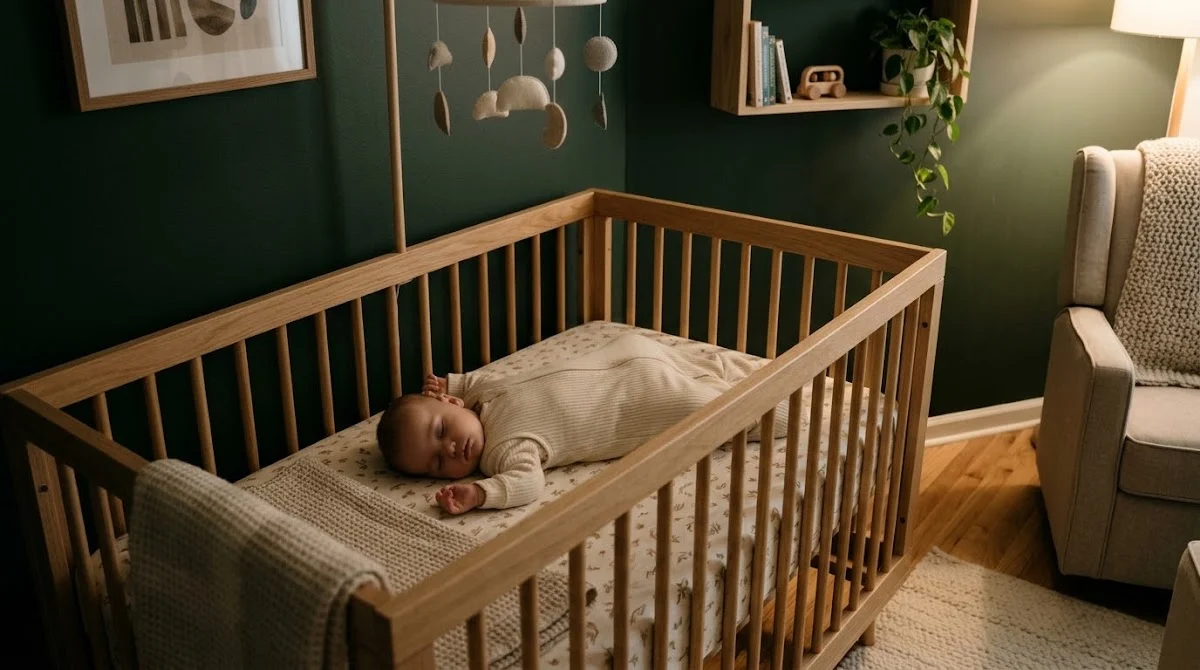
Make the sleep space safe before you make it sleepy. The NICHD says babies should sleep on their backs in a separate sleep area such as a crib or bassinet (NICHD Safe to Sleep), and that overheating from too many layers or warm rooms raises SIDS risk (NICHD).
- Use a firm, flat crib mattress with a snug fitted sheet and no pillows, bumpers or loose blankets.
- Keep the room dark with blackout curtains if early light wakes your baby.
- If you use a sound machine, keep the volume low and place it away from the crib. See white noise vs brown noise for sleep.
- Keep the room comfortable and dress your baby lightly. Our guide to why you get so hot when you sleep explains why heat disrupts sleep.
A consistent bedtime routine also helps. In a controlled study, a nightly routine reduced problem sleep behaviors, including time to fall asleep and night wakings (Mindell et al., NIH PMC).
Which Method Should I Choose? Recommendations
| If you | Consider | Why |
|---|---|---|
| Cannot tolerate crying | Chair method or bedtime fading | Less crying and more presence |
| Want the quickest approach | Graduated extinction | Structured, studied in a trial |
| Have a baby under 4 months | Wait and build routines | Little evidence this young |
| Have a baby who escalates when you re enter | Cry it out or bedtime fading | Fewer interruptions |
| Have naps falling apart too | Start with bedtime, then naps | See how to sleep train naps |
| Feel exhausted yourself | Pick one method and stay consistent | See how to stop your mind racing at night |
How Can Parents Stay Rested During Sleep Training?
Plan your support before night one, and agree with your partner on the method. For quick habits that help you recover, see our 5 essential sleep hacks. If bedtime battles continue as your child grows, read about a toddler fighting bedtime.
For your own comfort, odesleep offers the Oeko Tex certified bamboo sheets and organic cotton bed sheet set collections. These are for adult and older child beds, not cribs. For a crib, use only a snug fitted sheet made for the crib mattress.
Sources
- Gradisar M et al. Behavioral Interventions for Infant Sleep Problems: A Randomized Controlled Trial. Pediatrics 2016, via NIH PubMed
- Mindell JA et al. Behavioral treatment of bedtime problems and night wakings in infants and young children. Sleep 2006, via NIH PubMed
- Morgenthaler TI et al. Practice parameters for behavioral treatment of bedtime problems and night wakings in infants and young children. AASM, via NIH PubMed
- Mindell JA et al. A nightly bedtime routine: impact on sleep in young children and maternal mood. Sleep 2009, via NIH PubMed Central
- NICHD, NIH. Safe to Sleep: Reduce the Risk of SIDS and Other Sleep Related Causes of Infant Death
- NICHD, NIH. NIH alerts caregivers to increase in SIDS risk during cold weather (overheating guidance)
- HealthDay. No long term effects seen for letting infants cry before sleep, summary of Price et al., Pediatrics 2012 (non government)
Frequently Asked Questions (FAQs):
Is sleep training safe for my baby?
Studies so far have not found lasting harm, though no method suits every baby. The AASM review found sleep benefits that lasted 3 to 6 months (Mindell et al.), and the 2016 trial found no adverse effects at 12 months. Check with your pediatrician if your baby has medical issues.
Can I sleep train and still feed at night?
Often yes, but ask your pediatrician whether your baby still needs night feeds. Sleep training targets how a baby falls asleep, not how much they eat, and your pediatrician can confirm that growth is on track.
What about the 4 month sleep regression?
Sleep patterns do change in the first months, and many parents notice more night waking around then. We did not find a government source describing a specific regression, so treat the details as general parent experience. Behavioral methods are studied for bedtime problems and night wakings more broadly.
How long does sleep training take?
Many families see changes within a week or two, but it varies by baby and method. Consistency matters more than the exact method, which matches the AASM finding that no single method is better.
What if sleep training is not working?
Pause and check for illness, teething, hunger, overheating or schedule problems, and talk to your pediatrician. It is fine to stop or try a gentler method like bedtime fading.
Do I have to sleep train?
No. It is optional, and what matters most is that your baby sleeps safely on their back in their own sleep space.
Disclaimer: This article is for general informational purposes only and does not constitute medical or legal advice. Always consult a qualified professional before making any medical or legal decisions.

MBBS · PMDC registered
Registered Medical Practitioner (PMDC), Senior Medical Editor and Medical Reviewer for OdeSleep. Medical Officer in Paediatrics & NICU at Children's Hospital Lahore, combining frontline clinical experience with medical fact-checking.
View full profile →


