Starfish Sleeping Position: Benefits, Risks, and How to Sleep Better

· Medically reviewed
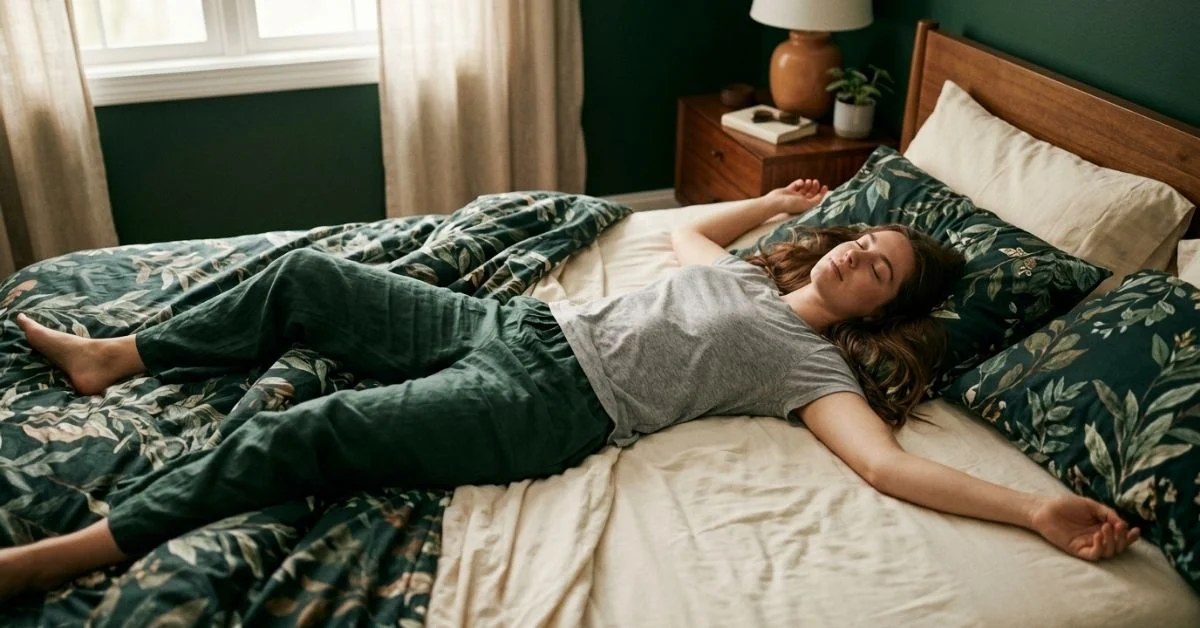
If you often wake up sprawled on your back with your legs apart and your arms raised above your pillow, you are sleeping in the starfish position. It looks like the most relaxed posture in the world, but it comes with real biomechanical trade offs for your shoulders, spine, and airway. This guide breaks down what clinical and government health sources say about the starfish pose, when it helps, when it can work against you, and how to adjust your setup so you wake up without the aches. Along the way we point to a few sleep maxxing tactics worth trying if you like to fine tune every part of your night.
What Is the Starfish Sleeping Position?
The starfish position is a variation of supine, or back, sleeping. You lie flat on your back with your legs extended and spread slightly apart while your arms rest bent beside your pillow or stretched above your head. It is one of the least common natural postures, and it usually shows up alongside the handful of other back sleeping habits covered in our comparison of best and worst sleeping positions. Because your body weight spreads across the full surface of the mattress rather than concentrating on a hip or shoulder, the starfish pose reduces the pressure points that side and stomach sleepers often deal with.
Key Benefits of the Starfish Sleeping Pose
When it is paired with the right pillow and mattress support, sleeping flat in this open posture offers a few genuine advantages:
- Neutral Spinal Alignment: A supportive mattress lets your spine, neck, and pelvis settle into a straight line without the twisting that side sleeping can cause.
- Reduced Acid Reflux: Lying on your back with your head slightly raised keeps your esophagus above your stomach, which limits the backward flow of stomach acid linked to gastroesophageal reflux disease.
- Skin and Facial Pressure Relief: Your face never presses into a pillow, so there is less overnight friction, fewer sleep creases, and less fluid pooling around the eyes. Choosing the best material for bed sheets for skin can add to this benefit by cutting down on friction even further.
- Even Weight Distribution: Spreading your limbs wide keeps pressure from building up on any single joint, which is part of why some people gravitate toward this pose after a long day on their feet.
Potential Drawbacks and Health Risks
The same openness that makes the starfish pose feel relaxed can also work against you. Four issues come up most often in the clinical literature on sleep posture:
| Potential Issue | Why It Happens | Solution or Adjustment |
|---|---|---|
| Shoulder Strain and Impingement | Keeping your arms elevated for hours narrows the space beneath the acromion bone, a pattern clinicians classify as rotator cuff syndrome and subacromial impingement. | Lower your arms to mid chest height or down at your sides before you settle in. |
| Nerve Compression and Numbness | Extended overhead arm elevation puts tension on the brachial plexus, the nerve network that runs from your neck into your arm and hand. | Tuck a small cushion under each elbow so the arm does not fully extend. |
| Snoring and Obstructive Sleep Apnea | Lying flat lets gravity pull the tongue and soft palate backward, narrowing the airway, a mechanism outlined by the National Heart, Lung, and Blood Institute and confirmed in clinical polysomnography studies. | Raise the head of the bed 20 to 30 degrees or switch to side sleeping. If congestion is part of the problem, see our guide on how you sleep with a blocked nose. |
| Lower Back Lumbar Strain | Legs lying flat on a firm mattress can tip the pelvis forward and arch the lower back, a pattern flagged in MedlinePlus guidance on low back pain. | Place a supportive pillow directly beneath your knees. |
Recommendations by Sleeper Profile
Not everyone should approach the starfish pose the same way. Use this table as a quick reference for adjusting the position to your own body and health needs:
| Sleeper Profile | What Tends to Happen | Recommended Adjustment |
|---|---|---|
| Healthy adult with no pain | Generally comfortable, with a mild risk of occasional snoring. | Keep the pose, add a knee pillow, and choose a medium firm mattress for even support. |
| Shoulder pain or rotator cuff tendinitis | Overhead arm position narrows the subacromial space and worsens tendon irritation. | Switch to modified back sleeping with arms at your sides, or side sleeping on the unaffected shoulder with a body pillow. |
| Frequent snoring or diagnosed sleep apnea | Flat back sleeping allows the airway to narrow more easily. | Elevate the head of the bed, try side sleeping, and review sleep apnea risk factors with a doctor if symptoms persist. |
| Lower back pain or sciatica | Flat, extended legs increase the arch in the lower back and can aggravate nerve pain. | Add a knee pillow and review the best position to sleep for lower back pain and the best way to sleep with sciatica. |
| Pregnant sleepers | Extended back sleeping is generally discouraged in later pregnancy. | Follow the guidance in sleeping positions for pregnancy and can you sleep on your back while pregnant. |
| Nighttime heartburn or GERD | Back sleeping is fine and often helpful, provided the head is elevated. | Raise the head of the bed 6 to 8 inches and avoid eating close to bedtime. |
Starfish vs Best Sleeping Positions for Shoulder Tendinitis
If you deal with rotator cuff inflammation or subacromial impingement, the standard starfish pose is generally not recommended. Elevating your arms above shoulder level narrows the subacromial space, compressing the inflamed supraspinatus tendon against the acromion bone, a mechanism well documented in the medical literature on shoulder impingement syndrome. This sustained tension reduces local blood flow and frequently shows up as morning stiffness or a sharp ache when reaching overhead.
Better Alternatives for Shoulder Tendinitis
- Modified Back Sleeping: Rest your arms gently across your abdomen or at your sides on supportive cushions, keeping your elbows below chest height.
- Side Sleeping with Contralateral Support: Sleep on your unaffected side while hugging a medium firm body pillow. Resting your painful arm over the pillow keeps it from collapsing inward and straining the joint.
How to Optimize Your Starfish Sleeping Posture
If you prefer this position, a few simple ergonomic adjustments can eliminate the most common aches:
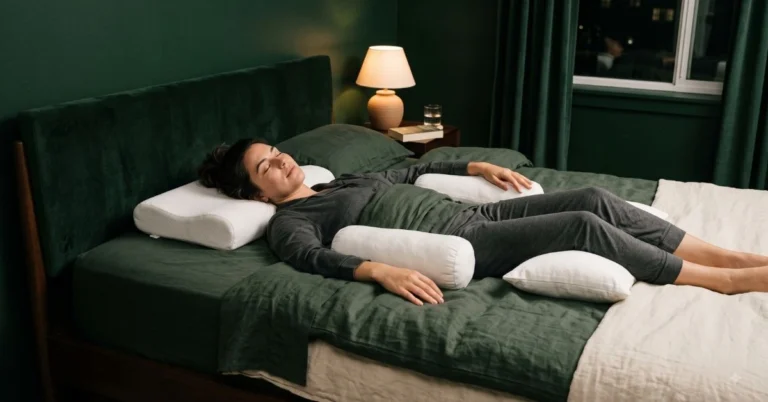
- Support Your Knees: Slide a contoured pillow under your knees. The slight bend flattens your lumbar spine against the mattress and relieves hip flexor tension.
- Choose a Low to Medium Loft Pillow: A pillow that is too thick pushes your cervical spine into an unnatural forward bend. Look for a supportive pillow that cradles the neck curve without pushing your chin toward your chest.
- Bring Your Arms Below Shoulder Level: Instead of throwing your hands directly behind your head, rest them near your chest or on thin side cushions to protect the brachial nerves. If the overhead habit is hard to break, our guide on how to train yourself to sleep on your back has practical tips for retraining your posture overnight.
- Maintain a Medium Firm Mattress: A mattress with adaptive contouring cushions the sacrum and shoulder blades while keeping your lower back from sinking out of alignment.
- Mind Your Bedding: Since your whole body stays in contact with the mattress in this pose, breathable, well fitted sheets matter more than usual. Deep pocket sheet sets keep the fabric secure on a thicker mattress, Oeko Tex certified bamboo sheets stay cool against skin that touches the bed all night, and an organic cotton bed sheet set or Organic Sheet Set can reduce the irritation some people notice from synthetic fabrics. If you use an adjustable base to raise your head for snoring or reflux, look for Adjustable Bed Sheets designed to stay fitted as the frame moves.
When Starfish Sleeping Needs a Second Look
This article is for general education and is not a substitute for medical advice. If you notice persistent shoulder pain, numbness that does not resolve during the day, loud snoring with witnessed pauses in breathing, or nighttime heartburn most nights of the week, talk with a doctor or a sleep specialist.
Keep Reading
The starfish pose is not inherently good or bad; it is a set of trade offs like every other position. Small adjustments, a knee pillow, a lower pillow loft, and better arm placement, can turn a promising but flawed posture into a solid one. For a wider look at building a better bedtime routine, our new sleep guide of your dreams covers the fundamentals from start to finish, and if you want to see how far people take this kind of fine tuning, our piece on sleep maxxing is a fun next read.
Sources
- National Heart, Lung, and Blood Institute. What Is Sleep Apnea.
- National Heart, Lung, and Blood Institute. Sleep Apnea, Causes and Risk Factors.
- MedlinePlus, National Library of Medicine. Gastroesophageal Reflux Disease.
- MedlinePlus, National Library of Medicine. Low Back Pain, Acute.
- MedlinePlus, National Library of Medicine. Brachial Plexus Injuries.
- National Center for Biotechnology Information, StatPearls (NIH Bookshelf). Rotator Cuff Syndrome.
- National Library of Medicine, PubMed. Effect of Sleep Position on Sleep Apnea Severity.
Frequently Asked Questions (FAQs):
Is the starfish sleeping position bad for your shoulders?
It can be. Keeping your arms overhead for six to eight hours can pinch rotator cuff tendons, contribute to subacromial impingement, and restrict blood flow, which can leave your fingers stiff or numb by morning.
Why do I naturally sleep with my arms over my head?
Many people do this instinctively to open the chest cavity and reduce a feeling of lung restriction, or because tight shoulder and thoracic muscles feel uncomfortable when the arms are pinned at the sides.
Does the starfish position worsen snoring?
Yes for most people. Sleeping flat on your back lets gravity pull the soft tissue of the throat and tongue toward the airway, which can trigger snoring or make obstructive sleep apnea more noticeable.
What is the best pillow height for the starfish position?
A low to medium loft pillow, roughly three to four inches thick, tends to work best. It keeps your neck in a neutral position without tilting your head forward or backward.
How do I transition out of the starfish pose if it causes neck or shoulder pain?
A full body pillow can anchor you on your side. Placing a pillow between your knees and wrapping your top arm around a supportive cushion helps prevent rolling back onto your back during deep sleep.
Is sleeping in the starfish position good for lower back pain?
It can be, as long as you place a pillow under your knees. Without that support, lying flat on your back can tip your pelvis forward and strain the lumbar spine.
Disclaimer: This article is for general informational purposes only and does not constitute medical or legal advice. Always consult a qualified professional before making any medical or legal decisions.

MBBS · PMDC registered
Registered Medical Practitioner (PMDC), Senior Medical Editor and Medical Reviewer for OdeSleep. Medical Officer in Paediatrics & NICU at Children's Hospital Lahore, combining frontline clinical experience with medical fact-checking.
View full profile →