Sleeping with Cats: Benefits, Risks, and How to Share Your Bed Comfortably

· Medically reviewed
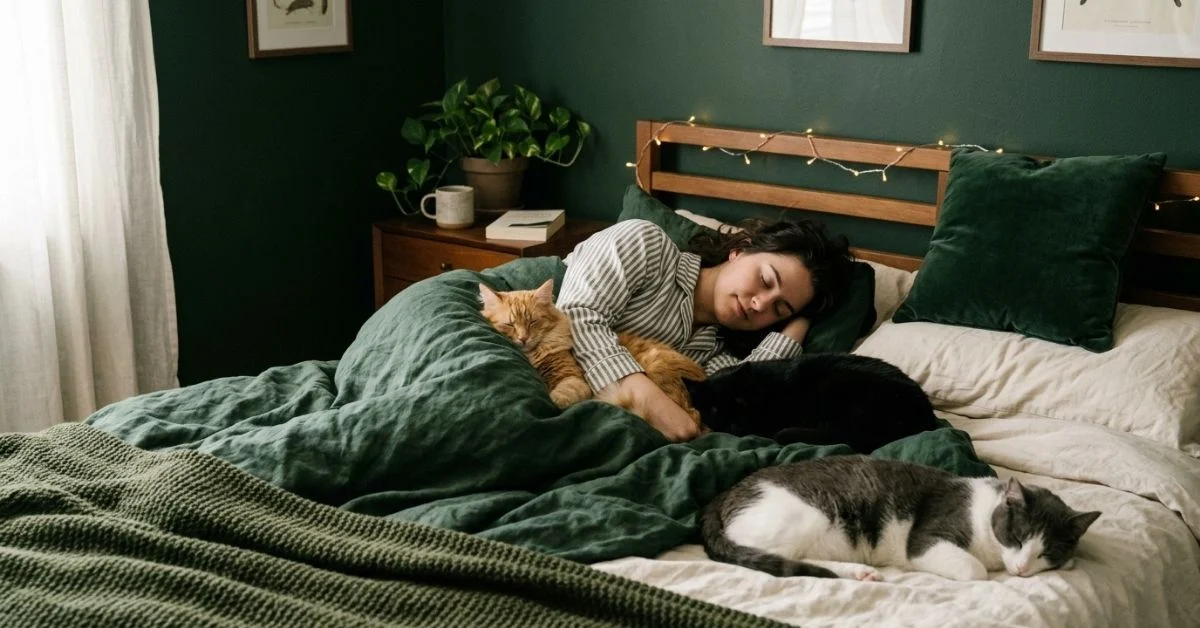
Millions of pet owners fall asleep with a cat curled against their legs or purring on the pillow beside them. That closeness feels effortless on good nights: warm, steady, calming. On other nights, a 2 a.m. sprint across the mattress or a paw batting at your toes turns a full night of rest into a broken one.
This guide looks at why cats choose to sleep with their owners, what the science says about the real risks (allergens, hygiene, and sleep fragmentation), what public health agencies actually recommend, and how to set up your bedroom so both you and your cat sleep well. Every claim about allergens, indoor air quality, and infant sleep safety below is backed by a government or federal health source, linked in the article and listed again at the end.
What Does It Mean When a Cat Sleeps on You?
If your cat picks your chest, legs, or pillow over an empty sofa, that preference is rooted in instinct and social bonding rather than random chance.
- Warmth seeking: A cat’s average body temperature sits between about 100.5°F and 102.5°F, several degrees above a resting human. Human body heat, especially from the chest, head, and hands, works like a natural heating pad on a cool night.
- Safety and vulnerability: In the wild, sleep is when animals are most exposed to predators. A cat that settles into deep sleep directly on your body is treating you as a trusted, protective anchor.
- Territorial marking: Cats carry scent glands on their cheeks, paws, and flanks. Resting against you transfers their pheromones onto your skin and bedding, which is their way of marking you as part of a secure home base.
- Emotional bonding: Cats build genuine attachment to their primary caregivers, and choosing to sleep close to you is a direct, physical expression of that companionship.
Why Your Cat Always Sleeps Next to You
When a cat consistently sleeps beside you rather than on top of you, small behavioral differences explain the choice of spot.
| Sleeping Spot | Primary Behavioral Reason |
|---|---|
| By your head or on the pillow | Maximum heat retention with minimal disturbance from your leg or arm movements overnight. |
| Between your knees or feet | A secure, nest like enclosure that provides warmth while still leaving an easy exit route. |
| Against your back | Total security. This position protects the cat’s vulnerable spine while resting on a warm surface. |
| At the edge of the bed | Social closeness paired with quick mobility if the cat wants to roam or hunt during the night. |
Is It Bad to Sleep with Cats?
For most healthy adults, sharing a bed with a clean, vaccinated, indoor cat carries a low health risk. That said, co sleeping does introduce a few specific factors worth understanding, especially around allergens and sleep quality.
1. Sleep Fragmentation
Cats are crepuscular animals, meaning their natural activity peaks at dawn and dusk. Middle of the night grooming, sudden zoomies, or playful pawing at your feet under the blanket can pull you out of deep sleep stages, leaving you groggy the next morning. Consistent, good quality sleep supports memory, mood, and metabolic health, so repeated nighttime interruptions are worth taking seriously rather than shrugging off. The CDC’s guidance on healthy sleep habits is a useful baseline for understanding what quality sleep actually requires, including a cool, quiet, and consistent bedroom routine.
2. Allergens and Respiratory Irritation
Pet dander (tiny flecks of skin) and dried saliva both carry a protein called Fel d 1, one of the most common indoor allergy triggers. According to the National Institute of Environmental Health Sciences, any furry animal can trigger allergy symptoms such as sneezing or itchy eyes, but cats and dogs are the most frequent culprits, and pet allergens can also make existing asthma harder to control. When a cat sleeps directly on your sheets or pillowcase, those allergens sit close to your airway all night, which can lead to congestion, sneezing, or disrupted breathing.
The Environmental Protection Agency lists pet dander alongside dust mites and mold as one of the most common indoor asthma triggers, and specifically recommends keeping pets out of the bedroom and off upholstered furniture if allergies or asthma are a concern. The EPA’s broader overview of biological contaminants and indoor air quality explains how these particles travel through HVAC systems and settle into fabric, which is exactly why bedding choice matters so much for allergy prone households.
3. Bedding Hygiene
Even a meticulously clean indoor cat can carry microscopic litter particles on its paws. Dander, loose hair, and tracked in pollen accumulate easily in loosely woven fabric, which is why tightly woven, washable bedding is worth the investment. The CDC’s overview of staying healthy around cats recommends routine veterinary care and regular hand washing after handling a cat or its litter box, both of which reduce the germs that eventually end up on your sheets.
Addressing Common Nighttime Cat Myths
Can Cats Suffocate a Sleeping Adult?
No. The long standing legend that cats intentionally smother sleeping adults or infants by stealing their breath is false. The myth likely grew out of old misunderstandings about Sudden Infant Death Syndrome and a mistaken belief that cats are drawn to the warmth of an infant’s mouth.
Adult humans face no such risk from a house cat. Infants and toddlers are a different matter. The NICHD Safe to Sleep campaign is explicit that babies should never share an adult bed, couch, or armchair with a pet, since soft bedding and a shifting sleep surface raise the risk of accidental suffocation and entrapment. If you have both a cat and an infant in the home, the safest setup is a separate, firm sleep space for the baby in every sleep session, with the cat kept out of that space entirely.
Dealing with an Uninvited Cat on Your Bed
If an outdoor cat or a new pet has started sneaking onto your duvet uninvited, a few boundary setting steps usually work within a week or two.
- Create a dedicated sleep station: A plush cat bed or heated pad on a raised, nearby surface. Cats naturally prefer elevated, secure vantage points.
- Use texture deterrents: Cats dislike slick or crinkly surfaces. A textured throw at the foot of the bed discourages unwanted perching.
- Build a nighttime routine: A brisk fifteen minute play session before bed, followed by a meal, triggers the natural hunt, eat, groom, sleep cycle and tires the cat out before lights off.
Choosing Bedding When You Sleep with a Cat
Fabric choice does more heavy lifting than most owners expect. The table below compares common sheet materials on the traits that matter most for allergy control, durability against claws, and how easily they release trapped fur and dander during a wash.
| Fabric | Allergen Release in Wash | Breathability | Best For |
|---|---|---|---|
| Organic cotton | Very good, tightly woven weaves resist trapping fur | High | Sensitive skin and everyday allergy control |
| Bamboo lyocell | Very good, smooth fiber surface sheds dander easily | Very high, naturally cooling | Hot sleepers and multi pet homes |
| Standard polyester blend | Fair, static can hold onto loose hair | Low to moderate | Budget setups, not ideal with allergies |
| Linen | Good, loose weave washes clean quickly | High | Warm climates and low maintenance care |
Five Practical Tips for Better Sleep with Your Cat
If co sleeping is working for you overall, small adjustments to the bedroom setup can protect your rest without giving up the companionship.
- Upgrade to breathable, tightly woven bedding: Long staple cotton, linen, and bamboo resist trapping loose hair and dander deep in the fibers and stay cool through the night. If allergies are a factor, an organic cotton bed sheet set or a purely organic sheet set gives you a tight weave without synthetic finishes that can trap odor and dander.
- Choose oeko tex certified fabric for peace of mind: Certified textiles are independently tested for harmful substances, which matters when a cat and your face share the same pillowcase most nights. Oeko Tex certified bamboo sheets combine that certification with the natural cooling and dander release properties bamboo lyocell is known for.
- Designate a cat zone on the mattress: Lay a washable pet blanket or textured runner across the lower third of the bed to encourage your cat to settle in one specific spot instead of claiming your pillow. A snug fitting sheet with a deep pocket stays anchored even with a cat climbing on and off; deep pocket sheet sets are built for exactly this kind of nightly movement.
- Maintain a consistent wash routine: Launder sheets and pillowcases weekly in warm water to neutralize dust mites, dander, and tracked litter residue. If your mattress height changes with an adjustable frame, adjustable bed sheets are cut to stay fitted through every recline position instead of popping loose overnight.
- Groom before bedtime and run a HEPA purifier: A quick daily brushing removes loose undercoat fur before it sheds onto your duvet, and a quiet HEPA filter running in the bedroom pulls floating dander out of the air overnight. Together with washable bedding, this combination is one of the most effective home based ways to lower nightly allergen exposure.
Our Recommendation
If you love sleeping beside your cat but wake up congested or notice hair everywhere, the fix is rarely to remove the cat. It is almost always the bedding. Here is a quick recommendation based on the most common scenarios we hear from cat owners.
| Your Situation | Recommended Pick | Why It Works |
|---|---|---|
| Mild allergies or sensitive skin | Organic cotton bed sheet set | Tight, natural weave that resists trapping dander |
| Hot sleeper sharing a bed with a cat | Oeko Tex certified bamboo sheets | Cooling fiber plus independently certified safety |
| A cat that climbs on and off often | Deep pocket sheet sets | Stays anchored to the mattress corners overnight |
| An adjustable bed frame | Adjustable bed sheets | Cut to stay fitted through every incline position |
| Wanting a fully chemical free set | Organic sheet set | Purely organic fibers with no synthetic finishing |
Sources
- CDC, About Sleep: https://www.cdc.gov/sleep/about/index.html
- CDC, Healthy Pets Healthy People, Cats: https://www.cdc.gov/healthy-pets/about/cats.html
- National Institute of Environmental Health Sciences, Pet Allergens: https://www.niehs.nih.gov/health/topics/agents/allergens/pets
- EPA, Asthma Triggers Gain Control: https://www.epa.gov/asthma/asthma-triggers-gain-control
- EPA, Biological Contaminants and Indoor Air Quality: https://www.epa.gov/indoor-air-quality-iaq/biological-contaminants-and-indoor-air-quality
- NICHD, Safe to Sleep, Safe Sleep Environment: https://safetosleep.nichd.nih.gov/reduce-risk/safe-sleep-environment
Frequently Asked Questions (FAQs):
Why does my cat suddenly want to sleep with me?
A sudden change in sleeping preference usually points to something environmental: a drop in household temperature, aging joints seeking a softer surface, or an instinctive need for security during a stressful stretch at home. If the change comes with lethargy or a drop in appetite, a veterinary visit is a good idea.
Should I let my cat sleep with my child?
Cats should not sleep with infants or toddlers under age four because of the risk of accidental smothering or scratching. For older children without asthma or pet allergies, co sleeping is generally safe once the child understands how to handle the cat gently.
How do I stop my cat from waking me up at 4 a.m.?
Never reward early morning wake up calls with attention or immediate feeding, since that reinforces the behavior. An automated feeder set for early morning hours, combined with an interactive play session right before lights off, usually resets the pattern within a couple of weeks.
Disclaimer: This article is for general informational purposes only and does not constitute medical or legal advice. Always consult a qualified professional before making any medical or legal decisions.

MBBS · PMDC registered
Registered Medical Practitioner (PMDC), Senior Medical Editor and Medical Reviewer for OdeSleep. Medical Officer in Paediatrics & NICU at Children's Hospital Lahore, combining frontline clinical experience with medical fact-checking.
View full profile →