
Blog
How to safely sleep in a car ?

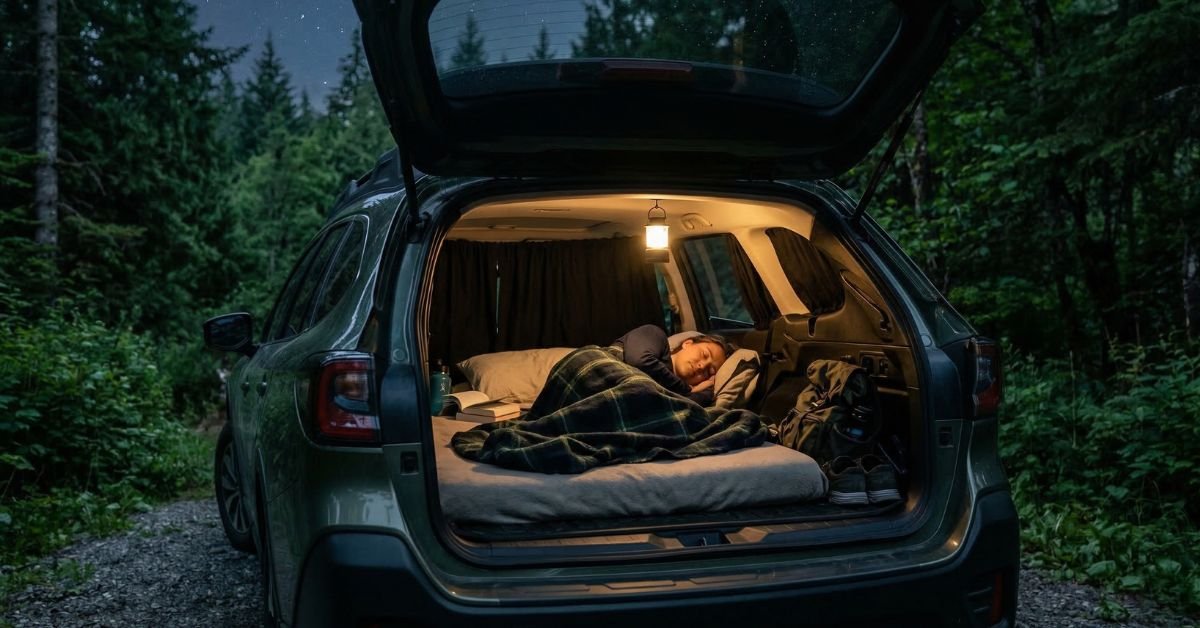
Whether you are embarking on an ambitious cross-country road trip, seeking a budget-friendly way to travel, or simply found yourself too tired to continue driving, knowing how to sleep in a car safely is an essential skill.
While it might seem as simple as reclining the seat and closing your eyes, there is a distinct art to doing it right. From legal hurdles to climate control, here is everything you need to know about making your vehicle a temporary bedroom.
Is it Safe to Sleep in Your Car?
Safety in a vehicle depends heavily on your preparation. The most critical mechanical risk is carbon monoxide poisoning, which can occur if the engine is running while you sleep. The CDC Carbon Monoxide Guidelines warn that you should never let a vehicle idle in a semi-enclosed space.
Furthermore, the NHTSA emphasizes drowsy driving prevention, noting that for American drivers, pulling over for a rest is a vital safety measure to avoid highway accidents. To maximize the quality of these roadside rests, many travelers use the 90-minute sleep cycle rule to ensure they wake up feeling refreshed rather than groggy.
Finding a Legal Location in the USA
- Rest Areas: Policies vary by state. For example, the Florida DOT Rest Area Rules specify time limits (typically 3 to 10 hours) to ensure parking turnover and safety.
- Public Lands: In the Western US, you can find legal, free "dispersed" camping spots by following the BLM Camping Regulations.
- National Forests: Many National Forests allow "primitive" vehicle camping. Check the USDA Forest Service Recreation Guide for rules on where you can park overnight.
Managing the Climate & Comfort
- Level the Playing Field: Most car seats aren't flat. If you have an SUV, folding the back seats down is your best bet for a level surface.
- Winter Safety: Your car loses heat rapidly. In winter, invest in a high-quality sleeping bag rather than relying on the car’s heater. It is also helpful to understand why our bodies require more sleep in winter to better plan your travel miles during shorter days.
- The 10-3-2-1-0 Rule: To ensure you actually fall asleep in a cramped environment, consider following the 10-3-2-1-0 sleep hygiene framework, which helps regulate your caffeine and screen time before bed.
Pro Sleeping in a Car Tips
To transition from a bad night's sleep to a great adventure, follow these sleeping in a car tips:
| Feature | Pro Tip |
| Location | Look for 24-hour truck stops (like Love's or Flying J) or Walmart locations that permit overnight stays. |
| Bedding | Use an inflatable car mattress designed to fill the gap in the footwells of the back seat. |
| Privacy | Always sleep with your head toward the front of the car to be less visible to passersby. |
| Hygiene | Keep a "go-bag" with wet wipes, dry shampoo, and a toothbrush for a quick morning refresh. |
Frequently Asked Questions (FAQs):
Is it illegal to sleep in your car at a rest area in 2026?
No, it’s generally not illegal to sleep in your car at a rest area, but rules vary by state and location, with time limits or bans in some areas.
How to prevent carbon monoxide poisoning while sleeping in a car.
Keep the engine off, crack a window for ventilation, and never sleep in an enclosed or poorly ventilated space with the car running.
Can you get a ticket for sleeping in your car if you aren't driving?
Yes, you can still get a ticket depending on local laws, especially for parking violations, trespassing, or suspicion of DUI, even if you’re not driving.
Should you sleep in the front or back seat for the best escape route?
Sleep in the front seat for a quicker escape since you’re already near the driver’s controls and exit
How to prevent carbon monoxide poisoning when car camping in winter.
Never run the engine or heater while sleeping, keep vents slightly open, and ensure the exhaust pipe isn’t blocked by snow.
Are rechargeable fans or cooling mats better for sleeping in a car in summer?
Rechargeable fans are generally better, as they actively move air to cool your body, while cooling mats offer mild passive relief but much weaker overall cooling.
Disclaimer: The information in this article is for educational and informational purposes only and is not intended as medical advice.