When it comes to picking your bedding, the debate usually boils down to two heavyweights. Understanding the difference between cotton and polyester sheets is the secret to actually waking up well-rested instead of reaching for the snooze button in a sweat.
Here is the breakdown of how these fabrics stack up and which one deserves a spot on your mattress.
If you’ve ever walked down a bedding aisle and wondered, "Is polyester good for sheets?" the answer depends entirely on your priorities. Polyester is a synthetic fiber that offers unique mechanical advantages and distinct comfort drawbacks.
If polyester is the king of convenience, cotton is the king of comfort. As a natural fiber used for centuries, it remains the industry standard for a high-quality sleep experience, though it requires a bit more "TLC" than its synthetic counterparts.
Shop our organic cotton bed sheet collection.
If you run hot at night, you're probably asking, "Is cotton more breathable than polyester?" The answer is a resounding yes. Cotton is a natural, porous fiber that allows air to circulate and moisture to evaporate.
While polyester is moisture-wicking (it moves sweat to the surface), it isn't breathable (it doesn't let air flow through). This is why many people find that cotton feels crisp and fresh, while polyester can feel "clamshell-like" or sticky.
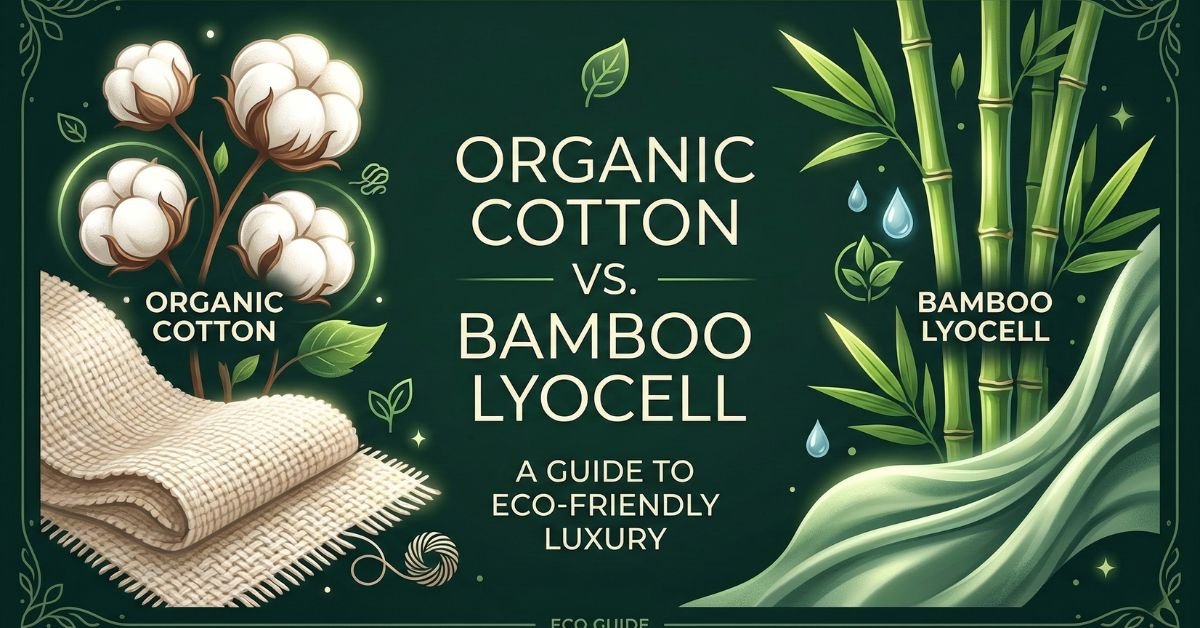
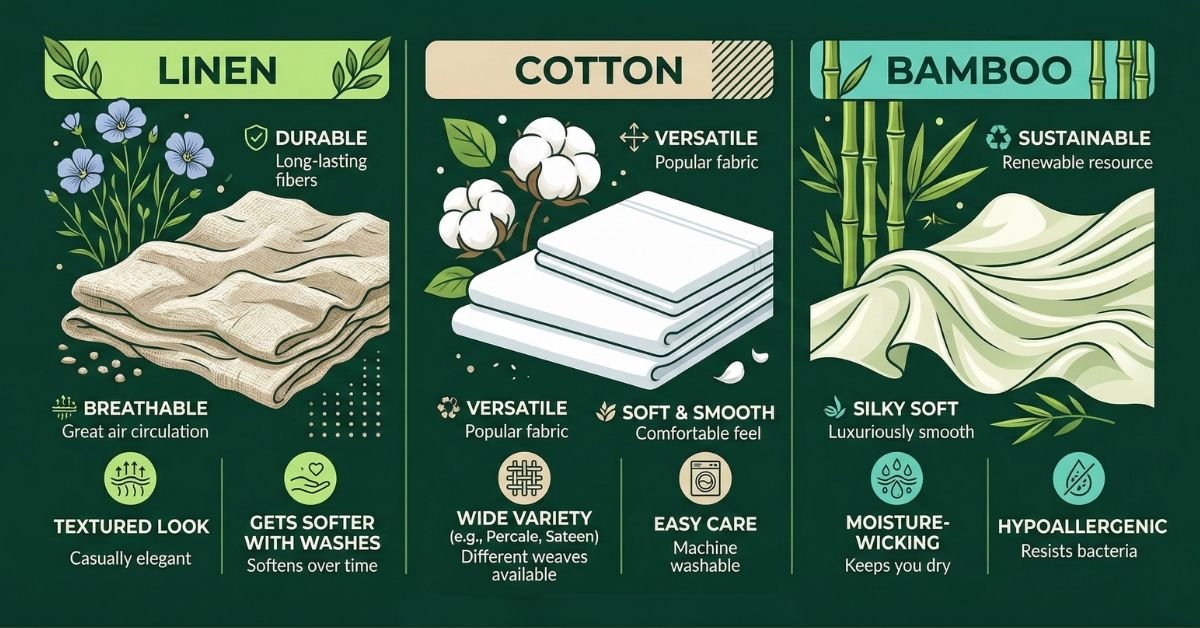
Read our detailed guide on Linen vs cotton vs bamboo sheets.
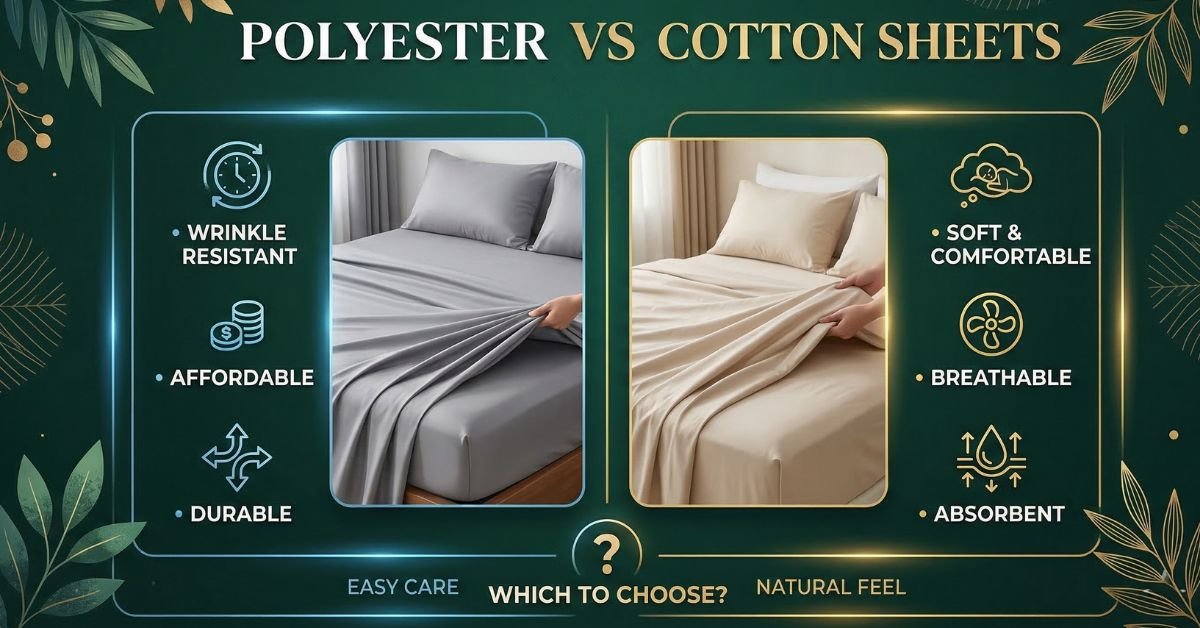
When deciding between polyester and cotton, it usually comes down to "Feel vs. Function."
| Feature | Cotton Sheets | Polyester Sheets |
| Material | Natural (Plant-based) | Synthetic (Plastic-based) |
| Breathability | High (Cooling) | Low (Insulating) |
| Softness | Softens with every wash | Silky but can feel "plastic-y." |
| Maintenance | Wrinkles easily | Wrinkle-resistant |
| Longevity | Good (but can thin) | Excellent (very durable) |
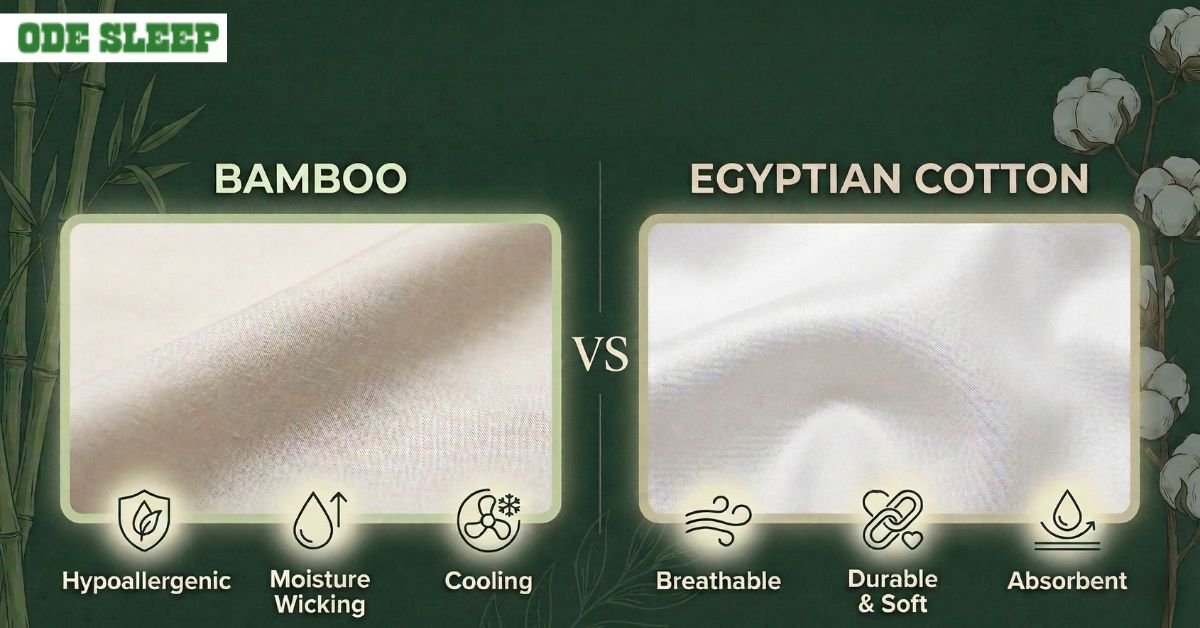
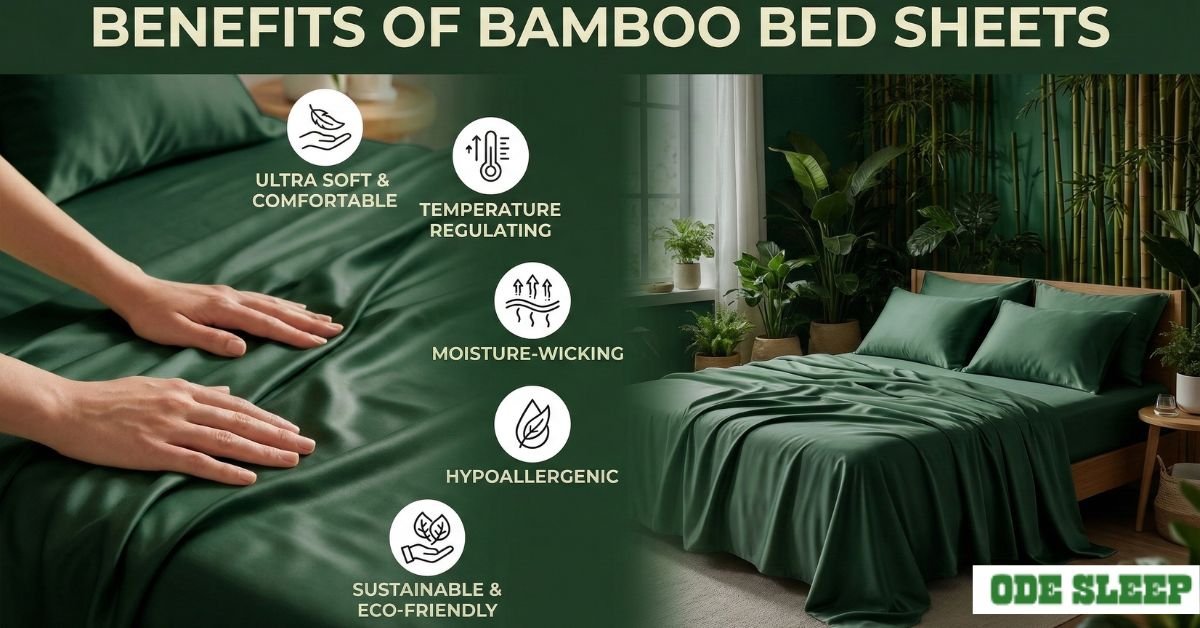
If you find yourself torn between the two, you might want to look at a third option. In the battle of polyester vs. cotton vs. bamboo sheets, bamboo often takes the crown for modern sleepers.
Frequently Asked Questions (FAQs):
It is generally better to sleep in cotton because it's a natural, breathable fiber that helps regulate your temperature and prevents that "sticky" feeling common with synthetic polyester.
A 60/40 cotton-polyester blend is a solid middle ground because it combines the natural breathability of cotton with the wrinkle resistance and durability of synthetic fibers.
For night sweats, 100% cotton is the superior choice because its natural, hollow fibers allow heat to escape and air to circulate, whereas poly-blends contain synthetic plastic that traps moisture and body heat.
Polyester is generally better for pet hair because its smooth, synthetic fibers and tighter weave help hair slide off easily, whereas the natural, porous fibers of cotton tend to trap and hold onto fur like a magnet.
Polyester sheets smell after one night because the synthetic fibers are non-breathable and trap body heat, moisture, and oils, creating a warm breeding ground for odor-causing bacteria.


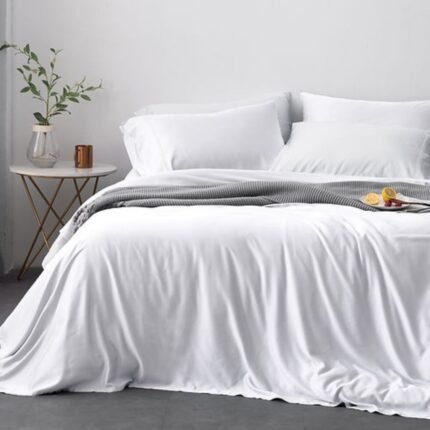 Island 100% bamboo bed sheet set
$65.00 – $80.00Price range: $65.00 through $80.00
Island 100% bamboo bed sheet set
$65.00 – $80.00Price range: $65.00 through $80.00
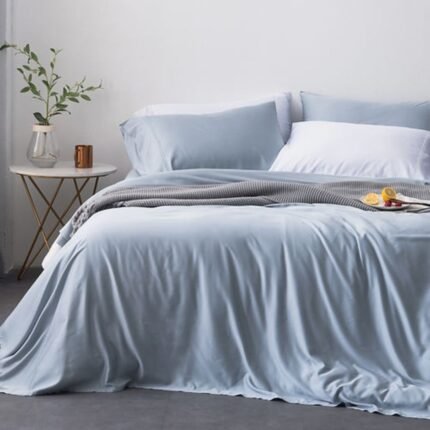 Island 100% bamboo bed sheet set | Blue
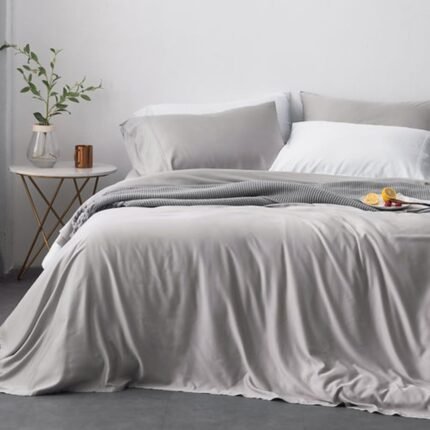 Island 100% bamboo bed sheet set | Grey
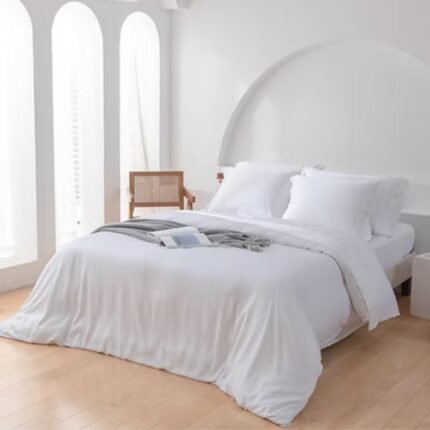 Island Bamboo Duvet Cover 100% Organic
$97.49 – $104.99Price range: $97.49 through $104.99
Island Bamboo Duvet Cover 100% Organic
$97.49 – $104.99Price range: $97.49 through $104.99
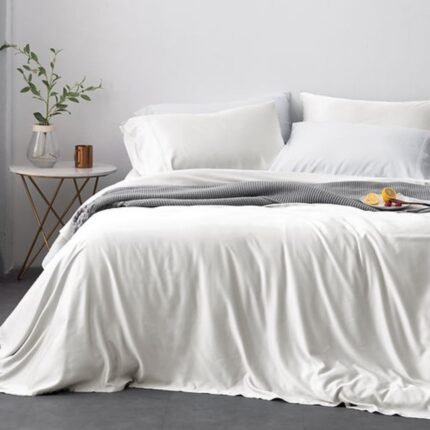 Island 100% bamboo bed sheet set | White Sand
No account yet?
Create an Account