
Blog
Organic Cotton vs. Bamboo Lyocell: A Guide to Eco-Friendly Luxury.

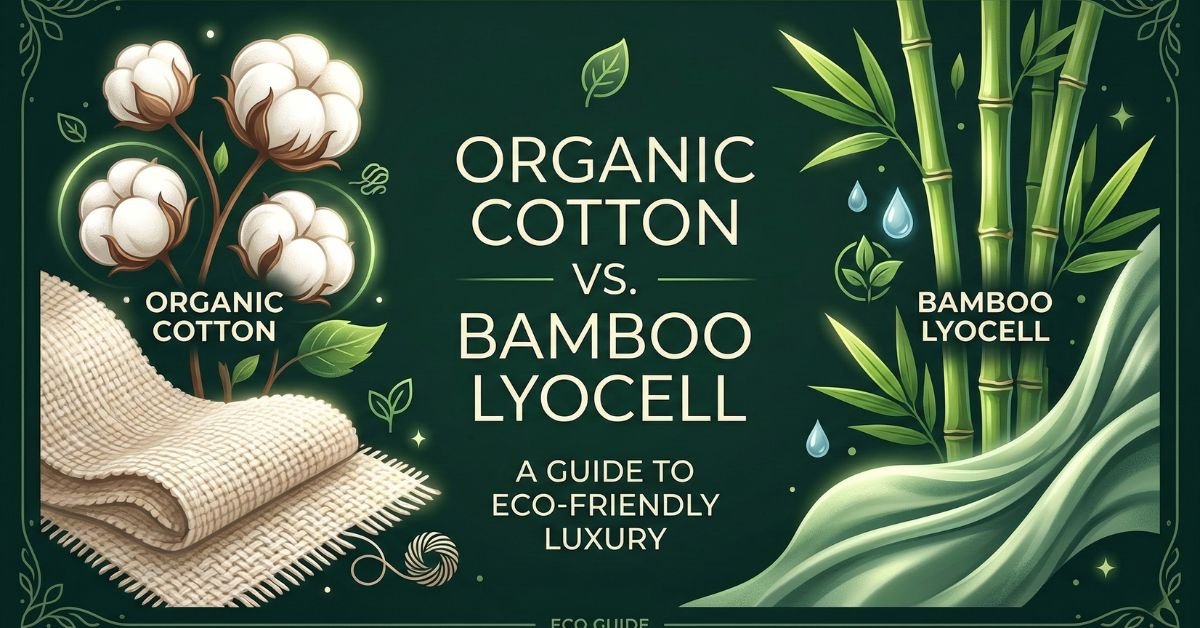
In the world of sustainable textiles, two titans currently dominate the "eco-luxury" space: Organic Cotton and Bamboo Lyocell. While both offer a massive upgrade over conventional synthetics, they cater to very different sensory preferences and environmental priorities.
If you are choosing between the crisp reliability of a classic and the high-tech silkiness of a modern marvel, here is everything you need to know.
Before comparing bamboo to cotton, it is crucial to understand that not all bamboo is created equal. Most "bamboo" on the market is actually bamboo viscose (or rayon). This process uses harsh chemicals in an "open-loop" system that can be taxing on the environment.
In contrast, bamboo lyocell fabric represents the gold standard of sustainability. It uses a "closed-loop" process where 99% of the non-toxic organic solvents and water are recycled and reused. When you see bamboo tencel fabric, you are looking at this same high-end lyocell technology, often branded by the manufacturer Lenzing.
The most immediate difference is the "hand" of the fabric. Lyocell fabric vs cotton is often described as a battle between "silky" and "crisp."
If you are a hot sleeper, lyocell vs bamboo sheets (specifically lyocell) is the winner. Lyocell is 50% more absorbent than cotton. It doesn't just soak up sweat; it wicks it away from the body and releases it, keeping you dry. Cotton absorbs moisture well but tends to hold onto it, which can lead to a damp feeling during humid nights.
When looking at Lyocell vs cotton price, expect to pay a premium for Lyocell. Because the closed-loop manufacturing process is more technically demanding, lyocell bamboo products usually start around $120–$180 for a sheet set, whereas high-quality organic cotton can often be found for $80–$130. However, Lyocell's high tensile strength means it is less likely to shrink or lose its shape than cotton.
Choose Organic Cotton if...
Choose Bamboo Lyocell if...
Frequently Asked Questions (FAQs):
No, Lyocell is a silky, semi-synthetic fiber made from processed wood pulp that drapes and wicks moisture much better than the crisp, fluffy natural fibers of a cotton plant.
Tencel is a high-end, branded form of lyocell made through a cleaner, closed-loop process, whereas "bamboo sheets" usually refer to viscose, which is silkier but made using harsher chemical solvents.
No account yet?
Create an Account